

Cutter Natural Bug Spray: Natural Alternatives in 2026
When searching for a natural alternative to chemical-heavy insect repellents, many people discover cutter natural bug spray as one option in a crowded market. The question isn't just whether a product works, but whether it fits your lifestyle, your space, and your comfort level with what you're putting on your skin or near your family. In 2026, the conversation around mosquito control has shifted from simply choosing DEET or not-DEET to understanding how different formulas work, where they work best, and whether you want a sticky aerosol application at all.
Understanding Cutter Natural Bug Spray Formulations
Cutter manufactures several lines of insect repellents, including formulations marketed as "natural" or plant-based alternatives to traditional DEET products. These typically rely on active ingredients like oil of lemon eucalyptus, geraniol, or other botanical compounds. The EPA regulates skin-applied repellent ingredients differently depending on their classification, which affects what manufacturers can claim about efficacy and protection duration.
What Makes a Spray "Natural"
The term "natural" in the bug spray category doesn't have a single legal definition. Products may contain:
- Oil of lemon eucalyptus (PMD) – EPA-registered, derived from Eucalyptus citriodora
- Geraniol – a plant-based compound found in geranium and citronella oils
- Citronella oil – one of the oldest botanical repellents on record
- Cedarwood oil – commonly used in minimum-risk formulations
- Peppermint oil – often blended with other essential oils for broader effect
Each ingredient carries its own efficacy profile, duration of protection, and regulatory status. According to the EPA product label for certain Cutter formulations, registered products must meet specific testing standards and display detailed usage directions.

How Topical Sprays Work Versus Ground-Level Alternatives
Traditional cutter natural bug spray works through direct skin application. You spray the product onto exposed skin and clothing, creating a personal vapor barrier that interferes with mosquito scent receptors. The insect can't detect carbon dioxide or lactic acid as easily, so it moves on.
This approach has clear benefits: it's portable, it's personal, and it moves with you. But it also has practical limitations that many homeowners discover after a season or two of backyard entertaining.
The Sticky Reality of Wearable Repellents
Even plant-based sprays require you to:
- Apply every 1-2 hours for continuous protection
- Cover all exposed skin evenly
- Reapply after swimming or heavy perspiration
- Avoid contact with furniture, fabrics, and pets until dry
- Accept the greasy residue and scent on your skin
When hosting guests on your patio, asking everyone to spray down before joining you creates friction. Families with young children face the additional challenge of thorough application on wiggly, resistant toddlers. Pet owners worry about residue transfer when animals brush against freshly sprayed legs.
Comparing Effectiveness: Botanical Sprays and Essential Oils
A systematic review on essential oils as mosquito bio-repellents highlights both the promise and limitations of plant-based formulations. Many essential oils demonstrate measurable repellency in laboratory conditions, but real-world performance varies significantly based on concentration, formulation, environmental conditions, and mosquito species.
| Active Ingredient | Typical Protection Duration | EPA Registration | Reapplication Frequency |
|---|---|---|---|
| DEET 25% | 4-6 hours | Yes | Every 4-6 hours |
| Oil of Lemon Eucalyptus | 2-4 hours | Yes | Every 2-4 hours |
| Geraniol | 1-2 hours | Varies | Every 1-2 hours |
| Citronella Oil | 30-60 minutes | Minimum-risk | Every 30-60 minutes |
| Peppermint Oil | 30-90 minutes | Minimum-risk | Every 30-90 minutes |
Research published in Emerging Infectious Diseases cautions that many unregulated, minimum-risk natural products lack the rigorous field testing required of EPA-registered repellents. The gap between lab efficacy and backyard performance matters when you're planning an outdoor dinner party or trying to enjoy sunset on your patio without constant interruption.
What the Data Says About Plant-Based Repellents
A peer-reviewed study on selected essential oils against Aedes aegypti tested specific compounds under controlled conditions. While several oils showed initial repellency comparable to low-concentration synthetics, protection times remained significantly shorter. The study reinforced what many homeowners experience: natural doesn't automatically mean ineffective, but it does often mean more frequent reapplication.
For the Outdoor Sanctuary Host who wants an evening outdoors without sticky interruptions, frequent reapplication undermines the entire point of creating a relaxing, low-maintenance environment. After the appetizers are plated and the table is set, the last thing anyone wants is to pause conversation, go inside, and spray down again.
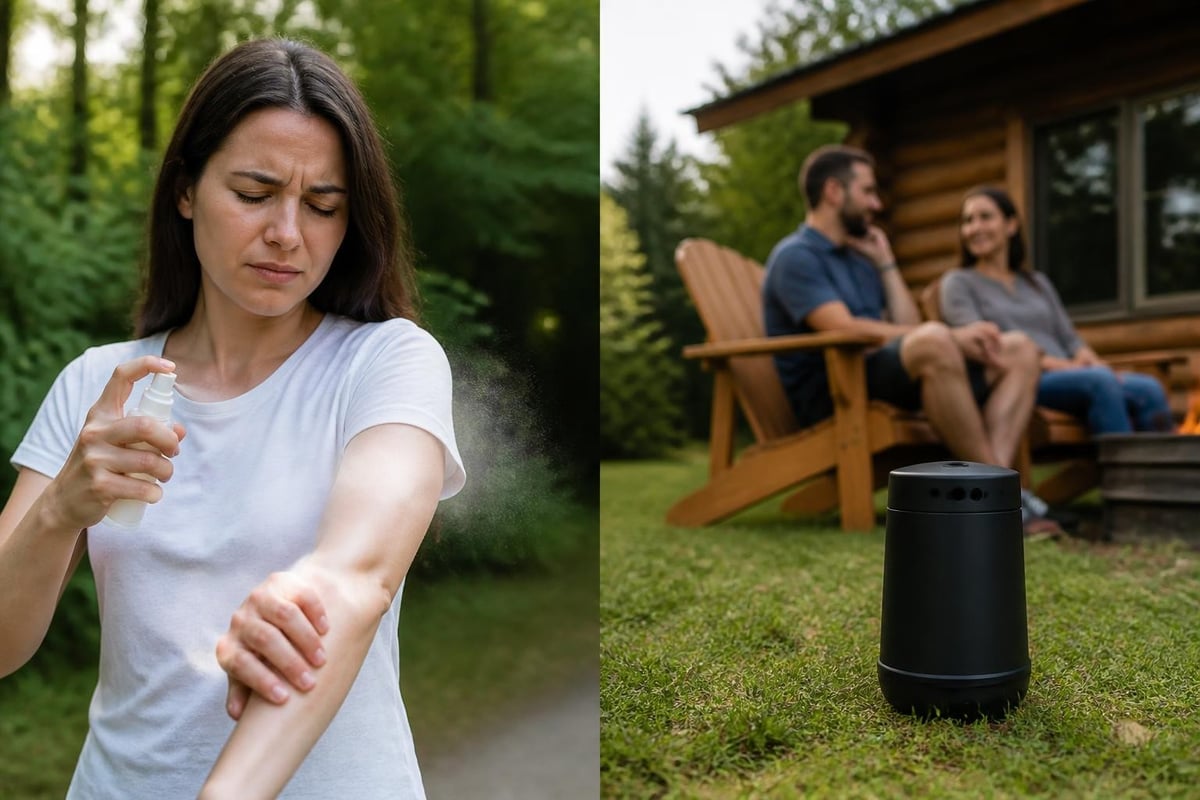
Beyond Topical Application: Spatial Repellent Strategies
The question isn't always "which spray?" but "do I need a spray at all?" Understanding how mosquitoes hunt reveals alternative strategies. Mosquitoes track humans primarily through scent: carbon dioxide from breath, lactic acid from sweat, and other volatile compounds released at ground level as we move and settle.
Spatial repellents shift the battleground from your skin to the surrounding environment. Instead of wearing protection, you treat the space itself. This category includes:
- Thermacell devices – battery-powered heat mats that vaporize allethrin
- Citronella candles – release scent plumes when burned
- Coil incense – smolder to create smoke barriers
- Essential oil diffusers – disperse botanical compounds into the air
- Ground-applied granules – biodegradable beads that mask human scent at the source
Each method has trade-offs in coverage area, duration, aesthetics, and safety around children and pets.
Scent-Masking at Ground Level
Mosquitoes detect CO₂ plumes from up to 30 feet away, then close in by tracking body heat and volatile organic compounds concentrated near the ground where we sit. Scent-masking formulas work by creating an aromatic curtain at ground level that makes it harder for mosquitoes to locate and identify targets.
Mosquito Beads use this principle through biodegradable corn-based granules infused with six essential oils: geraniol, citronella, peppermint, eugenol, cornmint, and rosemary. Pour the beads on the ground where people gather, and they release a concentrated scent field that masks the human odors mosquitoes track. Nothing touches your skin. No flame, no smoke, no hourly reapplication. Peak performance runs days one and two per application, covering up to 1,000 square feet with the Signature 18 oz container.

This approach appeals to homeowners who treat their patio as an outdoor room and refuse to compromise on aesthetics, safety, or convenience. Pour once, enjoy for days, and let the beads dissolve back into the earth when protection fades.
Regulatory Context and Consumer Confusion
The WHO Vector Control Advisory Group evaluates novel repellent products and spatial technologies, providing global guidance on testing standards and claim validation. In the United States, the EPA separates repellents into registered products (requiring extensive efficacy and safety data) and minimum-risk products (using pre-approved ingredients under section 25(b) of FIFRA).
Cutter natural bug spray formulations that contain EPA-registered actives like oil of lemon eucalyptus undergo formal review. Formulations relying solely on essential oils classified as minimum-risk may not require the same level of field testing, which explains the wide variation in reported performance.
Reading Labels and Understanding Claims
When comparing cutter natural bug spray to other botanical repellents or non-spray alternatives, examine:
- Active ingredient concentration – higher percentages typically extend protection duration
- EPA registration number – indicates formal review and approved claims
- Labeled protection time – how long before reapplication is needed
- Application instructions – skin-only, clothing-only, or environmental use
- Safety precautions – especially around children under three, pregnant women, and pets
A foundational review on plant-based insect repellents published in Malaria Journal traces the development of botanical formulations and highlights persistent challenges in standardization, stability, and protection duration compared to synthetic alternatives.
Lifestyle Fit: When Sprays Work and When They Don't
Choosing cutter natural bug spray or any topical repellent makes sense in specific scenarios:
- Hiking and trail use – you're moving through varied terrain, and treating the ground isn't practical
- Solo outdoor activities – protection for one person over a limited time
- Travel to high-risk areas – when disease transmission risk justifies aggressive personal protection
- Short-duration exposure – quick yard work, evening walks, brief outdoor tasks
Where topical sprays fall short:
- Entertaining guests – asking everyone to spray down disrupts hospitality
- Multi-hour patio use – constant reapplication interrupts relaxation
- Dining outdoors – residue on hands, utensils, and glassware raises concerns
- Homes with pets and small children – skin contact and chemical exposure become daily worries
The Outdoor Sanctuary Host values seamless, elegant solutions that don't require vigilance or visible intervention. You've invested in comfortable furniture, ambient lighting, and thoughtful landscaping. A pile of spray bottles on the side table undermines the entire aesthetic. For those who want to explore environmentally friendly bug repellent that fits this lifestyle, alternatives to wearable formulas deserve serious consideration.
Integrating Wellness and Outdoor Living
If you've invested in creating a true outdoor sanctuary, mosquito control is just one piece of a larger wellness puzzle. Many homeowners pair their patio upgrades with dedicated relaxation spaces like outdoor saunas. Companies such as RecoSauna bring authentic Finnish sauna culture to North American backyards with Thermowood models designed for year-round outdoor use. A well-planned outdoor wellness area combines heat therapy, cold plunge options, and protected lounging spaces where mosquitoes don't dictate the schedule.
Creating these integrated outdoor environments requires cohesive planning. You wouldn't tolerate citronella smoke drifting into your sauna any more than you'd accept sticky spray residue on spa robes. The products you choose must complement the experience rather than compromise it.
Cost and Convenience Over a Full Season
Analyzing the true cost of cutter natural bug spray or similar products requires looking beyond the initial purchase price. Consider:
- Frequency of use – how many applications per week during peak mosquito season (May through September in most regions)?
- Coverage per bottle – how many people need protection per outing?
- Reapplication intervals – every hour doubles your product consumption compared to every two hours
- Replacement rate – natural formulas often have shorter shelf lives than synthetic options
A family of four hosting weekend patio dinners twice weekly from May through September might use:
| Scenario | Applications per Event | Events per Season | Bottles Needed (6 oz each) | Approximate Cost |
|---|---|---|---|---|
| Hourly reapplication | 12 (4 people × 3 hours) | 40 events | 15-18 bottles | $120-$180 |
| Every 2 hours | 8 (4 people × 2 applications) | 40 events | 10-12 bottles | $80-$120 |
| Ground treatment alternative | 2 applications per week (multi-day protection) | 20 weeks | 8-10 containers | $70-$100 |
The math shifts when you account for unplanned gatherings, extended evenings, and the invisible cost of interrupting conversation to remind everyone to reapply. For deeper analysis, see this comparison of natural mosquito repellent costs versus professional services.
Regional Considerations and Mosquito Pressure
Effectiveness varies dramatically by geography. Gulf Coast and Southeast homeowners face prolonged mosquito seasons and multiple aggressive species. Upper Midwest and Northeast regions see intense but shorter peak periods. Arid Western states have pockets of high mosquito density near water sources but lower overall pressure.
Cutter natural bug spray performs differently when facing southern Aedes albopictus (Asian tiger mosquito) versus northern Culex pipiens (common house mosquito). Temperature, humidity, and breeding habitat density all affect how frequently you'll need protection and how much product you'll consume.
State-specific mosquito pressure matters. Florida's year-round humidity and standing water create constant challenges. Texas combines size, climate variation, and urban sprawl with mosquito-friendly conditions. For region-specific guidance, resources like Florida's best natural mosquito repellent and Kansas's natural mosquito solutions address local conditions directly.
Safety, Sensitivity, and Skin Health
Even plant-based sprays can trigger reactions in sensitive individuals. Common concerns include:
- Allergic reactions – some people react to citronella, lemongrass, or eucalyptus oils
- Skin irritation – concentrated essential oils can cause redness or burning on delicate skin
- Eye and mucous membrane sensitivity – accidental contact during application
- Photosensitivity – certain citrus oils increase sun sensitivity
Children under three, pregnant women, and individuals with asthma or skin conditions should review ingredient lists carefully and consult healthcare providers when switching to any new topical product. The appeal of natural ingredients doesn't eliminate the potential for adverse reactions.
For households that want mosquito protection without any skin contact, exploring options like natural mosquito repellent for patios or backyard-focused solutions removes that variable entirely.
Making the Switch: What to Expect
Transitioning from conventional DEET sprays to cutter natural bug spray or other botanical options requires adjusting expectations. Protection times will be shorter. Scent profiles will be stronger (though many people prefer herbal aromas to chemical odors). Reapplication frequency increases.
If you're moving from any topical spray to a ground-level scent-masking approach, the shift is even more dramatic. You go from treating individuals to treating the space. From hourly vigilance to multi-day protection. From sticky residue to nothing on your skin at all.
The learning curve involves understanding coverage areas, optimal application timing, and how environmental factors like wind and rain affect performance. Products that work by scent-masking perform best in semi-enclosed spaces with limited air movement: covered patios, screened porches, deck areas with partial walls or landscaping buffers.
Essential Oil Blends and Synergistic Effects
Single-ingredient sprays (pure citronella, for example) rarely match the performance of carefully balanced blends. The concept of synergy applies: combining multiple essential oils can produce greater repellency than any single component alone.
Research into essential oils and mosquito repellent shows that blends incorporating geraniol, citronella, peppermint, and other compounds create broader-spectrum effects. Different oils repel different mosquito species with varying success, so multi-oil formulations hedge against the unpredictability of which species will dominate your backyard on any given evening.
Cutter natural bug spray formulations that use proprietary blends aim for this synergistic effect, though specific ratios and concentrations remain trade secrets. Similarly, products like lemongrass oil-based repellents combine multiple citrus-derived compounds to extend protection duration.
Pet Safety and Family-Friendly Formulas
Households with dogs and cats need repellents that won't harm curious pets who lick freshly sprayed skin or rub against treated clothing. Many essential oils considered safe for human topical use are toxic to cats when ingested or absorbed in concentrated form. Oils of concern include:
- Tea tree (melaleuca) – highly toxic to cats, moderately concerning for dogs
- Pennyroyal – dangerous to both cats and dogs
- Wintergreen – contains methyl salicylate, toxic at low doses
Safer options like geraniol, citronella, and peppermint still require caution. Pets should not lick or ingest repellent-treated skin, and freshly sprayed individuals should wait until the product fully dries before close contact with animals.
Ground-applied alternatives that use pet-friendly formulations eliminate this risk by keeping active ingredients away from fur, paws, and mouths. For specific guidance, see pet-safe mosquito repellent strategies that protect both people and animals.
The Role of Integrated Mosquito Management
No single product solves all mosquito problems. Effective control combines multiple strategies:
- Source reduction – eliminate standing water where mosquitoes breed
- Habitat modification – trim vegetation, improve drainage, increase air circulation
- Biological control – encourage natural predators like dragonflies and bats
- Physical barriers – screens, netting, and enclosed structures
- Repellents and spatial treatments – targeted protection during peak activity hours
Cutter natural bug spray fits into layer five. It's one tool among many, best used in conjunction with smart landscaping, proper drainage, and strategic outdoor design.
Understanding how to protect your space from mosquitoes requires this holistic view. Relying solely on topical repellents ignores breeding sites, harborage areas, and environmental factors that determine mosquito pressure in the first place.
Looking Ahead: Innovation in Natural Repellent Technology
The natural mosquito repellent market continues to evolve. Researchers explore novel delivery systems, microencapsulation techniques that extend essential oil release, and new botanical compounds with superior efficacy profiles. Consumer demand for DEET-free, skin-safe, environmentally responsible options drives innovation across both registered and minimum-risk product categories.
In 2026, homeowners have more choices than ever before. The challenge isn't finding a natural option but finding the right natural option for your specific situation, your outdoor space, and your tolerance for application hassle.
Whether cutter natural bug spray serves your needs depends on how you use your outdoor areas, who shares those spaces, and what trade-offs you're willing to accept. For the Outdoor Sanctuary Host who values aesthetics, convenience, and seamless entertaining, the question often becomes not "which spray?" but "why spray at all?"
Choosing a natural mosquito repellent means weighing efficacy, convenience, safety, and lifestyle fit. Cutter natural bug spray offers one path, but topical sprays of any kind create friction when hosting, require constant reapplication, and put active ingredients directly on skin. For homeowners who want to protect their patio without sticky applications or hourly interruptions, ground-level scent-masking offers a compelling alternative. Mosquito Beads deliver multi-day protection through biodegradable granules you pour once and forget, letting you reclaim your outdoor sanctuary without compromise.