

Kansas Best Natural Mosquito Repellent: 2026 Guide
Kansas summers bring fireflies, sweet corn, and unfortunately, relentless mosquitoes. As suburban homeowners transform their patios into outdoor sanctuaries, the search for the kansas best natural mosquito repellent has intensified. Families gathering around patio tables no longer accept the choice between sticky DEET sprays and ineffective citronella candles. They demand protection that respects both their health concerns and their carefully curated outdoor aesthetic. The shift toward natural, DEET-free solutions reflects a broader understanding that effective mosquito control doesn't require coating your skin in synthetic chemicals or asking dinner guests to spray down before sitting at your table.
Why Kansas Homeowners Are Abandoning Traditional Repellents
The typical Kansas backyard defense strategy has followed the same pattern for decades: light a citronella candle, slap on some DEET spray, and hope for the best. That approach is failing the modern outdoor host for several compelling reasons.
Chemical Load Concerns
Today's suburban families question the wisdom of repeated DEET exposure, particularly when children and pets share the same outdoor spaces. Research published by the EPA confirms that while DEET remains effective, many consumers actively seek plant-derived alternatives that reduce their family's chemical exposure. The concern intensifies when you calculate how many times per summer you reapply a spray product-often hourly during peak mosquito activity.
Parents hosting weekend barbecues face an impossible social situation: either provide DEET spray for guests (awkward) or watch everyone suffer bites (worse). The kansas best natural mosquito repellent solutions address this by protecting the space itself rather than requiring each person to become a walking chemical barrier.
The Citronella Candle Disappointment
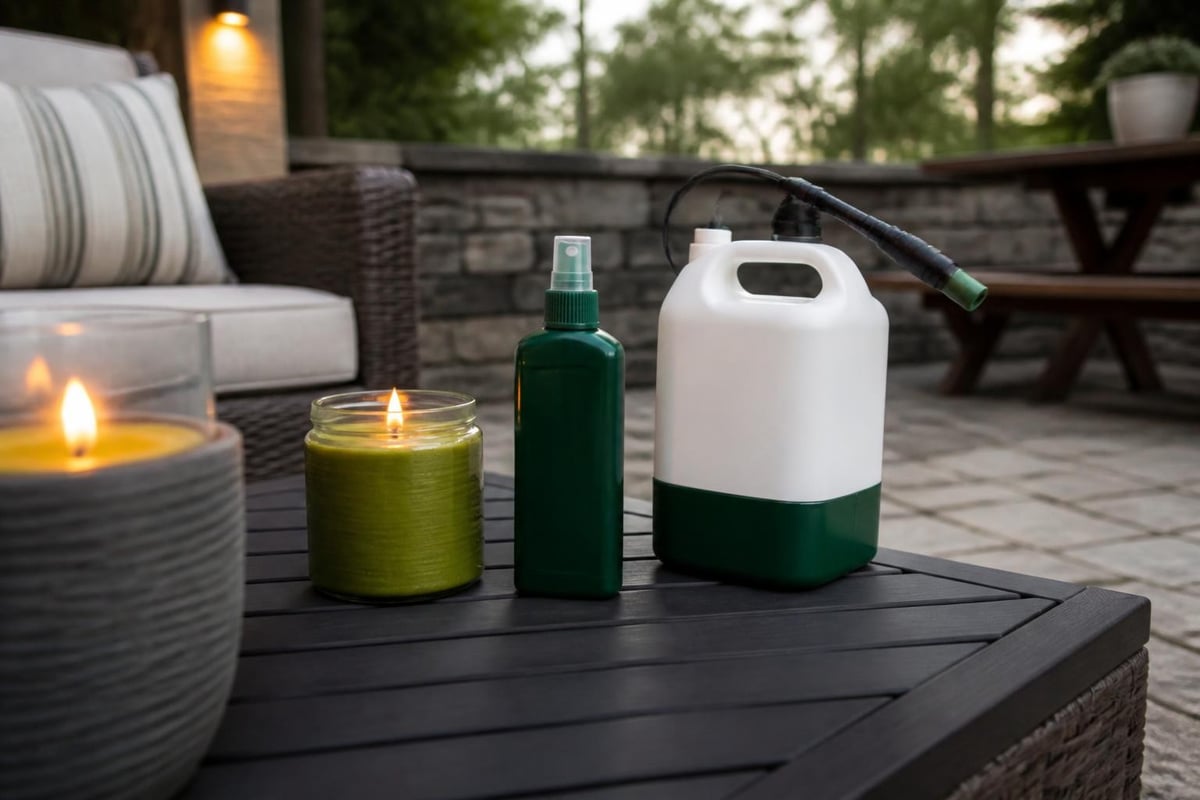
Citronella candles populate every patio store and garden center across Kansas, yet NC State Extension research demonstrates their protection radius extends only inches from the flame. The American Mosquito Control Association notes that most candles lack sufficient concentration of active ingredients to provide meaningful protection beyond creating ambiance.
For the Outdoor Sanctuary Host, citronella candles present additional problems:
- Visual clutter on a beautifully set table
- Flame hazards near children and pets
- Smoke drift that irritates dinner guests
- Ineffective coverage for spaces larger than 50 square feet
- Constant replacement and maintenance
Understanding Natural Mosquito Repellent Active Ingredients
The term "natural" has been stretched thin by marketing departments, making it essential to understand which plant-derived compounds actually demonstrate mosquito-repelling efficacy. The kansas best natural mosquito repellent formulations combine multiple essential oils to create overlapping protection zones.
Six Essential Oils That Deliver Results
Scientific literature supports several plant-based compounds for mosquito deterrence. A systematic review available through PubMed Central evaluates essential oils as bio-repellents and identifies the mechanisms by which they interfere with mosquito host-seeking behavior.
| Essential Oil | Primary Action | Duration | Concentration Needed |
|---|---|---|---|
| Geraniol | Scent-masking | 2-3 hours | 5-10% |
| Citronella | Olfactory disruption | 1-2 hours | 10-15% |
| Peppermint | Sensory confusion | 2-4 hours | 3-8% |
| Eugenol (Clove) | Repellent effect | 2-3 hours | 5-12% |
| Cornmint | Cooling deterrent | 2-3 hours | 4-9% |
| Rosemary | Scent barrier | 1-2 hours | 3-7% |
These oils work through scent-masking rather than toxicity. Mosquitoes hunt by detecting carbon dioxide and human scent from impressive distances. When essential oils saturate the air at ground level where people gather, mosquitoes lose the scent trail they follow to locate hosts.
Why Oil Combinations Outperform Single Ingredients
Kansas mosquito populations include multiple species with varying sensory preferences. K-State Research & Extension identifies common Kansas species including Aedes vexans, Culex pipiens, and Ochlerotatus trivittatus, each responding differently to specific scent profiles.
A multi-oil formula addresses this diversity by creating overlapping repellent zones. When geraniol effectiveness wanes after two hours, peppermint maintains the scent barrier. This redundancy extends protection windows and covers a broader range of mosquito species than any single essential oil can achieve alone.
Ground-Based vs. Skin-Applied Natural Repellents
The kansas best natural mosquito repellent conversation must distinguish between two fundamentally different approaches: products you apply to skin versus solutions that protect your space.
Limitations of Natural Sprays and Lotions
Oil of lemon eucalyptus (OLE) represents the most EPA-recognized plant-derived skin repellent. The EPA's product label for Mosi-Guard details application requirements: reapply every two hours, avoid eyes and mouth, use only on exposed skin. For a family of four spending four hours on the patio, that's eight separate applications minimum.
Practical Drawbacks:
- Sticky residue on skin and furniture
- Stains clothing and patio cushions
- Requires everyone to participate (guests, children, reluctant spouses)
- Frequent reapplication interrupts gatherings
- Pets lick treated skin, causing concerns
- Incompatible with swimwear and summer attire
Skin-applied natural repellents protect individuals, not spaces. The moment someone forgets to spray their ankle or steps away from the table, mosquitoes find exposed skin.
Space Protection Through Ground Application
An alternative approach applies biodegradable essential oil formulations directly to the ground where mosquitoes hunt. Because mosquitoes track scent at ground level, saturating that zone with masking scents disrupts their ability to locate targets.
This method offers distinct advantages for the suburban patio host:
- Nothing touches skin-no sticky application, no chemical contact
- Protects everyone in the space simultaneously, including pets and guests who haven't sprayed
- No visual intrusion on table settings or outdoor décor
- No flame, smoke, or active management during gatherings
- Coverage scales to space size rather than individual body surface area
Ground-based protection aligns with how mosquitoes actually hunt, intercepting them before they reach people rather than attempting to mask each individual's scent profile after they've already detected the group.

Kansas-Specific Mosquito Challenges and Solutions
Kansas geography creates unique mosquito pressure that influences which natural repellent strategies work best. The state's varied terrain-from Missouri River bottomlands to Flint Hills prairie-supports diverse mosquito populations with different behavior patterns.
Peak Season Timing in Kansas
The Kansas Department of Health & Environment tracks mosquito activity and West Nile virus incidence across the state. Kansas mosquito season typically runs from late April through October, with peak activity occurring June through September. Evening gatherings from 7 PM to 10 PM coincide with maximum mosquito hunting activity, precisely when families use their patios.
Temperature patterns in 2026 have extended the active season slightly, with warm April weather bringing earlier emergence and mild October evenings maintaining populations later into fall. This elongated season means Kansas homeowners need reliable protection across six full months rather than a brief summer window.
Habitat Reduction Remains Foundation
No repellent-natural or synthetic-compensates for breeding habitat on your property. K-State Extension emphasizes eliminating standing water as the primary defense. Kansas homeowners should weekly inspect:
- Gutters and downspout collection areas
- Birdbaths and pet water bowls
- Tire swings and wheelbarrows
- Flower pot saucers
- Children's toys left in yards
- Tarp creases and grill covers
A female mosquito can lay 100 eggs in a bottle cap of water. After addressing breeding sites, the kansas best natural mosquito repellent products provide the second defense layer, protecting gathering spaces during active use.
Evaluating Product Format: What Works for Kansas Patios
Natural mosquito repellent delivery systems vary widely in effectiveness, convenience, and aesthetic impact. Understanding format differences helps Kansas homeowners select solutions that actually protect their outdoor spaces.
Format Comparison
| Format | Coverage Area | Duration | Setup Time | Visual Impact | Reapplication |
|---|---|---|---|---|---|
| Citronella candles | 5-10 sq ft | 3-4 hours | 2 minutes | High (flame, smoke) | Replace candle |
| Spray (natural) | Per person | 1-2 hours | 5 min/person | None (on skin) | Every 1-2 hours |
| Plug-in devices | 15-20 sq ft | Continuous | 5 minutes | Medium (cord, unit) | Monthly refills |
| Ground granules | 300-1,000 sq ft | 24-48 hours | 2 minutes | Minimal | Every 2-3 days |
| Coils | 10-15 sq ft | 2-3 hours | 3 minutes | High (smoke) | Replace coil |
| Misting systems | 1,000+ sq ft | Continuous | Professional | High (nozzles) | Weekly refills |
The outdoor sanctuary aesthetic demands solutions that disappear. Visible deterrent devices-whether smoking coils, flickering candles, or wall-mounted misters-contradict the design intention of creating a seamless indoor-outdoor living space.
The Ground Granule Advantage
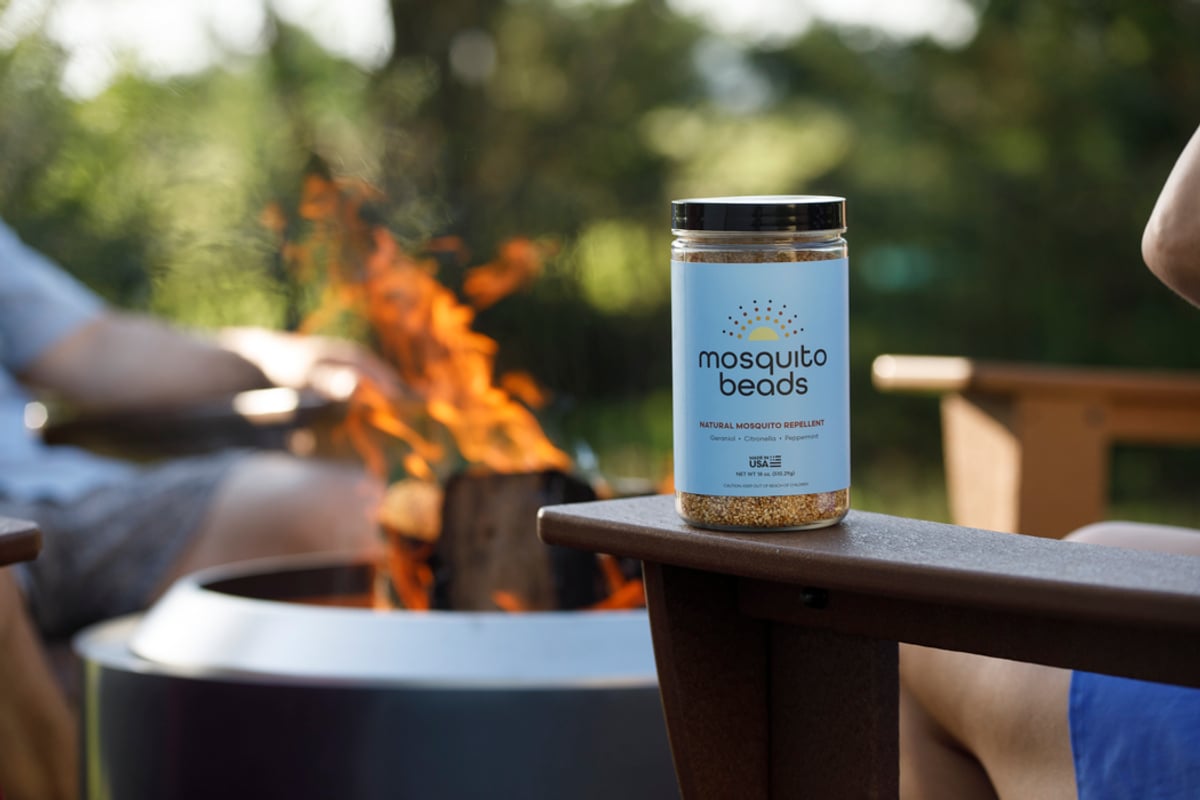
Biodegradable essential oil granules represent a recent innovation in natural mosquito control for outdoor spaces. Pour them on the ground around seating areas, and the corn-based beads release essential oil vapors at ground level where mosquitoes hunt.
For Kansas patios averaging 200 to 800 square feet, this format offers practical benefits:
- Coverage matches space size: Pour around the perimeter and beneath tables where people sit
- Nothing on guests: No awkward requests to spray down before dinner
- Pet-safe when used as directed: Biodegradable formulation poses minimal risk to dogs and cats in the space
- Aesthetic invisibility: Beads blend into mulch, gravel, or grass and require no flames or devices
- Multi-day protection: Peak performance spans days 1 and 2, reducing constant reapplication
This approach addresses the core frustration of suburban hosts: protecting the entire gathering space without compromising design, asking guests to participate in chemical applications, or managing flames and smoke during events.
Many families seeking the kansas best natural mosquito repellent discover that Mosquito Beads provide the scent-masking protection they need. These biodegradable granules contain six essential oils-geraniol, citronella, peppermint, eugenol, cornmint, and rosemary-that create a scent barrier at ground level. Simply pour the beads where people gather, and they mask human scent so mosquitoes drift past rather than landing. The Signature 18 oz jar covers up to 1,000 square feet, perfect for most Kansas patios.
Application Strategies for Maximum Protection
Even the kansas best natural mosquito repellent products deliver disappointing results when applied incorrectly. Kansas homeowners achieve optimal protection by understanding application patterns, timing, and coverage zones.
Strategic Placement Principles
Mosquitoes approach gathering spaces from predictable directions. They emerge from shaded vegetation, standing water sources, and cool ground-level areas. Observe your yard during peak mosquito hours (7-9 PM) to identify approach vectors.
High-Priority Application Zones:
- Perimeter of seating areas – Create a 3-4 foot barrier around tables, chairs, and loungers
- Entry points to patio – Gate openings, gaps in fencing, transitions from grass to hardscape
- Beneath furniture – Under tables and chairs where people's legs and feet sit
- Alongside vegetation edges – Where lawn meets shrub beds or fence lines
- Near ground-level water features – Fountains, ponds, or decorative water elements
For a typical 400-square-foot Kansas patio with seating for eight, concentrate application at the perimeter and beneath the main gathering table. This creates a scent-masking zone that intercepts mosquitoes before they reach seated guests.
Timing Applications for Kansas Weather
Kansas weather patterns influence natural repellent performance. Rain, wind, and extreme heat all affect essential oil volatility and persistence.
Optimal Application Schedule:
- Apply 30-60 minutes before guests arrive to allow essential oils to saturate the air at ground level
- Reapply after rain events or heavy irrigation
- In temperatures above 90°F, expect faster evaporation and slightly reduced duration
- Evening applications (5-6 PM) protect peak mosquito activity hours (7-10 PM)
- Wind above 10 mph disperses scent barriers-consider windbreak adjustments or increased application density
Monitor Kansas weather forecasts and plan applications accordingly. A Saturday evening gathering with calm conditions and temperatures in the low 80s represents ideal circumstances for natural repellent performance.
Combining Natural Methods for Layered Protection
The kansas best natural mosquito repellent strategy often combines multiple approaches rather than relying on a single method. This layered defense acknowledges that no natural product achieves 100% efficacy under all conditions.
The Three-Layer Defense
Layer One: Habitat Management
Before applying any repellent, eliminate breeding sites and reduce mosquito populations on your property. This foundational step decreases overall mosquito pressure, making repellents more effective.
Layer Two: Space Protection
Apply ground-based essential oil formulations to create scent-masking zones in primary gathering areas. This protects everyone simultaneously without individual participation.
Layer Three: Personal Options
For guests with extreme sensitivity to bites or during peak swarm conditions, offer supplemental personal protection-natural sprays, fans creating airflow, or light-colored long sleeves that reduce mosquito attraction.
This progression from habitat control to space protection to personal choice gives hosts control while respecting guests' autonomy. Most Kansas suburban gatherings function effectively with layers one and two, reserving personal repellents for exceptionally challenging conditions.
Enhancing Natural Repellents with Environmental Controls
Mosquitoes are weak fliers. A 10 mph breeze grounds them. Ceiling fans, oscillating floor fans, or strategically placed box fans create air movement that both disperses carbon dioxide signatures and physically prevents mosquitoes from reaching targets.
Combining essential oil ground protection with deliberate airflow multiplies effectiveness. The essential oils mask scent at ground level while fans disperse both mosquitoes and the carbon dioxide plume that attracts them. Understanding how mosquitoes detect CO2 from 30 feet away explains why this combination works: you're attacking both major hunting mechanisms simultaneously.
Addressing Common Natural Repellent Misconceptions
Kansas homeowners shopping for the kansas best natural mosquito repellent encounter significant misinformation. Clarifying these misconceptions prevents disappointment and wasted investment.
Myth: Natural Means Completely Safe in Unlimited Quantities
Essential oils are potent compounds. While generally recognized as safe when used as directed, concentrated essential oils can irritate skin, trigger allergies, or harm pets if ingested in large quantities. "Natural" and "non-toxic" are not synonyms for "consequence-free."
Follow product directions carefully. Ground-based biodegradable formulations minimize exposure risks by avoiding skin contact entirely, but concentrated essential oil bottles should still be stored away from children and pets.
Myth: Planting Citronella or Lavender Eliminates Mosquitoes
Garden centers promote "mosquito-repelling plants" including citronella grass, lavender, marigolds, and catnip. While these plants contain compounds with repellent properties, the concentrations released by intact living plants are insufficient to protect surrounding spaces.
The American Mosquito Control Association notes that crushing the leaves to release oils provides temporary localized effect, but simply having the plants in your landscape does not create a protective barrier. Enjoy them for aesthetics, not mosquito control.
Myth: Natural Repellents Work as Long as Synthetic DEET
DEET products can provide 6-8 hours of protection per application because DEET molecules bond to skin and volatilize slowly. Natural essential oils typically deliver 1-3 hours of protection when applied to skin due to faster evaporation rates.
This disparity matters less for ground-based applications where you're saturating an area rather than relying on a thin film on skin. Concentrated essential oil formulations poured on the ground continue releasing scent for days, whereas skin-applied natural sprays require hourly reapplication. The method matters more than the active ingredient alone when evaluating duration.
Myth: All Natural Repellents Smell Pleasant
Essential oils possess strong, distinct aromas. While many people enjoy the scent of peppermint or rosemary, others find concentrated citronella overwhelming. Product formulations attempt to balance efficacy (requires sufficient concentration to affect mosquitoes) with user experience (tolerable scent profile).
Test small quantities before committing to large-scale application for events. What smells pleasant in a store sample may become intense when covering 500 square feet of patio space. The kansas best natural mosquito repellent for your family depends partly on scent preferences as well as protection performance.
Pet Considerations for Kansas Outdoor Spaces
Kansas families treating their patios as outdoor rooms frequently share those spaces with dogs and cats. Pet safety influences natural repellent product selection significantly.
Essential Oil Toxicity in Pets
Cats lack certain liver enzymes that metabolize essential oils, making them more vulnerable to toxicity than dogs or humans. Concentrated tea tree oil, pennyroyal, and wintergreen pose particular risks. Dogs tolerate most essential oils better but can still experience reactions from concentrated exposure.
Pet-safe mosquito repellent strategies focus on diluted formulations applied to spaces rather than directly on pet fur. Ground-based biodegradable products used as directed allow essential oils to volatilize into the air, minimizing direct contact with pets while still providing scent-masking protection.
Safe Practices:
- Never apply concentrated essential oils directly to pet fur or skin
- Use ground-based formulations that pets won't lick or ingest
- Ensure adequate ventilation-outdoor application naturally disperses vapors
- Monitor pets for signs of distress (excessive drooling, vomiting, lethargy) when introducing new products
- Consult your veterinarian if your pet has known sensitivities
Most Kansas families successfully protect outdoor spaces with natural repellents while maintaining pet safety by choosing formulations designed for area application rather than topical use on animals.
Creating Pet-Friendly Mosquito Zones
Dogs and cats suffer mosquito bites, particularly on ears, noses, and bellies with thin fur coverage. Heartworm, transmitted by mosquitoes, represents a serious health threat to dogs across Kansas.
Protecting the patio space where pets spend time benefits them as well as human family members. Ground-based scent-masking creates a zone where mosquitoes struggle to locate any targets-human or canine. Combined with veterinarian-recommended heartworm prevention medication, this layered approach provides comprehensive protection for pets who share your outdoor sanctuary.
Cost Analysis: Natural Repellent Investment for Kansas Homeowners
Budget-conscious Kansas families evaluate the kansas best natural mosquito repellent options by calculating cost per protected evening, not just initial product price. This perspective reveals surprising value differences.
Seasonal Cost Comparison
Assume a family uses their patio three times per week from May through September-approximately 60 evenings per season. Each gathering runs 3-4 hours during peak mosquito activity.
| Method | Initial Cost | Refills/Season | Total Season Cost | Cost per Evening |
|---|---|---|---|---|
| Citronella candles (3) | $24 | $96 (replacements) | $120 | $2.00 |
| Natural spray (family of 4) | $18 | $72 (bottles) | $90 | $1.50 |
| Ground granules (18 oz) | $28 | $84 (refills) | $112 | $1.87 |
| Professional service | $400 | $800 (monthly) | $1,200 | $20.00 |
| Plug-in device | $45 | $180 (refills) | $225 | $3.75 |
These calculations assume typical Kansas usage patterns and mid-range product pricing. Comparing costs between natural repellents and professional services reveals that over-the-counter natural solutions deliver protection at a fraction of professional treatment costs.
Hidden Costs to Consider
Beyond product purchase prices, factor in time investment, convenience penalties, and replacement of damaged goods:
- Spray methods: Time spent applying to family members (15 minutes per gathering × 60 evenings = 15 hours per season)
- Candles: Replacement of wax-damaged furniture, tablecloths stained by drips
- Professional services: Requirement to keep pets and children inside during application and dry time
- Failed methods: Money spent on ineffective solutions before finding what works
The kansas best natural mosquito repellent for your household balances upfront cost, ongoing expense, time investment, and actual protection delivered. A slightly more expensive product that works reliably costs less than repeatedly purchasing cheaper options that fail.
Making Your Selection: Questions to Ask
Kansas homeowners ready to invest in natural mosquito protection should evaluate products systematically. Ask these questions before purchasing:
Coverage and Application:
- How many square feet does one application protect?
- What's the recommended application frequency?
- Does the method protect the space or just individuals?
- Can I apply it once and protect guests who arrive later?
Ingredients and Safety:
- Which specific essential oils does it contain and at what concentrations?
- Is it safe for use around pets when applied as directed?
- Does it require skin contact or can I protect my space without touching anyone?
- Are there EPA registration numbers or third-party testing results?
Practical Considerations:
- Does it create visual clutter on my patio?
- Does it produce smoke, flame, or require electricity?
- How does Kansas weather (rain, heat, wind) affect performance?
- What's the realistic cost per protected evening?
These questions help distinguish between marketing claims and actual functional value. The kansas best natural mosquito repellent products answer these questions with specificity and documentation rather than vague promises.
Beyond the Product: Creating Your Mosquito-Free Kansas Sanctuary
Selecting the kansas best natural mosquito repellent represents one component of reclaiming your outdoor space. Kansas homeowners who successfully transform their patios into mosquito-free sanctuaries address multiple factors simultaneously.
Design Decisions That Reduce Mosquito Pressure
Landscape and hardscape choices influence mosquito populations before you ever apply repellent. Kansas climate supports both mosquito breeding and the plants that harbor them. Strategic design modifications reduce baseline mosquito pressure:
- Replace dense ground covers with gravel or hardscape in seating areas
- Trim shrubs to eliminate shaded resting spots near the patio
- Install drainage that prevents standing water in low spots
- Choose container plantings over in-ground beds near seating (easier to manage water accumulation)
- Position outdoor furniture away from vegetation edges where mosquitoes emerge at dusk
These permanent landscape interventions compound the effectiveness of temporary repellent applications. Less mosquito habitat means fewer mosquitoes attempting to breach your scent-masking barrier.
Timing Your Outdoor Activities Strategically
Kansas mosquitoes follow predictable activity patterns. Peak hunting occurs during the two hours surrounding dusk and again at dawn. Mosquitoes largely disappear during midday heat and late-night cool.
While you can't always schedule gatherings around mosquito behavior, understanding these patterns helps you prepare:
- Afternoon gatherings (2-5 PM): Minimal mosquito activity; light protection sufficient
- Sunset dinners (6-9 PM): Peak mosquito hours; maximum protection required
- Late evening (10 PM+): Activity declines as temperatures drop below 60°F
Apply your natural repellent solutions 30-60 minutes before peak activity begins. This timing allows essential oils to saturate the air at ground level before mosquitoes emerge in force.
Managing Expectations Realistically
No natural mosquito repellent-or synthetic one, for that matter-delivers perfect results under all conditions. The kansas best natural mosquito repellent products reduce bites by 70-90% under typical conditions, not 100%. That reduction transforms outdoor gatherings from miserable to enjoyable.
Some mosquitoes will penetrate any defense. Setting realistic expectations prevents disappointment and helps you evaluate whether a product works. Compare "unbearable swarms" to "occasional lone mosquito" rather than expecting zero mosquitoes ever. Natural products excel at reducing mosquito pressure to tolerable levels while avoiding chemical exposure, not at creating hermetically sealed bubbles.
Kansas homeowners deserve outdoor spaces they can actually use without coating themselves in chemicals or watching guests suffer. The kansas best natural mosquito repellent solutions combine essential oils in biodegradable formulations that mask human scent at ground level, intercepting mosquitoes before they reach your gathering. Mosquito Beads delivers this scent-masking protection through corn-based granules infused with geraniol, citronella, peppermint, eugenol, cornmint, and rosemary-pour them where you sit, and they create a barrier that lets mosquitoes drift past instead of landing. Nothing on your skin, no spray needed, just your patio space protected the way you've been trying to make it feel: like an actual outdoor room you control.