

Essential Oils and Mosquito Repellent: Natural Protection
When mosquitoes turn your patio into their hunting ground, you face a choice: reach for synthetic chemicals or explore natural alternatives. The conversation around essential oils and mosquito repellent has grown as families seek options that protect without compromising safety or comfort. Essential oils offer a plant-based approach to mosquito defense, but understanding how they work, which ones deliver results, and how to use them effectively makes all the difference between frustration and genuine protection.
Understanding How Mosquitoes Hunt and Why Scent Matters
Mosquitoes are scent-tracking machines. They detect carbon dioxide from 30 feet away and follow a complex chemical trail that includes lactic acid, ammonia, and other compounds in human sweat. Female mosquitoes rely on this scent signature to locate blood meals, which they need for egg production.
Essential oils and mosquito repellent strategies work by disrupting this scent-tracking process. When strong aromatic compounds fill the air or saturate a space, they either mask human scent or overwhelm the mosquito's sensory receptors. The insect drifts past because it cannot lock onto the chemical signals it normally follows.
The Science Behind Essential Oil Repellency
Research published on PubMed demonstrates that several plant essential oils show measurable repellent activity against mosquito species including Aedes aegypti. The active compounds in these oils interfere with mosquito olfactory receptors, reducing their ability to detect and orient toward human hosts.
Key factors determine effectiveness:
- Volatility: how quickly the oil evaporates and disperses
- Concentration: the percentage of active compounds in the formulation
- Application method: whether applied to skin, clothing, or the surrounding environment
- Duration: how long protection lasts before reapplication is needed
Unlike DEET or picaridin, which create a vapor barrier on skin, essential oils typically offer shorter protection windows. According to the University of Wisconsin–Madison's mosquito ecology program, most essential oil formulations provide between 30 minutes and two hours of protection when applied topically.

Which Essential Oils Show Repellent Properties
Not all essential oils repel mosquitoes equally. Scientific testing has identified specific oils with documented effectiveness, though protection duration varies significantly.
Top-Performing Essential Oils
| Essential Oil | Primary Active Compound | Typical Protection Time | Notes |
|---|---|---|---|
| Geraniol | Geraniol | 2-4 hours | Effective against multiple mosquito species |
| Citronella | Citronellal, geraniol | 30-90 minutes | Most studied, variable results |
| Lemon Eucalyptus (OLE) | PMD (p-menthane-3,8-diol) | 4-6 hours | EPA-registered, comparable to low-concentration DEET |
| Peppermint | Menthol, menthone | 1-2 hours | Strong scent, moderate duration |
| Rosemary | 1,8-cineole, camphor | 1-2 hours | Often used in blends |
| Eugenol (clove) | Eugenol | 2-3 hours | Potent but can irritate skin |
Lemon eucalyptus oil stands apart. The EPA recognizes oil of lemon eucalyptus (OLE) as the only plant-based repellent with efficacy comparable to synthetic options when formulated correctly. The active compound PMD provides protection lasting several hours, making it a legitimate alternative for those avoiding DEET.
Synergistic Blends and Enhanced Formulations
Single oils rarely perform as well as carefully formulated blends. A systematic review in PubMed Central notes that combining multiple essential oils can extend protection and broaden spectrum coverage against different mosquito species.
Effective blends typically include:
- A primary repellent (geraniol, citronella, or OLE)
- Supporting oils that enhance duration (peppermint, rosemary)
- Fixatives that slow evaporation (cedarwood, vanilla)
The goal is creating a scent profile that mosquitoes avoid while maintaining pleasant aromatics for humans. This balance explains why organic bug repellent formulations often contain four to six different essential oils rather than relying on a single ingredient.
Application Methods: Beyond Sticky Sprays
The traditional approach to essential oils and mosquito repellent involves topical application. You spray or rub the oil directly on exposed skin, creating a personal barrier. This method has significant limitations that matter especially when protecting shared outdoor spaces.
Why Topical Application Falls Short
Skin-applied essential oils face several challenges:
- Rapid evaporation: protection drops dramatically after the first hour
- Reapplication burden: you must spray every 30-90 minutes
- Oily residue: leaves skin feeling greasy and uncomfortable
- Guest friction: you cannot reasonably ask visitors to coat themselves before sitting on your patio
- Pet concerns: oils that are safe for humans may be toxic to cats and dogs if they lick treated skin
For the person hosting an evening gathering, these drawbacks create real problems. You want everyone comfortable, not managing sticky reapplication schedules or worrying about residue on furniture.
Environmental Application Strategies
Shifting focus from individual protection to space protection changes the equation. When you treat the environment rather than people, you eliminate skin contact while potentially extending protection duration.
Ground-based application methods include:
- Granular carriers: biodegradable beads or pellets infused with essential oil blends
- Perimeter treatments: concentrating oils along boundaries where mosquitoes enter
- Elevated diffusion: placing oil-saturated materials at strategic locations
- Timed-release systems: formulations designed to slowly release compounds over days
These approaches create scent zones that mask human presence from mosquitoes hunting at ground level. Because the oils remain in the space rather than on skin, they deliver consistent coverage for everyone in the area without individual application.
For families who consider their patio an extension of their living room, this shift from personal to spatial protection aligns with how they actually use outdoor spaces. You are not asking guests to spray down before dinner. You are preparing the environment in advance, the same way you would light the space or arrange seating.

Comparing Natural and Synthetic Repellents
The choice between essential oils and mosquito repellent containing DEET or picaridin involves tradeoffs in efficacy, duration, safety profile, and user experience.
Performance and Duration
| Repellent Type | Active Ingredient | Protection Duration | Reapplication Frequency |
|---|---|---|---|
| DEET spray | N,N-diethyl-meta-toluamide | 4-8 hours | Every 4-8 hours |
| Picaridin spray | Icaridin | 3-8 hours | Every 3-8 hours |
| OLE/PMD spray | p-menthane-3,8-diol | 4-6 hours | Every 4-6 hours |
| Other essential oil sprays | Various | 0.5-2 hours | Every 30-90 minutes |
| Ground-based essential oil systems | Blended oils in carriers | 24-48 hours peak | Every 1-2 days |
DEET remains the gold standard for personal protection in high-risk environments. Penn State Extension's repellent guide confirms that DEET formulations provide the longest single-application protection, making them appropriate for hiking, camping in mosquito-heavy regions, or travel to areas with disease transmission.
However, many suburban families find DEET's drawbacks significant:
- Chemical exposure concerns: especially for children and pregnant women
- Fabric damage: DEET dissolves certain plastics and synthetic fibers
- Unpleasant feel: sticky, oily texture that transfers to furniture
- Smell: strong chemical odor that persists
Essential oils and mosquito repellent alternatives address these concerns while accepting shorter protection windows in exchange for a more pleasant experience.
Safety and Toxicity Considerations
The WHO's guidance on vector control products emphasizes that safety profiles vary significantly among both synthetic and natural repellents. DEET has decades of safety data supporting its use, though it can cause skin irritation in some users and requires caution around children under two months old.
Essential oils present a different safety profile. Most are generally recognized as safe when used properly, but they can trigger allergic reactions or skin sensitivity. The University of Arizona's fact sheet on mosquito repellents notes that undiluted essential oils should never be applied directly to skin, and some oils (particularly pennyroyal and camphor) carry toxicity risks.
For households with pets, the safety equation shifts further. Cats are particularly vulnerable to essential oil toxicity because they lack certain liver enzymes needed to metabolize terpenes. Dogs tolerate most oils better but can still react to concentrated exposures.
Ground-applied systems that keep oils off skin and fur reduce these risks substantially while maintaining mosquito protection in the space.
Making Essential Oils Work in Real-World Settings
Theory meets reality when you step onto your patio with guests arriving in 20 minutes and mosquitoes already circling. Effective use of essential oils and mosquito repellent requires matching the method to the situation.
Spatial Protection for Outdoor Living Areas
The outdoor sanctuary host faces a specific challenge: protecting a defined space where multiple people gather for extended periods. This is not a backpacking trip where everyone carries their own spray. It is a dinner party, a family game night, or a quiet evening reading on the patio.
Spatial protection strategies that work in these settings:
- Perimeter establishment: creating a scent boundary along the edges of your patio or deck
- Concentrated coverage near seating: focusing protection where people actually sit
- Layered defense: combining ground treatment with subtle overhead diffusion
- Advance preparation: treating the space 30-60 minutes before guests arrive
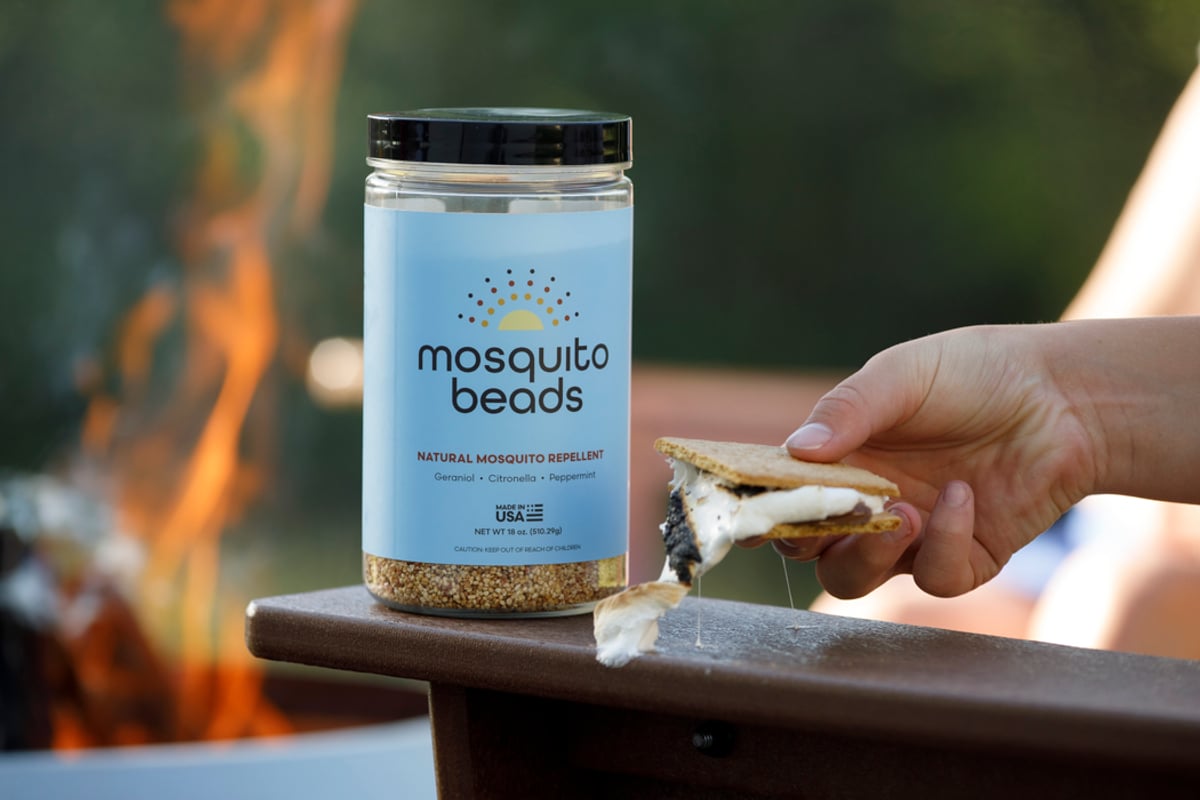
One effective approach uses biodegradable granules infused with a blend of six essential oils including geraniol, citronella, peppermint, eugenol, cornmint, and rosemary. You pour these beads on the ground around seating areas, creating a scent-masking zone at the level where mosquitoes hunt. The beads release their oil blend gradually, with peak performance during the first two days after application.
This method eliminates the need for sticky sprays while protecting everyone in the space. Mosquito Beads delivers this kind of ground-based protection, allowing you to prepare your patio without asking guests to coat themselves in oils or spray. The Signature 18 oz jar covers up to 1,000 square feet, enough for most standard patios and decks.
Combining Methods for Maximum Effect
No single approach works perfectly in every situation. Smart mosquito management often combines essential oils and mosquito repellent methods with other proven strategies:
- Eliminate standing water: remove mosquito breeding sites within 100 feet
- Time outdoor activities: avoid peak feeding times at dawn and dusk when possible
- Use fans: create airflow that disrupts mosquito flight patterns
- Wear protective clothing: long sleeves and pants in light colors
- Layer protection methods: ground treatment plus personal spray for extended outdoor events
The environmentally friendly mosquito spray options available today allow you to build a customized defense that matches your tolerance for chemicals, application effort, and protection needs.
For a typical suburban patio evening, the combination of ground-applied essential oil beads plus good breeding site management handles the majority of mosquito pressure without anyone touching a spray bottle.
Duration, Reapplication, and Realistic Expectations
One of the biggest gaps between marketing claims and user experience centers on how long essential oils and mosquito repellent actually protect.
Understanding Protection Windows
Essential oils evaporate. This is both their strength and their limitation. The aromatic compounds that repel mosquitoes are volatile by nature, which means they disperse into the air quickly. When applied to skin, this volatility translates to rapid diminishing returns.
Realistic protection timelines:
- Topical essential oil sprays: 30 to 90 minutes before noticeable decline
- Oil of lemon eucalyptus (OLE): 4 to 6 hours, comparable to low-concentration DEET
- Ground-applied granular systems: 24 to 48 hours peak performance, with declining effectiveness over days 3-5
- Candles and diffusers: effective within a 3-5 foot radius while burning
Setting appropriate expectations prevents disappointment. If you choose a topical essential oil spray for mosquito repellent for outside activities, plan to reapply every hour. If you use a ground-based system, understand that peak protection runs during the first two days, with gradual decline afterward.
Factors That Reduce Effectiveness
Several variables impact how well essential oils perform:
- Temperature and humidity: high heat accelerates evaporation
- Wind: disperses oils away from the protected area
- Rain: washes away ground-applied treatments
- Mosquito pressure: heavy infestations overwhelm weaker repellents
- Application thoroughness: missed spots become entry points
The Cochrane review on topical insect repellents emphasizes that even the most effective repellents provide incomplete protection. They reduce bites significantly but do not eliminate them entirely. Combining repellent use with other protective measures remains the most reliable approach.
Design-Conscious Protection for the Modern Patio
The outdoor sanctuary host values aesthetics as much as function. You have invested in beautiful furniture, thoughtful lighting, and a cohesive design scheme. The last thing you want is visible clutter or chemical smells disrupting the ambiance.
Traditional mosquito control creates visual and sensory noise:
- Citronella candles: conspicuous, require open flame, produce smoke
- Tiki torches: large, require fuel, create safety concerns near children
- Plug-in devices: need electrical outlets, visible cords
- Spray bottles: must be stored somewhere, require active application
Essential oils and mosquito repellent systems designed for ground application disappear into the landscape. You pour granules along flower beds, under deck railings, or around the perimeter of your seating area. Guests never see them. There is no flame, no cord, no candle on the dinner table competing with your centerpiece.
This discretion matters when your patio is an extension of your home's interior design. Just as you would not tolerate a utilitarian spray bottle on your dining room sideboard, you do not want mosquito control that announces itself visually.
The same design consciousness applies to how solutions feel and smell. A sticky spray that leaves residue on hands and furniture does not belong in a carefully curated outdoor room. Neither does the sharp chemical smell of DEET or the acrid smoke of a citronella candle.
Well-formulated essential oil blends create a pleasant ambient scent similar to an outdoor candle but without the flame or smoke. You might catch hints of mint, rosemary, or citrus as you relax, but it reads as intentional aromatherapy rather than mosquito defense.
For homeowners who care about refillable tissue boxes because they refuse to have cardboard clutter on their console table, this attention to design and user experience extends to every element of home management, including mosquito control.
Pet Safety and Family-Friendly Considerations
Families with pets and young children evaluate essential oils and mosquito repellent through a different lens. Safety takes priority over convenience, and direct skin contact raises concerns that do not apply to adult-only households.
Essential Oil Toxicity in Pets
Cats and essential oils do not mix safely. Feline livers lack glucuronyl transferase, an enzyme needed to metabolize many plant compounds. Oils that are harmless to humans can build up to toxic levels in cats, causing liver damage, respiratory distress, or neurological symptoms.
High-risk oils for cats include:
- Tea tree (melaleuca)
- Pennyroyal
- Wintergreen
- Pine
- Citrus oils in high concentration
Dogs tolerate essential oils better but can still experience adverse reactions to concentrated exposures. Signs of toxicity include excessive drooling, vomiting, tremors, or difficulty walking.
The safest approach for pet households involves keeping essential oils away from direct contact with animals. Ground-applied systems that pets can walk past without ingesting or getting oils on their fur present minimal risk when used as directed. Topical sprays that you apply to your own skin and then pet your dog transfer oils directly to their coat, where they may lick them off during grooming.
Children and Safe Application
Children under three years old have more permeable skin and developing neurological systems that make them more vulnerable to adverse reactions. Most experts recommend avoiding essential oil application on infants under six months and using reduced concentrations for toddlers and young children.
For families who want to protect outdoor play areas where kids run barefoot and pets roam freely, environmental application methods make more sense than wearable repellents. A properly applied ground treatment creates protection without requiring direct contact with children or animals.
This aligns with how environmentally friendly bug repellent strategies prioritize minimal contact with people and pets while still delivering effective mosquito defense.
Cost Analysis: Natural Versus Professional Services
Budget-conscious homeowners often weigh DIY essential oils and mosquito repellent against professional mosquito control services or synthetic spray systems.
Comparative Costs
| Solution Type | Upfront Cost | Recurring Cost | Coverage Duration | Annual Cost Estimate |
|---|---|---|---|---|
| Professional barrier spray | $0 | $70-150/treatment | 3-4 weeks | $560-1,200 |
| Misting system installation | $1,500-3,500 | $20-40/month chemicals | Seasonal | $1,740-3,980 year one |
| DEET spray (personal) | $8-15/bottle | Replace monthly | Per application | $96-180 |
| Essential oil spray (personal) | $12-25/bottle | Replace bi-weekly | Per application | $156-325 |
| Ground-applied essential oil beads | $18-35/treatment | Reapply every 2 days | 48 hours peak | $180-350 |
Professional services deliver comprehensive protection but require ongoing investment and involve synthetic pesticides that many homeowners want to avoid. The comparison of natural repellents versus professional services shows that DIY natural methods cost significantly less while giving you control over what chemicals enter your environment.
Essential oil-based systems occupy the middle ground: more effective than basic citronella candles, less expensive than professional service, and avoiding the synthetic chemicals in barrier sprays.
Regional Considerations and Mosquito Species Variation
Not all mosquitoes respond identically to essential oils and mosquito repellent formulations. The species prevalent in your region affects which approaches work best.
Common U.S. Mosquito Species and Their Behaviors
Aedes aegypti and Aedes albopictus (Asian tiger mosquito):
- Active during daytime
- Aggressive biters
- Commonly found in the Southeast and expanding north
- Respond well to geraniol and citronella blends
Culex pipiens (common house mosquito):
- Active from dusk through dawn
- Primary West Nile virus vector
- Present nationwide
- Moderate response to most essential oils
Anopheles quadrimaculatus (malaria mosquito):
- Dusk and nighttime feeder
- Prefers areas near water
- Southeastern and midwestern states
- Responds to lemon eucalyptus and geraniol
Regional mosquito pressure varies dramatically. Gulf Coast and Southeast states face year-round mosquito seasons and multiple species. Northern states see intense but shorter seasons concentrated in summer months.
This geographic variation means a method that works perfectly in Minnesota might struggle in Florida without adjustment. Higher mosquito pressure requires more frequent reapplication, higher concentrations, or layered protection strategies.
Implementation Guide for Your Patio
Putting essential oils and mosquito repellent theory into practice requires a systematic approach tailored to your specific outdoor space.
Step-by-Step Protection Strategy
- Assess your space: measure square footage, identify seating areas, note nearby standing water
- Choose your method: select ground application, topical spray, or combination based on your needs
- Calculate coverage: determine how much product you need for adequate protection
- Apply in advance: treat your space 30-60 minutes before use for maximum effectiveness
- Monitor results: note which areas still see mosquito activity and adjust concentration
- Reapply on schedule: maintain protection with timely retreatment based on product duration
For a standard 15x20 foot patio (300 square feet), you would need approximately one 5 oz application of granular essential oil beads distributed around the perimeter and concentrated near seating areas. For larger entertaining spaces up to 1,000 square feet, an 18 oz jar provides full coverage.
Troubleshooting Common Issues
Problem: Mosquitoes still present despite treatment
- Solution: Increase concentration in high-activity zones, eliminate nearby breeding sites, add supplementary protection during peak feeding times
Problem: Essential oil scent too strong
- Solution: Reduce application density, focus on perimeter rather than saturating the entire space, choose milder oil blends
Problem: Protection fades quickly
- Solution: Reapply more frequently, switch to slower-release formulations, add fixative oils to extend duration
Problem: Uneven coverage with some areas unprotected
- Solution: Map your space and apply systematically, pay extra attention to entry points and transition zones, ensure adequate coverage near seating
The natural ways to combat mosquitoes that actually deliver results combine proper application technique with realistic expectations and consistent reapplication schedules.
The Future of Natural Mosquito Control
Innovation in essential oils and mosquito repellent continues as researchers identify new plant compounds and develop better delivery systems.
Emerging approaches include:
- Microencapsulation: coating essential oils in biodegradable polymers that release slowly over time
- Synergy mapping: identifying oil combinations that multiply rather than simply add protection
- Species-specific formulations: tailoring blends to target the mosquitoes prevalent in specific regions
- Smart dispensing: time-release and triggered-release systems that respond to temperature and humidity
- Bio-enhanced extraction: improving the concentration of active compounds in plant oils
These advances aim to close the efficacy gap between natural and synthetic repellents while maintaining the safety and user-experience advantages that make essential oils attractive.
For the homeowner who wants effective mosquito protection without compromising on safety, aesthetics, or environmental impact, the options continue to expand and improve.
Essential oils and mosquito repellent represent a viable alternative for families who refuse to choose between effective protection and chemical-free outdoor living. By understanding how these natural compounds work, which oils deliver results, and how to apply them strategically, you can reclaim your patio without reaching for DEET or tolerating sticky sprays. Mosquito Beads offers a simple solution: pour biodegradable granules infused with six essential oils on the ground where you gather, and let scent-masking do the work while you enjoy your outdoor sanctuary unbothered.