

Bug Repellent Balm: Natural Protection Explained
Bug repellent balm has become a staple in outdoor protection arsenals across America, offering a portable solution that combines essential oils with carrier bases to create a topical barrier against mosquitoes and other biting insects. These semi-solid formulations typically blend natural ingredients like citronella, geraniol, peppermint, and eucalyptus into a wax or butter base that can be rubbed onto exposed skin. For families seeking alternatives to synthetic chemicals, understanding how these balms work, what makes them effective, and when they excel versus other protection methods has never been more important.
Understanding Bug Repellent Balm Formulations
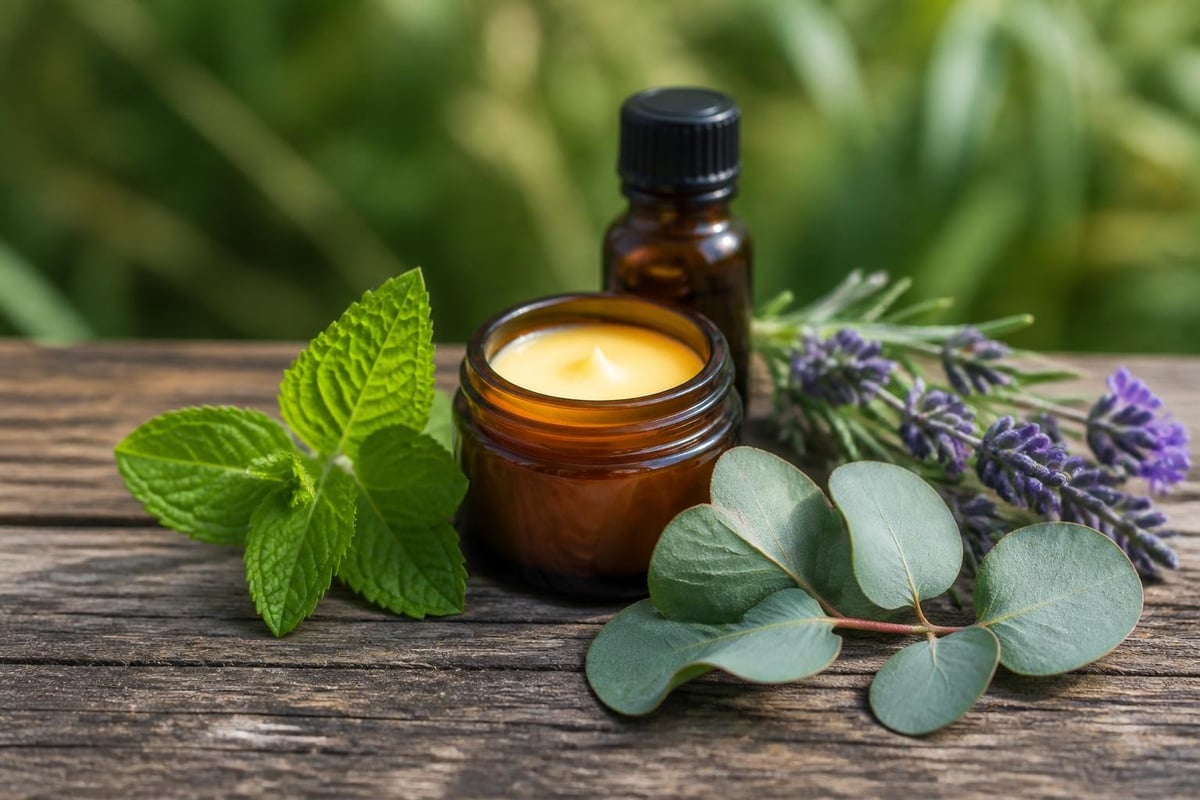
Bug repellent balm products rely on a carefully balanced recipe that keeps active essential oils stable while delivering them to the skin in a convenient format. The typical formulation includes three core components: active repellent compounds (usually essential oils), carrier oils that help spread and absorb the actives, and solidifying agents like beeswax, shea butter, or cocoa butter that give the product its balm texture.
Active Ingredients and Their Mechanisms
The repellent power in most balms comes from essential oils known to interfere with mosquito scent receptors. Research on essential oils as mosquito bio-repellents has documented the efficacy of various plant-derived compounds, though protection duration varies significantly by concentration and formulation.
Common essential oil actives include:
- Citronella oil (lasts 30-60 minutes in most balm formulations)
- Geraniol (offers variable protection depending on concentration)
- Peppermint oil (provides cooling sensation and moderate repellency)
- Eucalyptus citriodora (PMD/Citrepel, the most effective natural option)
- Lemongrass oil (short-duration protection, pleasant scent)
These compounds work by masking the carbon dioxide, lactic acid, and other chemical signatures that mosquitoes use to locate human hosts. Mosquitoes detect CO2 from remarkable distances, making scent disruption a key protection strategy.
Carrier Systems and Absorption
The base of a bug repellent balm determines how well active ingredients spread, how long they remain on skin, and whether they feel greasy or absorb cleanly. Coconut oil, jojoba oil, and sweet almond oil are popular carriers because they blend well with essential oils and offer some skin-conditioning benefits.
Beeswax typically makes up 10-20% of the formula, providing structure without making the product too stiff to apply. A 2022 formulation study in Scientific Reports examined how cream and balm bases affect the release rate and protection time of essential oil repellents, finding that thicker formulations extended duration slightly but reduced initial coverage.
| Component Type | Example Ingredients | Function in Balm |
|---|---|---|
| Active Repellents | Citronella, geraniol, PMD | Block mosquito scent receptors |
| Carrier Oils | Coconut, jojoba, almond | Dilute and spread actives |
| Solidifiers | Beeswax, shea butter | Create semi-solid texture |
| Optional Enhancers | Vitamin E, arnica | Extend shelf life, condition skin |
The texture matters more than many users realize. A balm that is too hard requires vigorous rubbing, which people often skip in practice. One that is too soft may melt in summer heat or require refrigeration.
Application Techniques and Coverage Challenges
Even the best-formulated bug repellent balm only protects the areas where it is applied, creating a fundamental coverage challenge that many users underestimate. Missing just a few square inches of exposed skin can provide mosquitoes with all the landing zone they need.
Proper Application Method
Step-by-step coverage for maximum protection:
- Warm a small amount between fingertips until it softens
- Apply to all exposed skin in a thin, even layer
- Pay special attention to ankles, wrists, and neck areas
- Reapply to pulse points where product wears off faster
- Avoid eyes, mouth, and any broken skin
The reapplication schedule presents the biggest practical hurdle. Most natural bug repellent balm formulations require reapplication every 60-90 minutes for continuous protection, according to laboratory testing methods. How arm-in-cage tests measure repellent performance reveals the gap between controlled laboratory conditions and real-world outdoor use, where sweating, clothing friction, and water exposure reduce effective protection time.
The Social Application Problem
Here is where theory meets reality: you have eight people at your patio table for dinner. Passing around a tin of balm and asking everyone to apply it creates awkward moments. Parents with young children face the additional challenge of thorough application on squirming kids. Pets wandering through the gathering space remain entirely unprotected, yet they share the same mosquito exposure.
The individual protection model means each person becomes responsible for their own coverage. Miss a spot, and you are the one swatting mosquitoes while everyone else enjoys conversation. This creates an uneven protection landscape across your outdoor space.
Comparing Protection Models: Personal Versus Spatial
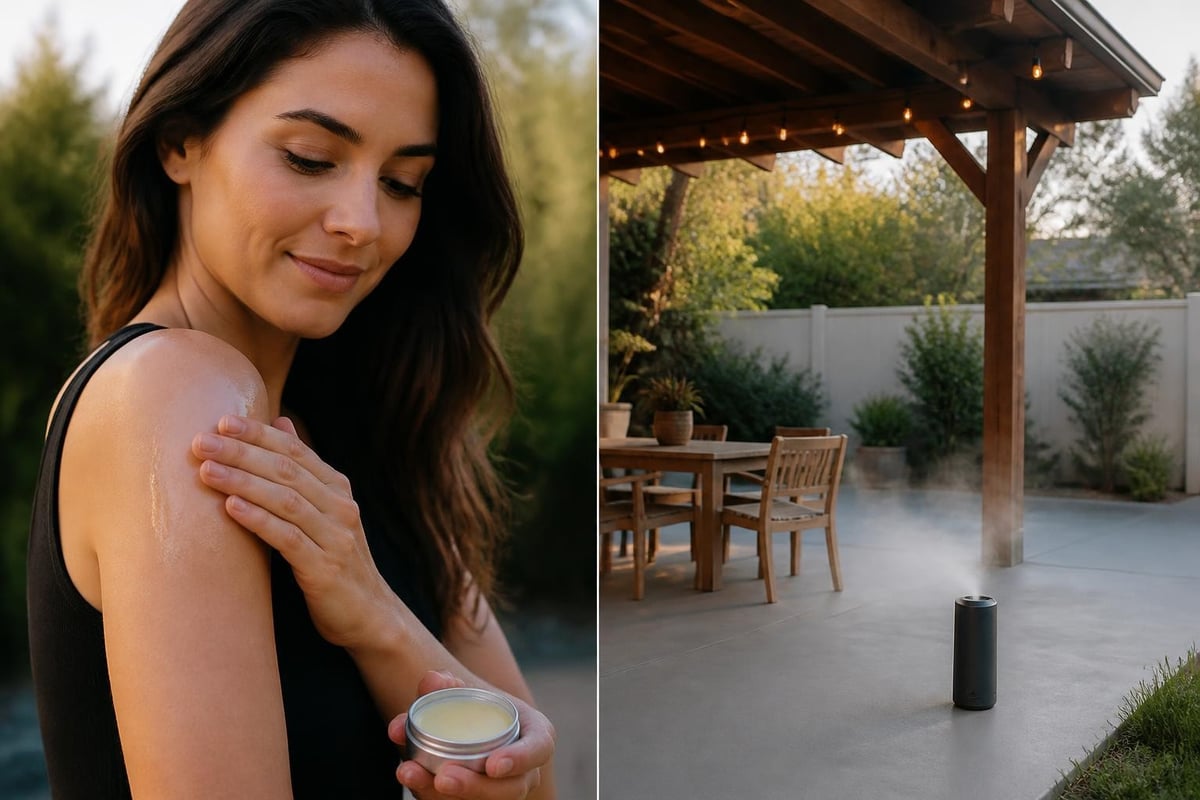
Bug repellent balm represents a personal protection strategy, where each individual creates their own chemical barrier. This contrasts sharply with spatial or area protection approaches that address the entire environment where people gather.
Personal protection (balms, sprays, lotions):
- Protects only the person who applies it
- Requires skin contact with active ingredients
- Needs frequent reapplication
- Creates application burden for hosts and guests
- Offers no protection to pets or non-users
Spatial protection (ground treatments, candles, diffusers):
- Protects everyone in the treated area
- No skin contact required
- Longer protection windows between applications
- Host controls the protection, guests relax
- Covers pets and children without additional steps
Understanding why mosquitoes target specific people helps explain why comprehensive spatial coverage often outperforms individual protection in group settings. When hosting on your patio, you want protection that works without asking guests to pause their evening and reapply products.
Chemical Concerns and DEET-Free Preferences
The shift toward natural bug repellent balm formulations reflects broader consumer concern about chemical exposure, particularly in family environments where children and pets share outdoor spaces. DEET safety data from the EPA confirms the compound's effectiveness and regulatory approval, yet many outdoor hosts prefer alternatives.
Why Families Avoid DEET
The aversion to DEET is not always about documented health risks. It is about choosing to minimize chemical load when alternatives exist. Suburban families who treat their patios as outdoor living rooms want the same level of control over their environment that they exercise indoors.
The tactile experience matters too. DEET-based sprays leave a greasy, sometimes sticky residue that feels unpleasant on skin. That sensation becomes a deal-breaker when you are trying to relax in comfortable outdoor furniture or when young children constantly touch their faces with treated hands.
EPA guidance on DEET-free claims provides regulatory context for how products can market themselves as alternatives, establishing clear standards for what "free from" language requires in terms of testing and documentation.
The Natural Essential Oil Alternative
Essential oil-based bug repellent balm formulations avoid synthetic pesticides entirely, relying instead on plant compounds with documented repellent properties. The best oil for insect repellent purposes varies by target insect and desired protection duration, but geraniol, citronella, and lemongrass consistently appear in effective natural formulations.
The trade-off is protection time. Where DEET can provide 4-6 hours of coverage in a single application, most natural balms require reapplication every 60-120 minutes. For a two-hour patio dinner, that means at least one mid-meal reapplication for reliable coverage.
Efficacy Testing and Performance Expectations
Understanding how bug repellent balm performance gets measured helps set realistic expectations for what these products can and cannot deliver. Laboratory testing uses standardized protocols that rarely match real-world outdoor conditions.
Standard Testing Protocols
The arm-in-cage test remains the gold standard for topical repellent assessment. Recent research examining arm-in-cage methodology demonstrates how this approach measures protection time: treated skin is exposed to hungry mosquitoes in a controlled cage, and researchers record how long before the first confirmed landing and probe attempt.
This method provides reproducible data but may overestimate or underestimate real-world performance depending on mosquito species, user activity level, ambient temperature, and humidity. A balm that tests well in an air-conditioned laboratory at 72 degrees may perform differently during an August evening in Houston when you are actively moving around your patio.
| Test Method | Strengths | Limitations |
|---|---|---|
| Arm-in-cage | Controlled, reproducible | Artificial setting, limited species |
| Field trials | Real-world conditions | Variable, hard to control |
| Landing rate | Measures deterrence | Does not capture annoyance |
| Protection time | Clear metric | Varies by individual factors |
WHO preferred product characteristics for vector control outline performance benchmarks for public health applications, though these focus primarily on malaria prevention in endemic regions rather than backyard mosquito nuisance in suburban America.
Real-World Performance Variables
Bug repellent balm efficacy in your backyard depends on factors that no laboratory test can fully capture. Mosquito density, species composition, temperature, humidity, wind, and individual skin chemistry all influence outcomes.
Someone who sweats heavily will see faster product degradation. A person wearing sandals and shorts exposes more skin area requiring coverage than someone in long sleeves and pants. Children who run, play, and touch everything redistribute balm unevenly across their skin within minutes of application.
Beyond Personal Application: Alternative Protection Strategies
While bug repellent balm serves an important role in personal protection during hiking, camping, or individual outdoor activities, hosting at home opens up additional strategic options that eliminate the need for repeated skin application entirely.
Ground-Based Scent Masking
Natural mosquito repellent solutions for patios increasingly focus on ground-level scent disruption rather than personal skin treatment. This approach recognizes that mosquitoes hunt from the ground up, following CO2 plumes and scent trails that pool near surfaces before rising.
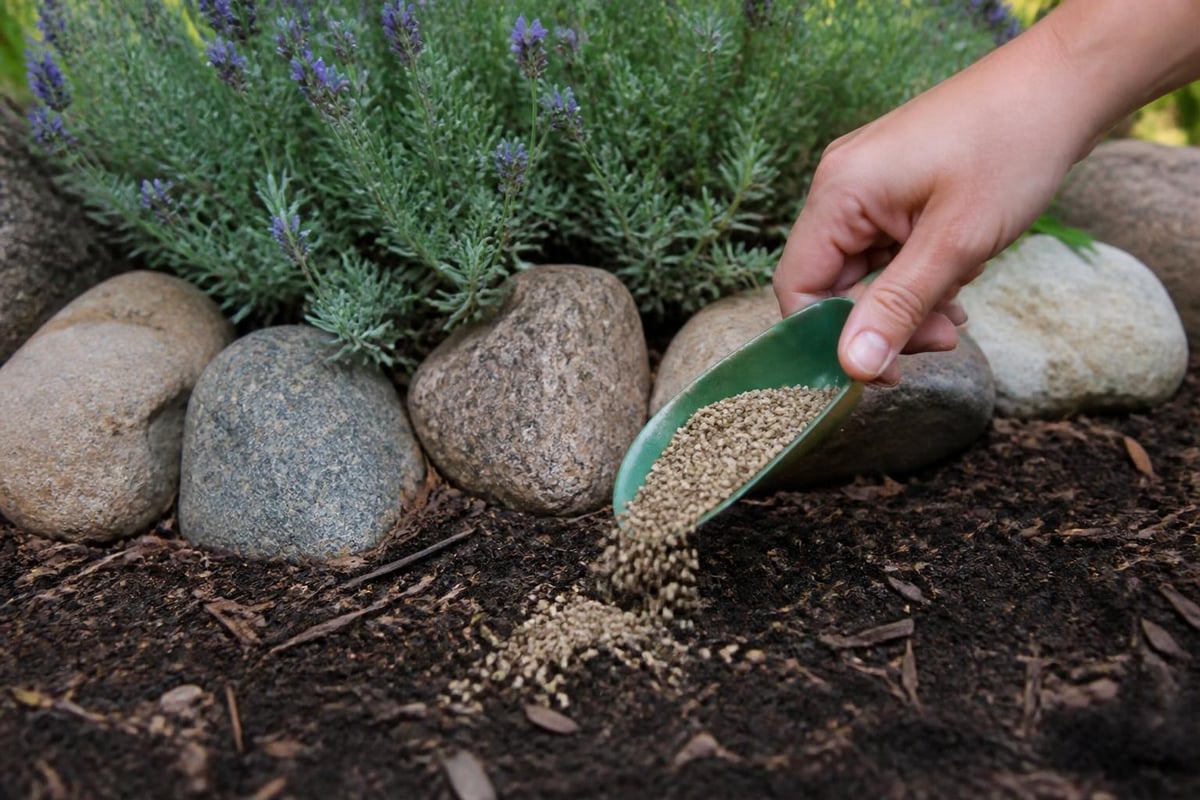
By creating a scent barrier at ground level using biodegradable granules infused with essential oils like geraniol, citronella, peppermint, and rosemary, you can mask the human scent markers mosquitoes track. Pour these formulations on the ground around seating areas, near planters, or along patio perimeters. Nothing touches skin, nothing requires reapplication during your gathering, and every person in the protected space benefits equally.
For suburban outdoor hosts who value both effectiveness and aesthetic discretion, this addresses a key frustration: how to actually enjoy your backyard without visible devices, smoking candles, or asking guests to spray themselves down before sitting.
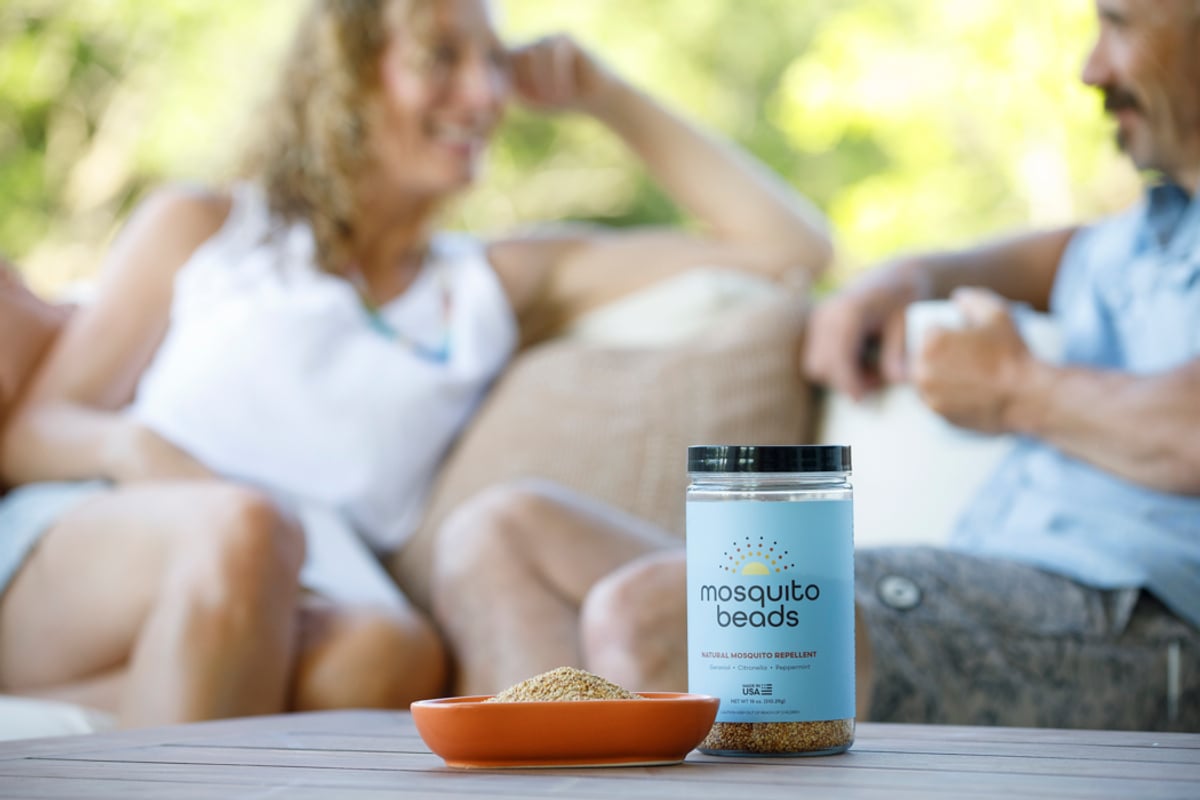
Mosquito Beads offer this ground-based approach: biodegradable corn granules infused with six essential oils that mask human scent at the level where mosquitoes hunt. Pour on the ground where people gather, and the space itself becomes protected without anyone needing to apply anything to their skin.
Complementary Strategies for Comprehensive Coverage
No single method provides perfect protection in all scenarios. Smart outdoor hosts layer multiple approaches based on the specific situation.
Scenario-based protection planning:
- Quiet patio dinner (8 adults, 2 hours): Ground scent-masking covers the entire space, no individual application needed
- Active backyard play (kids running around): Ground treatment for play area perimeter, balm on children's ankles and wrists as backup
- Camping or hiking: Bug repellent balm for personal protection since ground treatment is impractical
- Large gathering (20+ people): Ground treatment for main areas, balm available for individuals who prefer additional coverage
This layered thinking recognizes that different outdoor contexts call for different protection models. Natural ways to combat mosquitoes include habitat modification, strategic plant selection, eliminating standing water, timed outdoor activities, and both personal and spatial repellent use.
Storage, Shelf Life, and Practical Considerations
Bug repellent balm requires proper storage to maintain efficacy throughout its useful life. Essential oils are volatile compounds that degrade when exposed to heat, light, and oxygen, reducing repellent effectiveness over time.
Optimal Storage Conditions
Store balm products in cool, dark locations away from direct sunlight. A bathroom medicine cabinet or bedroom drawer works better than a garage shelf where summer temperatures can reach 120 degrees. High heat can cause the balm to melt, separating the wax base from the oils and creating an inconsistent product.
Shelf life indicators:
- Most commercial balms: 12-24 months when stored properly
- Homemade formulations: 6-12 months without preservatives
- Rancid carrier oils: off smell indicates degradation
- Separated ingredients: excessive heat damage
- Reduced effectiveness: old essential oils lose potency
Vitamin E oil added at 1-2% of total formulation can extend shelf life by reducing oxidation of carrier oils. Some manufacturers include rosemary oleoresin extract as a natural preservative, though this contributes a noticeable herbal scent.
Packaging and Portability
Bug repellent balm typically comes in small tins, twist-up tubes, or small jars, each with distinct advantages. Tins offer maximum portability and protection but require finger application. Twist-up tubes provide cleaner application without touching the product but can be difficult to use in cold weather when the balm firms up. Jars allow scooping with applicator tools but are more prone to contamination.
For families managing multiple outdoor activities across different settings, having appropriate sizes matters. A small 0.5-ounce tin fits in a pocket for hiking. A 2-ounce jar makes sense for a camping trip where multiple family members will share. Neither addresses the core challenge of hosting guests at home, where asking people to pass around a balm tin creates exactly the kind of visual and social friction that outdoor sanctuary hosts try to avoid.
Cost Analysis and Value Comparison
Bug repellent balm pricing varies widely based on formulation quality, organic certification, packaging, and brand positioning. Understanding cost-per-use helps clarify the real value of different protection options.
Price Per Application Breakdown
A typical 2-ounce tin of bug repellent balm retails between twelve and twenty-five dollars and contains enough product for approximately 40-60 full-body applications, depending on surface area being covered. That works out to $0.20-$0.60 per application per person.
| Product Type | Typical Price | Applications | Cost Per Use | Duration Per Application |
|---|---|---|---|---|
| Natural balm (2 oz) | $15-25 | 40-60 person-uses | $0.25-$0.60 | 60-90 minutes |
| DEET spray (6 oz) | $8-12 | 30-40 person-uses | $0.20-$0.40 | 4-6 hours |
| Spatial ground treatment | $20-30 | 8-12 patio evenings | $1.70-$3.75 | 2-3 days peak |
| Professional spray service | $75-150 | One treatment | $75-150 | 21-30 days |
The math changes dramatically when you are protecting a group rather than an individual. Eight people at a patio dinner each needing balm application (and likely reapplication) consume 16 person-uses, or about $4-$10 worth of product for a single evening. Comparing costs of natural mosquito repellents versus professional services reveals that per-gathering economics favor spatial protection solutions for regular hosts.
Value Beyond Dollar Cost
Cost analysis that only counts purchase price misses the convenience factor that matters most to busy suburban families. The value of not having to interrupt dinner conversation to reapply products, not worrying whether guests remembered to reapply, and not dealing with sticky residue on skin has real worth even if it is hard to quantify in dollars.
For outdoor sanctuary hosts who have invested thousands in patio furniture, lighting, and landscaping to create beautiful outdoor rooms, protection methods that require no visible equipment and no interruption to the evening align with their broader goals. The question becomes: what is a relaxed, uninterrupted evening worth?
Seasonal Considerations and Regional Variations
Bug repellent balm performance and necessity vary significantly by geography and season, reflecting regional differences in mosquito populations, species composition, and activity patterns.
Peak Mosquito Season by Region
Understanding when mosquitoes pose the greatest threat in your area helps time protection strategies appropriately. Florida's extended mosquito season runs nearly year-round due to subtropical climate and consistent humidity, while Kansas faces concentrated summer pressure from May through September.
Regional mosquito patterns:
- Southeast (Florida, Georgia, Louisiana): Year-round threat, multiple species, high humidity enhances scent tracking
- Gulf Coast (Houston, New Orleans): Houston's combination of heat and standing water creates extreme populations from March through November
- Midwest (Kansas, Missouri, Iowa): Concentrated summer season, floodwater mosquitoes after spring rains
- Northeast (New York, Boston, Philadelphia): May through September peak, cooler evenings reduce late-season pressure
- Southwest (Arizona, Nevada): Monsoon-driven populations, otherwise limited by dry conditions
Bug repellent balm works across all these regions, but the frequency of use and amount required per season vary dramatically. A Florida family might use 6-8 tins per year for regular outdoor activities, while a Nevada household needs just 1-2.
Temperature Effects on Balm Performance
Ambient temperature affects both mosquito activity levels and how bug repellent balm behaves on skin. Above 85 degrees, most balm formulations soften significantly, spreading more easily but also wearing off faster due to increased sweating and oil production on skin.
Below 60 degrees, balms stiffen and become difficult to apply, requiring vigorous rubbing that many users skip. Meanwhile, mosquito activity drops sharply below 60 degrees anyway, reducing the need for protection during cooler weather.
The sweet spot for balm application is 65-80 degrees, which unfortunately overlaps perfectly with prime outdoor gathering weather when you most want to be on your patio enjoying the evening air.
Pet Safety and Family-Friendly Formulations
Families choosing bug repellent balm must consider the safety implications for children, pets, and other household members who share outdoor spaces. Not all essential oils that are safe for adult human skin application are appropriate for pets or young children.
Essential Oil Toxicity Concerns
Cats lack certain liver enzymes needed to metabolize essential oils, making compounds like tea tree oil, eucalyptus, and citrus oils potentially toxic through skin contact or ingestion during grooming. Dogs tolerate most essential oils better than cats but can still experience reactions to concentrated formulations.
Pet-safe mosquito repellent options avoid direct application to animal fur and instead focus on environmental protection that keeps mosquitoes away from the entire space where pets spend time.
Essential oils to avoid around pets:
- Tea tree oil (melaleuca)
- Pennyroyal
- Wintergreen
- Pine oils (high phenol content)
- Concentrated eucalyptus (small amounts may be tolerable)
Bug repellent balm marketed for human use should never be applied directly to pets. Even "natural" and "safe for humans" does not mean appropriate for animals with different metabolic pathways and grooming behaviors.
Child-Safe Application Guidelines
Children over two years old can generally tolerate the same essential oil concentrations as adults, but application technique matters. Avoid getting balm on hands that will go directly into mouths. Skip application near eyes, and wash hands thoroughly after applying.
For toddlers under two, consult a pediatrician before using any essential oil-based repellent. Some manufacturers produce diluted formulations specifically for young children, though effectiveness typically decreases proportionally with reduced concentration.
The challenge for parents hosting backyard gatherings: protecting children from mosquito bites without requiring constant reapplication supervision or worrying about product transfer to pets who share the space. This scenario again highlights the value of spatial protection methods that eliminate the need for individual skin treatment entirely.
Making the Right Choice for Your Outdoor Space
Bug repellent balm serves specific use cases exceptionally well while presenting practical limitations in others. Understanding when to use balms versus alternative protection strategies helps outdoor hosts make decisions aligned with their actual needs.
When Bug Repellent Balm Excels
Ideal scenarios for balm use:
- Individual hiking or trail running
- Camping trips where personal protection is primary
- Sporting events where you are mobile
- Fishing or hunting in remote areas
- Travel to unfamiliar regions with unknown mosquito pressure
- Backup protection when primary methods may not cover all exposure
The common thread: situations where you control only your own protection and cannot modify the broader environment.
When Spatial Protection Makes More Sense
Scenarios where ground-based scent-masking outperforms personal application:
- Hosting patio dinners or BBQs with multiple guests
- Creating protected play spaces for children
- Outdoor work areas (gardening, grilling, woodworking)
- RV camping where you control your site perimeter
- Any gathering where asking guests to apply products creates friction
- Pet-friendly spaces requiring protection without topical application
For the outdoor sanctuary host who has designed a beautiful patio environment and wants protection that works invisibly in the background, spatial approaches align better with both practical needs and aesthetic preferences. Pour, don't spray becomes a philosophy that respects both effectiveness and experience.
Bug repellent balm offers valuable personal protection through essential oil formulations that create temporary barriers on skin, though real-world performance requires understanding application technique, reapplication timing, and the practical challenges of protecting groups rather than individuals. For suburban outdoor hosts who want comprehensive protection without asking guests to participate in product application, ground-based scent-masking provides an elegant alternative that protects everyone in the space equally. Mosquito Beads delivers exactly this approach: biodegradable corn granules infused with six essential oils that you pour on the ground where people gather, creating a scent barrier that masks human odors mosquitoes track while keeping chemicals off skin, eliminating sticky applications, and protecting your entire outdoor sanctuary for days at a time.