

Natural Mosquito Repellent BBQ: No Spray, No Smoke
Nothing deflates a backyard barbecue faster than mosquitoes turning your patio into a no-fly zone. You've spent hours prepping the grill, setting the table, and creating an outdoor sanctuary your family actually wants to use. Then the sun dips, the breeze dies, and everyone scrambles indoors swatting and itching. Traditional solutions either ask your guests to coat themselves in sticky chemicals or fill your entertaining space with smoke and flame. For hosts who treat their patio as an extension of their home, neither option respects the space you've built or the people you've invited. A natural mosquito repellent bbq approach protects your gathering without compromising your standards or asking anyone to tolerate greasy skin or citronella haze.
Why BBQ Evenings Attract Mosquitoes
Mosquitoes don't crash your cookout by accident. They hunt by tracking the carbon dioxide you exhale, the lactic acid in your sweat, and the warmth radiating from your skin. Mosquitoes detect CO2 from 30 feet away, which means the moment your guests arrive and start talking, laughing, and breathing near the grill, you've rung the dinner bell.
The Ground-Level Scent Trail
Most people assume mosquitoes swoop down from above, but they actually navigate close to the ground where human scent accumulates. When you stand near a hot grill or sit on patio furniture, your scent settles into a detectable cloud at ankle and knee height. Mosquitoes follow that trail like breadcrumbs, rising up only when they lock onto a target.
Key attractants during outdoor cooking:
- Elevated CO2 from multiple people in one area
- Heat from the grill amplifying body warmth signals
- Increased perspiration from standing near fire
- Standing water in planters or under deck boards
- Darker clothing that traps heat and visual contrast
A recent laboratory study testing water-soluble essential oil formulations against Aedes aegypti demonstrated that disrupting scent detection at the source can redirect mosquito flight patterns away from human hosts. This research supports ground-based interventions that mask the scent trail before mosquitoes complete their approach.
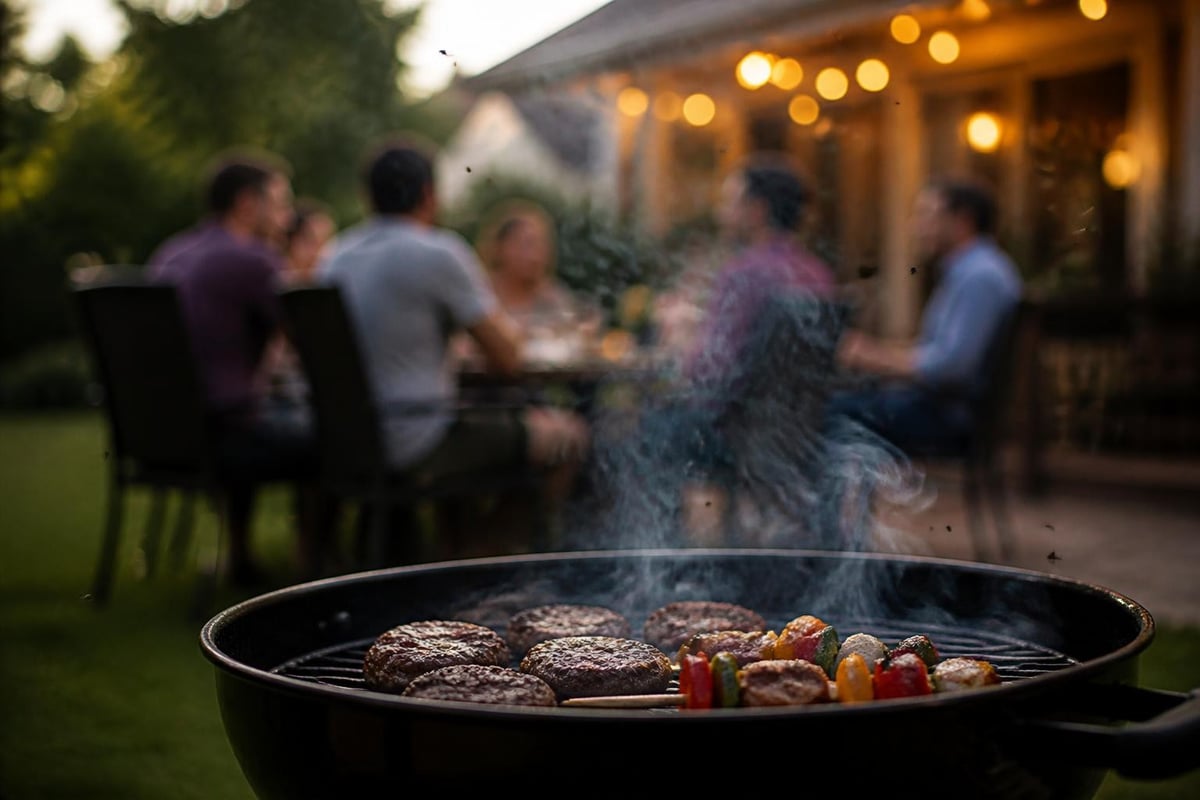
What Makes a Natural Mosquito Repellent BBQ Solution Different
The phrase "natural mosquito repellent" gets slapped on everything from tiki torches to wristbands, but not all approaches work the same way. Some rely on masking scent, others on creating physical barriers, and a few actually repel on contact. Understanding the distinction matters when you're planning protection for an entire patio rather than just yourself.
Spatial Protection vs. Personal Application
Traditional DEET sprays protect one person at a time. Everyone at your BBQ would need to apply, reapply every hour, and tolerate the sticky residue. That's a nonstarter when you're hosting. You can't hand a bottle to your neighbor and say, "Spray down before you grab a burger."
Spatial solutions protect the zone, not the individual. They create a scent barrier or deterrent field that covers your gathering area. This is where a natural mosquito repellent bbq strategy shifts from asking people to wear chemicals to simply treating the space itself.
Comparison of common natural approaches:
| Method | Coverage | Duration | Application | Guest Impact |
|---|---|---|---|---|
| DEET spray | One person | 1-2 hours | Skin applied | Sticky, chemical smell, reapplication |
| Citronella candle | 3-5 ft radius | Until burned out | Set and light | Smoke, flame, limited range |
| Essential oil beads | Up to 1,000 sq ft | 1-2 days peak | Pour on ground | No contact, no reapplication |
| Plant borders | Minimal | Continuous | Plant and maintain | Ineffective alone per research |
The EPA guidance on absence-of-ingredient claims helps clarify what "natural" and "DEET-free" legally mean on product labels, which is critical when evaluating commercial options that promise BBQ protection.
How Essential Oil Formulations Work
Natural repellents typically rely on plant-derived compounds that interfere with mosquito sensory receptors. A systematic review on essential oils as mosquito bio-repellents found that oils like geraniol, citronella, peppermint, eugenol, and rosemary showed measurable repellency in controlled conditions, though field performance varied by concentration, formulation, and application method.
The key mechanism is scent-masking rather than toxicity. Mosquitoes hunting by smell lose the thread when human scent is buried under a stronger, conflicting aroma. They drift past rather than landing because they can't pinpoint their target. This approach protects the entire treated area without requiring anyone to wear anything or stand in smoke.
For a backyard BBQ, that means treating the perimeter and seating zones before guests arrive. Pour biodegradable granules infused with essential oils around the patio edge, near table legs, and along walkways where people congregate. The scent diffuses upward and outward, creating an olfactory buffer between your guests and incoming mosquitoes.
Setting Up Your Natural Mosquito Repellent BBQ Space
Preparation separates a mosquito-free evening from a frustrating one. A natural mosquito repellent bbq setup takes about 15 minutes if you plan the coverage zones and treat them early.
Pre-Event Checklist
- Eliminate standing water in planters, grill drip trays, and any low spots where rain collected
- Identify high-traffic zones where guests will sit, stand near the grill, and move between house and patio
- Apply ground treatment 24 hours before the event for maximum scent diffusion
- Test airflow by observing where smoke or steam from the grill drifts (this shows scent movement patterns)
- Set backup zones near doorways and serving tables where people linger
When you treat the ground around gathering spots, you're not creating a chemical barrier. You're layering scent that mosquitoes can't navigate through. Think of it as fog that hides the road signs mosquitoes use to find you.
A Scientific Reports study comparing contact-repellency of 20 essential oils found that geraniol and eugenol showed longer protection windows than many single-oil formulations, supporting the use of blended essential oil products for extended outdoor events.
Coverage Zones for Different BBQ Setups
Your patio layout determines where protection matters most. A small 10x10 deck needs perimeter coverage. A sprawling backyard with multiple seating areas requires zone-based treatment.
Small patio (under 300 sq ft):
Pour beads in a continuous line around the perimeter, focusing on corners and under furniture where air stagnates. Place an open container near the grill where heat will amplify scent diffusion. This setup handles intimate gatherings of 4-6 people.
Mid-size yard (300-600 sq ft):
Treat the patio perimeter plus a secondary ring around lawn seating or fire pit areas. Mosquitoes entering from wooded edges or neighbor yards will hit the scent barrier before reaching your guests. Focus extra coverage on shaded zones under trees or awnings where mosquitoes rest during the day.
Large entertaining space (600-1,000 sq ft):
Create overlapping scent zones by treating every 8-10 feet along traffic paths and around each seating cluster. Don't forget transitional areas like pathways to the house or near outdoor kitchens. Use mesh bags clipped to patio umbrellas or fence posts for elevated scent distribution.

Comparing Natural Options for BBQ Protection
Not every "natural" solution delivers the same results. Some work better in theory than practice, while others require constant maintenance that disrupts your hosting flow.
Landscape Plants and Herbs
Garden centers sell mosquito-repellent plants like lavender, lemongrass, and citronella grass with promises of natural protection. The reality is more nuanced. While these plants contain compounds mosquitoes dislike, Clemson University research on plants that repel insects found that simply growing them nearby provides minimal protection. You'd need to crush leaves to release oils, and even then, the effect is localized and short-lived.
Iowa State University Extension addresses whether planting specific herbs reduces mosquitoes and concludes that potted rosemary or basil near your grill won't keep mosquitoes away from your guests. The concentration of active compounds isn't high enough unless you're actively bruising foliage and distributing it around the space.
Plants as part of a layered strategy:
- Grow them for aesthetics and cooking, not primary mosquito control
- Combine with active ground treatment for actual protection
- Use crushed herbs in sachets as a supplemental measure only
- Don't rely on landscape choices alone for BBQ events
Candles and Torches
Citronella candles remain popular because they're visible, traditional, and create ambiance. But their effective range is shockingly small, typically 3-5 feet in still air. Any breeze reduces that further. A systematic review of essential oils as mosquito repellents noted that volatilization from open flame creates inconsistent concentration, making candles unreliable for consistent protection across a dining area.
Tiki torches add visual clutter and open flame risk, especially with kids or pets present. You also can't place them close to seating without smoke drifting into faces. For a host who refuses visual noise on a beautiful table, candles and torches undermine the aesthetic you've worked to create.
Ground-Applied Essential Oil Solutions
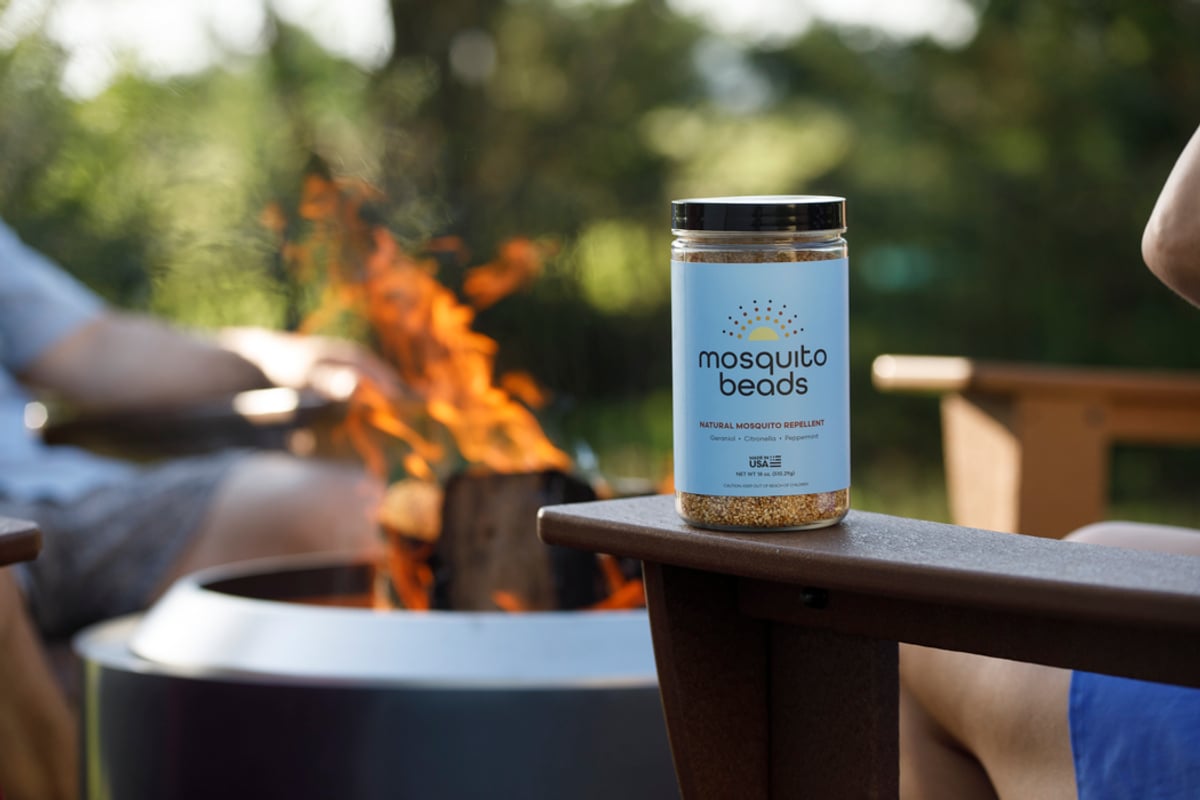
This is where natural mosquito repellent bbq strategies align with practical hosting needs. Biodegradable granules infused with essential oils like geraniol, citronella, peppermint, eugenol, cornmint, and rosemary release scent at ground level where mosquitoes navigate. You pour them once, they protect for 1-2 days at peak performance, and nobody has to spray, light, or reapply anything.
Because the product sits on the ground rather than burning or spraying, there's no smoke, no flame, and nothing touching anyone's skin. Guests arrive to a protected space without realizing you've treated it. That's the hallmark of good hosting: invisible preparation that lets everyone relax.
For families concerned about chemical load near children and pets, ground-based solutions offer peace of mind. EPA-registered skin-applied repellent ingredients include DEET and picaridin, which are effective but require direct skin contact. Plant-based alternatives registered under FIFRA 25(b) avoid that contact entirely when applied to the environment rather than people.
Many hosts choose biodegradable beads poured on the ground where people gather because the scent-masking approach protects the whole space without asking anyone to tolerate sticky applications or chemical exposure. Natural mosquito repellent for your patio explores how ground treatment creates a protective zone that suits entertaining better than individual spray-down routines.
Timing and Application for Maximum BBQ Protection
When you apply natural repellent matters as much as where. Essential oils need time to diffuse and establish a scent field before mosquitoes start hunting at dusk.
24-Hour Advance Application
Pour ground treatment the evening before your BBQ. This gives the essential oils time to volatilize and spread across your coverage area. Morning or afternoon application works too, but overnight diffusion creates the strongest scent barrier by the time guests arrive.
Why advance application works better:
- Oils settle into ground-level air currents
- Scent disperses evenly without being disrupted by foot traffic
- You avoid last-minute setup stress
- Peak performance hits right as mosquitoes become active
If you're hosting an impromptu gathering, apply at least 2-3 hours before sunset. The scent field won't be as robust, but you'll still create meaningful protection as mosquitoes emerge for their evening hunt.
Reapplication for Multi-Day Events
Peak performance runs days 1 and 2 per application. If you're hosting a weekend-long event or back-to-back BBQs, plan for a second treatment on day 3. Essential oils break down through exposure to sun, moisture, and air movement, so refreshing the coverage maintains consistent protection.
For most single-evening BBQs, one treatment handles the full event plus the following day. This makes natural mosquito repellent bbq protection remarkably low-maintenance compared to hourly spray reapplication or constantly relighting candles.
Addressing Common Concerns About Natural Repellents
Skepticism about natural mosquito control is healthy. The market is full of products that overpromise and underdeliver. Understanding what works, what doesn't, and why helps you make informed choices.
Efficacy vs. Synthetic Repellents
DEET remains the gold standard for personal protection because it's been studied for decades and works reliably when applied to skin. But comparing skin-applied DEET to ground-applied essential oils is comparing different use cases. One protects a moving person in mosquito-dense wilderness. The other protects a defined space where people gather.
A CDC review on minimum-risk products notes that "natural" or 25(b) products show variable performance partly because they're tested under different conditions than EPA-registered chemicals. Lab studies may show repellency, but field performance depends on concentration, formulation, environmental factors, and how users apply the product.
For backyard BBQs, the question isn't whether geraniol repels as long as DEET on skin. It's whether ground-applied essential oils create enough scent disruption to reduce mosquito landings in your entertaining space. Field experience and customer feedback suggest they do, especially when applied correctly across adequate coverage zones.
Pet and Child Safety
Families with pets and young children rightfully worry about any product labeled "pesticide" or "repellent." The advantage of ground-applied natural solutions is that they're not ingested, inhaled, or absorbed through skin contact under normal use.
When used as directed, biodegradable corn-based granules infused with essential oils are pet-friendly. Pets may sniff treated areas but aren't lying on concentrated product the way they might be if you sprayed a chemical barrier. Understanding pet-safe mosquito repellent details how ground application avoids the risks associated with topical products or sprays that pets might lick off their fur.
For children, the benefit is even clearer. No one has to convince a toddler to sit still for spray application or tolerate greasy hands and face. The space is protected before they arrive, and they play freely without exposure.
Duration of Protection
Essential oils volatilize faster than synthetic chemicals, which is why they require more frequent application than professional barrier sprays. For a single BBQ event, this isn't a drawback. You treat once, host your gathering, and enjoy protection for 1-2 days at peak performance.
If you're looking for month-long protection from a single application, professional barrier spray services using synthetic pyrethroids are the realistic choice. But those sprays also coat every surface, persist in the environment, and carry toxicity concerns for beneficial insects and aquatic life.
The trade-off with natural mosquito repellent bbq solutions is intentional: shorter duration in exchange for no persistent residue, biodegradability, and freedom from synthetic chemicals. For weekend entertaining, that trade-off favors natural options.
Building a Complete Mosquito Management Strategy
Ground-applied essential oils work best as part of a comprehensive approach rather than a standalone silver bullet. Reducing mosquito populations and eliminating breeding sites amplifies the effectiveness of any repellent.
Source Reduction
Walk your property the day before your BBQ and dump any standing water. Check:
- Grill covers and patio furniture cushions
- Flower pot saucers and drainage trays
- Clogged gutters and downspout extenders
- Birdbaths and pet water bowls (refresh daily)
- Wheelbarrows, buckets, and kids' toys
Mosquitoes need only a bottle cap of standing water to breed, and larvae mature in 7-10 days. Eliminating breeding sites near your entertaining space reduces the local population before you even apply repellent.
Airflow and Fans
Mosquitoes are weak fliers. A ceiling fan or portable floor fan creates enough airflow to keep them from landing. Position fans to blow across seating areas and near the grill where people stand still. This isn't a replacement for repellent, but it adds a mechanical layer of defense that costs nothing and requires no chemicals.
Combining ground-applied scent-masking with strategic fan placement creates a one-two punch: mosquitoes can't smell you, and even if they get close, they can't navigate the air currents to land.
Timing Your Event
Mosquitoes are most active at dawn and dusk when humidity is high and temperatures drop. If you can shift your BBQ to mid-afternoon or wait until full dark, you'll miss peak feeding times. That's not always practical, but it's worth considering for events where timing is flexible.
When you must host during prime mosquito hours, double down on coverage. Treat larger zones, add backup containers near doorways, and refresh treatment if your event spans multiple evenings.
The Role of Formulation in Natural Repellent Performance
Not all essential oil products are created equal. Concentration, carrier base, and release mechanism determine whether a product works in real-world conditions or just smells nice.
Oil Concentration and Blending
Single-oil products like pure citronella or lemongrass often underperform because they lack the complexity to disrupt multiple mosquito sensory pathways. Blended formulations using geraniol, citronella, peppermint, eugenol, cornmint, and rosemary create overlapping scent signatures that mosquitoes struggle to navigate through.
Higher oil concentration isn't always better. If essential oils volatilize too quickly, protection peaks and fades within hours. Slow-release formulations extend duration by metering oil diffusion over days rather than minutes.
Carrier and Delivery System
Liquid sprays, wax candles, and granular beads all deliver essential oils differently. Sprays evaporate quickly and require reapplication. Candles burn unevenly and create localized scent clouds. Granules release scent as they break down, providing sustained diffusion without combustion or aerosolization.
For BBQ protection, granular delivery offers the best balance of coverage, duration, and ease of use. Pour once, protect the space, and avoid the hassle of spraying guests or relighting candles every hour.
Why Hosts Prefer Non-Spray Solutions
The shift away from aerosol and pump sprays isn't just about avoiding DEET. It's about not asking your guests to participate in their own protection or tolerate sticky residue on their skin and clothing.
Reasons hosts choose ground-based repellent:
- No one has to spray down before eating
- No greasy feeling on hands when grabbing food
- No chemical smell competing with BBQ aromas
- Children can play without reapplication reminders
- Pets roam freely without licking treated skin
- Guests in nice clothing avoid stains and residue
When you treat the space instead of the people, everyone benefits without compromise. That's the core appeal of a natural mosquito repellent bbq approach: invisible protection that respects your guests and your aesthetic standards.
Many outdoor sanctuary hosts have tried citronella candles and DEET sprays and want neither. They refuse visual noise on a beautiful table and worry about chemical load near family and pets. Ground-applied essential oil solutions meet those needs by protecting the environment rather than coating individuals. Frequently asked questions address common concerns about application, coverage, and how scent-masking differs from chemical barrier sprays.
Measuring Success at Your Natural Mosquito Repellent BBQ
How do you know if your natural repellent strategy worked? The clearest metric is whether your guests stayed outside comfortably instead of retreating indoors swatting and complaining.
Observation-Based Evaluation
Pay attention during your event:
- Are people sitting still or constantly shifting and slapping?
- Do you hear complaints about bites or see guests scratching?
- Does anyone ask for bug spray or move toward the house?
- Can you see mosquitoes hovering near treated zones?
If your guests stay put, relax visibly, and don't mention bugs, your protection worked. Absence of complaints is the gold standard for spatial repellent performance.
Comparing Treated vs. Untreated Events
If you've hosted BBQs in the same space without repellent, you'll notice the difference immediately. Previous events might have ended early as mosquitoes drove everyone inside. Treated events run late into the evening with people lingering over dessert and conversation instead of fleeing.
Track how long people stay outside and whether you hear the phrase "I'm getting eaten alive." That phrase disappears when protection is adequate.
A successful natural mosquito repellent BBQ comes down to treating the space before guests arrive, choosing ground-applied solutions that protect without smoke or sticky applications, and building a strategy that respects both your standards and your guests' comfort. When you pour biodegradable essential oil beads around your patio perimeter and seating zones, you create scent-masking protection that lets everyone focus on food, conversation, and enjoying the evening you worked to create. Mosquito Beads offers a DEET-free approach that protects up to 1,000 square feet for 1-2 days per application, giving you the freedom to host confidently without asking anyone to spray down or tolerate chemical exposure.