

Best Oil for Insect Repellent: Natural Solutions 2026
Finding the best oil for insect repellent matters when you want effective protection without chemicals on your skin. Essential oils offer natural alternatives to DEET and picaridin, but not all oils perform equally. Some provide hours of protection, while others fade in minutes. Understanding which oils work, how they compare, and how to use them helps you make informed decisions for your family, pets, and outdoor spaces. This guide examines the most effective natural oils, their mechanisms, safety considerations, and practical applications for real-world mosquito control.
Understanding How Essential Oils Repel Mosquitoes
Essential oils work through multiple pathways to disrupt mosquito behavior. Scent masking hides the carbon dioxide, lactic acid, and body odor that mosquitoes track from 30 feet away, as explained in research on how mosquitoes detect humans. Direct repellency triggers avoidance responses in mosquito antennae when certain volatile compounds reach sufficient concentration.

Not all oils contain the same active compounds. Monoterpenes, sesquiterpenes, and alcohols provide the repellent effect, but their concentration varies widely between oil batches. A recent systematic review of essential oil efficacy found that repellency depends on proper formulation, application method, and reapplication frequency.
The Challenge of Topical Application
When applied directly to skin, most essential oils evaporate quickly. Protection often lasts 20 to 40 minutes before reapplication becomes necessary. Higher concentrations extend duration but increase irritation risk, particularly for sensitive skin, children, and pregnant individuals.
Environmental application changes the equation. Oils dispersed in outdoor spaces create protective zones without direct skin contact, eliminating concerns about absorption, photosensitivity, and the sticky residue people dislike about traditional sprays.
Top Performing Oils for Mosquito Protection
The best oil for insect repellent depends on protection duration, irritation profile, and application context. Here are the strongest performers based on published research and field testing.
Geraniol: The Rising Star
Geraniol delivers reliable repellency with a pleasant rose-like scent. Found naturally in geranium, lemongrass, and rose oils, geraniol registers as 25b exempt under EPA guidelines, meaning it qualifies as a minimum-risk pesticide when properly formulated.
Field trials show geraniol provides 2 to 4 hours of protection when applied topically at 5% to 10% concentration. In ground-application formats, geraniol creates scent barriers that mask human odor at ground level, where mosquitoes primarily hunt.
| Oil Type | Protection Duration (Topical) | Primary Compounds | Skin Irritation Risk |
|---|---|---|---|
| Geraniol | 2-4 hours | Geraniol, citronellol | Low to moderate |
| Citronella | 30-60 minutes | Citronellal, geraniol | Low |
| Lemon Eucalyptus (OLE) | 4-6 hours | PMD (p-menthane-3,8-diol) | Low |
| Peppermint | 45-90 minutes | Menthol, menthone | Moderate (cooling sensation) |
Citronella: The Classic with Limits
Citronella oil remains the most recognized natural repellent, derived from two grass species: Cymbopogon nardus and Cymbopogon winterianus. While citronella candles have become backyard staples, their effectiveness depends entirely on proximity and air movement.
The oil itself provides modest topical protection, typically 30 to 60 minutes. Citronella works better in enclosed or semi-enclosed spaces where scent concentration remains stable. Natural mosquito repellent solutions for patios often combine citronella with other oils to extend coverage and duration.
Oil of Lemon Eucalyptus: The Evidence-Based Option
Oil of lemon eucalyptus (OLE) and its refined component PMD represent the best-studied natural repellent. Consumer Reports testing shows PMD-based products provide 4 to 6 hours of protection, approaching DEET performance.
However, OLE requires careful handling. The CDC does not recommend it for children under three years old due to eye-irritation concerns. Adults should avoid facial application and wash hands after use. For families seeking natural options without topical application, OLE highlights why ground-based delivery systems appeal to safety-conscious outdoor hosts.
Peppermint and Cornmint: Cooling Repellents
Peppermint oil (Mentha piperita) and cornmint oil (Mentha arvensis) both contain high menthol levels that create cooling sensations and repel mosquitoes. Protection typically lasts 45 to 90 minutes with topical application.
These oils work particularly well in multi-oil blends where peppermint's sharp scent complements floral notes from geraniol or citronella. The cooling effect also soothes existing bites, making peppermint a dual-purpose ingredient.

Rosemary and Eugenol: Supporting Players
Rosemary oil contains camphor, 1,8-cineole, and alpha-pinene, which contribute moderate repellency. While not as potent as geraniol or OLE alone, rosemary adds depth to blended formulations and offers antimicrobial properties.
Eugenol, the primary compound in clove oil, provides strong initial repellency but evaporates rapidly. At high concentrations, eugenol can irritate skin, so it appears most effectively in diluted blends rather than standalone applications.
Safety Considerations for Natural Oil Repellents
Natural does not automatically mean safe for all users. Essential oils contain powerful bioactive compounds that require thoughtful application, particularly for vulnerable populations.
Pregnancy and Nursing
The UKTIS guidance on essential oil use during pregnancy advises caution with topical application of concentrated oils. While inhaled diffusion at normal household levels appears safe, skin application introduces higher systemic exposure.
Pregnant individuals concerned about chemical exposure often prefer non-topical repellent options. Ground-application products protect outdoor spaces without requiring anyone to apply oils directly to skin, eliminating absorption concerns entirely.
Children and Infants
Children have thinner skin and faster absorption rates than adults. The American Academy of Pediatrics recommends avoiding essential oil application on infants under two months and using only well-diluted formulations on older children.
For families with young children, the sticky-spray dilemma becomes particularly acute. Parents hesitate to spray infants and toddlers with any substance, yet mosquito-borne illnesses pose real risks. Space-protection strategies that avoid topical application offer a practical middle path.
Pets in the Household
Cats lack the liver enzyme glucuronyl transferase, which metabolizes many essential oil compounds. Concentrated oils, particularly tea tree, eucalyptus, and pennyroyal, can cause toxicity in felines. Dogs tolerate most oils better but still require proper dilution.
Ground-application repellents formulated with pet safety in mind use concentrations that protect spaces without creating toxic exposure for animals. When beads or granules dissolve slowly into soil, pets avoid the concentrated contact that occurs with sprays or diffusers. For more guidance, explore environmentally friendly bug repellent approaches that consider ecosystem impact.
Application Methods: Topical vs. Spatial Protection
The best oil for insect repellent depends partly on how you intend to use it. Different application methods suit different situations and user preferences.
Topical Sprays and Lotions
Pros:
- Direct protection that moves with the person
- Effective for hiking, camping, or travel where you cannot control the environment
- Immediate application without setup time
Cons:
- Requires skin contact with concentrated oils
- Sticky, greasy residue that transfers to clothing and furniture
- Frequent reapplication (often hourly)
- Difficult to apply evenly on children or unwilling guests
- Photosensitivity concerns with citrus-based oils
- Chemical load concerns for families avoiding synthetic ingredients
When traveling to unfamiliar areas or exploring wilderness, topical application makes sense. Awesome Travel Guides often recommend portable repellent solutions for travelers visiting tropical or high-mosquito destinations where environmental control is impossible.
Candles and Diffusers
Citronella candles create ambiance but deliver inconsistent protection. Wind disperses the protective scent cone, and effectiveness drops sharply beyond three feet from the flame. Multiple candles improve coverage but add cost, fire risk, and visual clutter.
Ultrasonic diffusers work indoors but struggle outdoors where air circulation dilutes essential oil concentration below effective thresholds.
Ground-Application Systems
Ground-based repellent delivery represents a fundamentally different approach. Rather than asking each person to apply oils topically, you protect the entire gathering space.
Scent-masking at ground level works because mosquitoes track carbon dioxide and body odor plumes that rise from the ground where people stand and sit. When biodegradable granules infused with essential oil blends disperse on patios, decks, or campsites, they create a scent barrier that masks human odor signatures before mosquitoes approach landing distance.
This method eliminates the sticky-spray problem entirely. Guests never touch the product. Children and pets remain in the protected space without anyone applying oils to their skin. The patio stays protected for days rather than requiring hourly reapplication.
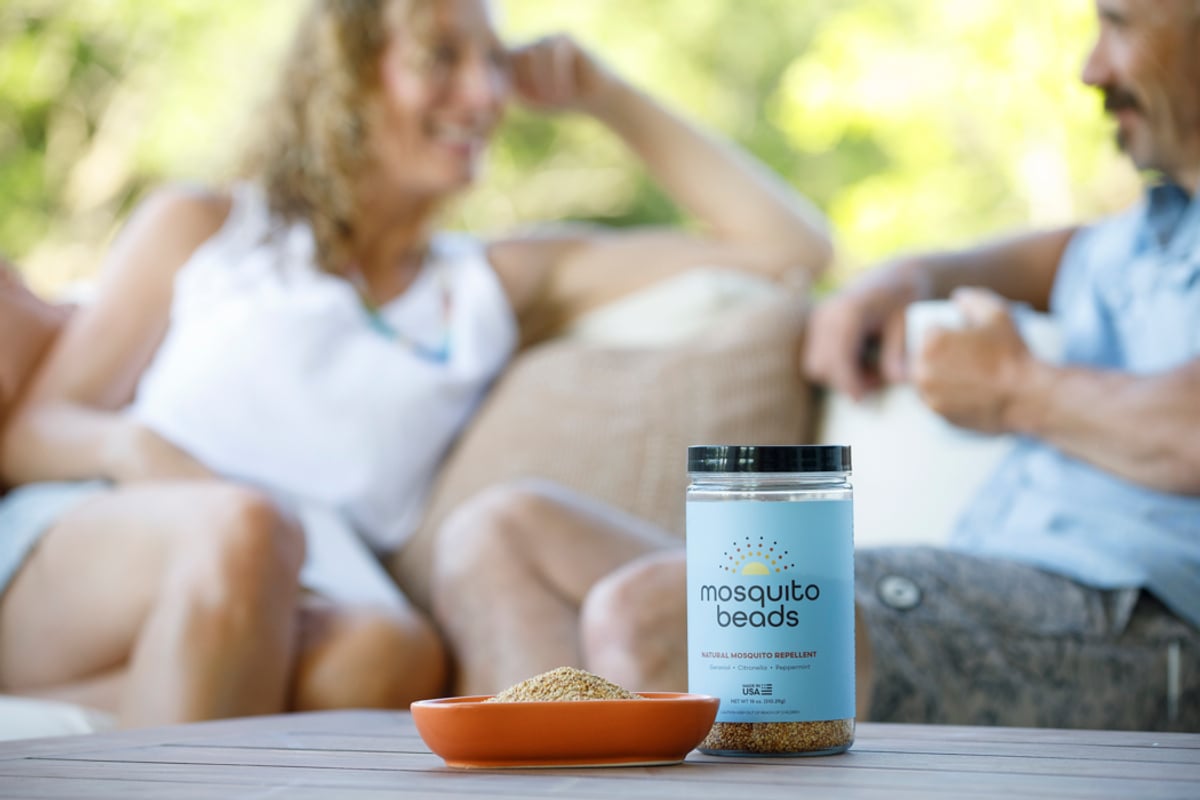
For families who treat their outdoor space as an extension of their home, ground application fits naturally into the pre-gathering routine. Pour before the event, enjoy uninterrupted evenings, and let the beads biodegrade back into the soil when protection fades. Innovations like Mosquito Beads demonstrate how combining six essential oils in a ground-delivery format extends the concept of natural protection beyond topical application.
Comparing Natural Oils to Synthetic Alternatives
Understanding where natural oils fit in the broader repellent landscape helps set realistic expectations.
DEET: The Efficacy Benchmark
DEET (N,N-diethyl-meta-toluamide) remains the gold standard for topical mosquito repellents, providing 4 to 8 hours of protection at 20% to 30% concentration. However, DEET carries concerns about skin irritation, plastic degradation, and the unpleasant greasy feel that drives many users toward natural alternatives.
For families who have used DEET and dislike the experience, the question becomes: What trade-offs are acceptable? Shorter protection duration may be fine if the alternative avoids skin contact entirely. A Cochrane review of mosquito repellents notes that efficacy matters most in disease-endemic regions, while user preference and compliance drive choices in low-disease areas.
Picaridin: The Modern Synthetic
Picaridin offers DEET-level protection without the odor or plastic-melting properties. It has gained market share among consumers seeking effective synthetic options with better sensory profiles.
Still, picaridin remains a synthetic chemical applied directly to skin. For the outdoor sanctuary host who curates every detail of their patio experience and worries about chemical exposure near family and pets, neither DEET nor picaridin aligns with their values.
IR3535: The Lesser-Known Synthetic
IR3535 (ethyl butylacetylaminopropionate) provides moderate protection with a milder profile than DEET. It appears in several European formulations but remains less common in the United States.
Building Effective Essential Oil Blends
Single oils rarely outperform thoughtfully designed blends. Combining oils with different volatility profiles extends protection duration while broadening the spectrum of mosquito species affected.
Formulation Principles
- Lead with a proven repellent: Start with geraniol, OLE, or citronella as the primary active ingredient
- Add synergistic compounds: Peppermint and cornmint amplify the lead oil's effect
- Include fixatives: Rosemary and eugenol slow evaporation, extending duration
- Balance scent profile: Ensure the blend smells pleasant to humans while repelling mosquitoes
- Test concentration: Too dilute fails to repel; too strong irritates skin or overwhelms the senses
Why Six Oils Work Better Than One
Multi-oil formulations address mosquito behavior complexity. Different species respond to different chemical triggers. Aedes aegypti (yellow fever mosquito) and Culex pipiens (common house mosquito) have distinct sensory profiles. A blend targeting multiple pathways provides broader protection than any single oil.
The role of essential oils in mosquito control shows how combining geraniol, citronella, peppermint, eugenol, cornmint, and rosemary creates overlapping zones of protection that compensate when one compound's effectiveness fades.
Regional Considerations and Mosquito Species
The best oil for insect repellent varies by geography and target species. Regional mosquito populations respond differently to specific compounds.
Humid Climates and Aggressive Species
Southern states and tropical regions host aggressive day-biting species like Aedes albopictus (Asian tiger mosquito). These mosquitoes require robust repellent strategies, whether topical or spatial. Higher concentrations and frequent reapplication become necessary regardless of oil type.
Florida's intense mosquito pressure demands layered approaches combining habitat modification, spatial repellents, and selective topical application. Resources like Florida's best natural mosquito repellent outline regional strategies for high-pressure environments.
Temperate Zones and Seasonal Patterns
Midwestern and plains states experience concentrated mosquito seasons with less year-round pressure. Evening-feeding Culex species dominate, making patio and deck protection particularly valuable during prime social hours.
Kansas's best natural mosquito repellent options focus on protecting outdoor gathering spaces during the brief but intense warm season when families maximize patio use.
Creating a Complete Mosquito Management Strategy
No single product, natural or synthetic, eliminates all mosquito problems. Effective management layers multiple tactics that address different aspects of mosquito behavior and lifecycle.
Step-by-Step Integrated Approach
- Eliminate standing water in gutters, plant saucers, and tarps where mosquitoes breed
- Install fans to disrupt mosquito flight and disperse carbon dioxide plumes
- Apply spatial repellents to gathering areas before events
- Use selective topical protection when leaving protected zones
- Time outdoor activities to avoid peak feeding hours at dawn and dusk
This integrated method reduces reliance on any single tactic while improving overall effectiveness. The WHO guidance on vector control emphasizes combining environmental management with repellents for sustainable mosquito reduction.
When to Choose Spatial vs. Personal Protection
Choose spatial protection when:
- Hosting gatherings where multiple people share a defined space
- Creating a protected zone on patios, decks, or campsites
- Avoiding topical application on children, pets, or sensitive skin
- Seeking multi-day protection without daily reapplication
Choose personal protection when:
- Traveling through mosquito habitat (hiking, fishing, hunting)
- Visiting areas with disease-carrying species
- Needing protection that moves with you
- Operating in environments you cannot control
Sustainability and Environmental Impact
The best oil for insect repellent considers environmental footprint alongside human protection. Natural oils vary widely in sustainability depending on sourcing, production methods, and post-use degradation.
Biodegradability
Essential oils biodegrade rapidly in soil and water, unlike persistent synthetic chemicals. Citronella, geraniol, and peppermint break down through microbial action within days to weeks, minimizing ecosystem accumulation.
Ground-application systems using biodegradable carriers ensure the delivery mechanism degrades along with the active ingredients. Corn-based granules dissolve naturally, leaving no plastic residue or synthetic polymers in soil.
Sourcing and Production Ethics
Sustainable essential oil production requires responsible farming practices that avoid monoculture, excessive water use, and habitat destruction. Look for oils certified organic or sustainably harvested, though certification availability varies by oil type.
Some oils, particularly rosewood and sandalwood, face overharvesting concerns. Choosing abundant species like peppermint, citronella, and geranium supports renewable supply chains. Laundry Labs similarly emphasizes sustainable ingredient sourcing in their eco-friendly product formulations.
Real-World Performance Expectations
Setting realistic expectations prevents disappointment with natural repellents. Here's what to anticipate in typical use scenarios.
Backyard Patio Protection
Scenario: Eighteen-ounce ground application covering 1,000 square feet before a Saturday evening gathering.
Expected results: Peak protection on days one and two, with noticeable mosquito reduction allowing comfortable outdoor dining and conversation. Protection gradually fades over days three through five as volatile compounds dissipate.
User experience: Guests never apply anything to skin, children and pets move freely through the space, and the patio remains protected without visual clutter from candles or electrical devices.
Camping and Portable Applications
Scenario: Five-ounce portable container protecting a 300-square-foot campsite or RV setup.
Expected results: Scent barrier reduces mosquito landings in the immediate camp zone. Combined with proper site selection (avoiding standing water, catching breezes), creates a significantly more comfortable camping experience.
Limitations: Open wilderness environments with high mosquito pressure may require supplemental personal protection when leaving the immediate camp perimeter.
Game Day and Sports Events
Scenario: Portable mesh bag clipped near seating areas at youth sports events.
Expected results: Local scent masking protects spectators during one to two hour events. Convenient clip-and-go format eliminates the awkwardness of spraying down in public.
Trade-offs: Wind dispersal reduces effectiveness in completely open fields. Best results occur with slight wind barriers like bleachers or tree lines.
Formulation Science and Future Directions
Research continues advancing natural repellent effectiveness through improved formulation, delivery systems, and compound isolation.
Microencapsulation Technology
Encapsulating essential oils in biodegradable polymers slows release rates, extending protection duration from minutes to hours. This technology bridges the efficacy gap between natural oils and synthetic repellents while maintaining environmental compatibility.
Synergist Discovery
Identifying compounds that enhance essential oil effectiveness without increasing concentration could improve natural repellent performance. Early research suggests certain fatty acids and plant extracts amplify geraniol and citronella repellency when combined in specific ratios.
Novel Delivery Systems
Moving beyond topical sprays and candles opens new protection possibilities. Ground-application granules, time-release stakes, and perimeter barriers represent evolving approaches that separate repellent delivery from skin contact.
A frontiers review on essential oil safety and efficacy examines how formulation improvements address historical limitations like rapid evaporation and inconsistent results.
Making the Choice for Your Situation
Selecting the best oil for insect repellent requires balancing effectiveness, safety, user experience, and environmental values. No universal answer fits every situation.
Questions to Guide Your Decision
Who needs protection?
- Adults comfortable with topical application have more options
- Families with young children benefit from non-topical spatial strategies
- Pet owners must consider formulations safe for animals in the space
What protection duration do you need?
- Single evening events require shorter-term solutions
- Multi-day camping trips demand sustained protection
- Seasonal patio use benefits from easy reapplication
What are your chemical-exposure priorities?
- Synthetic-avoiders prioritize natural ingredients regardless of efficacy trade-offs
- Disease-risk managers prioritize proven effectiveness over natural sourcing
- Middle-ground seekers want natural options that actually work
What's your budget?
- Frequent topical reapplication adds ongoing costs
- Longer-lasting spatial systems may cost more upfront but reduce per-use expense
- DIY blending offers control but requires time and experimentation
The Suburban Sanctuary Perspective
For the outdoor sanctuary host who treats their patio as an extension of their living space, the ideal solution delivers reliable protection without compromising the carefully curated environment. Sticky sprays that transfer to furniture fabrics, smoky candles that overpower dinner aromas, and buzzing electrical devices that disrupt conversation all fail to meet their standards.
Ground-application systems using essential oil blends align with these values by protecting the space itself rather than requiring each guest to self-treat. The biodegradable approach suits families who compost, garden, and make conscious environmental choices throughout their home.
The best oil for insect repellent ultimately depends on how you plan to use it, but geraniol, citronella, lemon eucalyptus, peppermint, and rosemary all demonstrate proven mosquito-repelling properties. For families seeking protection without the sticky residue of topical sprays or the chemical concerns of synthetic repellents, ground-based delivery systems offer an elegant alternative that protects your entire gathering space. Mosquito Beads combine six essential oils in biodegradable corn granules you pour where people gather, creating scent-masking zones that let mosquitoes drift past while your family enjoys uninterrupted outdoor time.