

Natural Mosquito Repeller: DEET-Free Solutions for 2026
The quest for effective mosquito control without synthetic chemicals has driven significant innovation in the pest management industry. As families spend more time outdoors on patios, decks, and backyard sanctuaries, the demand for a natural mosquito repeller that performs without DEET, sticky sprays, or visual clutter has never been stronger. Understanding how these alternatives work and which mechanisms deliver reliable protection helps homeowners make informed decisions that align with their values around family health, pet safety, and environmental responsibility.
Understanding How Natural Mosquito Repellers Work
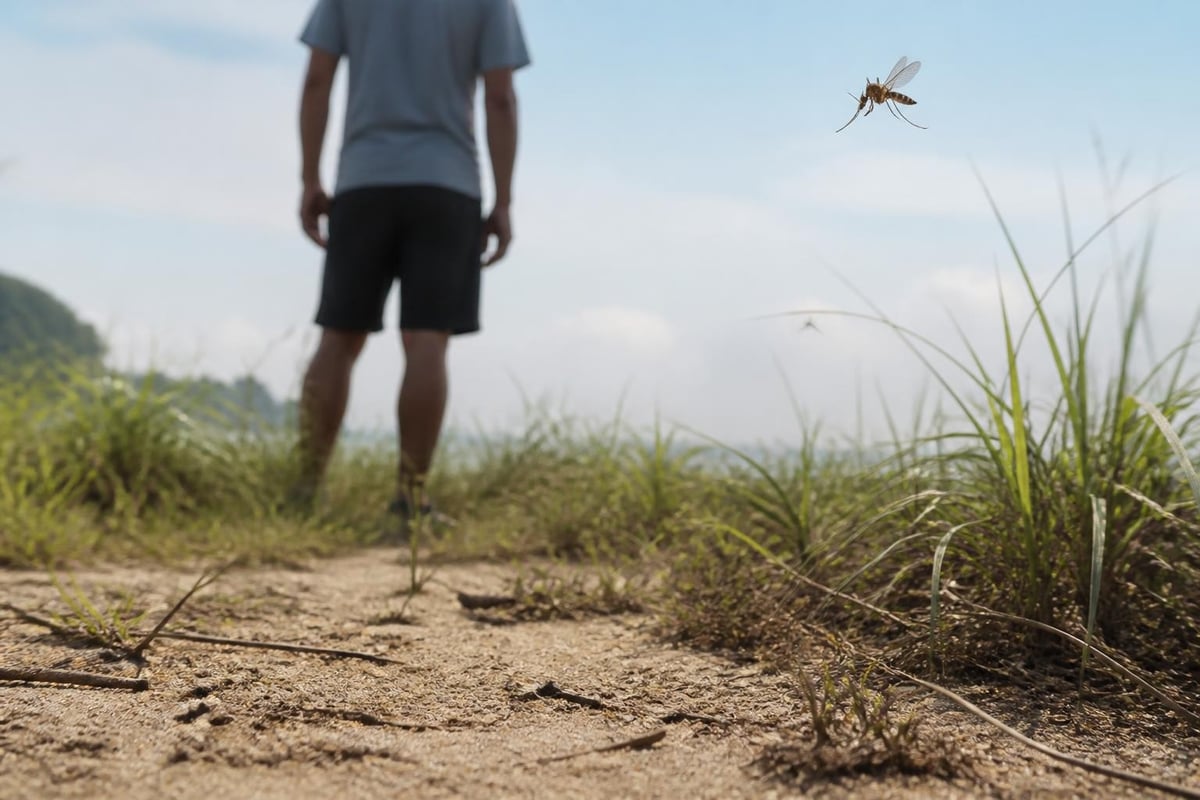
Mosquitoes locate their targets through a sophisticated sensory system that detects carbon dioxide, body heat, and specific chemical signatures in human scent. Mosquitoes detect CO2 from 30 feet away, which triggers their initial approach, but the final landing decision depends on scent markers they pick up at ground level where air currents carry the strongest concentration of human odor.
A natural mosquito repeller typically employs one of three mechanisms: direct deterrence through strong essential oils applied to skin, spatial repellence that creates a treated zone, or scent-masking that blocks mosquito detection. Each approach offers distinct advantages and limitations.
Scent-Masking vs. Deterrence
Traditional citronella candles and torches work through spatial repellence, releasing oils into the air to create a treated perimeter. The University of California IPM program notes that while these methods provide some benefit directly in the smoke plume, their effectiveness drops sharply just a few feet away and depends entirely on wind conditions.
Scent-masking technologies take a different approach by interfering with the mosquito's ability to detect human scent signatures in the first place. When properly deployed at ground level where scent concentration is highest, these systems prevent mosquitoes from identifying viable targets, causing them to drift past gathering areas without attempting to land.
Key differences include:
- Deterrent-based systems push mosquitoes away through unpleasant stimuli
- Masking-based systems hide the attractant signals mosquitoes track
- Deterrents require constant output (flame, heat, evaporation)
- Masking compounds work passively once applied to the space
Plant-Derived Active Ingredients in Natural Repellents
The World Health Organization recognizes several plant-derived compounds in its vector control guidance, acknowledging their role in integrated pest management strategies. Essential oils function through multiple pathways, including olfactory interference, contact repellence, and in some cases, mild neurotoxicity to insects at concentrations harmless to mammals.
Geraniol and Citronella Performance
Geraniol, derived from rose and geranium plants, demonstrates robust mosquito repellency in both laboratory and field conditions. Research published on PubMed examining citronellal derivatives shows that geraniol and related compounds achieve protection comparable to low-concentration synthetic alternatives when formulated to extend volatility control.
Citronella oil, perhaps the most recognized natural mosquito repeller ingredient, contains citronellal, citronellol, and geraniol as major components. The challenge with citronella has always been duration. As a highly volatile compound, it evaporates quickly, which is why candles require continuous burning and skin formulations demand reapplication every 30 to 60 minutes.
| Essential Oil | Primary Mechanism | Volatility | Typical Duration |
|---|---|---|---|
| Geraniol | Scent interference | Moderate | 2-4 hours |
| Citronella | Spatial repellence | High | 30-60 minutes |
| Peppermint | Contact deterrent | High | 1-2 hours |
| Eugenol | Multi-pathway | Low-moderate | 3-5 hours |
| Rosemary | Olfactory masking | Moderate | 2-3 hours |
Synergistic Blending Strategies
A systematic review available through NCBI on essential oils as mosquito bio-repellents highlights that blended formulations consistently outperform single-ingredient products. The synergistic effect occurs because different oils target different receptors in the mosquito's sensory system, creating multilayered interference that is harder for the insect to overcome.
The most effective natural mosquito repeller products combine oils with complementary volatility profiles. Fast-evaporating compounds like peppermint and citronella provide immediate spatial coverage, while slower-releasing ingredients such as eugenol and rosemary extend the protection window.
Ground-Based Application Methods vs. Skin Sprays
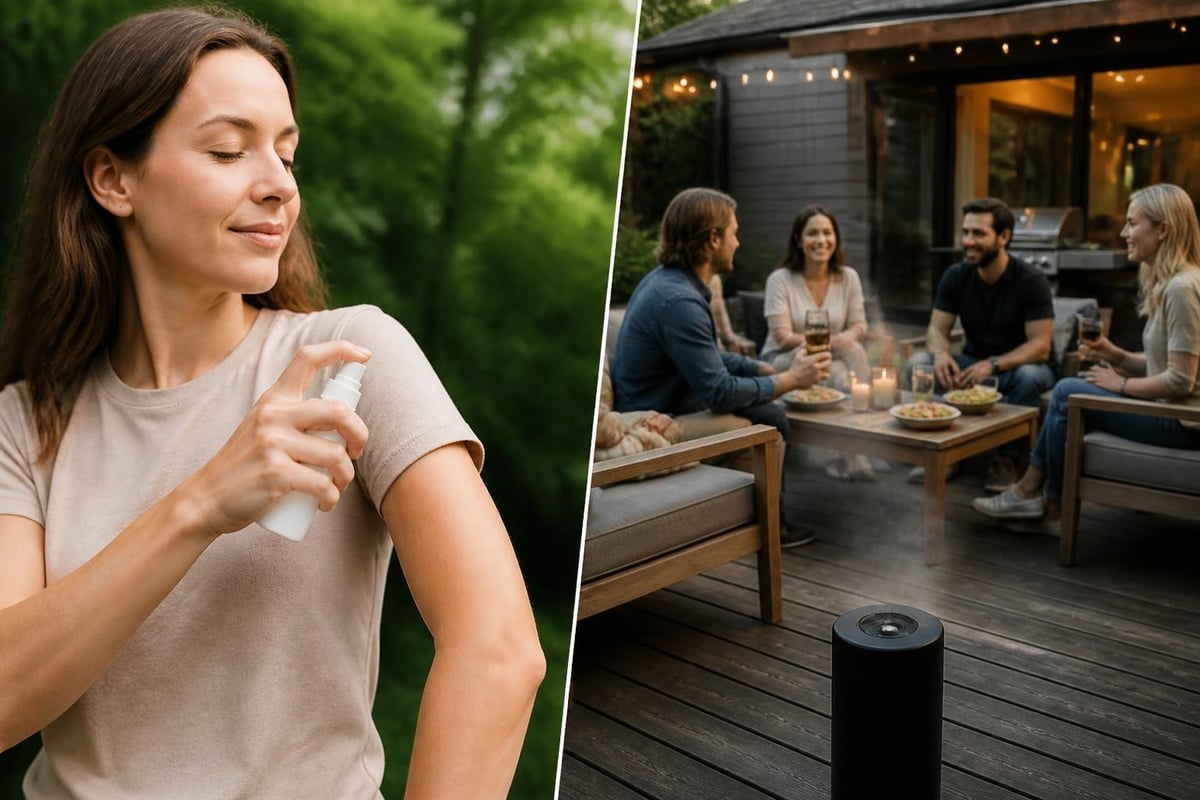
The traditional approach to mosquito protection centers on personal application: sprays, lotions, and wipes applied directly to exposed skin. While effective when properly used, this method presents several challenges for families hosting gatherings on patios and outdoor living spaces.
Why Families Move Away from Spray Products
Practical limitations of spray-based repellents:
- Each person must apply their own product
- Reapplication required every 1-2 hours
- Sticky, greasy residue on skin and clothing
- Cannot reasonably ask guests to spray down before joining
- Concerns about chemical exposure, especially with young children
- Difficulty protecting pets who share the space
The shift toward space protection rather than personal protection reflects changing expectations about outdoor living. When the patio functions as an extension of the home, a room without walls, homeowners want environmental control that doesn't require participation from every individual.
Ground Application Technology
A natural mosquito repeller designed for ground deployment works by treating the area where human scent accumulates most strongly. Because odor plumes concentrate at ground level before dispersing upward, targeting this zone intercepts mosquito tracking behavior at its most sensitive point.
Ground-based systems offer several distinct advantages. They protect the entire gathering area rather than just individual people. Once applied, they work passively without flames, electricity, or continuous attention. Ground-based mosquito protection eliminates the visual clutter of torches, candles, and tabletop devices that compete with intentional design elements on a well-appointed patio.
When choosing between application methods, consider the context. Hiking trails and camping require portable, personal protection. Backyard entertaining, patio dining, and poolside relaxation benefit from area coverage that doesn't touch anyone's skin.
Regulatory Framework for Natural Repellent Products
The EPA regulates skin-applied repellents under the Federal Insecticide, Fungicide, and Rodenticide Act (FIFRA), with specific requirements depending on the product's claims, active ingredients, and application method. Understanding these distinctions helps consumers evaluate what they're buying and what performance to expect.
25(b) Exempt vs. Registered Products
Certain plant-derived ingredients qualify for exemption under FIFRA 25(b) when used in minimum-risk formulations. These products must list all ingredients, make no claims about disease-vector control, and include only approved active and inert components.
Registered products undergo efficacy testing and toxicology review by the EPA before making public health claims. The registration process costs hundreds of thousands of dollars, which is why many smaller natural mosquito repeller products opt for the 25(b) pathway.
Neither category is inherently superior. Registration demonstrates third-party validated efficacy for specific claims. Exemption indicates the product uses ingredients the EPA has deemed minimum-risk based on decades of safe use and toxicological data.
What Labels Really Tell You
Reading between the lines on product labels reveals important information. Terms like "repels mosquitoes" require substantiation through testing. Phrases such as "creates a pleasant environment" or "masks attractant scents" describe the mechanism without making kill or repellency claims that would trigger full registration requirements.
Duration claims deserve scrutiny. "Up to 8 hours" in laboratory conditions often translates to 2-3 hours in field use with wind, temperature fluctuations, and human activity. Products that specify "peak performance days 1 and 2" provide more realistic guidance for reapplication timing.
Comparing Performance Across Product Categories
Not all natural mosquito repeller options deliver equivalent results. Performance depends on formulation quality, concentration of active ingredients, delivery mechanism, and environmental conditions.
Candles and Torches
Citronella candles remain the most recognizable natural option, but Penn State Extension research shows their protection radius extends only 2-3 feet in still air and essentially disappears in even modest wind. The constant flame requirement creates safety concerns around children and pets, and the smoke often bothers guests more than it deters mosquitoes.
Pros:
- Widely available
- Familiar format
- Provides ambient lighting
Cons:
- Very limited effective radius
- Requires continuous flame
- Wind-dependent performance
- Visual and smoke distraction
- Fire safety concerns
Plant-Based Sprays and Lotions
Spray formulations of essential oils offer portability and direct application but inherit all the challenges of synthetic spray products plus additional limitations. Natural oils evaporate faster than DEET or picaridin, requiring frequent reapplication. The oil base can feel greasy, and achieving adequate coverage without missed spots takes practice.
Oil of lemon eucalyptus (OLE), specifically its refined component PMD, performs well enough that NCCIH acknowledges it as a viable alternative for travelers. However, it still requires skin application every 2-3 hours and cannot solve the fundamental challenge of protecting a shared space without asking everyone present to participate in the protection protocol.
Biodegradable Ground Granules
The newest category in natural mosquito protection uses biodegradable carriers infused with essential oil blends. These products pour onto the ground around gathering areas, releasing scent-masking compounds where mosquito detection is most active.
Biodegradable ground granules like Natural Mosquito Repellent combine six essential oils in a corn-based matrix that breaks down naturally. The multi-day performance window and ground-level deployment address the two biggest complaints about traditional natural options: constant reapplication and sticky skin contact.

Performance peaks during the first 48 hours after application as the volatile compounds release at optimal rates. Because the product treats the space rather than people, a single application protects everyone in the area, including pets and guests who arrive later.
Practical Application for Patio and Outdoor Spaces
Creating an effective protection zone requires understanding coverage calculations, application patterns, and reapplication timing based on actual performance rather than marketing claims.
Coverage Planning by Space Size
Calculate coverage needs by measuring the gathering area, not the entire yard. Focus on high-use zones: seating areas, dining tables, poolside loungers, and pathways between the house and entertaining space.
For a typical suburban patio setup:
- 12x12 ft dining area: 144 sq ft
- 8x10 ft seating cluster: 80 sq ft
- 4 ft wide pathway x 15 ft: 60 sq ft
- Total target coverage: 284 sq ft
An 18-ounce container covering up to 1,000 square feet handles this scenario with margin for spot treatment around particularly attractive areas like grills or outdoor kitchens where food preparation occurs.
Application Techniques That Work
Step-by-step deployment:
- Apply products 30-60 minutes before guests arrive for optimal scent distribution
- Concentrate coverage around the perimeter of seating areas
- Create a protective barrier between standing water sources and gathering spaces
- Add extra treatment near doorways where mosquitoes attempt entry
- Refresh high-traffic zones after 48 hours for sustained protection
Wind direction matters less for ground-based scent-masking than for candles or torches because the mechanism relies on blocking detection rather than pushing mosquitoes away. However, treating upwind areas provides additional benefit as air currents carry the scent profile across the protected space.
Integration with Other Control Measures
The American Mosquito Control Association emphasizes integrated pest management combining multiple strategies. A natural mosquito repeller works best as part of a comprehensive approach:
- Eliminate standing water in gutters, planters, and containers
- Maintain screens and seal entry points to covered areas
- Schedule outdoor activities outside peak mosquito feeding times (dawn and dusk)
- Use fans to create air movement that disrupts mosquito flight
- Deploy ground-based natural repellents in gathering zones
For families concerned about natural approaches that actually work, combining habitat modification with effective natural products delivers measurable improvement over either strategy alone.
Cost Analysis: Natural Solutions vs. Professional Services
Budget-conscious homeowners weighing options between consumer natural products and professional mosquito control services benefit from understanding the true cost per use over a season.
Break-Even Calculations
Professional mosquito treatment services in suburban markets typically charge $75-150 per visit with monthly or bi-weekly scheduling recommended. Over a six-month outdoor season (May through October in most U.S. regions), costs range from $450 to $1,800.
Consumer-grade natural mosquito repeller products require upfront investment but deliver significantly more applications per dollar. An 18-ounce container protecting 1,000 square feet with peak performance over two days costs approximately $25-35. For twice-weekly applications over 26 weeks, total season cost runs $325-455.
| Solution | Season Cost | Application Frequency | Coverage Area | Chemical Exposure |
|---|---|---|---|---|
| Professional spray | $450-1,800 | Monthly/Bi-weekly | Whole yard | Synthetic pesticides |
| Natural ground beads | $325-455 | Twice weekly | High-use zones | Plant-derived oils |
| Citronella candles | $200-400 | Every gathering | 3-foot radius | Minimal |
| Skin spray (family) | $150-300 | Every 2 hours | Per person | Varies by product |
The detailed cost comparison of over-the-counter natural mosquito repellents versus professional services reveals that focused area treatment often outperforms whole-yard approaches for families primarily using defined spaces like patios.
Value Beyond Direct Cost
Financial analysis alone misses important factors. Professional treatments require scheduled appointments, advance notice for application, and restricted access to treated areas during drying periods. Consumer products offer immediate deployment, no scheduling constraints, and the ability to adjust coverage based on actual use patterns.
For occasional users hosting gatherings a few times monthly, professional contracts force payment for coverage during weeks when the yard sits empty. Self-directed application of a natural mosquito repeller aligns cost directly with use.
Safety Considerations for Families and Pets
One of the primary drivers behind choosing natural alternatives centers on minimizing chemical exposure for children, pregnant women, and pets who share outdoor spaces. However, "natural" does not automatically mean "risk-free."
Essential Oil Safety Profile
Essential oils qualify as generally recognized as safe (GRAS) for many applications, but concentration matters. Undiluted essential oils can cause skin irritation in sensitive individuals. Products designed for ground application rather than skin contact eliminate this concern entirely.
Pet safety with mosquito repellents requires special attention because cats and dogs explore yards with their noses close to the ground where treatments concentrate. Plant-derived products formulated for ground use and allowed to settle into the area before pet access provide safer alternatives than residual synthetic pesticides that remain active for weeks.
Distinguishing Contact Risk from Exposure Risk
A natural mosquito repeller applied to the ground creates fundamentally different exposure dynamics than spray products. When beads dissolve into the soil or patio surface, they release scent compounds into the air but don't create surfaces coated with wet product that children or pets might contact directly.
This distinction matters for families with toddlers who play on the ground and put hands in their mouths, as well as for pets who lick their paws. The absence of residue on surfaces eliminates a major transfer pathway for chemical exposure.
Respiratory Considerations
Some individuals experience sensitivity to strong scents even from natural sources. Properly formulated products release oils gradually rather than in concentrated bursts, minimizing respiratory irritation. Unlike citronella candles that produce smoke and concentrated oil vapor in the immediate vicinity, ground-based systems distribute scent at lower concentrations across a wider area.
Families with members who have asthma or fragrance sensitivities should test any new natural mosquito repeller in a small area before full deployment, monitoring for reactions over 24 hours.
Regional Effectiveness and Climate Considerations
Mosquito pressure varies dramatically by geography, with implications for what level of intervention provides adequate protection. The European Centre for Disease Prevention and Control provides region-specific guidance showing how mosquito species, abundance, and behavior patterns shift across different climates.
High-Pressure Environments
Gulf Coast states, lowland areas near the Great Lakes, and regions with extensive wetlands experience mosquito seasons extending 8-10 months annually with multiple aggressive species active simultaneously. In these environments, a natural mosquito repeller functions best as part of layered protection rather than a standalone solution.
Homeowners in Houston or Florida benefit from combining aggressive source reduction, professional treatment of inaccessible breeding sites, and natural products for immediate gathering areas where chemical exposure concerns are highest.
Moderate-Pressure Regions
The majority of suburban U.S. markets experience distinct mosquito seasons from late spring through early fall with peak activity in midsummer. These conditions align well with natural product performance profiles. Regular application of ground-based natural repellents during the 3-4 month peak season provides reliable protection for outdoor gatherings.
Areas like Kansas with distinct seasonal patterns allow homeowners to concentrate resources during high-use months rather than maintaining year-round contracts with professional services.
Beyond the Backyard: Portable Applications
While patios represent the primary use case for many homeowners, the principles of scent-masking ground protection extend to portable scenarios where families spend time outdoors.
Sports Field and Sideline Protection
Youth sports create a perfect storm for mosquito exposure: standing water near fields from irrigation, dusk game times coinciding with peak feeding hours, and stationary spectators in folding chairs. Parents seeking natural mosquito repellent for sports face the additional challenge that most fields prohibit open flames and some restrict aerosol sprays.
Ground-deployed products in mesh bags provide portable protection that clips to chairs or sits beneath bleachers, creating a protected zone for spectators without requiring individual application or field-wide treatment.
Camping and RV Scenarios
Campers face distinct challenges from suburban homeowners. Natural mosquito repellent for camping must be lightweight, packable, and effective without infrastructure. Similarly, RV users need solutions that protect their immediate setup area without treating the entire campground.
Smaller packable formats (5-ounce containers covering 300 square feet) suit these applications, protecting the area around a campsite table or RV entrance where people congregate.
Making the Transition from Chemical to Natural Protection
Homeowners accustomed to professional chemical treatments or DEET sprays often approach natural alternatives with skepticism rooted in past disappointments with ineffective citronella candles. Setting realistic expectations and understanding the adjustment period improves satisfaction.
Recalibrating Performance Expectations
Synthetic broad-spectrum insecticides kill mosquitoes on contact and provide residual control lasting weeks. A natural mosquito repeller works through behavioral disruption rather than killing, and requires more frequent refreshing. This tradeoff delivers lower chemical exposure in exchange for more active management.
The question isn't whether natural products match synthetic performance on every metric. The question is whether they provide adequate protection for the specific use case while meeting health and environmental values that drive the purchasing decision.
Optimization Through Iteration
First-time users benefit from starting with a contained space like a small patio rather than attempting to protect an entire yard. This focused approach allows for observation of what coverage patterns work best and how environmental factors like wind and temperature affect performance.
Optimization checklist:
- Document initial application rate and coverage pattern
- Note weather conditions (temperature, wind, humidity)
- Track when mosquito activity becomes noticeable
- Adjust concentration in high-pressure zones
- Refine reapplication timing based on observed performance
After 3-4 applications, most users develop intuition about how much product their specific space requires and what refresh schedule maintains comfortable protection levels.
When your patio represents more than just outdoor space but an extension of your home where family gathers and memories form, protection from mosquitoes cannot come with tradeoffs you're unwilling to accept. The evolution of natural mosquito repeller technology now offers genuine alternatives to sticky sprays and chemical treatments. Mosquito Beads brings ground-based scent-masking protection to your outdoor sanctuary with biodegradable beads you simply pour where you sit, creating a protected zone without touching anyone's skin or cluttering your carefully designed space.