

Natural Mosquito Repellent Camping: DEET-Free Protection
Camping should mean evenings around the fire, trail meals under the stars, and waking to birdsong. Instead, many families spend those hours swatting, scratching, and retreating into tents long before sunset. The common solution is DEET spray, but that means applying chemicals to every family member's skin, reapplying every few hours, and managing the sticky residue that attracts dirt and feels uncomfortable in the heat. Natural mosquito repellent camping strategies offer a different approach: protect the space, not just individual bodies, using methods that keep chemicals off skin while covering the entire campsite perimeter.
Understanding How Mosquitoes Find Campers
Mosquitoes do not hunt by sight or sound. They track carbon dioxide from up to 30 feet away and follow body heat, sweat, and skin bacteria scent to locate their target. Research shows mosquitoes detect CO2 plumes long before they can sense individual people, which explains why they find campers so efficiently. Your tent exhales breath all night. Your cooking area releases heat and food odors. Standing water near the site breeds larvae within days.
Natural mosquito repellent camping begins with understanding this scent-tracking behavior. If mosquitoes cannot smell you, they drift past instead of landing. That principle drives the most effective natural strategies: disrupting the scent trail at ground level where mosquitoes navigate, rather than coating yourself in repellent and hoping it lasts.
Site Selection Makes the First Difference
Choose your campsite deliberately. Avoid pitching near standing water, wetlands, or drainage areas where mosquitoes breed and feed. Even a single rain-filled depression can support hundreds of larvae. The U.S. National Park Service recommends selecting dry, elevated ground with steady airflow to reduce mosquito encounters naturally.
Look for these site characteristics:
- Higher elevation away from creek beds and marshes
- Open canopy that allows breeze to disperse scent plumes
- Sandy or rocky ground rather than dense leaf litter
- Distance from dawn/dusk feeding zones like forest edges
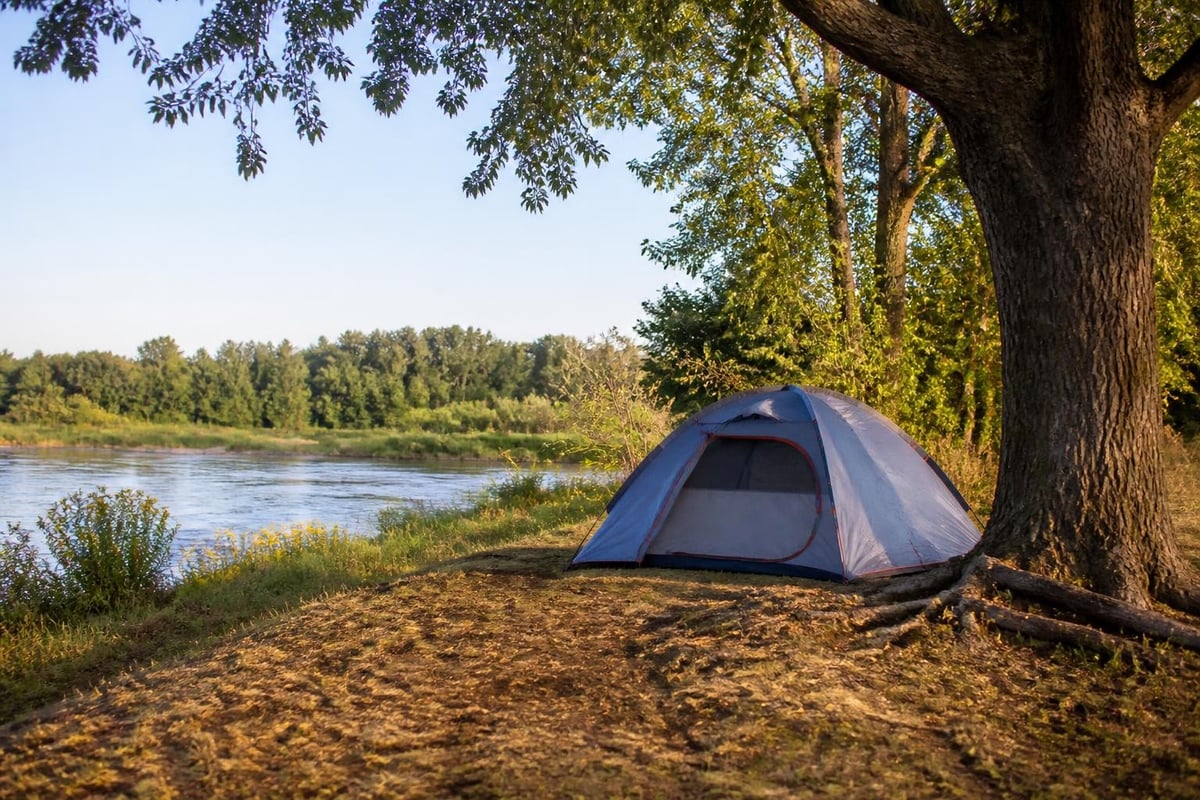
Breezes above six miles per hour make it difficult for mosquitoes to navigate. If you can choose between a sheltered hollow and a ridge with steady wind, take the ridge. Many campers prioritize shade and privacy, but those dense, still pockets concentrate mosquitoes during peak feeding hours at dawn and dusk.
Ground-Applied Natural Repellent Zones
Traditional camping mosquito control means spraying everyone with DEET or picaridin before each hike, meal, and evening. That approach protects one person at a time and requires constant reapplication. Natural mosquito repellent camping shifts the strategy to protecting the entire campsite perimeter using ground-applied scent-masking methods.
Pour biodegradable natural repellent around your tent, picnic table, and fire ring to create a scent barrier. The goal is to mask the human carbon dioxide and body odor signature that mosquitoes track at ground level. When the scent trail disappears, mosquitoes continue drifting rather than landing.
How Scent-Masking Works in Open Spaces
Mosquitoes fly low, typically within three feet of the ground, following scent gradients. A ground-applied barrier of essential oils (geraniol, citronella, peppermint, eugenol, cornmint, rosemary) disrupts that gradient. The mosquito detects plant scent instead of human scent and moves past the treated zone.
This method protects the whole space. Everyone near the campfire benefits, not just the people who remembered to spray themselves. Pets stay safe because nothing touches their skin. Children playing near the tent remain protected without asking them to stand still for spray applications every two hours.
Key advantages of ground-applied natural repellent:
- No sticky residue on skin or clothing
- Covers the entire campsite instead of individual bodies
- Lasts days instead of hours with proper application
- Safe around pets and children when used as directed
- No reapplication during meals or activities
Pour the beads in a perimeter around high-traffic areas: tent entrances, cooking zones, seating areas. The scent works best during days one and two after application. Refresh the perimeter if rain washes the area or if you notice mosquitoes returning to previously protected zones.
Essential Oil Blends and Active Ingredients
Not all natural mosquito repellent camping products deliver equal protection. The EPA's repellent selection tool helps consumers identify registered products, but many plant-derived options fall under FIFRA 25(b) minimum-risk exemptions rather than full EPA registration. Understanding which essential oils offer documented efficacy matters when planning backcountry trips.
Six Oils with Field-Tested Performance
A systematic review of essential oils as mosquito bio-repellents evaluated dozens of plant extracts between 2020 and 2024. Six oils emerged with consistent repellent activity across multiple mosquito species:
| Essential Oil | Primary Active Compound | Duration (skin-applied studies) | Mechanism |
|---|---|---|---|
| Geraniol | Geraniol monoterpene | 1-2 hours | Olfactory disruption |
| Citronella | Citronellal, geraniol | 30-90 minutes | Scent masking |
| Peppermint | Menthol, menthone | 45-120 minutes | Deterrent vapor |
| Eugenol (clove) | Eugenol phenylpropanoid | 60-90 minutes | Contact repellent |
| Cornmint | L-menthol | 90-150 minutes | Vapor barrier |
| Rosemary | Camphor, 1,8-cineole | 60-120 minutes | Olfactory deterrent |
These durations reflect skin-applied studies. When poured on the ground as biodegradable beads, the oils create a persistent scent zone that refreshes with ground moisture and temperature shifts rather than evaporating from body heat and sweat.

Why Blends Outperform Single Oils
Mosquitoes adapt quickly to single-compound repellents. A six-oil blend presents multiple olfactory disruptions simultaneously, reducing the likelihood of mosquitoes navigating through the barrier. The blend also extends effective duration because different oils volatilize at different rates, creating a layered scent profile over 48 hours.
Families appreciate blend-based natural mosquito repellent camping solutions because the plant scent feels less clinical than synthetic repellents. The rosemary and peppermint notes blend into outdoor settings rather than announcing chemical intervention.
Permethrin-Treated Gear and Clothing
Permethrin is a synthetic pyrethroid that bonds to fabric and kills mosquitoes on contact. Though synthetic, it is derived from chrysanthemum flowers and approved for gear treatment. Permethrin never goes on skin. You treat clothing, tents, sleeping bag exteriors, and backpacks before the trip.
Permethrin-treated gear reduces mosquito bites by 80 to 90 percent in field studies. The treatment survives six launderings or 42 days of sun exposure, whichever comes first. University of Florida IFAS extension guidance recommends permethrin as part of an integrated mosquito management strategy for campers.
Application Protocol for Clothing
Purchase pre-treated clothing or treat your own. Aerosol permethrin products designed for fabric treatment are available at outdoor retailers. Hang shirts, pants, and hats on a line outdoors. Spray until damp but not dripping. Allow to dry completely (two hours minimum) before packing.
Never apply permethrin to skin. Never spray permethrin near cats until completely dry (wet permethrin is toxic to cats, though dry permethrin on fabric poses minimal risk). Always follow label directions and apply outdoors in well-ventilated areas.
Key permethrin tips for natural mosquito repellent camping:
- Treat all outer layers including socks and hat brims
- Reapply after six washes or before extended trips
- Store treated items in sealed bags to preserve potency
- Combine with ground-applied scent barriers for full-perimeter protection
- Check labels for application rates and drying times
Permethrin provides contact-kill protection, but it does not prevent mosquitoes from entering your campsite. Pair treated clothing with ground-applied natural repellent to create layered defense: the ground barrier reduces mosquito presence in the campsite, and permethrin-treated gear handles any that do approach.
Campsite Setup and Structural Defenses
Physical barriers reduce reliance on chemical repellents. Mosquito netting, tent design, and spatial organization of your campsite all influence bite rates. Natural mosquito repellent camping includes building a defensive layout before you unpack cooking gear.
Tent Selection and Netting Strategies
Choose tents with fine mesh (no-see-um mesh) rather than standard mosquito netting. Standard mesh blocks mosquitoes but allows biting midges and sand flies through. No-see-um mesh has smaller openings (around 0.5 mm) that exclude nearly all flying biters.
Set up mesh dining shelters or screen rooms for meal prep and evening relaxation. These structures provide chemical-free protection during peak mosquito hours (dusk and dawn). Pair the screened area with ground-applied natural repellent around the perimeter to prevent mosquitoes from hovering at entry points.
Structural defense checklist:
- No-see-um mesh on all tent windows and doors
- Screen room or dining fly for group meals
- Tent footprint to prevent ground moisture from reducing repellent effectiveness
- Double-zip doors to minimize mosquito entry during transitions
Keep tent doors closed except during entry and exit. Mosquitoes that enter during the day will wait inside for dusk feeding. A quick sweep with a headlamp before bed helps locate any that slipped past defenses.
Family-Safe Repellent Choices
Families camping with young children face stricter safety requirements. The American Academy of Pediatrics advises against DEET on infants under two months and recommends concentration limits for older children (no higher than 30 percent DEET). Many parents prefer avoiding DEET entirely, which makes natural mosquito repellent camping approaches essential.
Age-Specific Considerations
Infants under two months should rely entirely on physical barriers: netting, permethrin-treated clothing (after complete drying), and screened carriers. Do not apply any repellent, natural or synthetic, to infant skin. Instead, create a protected zone using ground-applied biodegradable repellent around strollers, playpens, or blanket areas.
Children ages two to twelve can use EPA-registered natural repellents containing PMD (para-menthane-3,8-diol, also called oil of lemon eucalyptus). PMD products carry EPA registration and demonstrate efficacy comparable to low-concentration DEET. PMD is plant-derived but should not be applied to children under three years old per label directions.
| Age Group | Recommended Strategy | What to Avoid |
|---|---|---|
| 0-2 months | Physical barriers, ground-applied perimeter repellent, permethrin-treated gear | All skin-applied repellents |
| 2 months - 3 years | Netting, permethrin clothing, ground barriers | PMD/OLE, high-concentration products |
| 3-12 years | PMD products, ground barriers, treated clothing | DEET above 30%, spray-on applications that children control |
| Adults | All registered repellents, ground barriers, treated gear | Applying repellent near eyes, mouth, hands |
Ground-applied natural repellent solves the family camping dilemma: you protect the entire site without asking children to stand still for spray application or worrying about them touching treated skin and then putting hands in their mouths. Pour beads around the tent and picnic area once, and the whole family benefits for two days.
For families who want the peace of mind that comes from protecting their campsite without sticky sprays or complex application routines, biodegradable natural repellent beads offer a practical solution. Mosquito Beads are designed for exactly this scenario: pour the corn-based granules infused with six essential oils around your campsite perimeter, and the scent-masking barrier works to keep mosquitoes from detecting your family's presence. Nothing on skin, no reapplication during meals, and protection that covers everyone in the treated zone for days one and two.

Planning Meals and Fire Smoke Strategy
Campfire smoke repels some mosquitoes, but relying on smoke creates its own problems: respiratory irritation, smoky clothing, and limited coverage. Smoke drifts with the wind, leaving downwind areas unprotected. Natural mosquito repellent camping balances smoke use with more reliable methods.
Herbs and Wood Selection
Toss rosemary, sage, or eucalyptus branches onto the fire for additional mosquito-repelling smoke. These herbs release oils that enhance the deterrent effect. The scent is pleasant to humans but disruptive to mosquito navigation. Pine and cedar produce aromatic smoke as well, though their repellent effect is less documented than hardwoods.
Do not rely solely on smoke. Wind shifts constantly, and smoke cannot protect tent interiors or sleeping areas. Use fire smoke as a supplemental tool during evening social hours, but establish ground-applied repellent zones for consistent all-night protection.
Cooking and Food Storage
Mosquitoes are not attracted to food like flies are, but cooking generates heat, moisture, and carbon dioxide-all mosquito attractants. Set up your cooking area downwind from sleeping zones and pour natural repellent around the perimeter. Store food in sealed containers away from the tent to reduce overall scent signature at your sleeping site.
Clean cooking gear immediately after meals to eliminate food residue that attracts other insects. While mosquitoes are not drawn to leftovers, ants, wasps, and flies are, and their presence makes outdoor time less pleasant.
Backup Strategies for High-Pressure Environments
Some environments overwhelm natural mosquito repellent camping measures: swampy backcountry, northern forests during black fly season, tropical regions with year-round mosquito pressure. In these settings, layer multiple strategies and carry backup options.
When to Add Skin-Applied Repellent
If ground-applied barriers and permethrin-treated clothing are not sufficient, add skin-applied repellent to exposed areas. Choose EPA-registered natural products containing PMD or consider low-concentration picaridin (10 to 20 percent) for extended protection.
Apply skin repellent only to exposed skin: neck, hands, ankles. Clothing should already be treated with permethrin, so no need to spray over fabric. Reapply according to label directions, typically every two to four hours depending on activity level and sweat.
Spatial Repellent Devices
Battery-powered spatial repellent devices release vaporized repellent into a small area (10 to 15 feet radius). These devices use heat or fans to disperse active ingredients like metofluthrin or allethrin. They require power, create dependency on batteries, and offer limited coverage, but they can protect a picnic table or tent vestibule during peak mosquito hours.
The World Health Organization Vector Control Advisory Group reviews spatial repellent evidence and notes that these tools work best as part of integrated strategies, not standalone solutions. Combine spatial devices with ground-applied natural barriers for broader coverage.
Additional high-pressure tactics:
- Headnets for hiking through dense mosquito zones
- Ankle and wrist bands treated with natural oils
- Portable fans to create airflow around seating areas
- Early retreat to screened areas during dawn/dusk feeding peaks
Know your tolerance threshold. If natural mosquito repellent camping methods keep bites to one or two per evening, most families accept that level. If you are receiving ten or more bites per hour, escalate to additional measures or relocate to a less mosquito-dense site.
Monitoring and Adjusting Your Approach
Natural methods require observation and adjustment. What works perfectly at a dry elevation campsite may underperform near a creek. Track which strategies reduce bite rates and which do not deliver results in your specific environment.
Field Testing and Note-Taking
Keep a simple log during your first few natural mosquito repellent camping trips. Note which hours had the most mosquito activity, where bites occurred (near tent, at picnic table, on trail), and which interventions seemed to help. Over time, patterns emerge that let you refine your setup for future trips.
For example, you might notice that mosquitoes concentrate near the tent door at dusk but rarely bother the cooking area 20 feet away. That suggests your ground-applied repellent around the cooking zone is working well, but you need to refresh the tent perimeter or add permethrin treatment to the tent exterior.
Adapting to Weather and Season
Rain washes ground-applied repellent, reducing effectiveness. After heavy rain, refresh your perimeter application. Heat accelerates essential oil volatilization, which can shorten the effective duration of scent barriers. In hot climates, expect to reapply ground repellent more frequently than in cooler regions.
Early summer (May to July in most of North America) brings peak mosquito populations as spring larvae mature. Late summer and fall see reduced numbers but increased disease risk from mosquitoes that have fed multiple times. Adjust your natural mosquito repellent camping approach based on seasonal mosquito pressure in your region. Mosquito behavior varies by species and season, so understanding local patterns helps you plan more effective defense.
Teaching Children Mosquito Awareness
Children benefit from understanding why you are setting up ground barriers and wearing certain clothing. Teaching mosquito ecology makes them active participants in campsite defense rather than passive recipients of spray applications.
Age-Appropriate Lessons
Explain to young children that mosquitoes smell people and that certain plants make it harder for mosquitoes to find us. Show them where you are pouring ground repellent and let them help with age-appropriate tasks like hanging permethrin-treated clothing or checking tent mesh for tears.
Older children can learn about mosquito life cycles, breeding sites, and disease transmission. Take a walk around the campsite and identify standing water where larvae might develop. Dump out container water, flip over buckets, and clear tarps that collect rain. These habitat-reduction actions teach integrated pest management principles that children carry into adulthood.
Building Good Habits
Teach children to enter and exit tents quickly, close zippers immediately, and avoid sitting near standing water during dawn and dusk. These habits reduce bites more effectively than asking children to remember hourly spray application.
Make mosquito awareness part of camping routine, not an emergency response. When children understand that campsite setup includes protective measures, they accept ground barriers and treated gear as normal rather than viewing them as inconvenient restrictions.
Natural mosquito repellent camping means protecting the entire campsite perimeter instead of coating each family member in spray and hoping it lasts. Ground-applied scent barriers, permethrin-treated gear, smart site selection, and physical barriers work together to create comfortable outdoor evenings without relying on sticky, chemical-heavy skin applications. For families who want effective protection that keeps everyone safe and comfortable, Mosquito Beads offer biodegradable, DEET-free defense you pour on the ground where people gather-nothing on your skin, no smoke, no flame, and peak performance for days one and two per application.