

Ground Mosquito: Breeding, Behavior & Protection Tips
When you step outside for an evening on the patio, the first mosquitoes to find you are often hunting close to the ground. These aren't a special species, but rather common mosquitoes exhibiting ground-level behavior that makes them particularly persistent around outdoor living spaces. Understanding the ground mosquito phenomenon-why mosquitoes breed, hunt, and hover near the surface-gives homeowners the insight needed to reclaim their yards without resorting to chemical sprays or constant reapplication of sticky repellents.
Why Mosquitoes Stay Close to the Ground
Most mosquitoes exhibit ground-level flight patterns for practical reasons tied to survival and reproduction. Female mosquitoes searching for blood meals typically fly between six inches and eight feet above the surface, with many species preferring the lower end of that range. This behavior isn't random.
Ground mosquito activity concentrates where conditions support their three primary needs:
- Access to carbon dioxide plumes that drift downward from human breath
- Protection from wind that disrupts flight at higher elevations
- Proximity to ground-level moisture where they'll lay eggs within 48 hours of feeding
The physics of scent tracking explain much of this behavior. Mosquitoes detect CO2 from 30 feet away, and those chemical signals settle toward the ground in still evening air. A mosquito flying at ankle height can follow a scent corridor directly to its target, while higher-altitude flight puts insects above the densest concentration of the cues they depend on.
Ground-Level Breeding Sites Create Local Populations
The term ground mosquito also describes where many species complete their aquatic life stages. According to research published in Communications Biology, gravid Aedes aegypti females actively select clustered, ground-level breeding sites using communal chemical cues. This means one successful breeding container attracts more egg-laying, creating hotspots of mosquito production right in your yard.
Common ground-level breeding sites include:
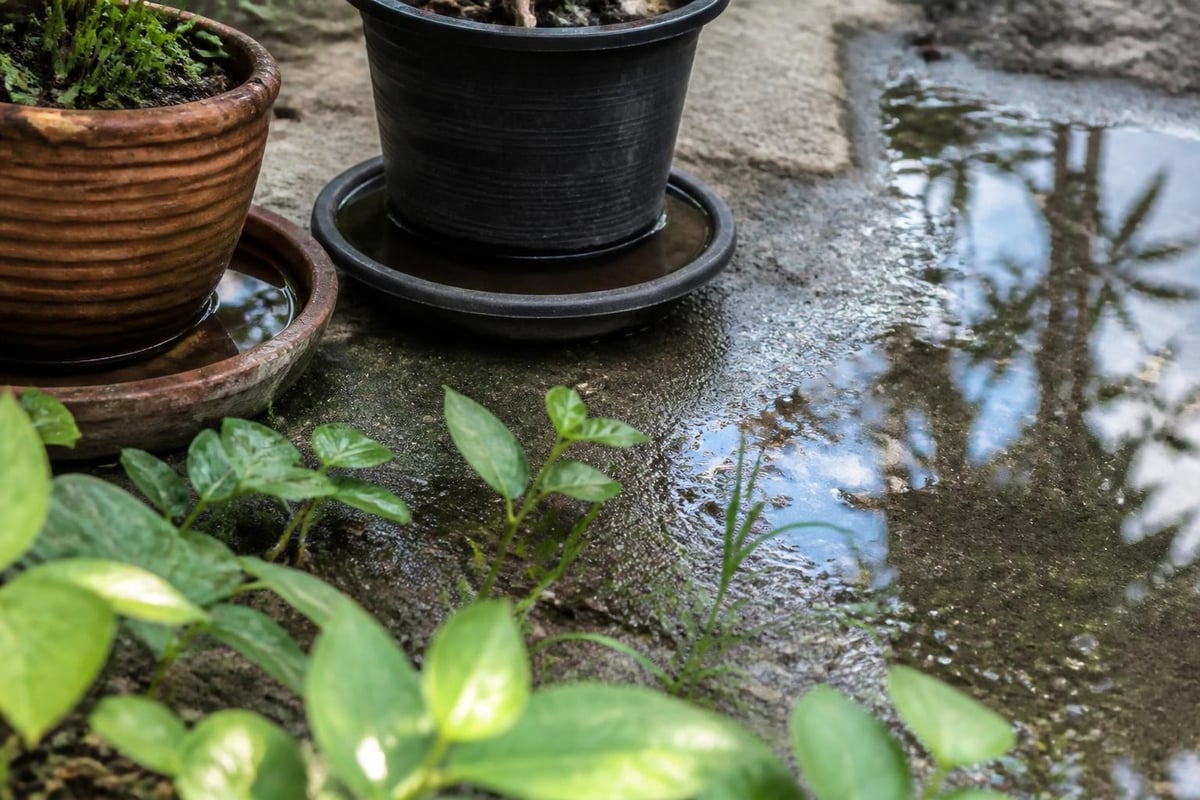
- Plant saucer overflow
- Low spots that hold rainwater for 5-7 days
- Clogged drainage channels
- Concrete depressions in patios or driveways
- Tarps or covers that collect standing water
A semi-field study on oviposition site choice confirmed that containers with organic matter and ground-level water sources are strongly preferred over elevated options. For the homeowner, this means the breeding sites closest to where you entertain are often the most productive for mosquitoes.
How Ground Mosquitoes Hunt by Scent
The hunting strategy of a ground mosquito relies heavily on olfactory cues that remain strongest near the surface. Research shows mosquitoes target us based on a complex blend of signals: carbon dioxide, lactic acid, ammonia, and over 300 other volatile compounds emitted through skin and breath.
These scent molecules behave predictably in outdoor air. Heavier compounds settle, lighter gases rise, but the richest concentration of human scent markers pools in a zone from ground level to about four feet high-exactly where people sit on patio furniture.
The Scent Cone Phenomenon
When you're seated outdoors, you create what researchers call a scent cone. Your exhalations, skin emissions, and body heat generate a chemical signature that spreads outward and downward. Mosquitoes enter this cone from downwind, following the gradient of increasing scent concentration until they reach skin.
This is why mosquitoes seem to "find" you even when you're sitting still. They're not seeing you-they're smelling you. And because that scent signature is richest at ground level, most mosquitoes approach low before ascending to exposed skin on arms and legs.
| Scent Component | Detection Range | Ground Concentration |
|---|---|---|
| Carbon Dioxide | 30+ feet | Moderate (rises) |
| Lactic Acid | 15-20 feet | High (settles) |
| Ammonia | 10-15 feet | High (settles) |
| Octenol | 10-12 feet | Moderate (settles) |
Understanding this ground-level scent-tracking behavior explains why traditional sprays often fail in outdoor entertaining spaces. When you apply DEET or picaridin to your skin, you protect one person for a limited window. But the scent cone that attracted mosquitoes to your patio in the first place remains unchanged, continuing to draw insects into your space.
Managing Ground-Level Breeding Sites
The WHO operational manual on larval source management provides authoritative guidance on identifying and eliminating mosquito breeding habitats. For homeowners, the focus should be on ephemeral ground-level sites that cycle water repeatedly throughout warm months.
Weekly inspection checklist:
- Empty all plant saucers and decorative containers
- Clear debris from gutters and downspouts
- Fill ground depressions with soil or gravel
- Ensure pool covers drain completely
- Check AC condensation lines for standing water
- Refresh pet water bowls daily
The University of Arizona Cooperative Extension notes that urban drainage structures present particular challenges because they're designed to hold water temporarily-exactly the 5-7 day window mosquitoes need to complete development from egg to adult.
Why Source Reduction Isn't Enough
Even with diligent source reduction, you cannot eliminate every ground-level breeding site. Your neighbors' yards, nearby storm drains, and natural depressions in green spaces will continue producing mosquitoes that migrate into your outdoor living area.
This is where the concept of protecting the space becomes critical. Rather than attempting to eliminate every mosquito or coat every person in chemical repellent, many homeowners are exploring ways to make their gathering areas less detectable to ground-hunting mosquitoes.
Ground Application vs. Personal Application
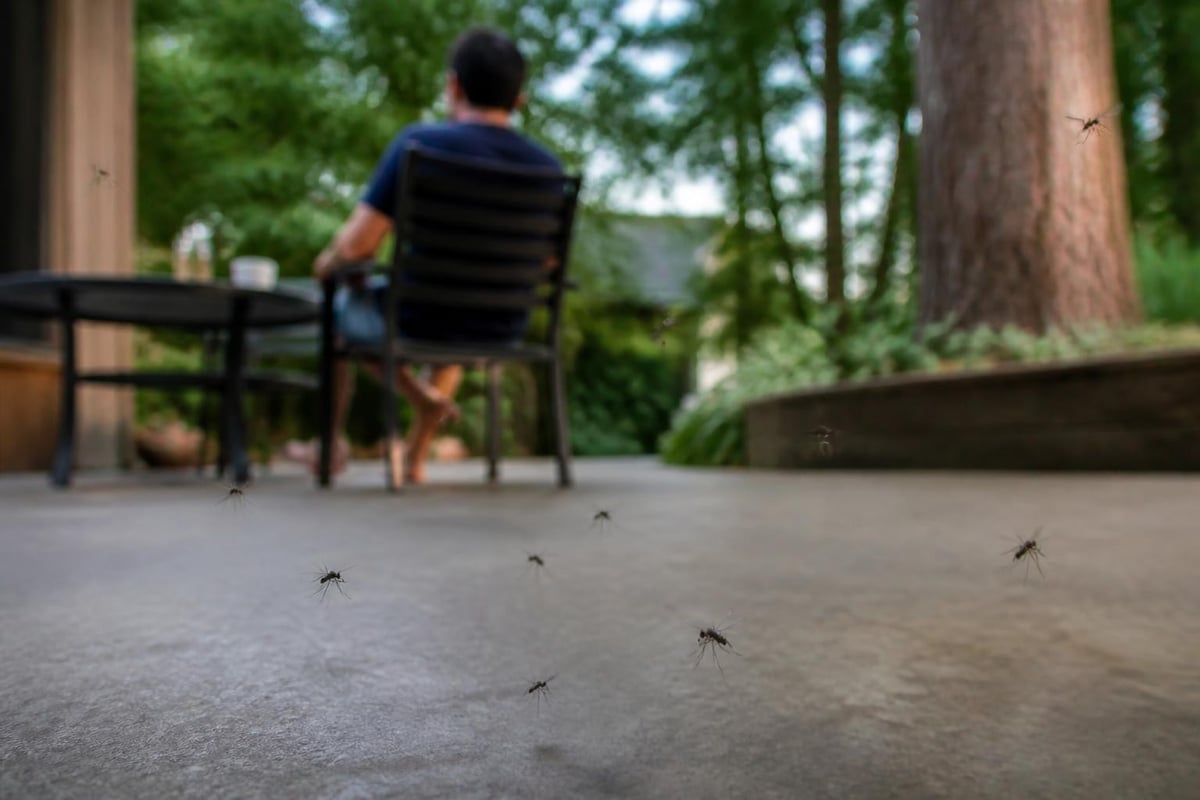
The distinction between ground application and personal application represents a fundamental shift in how we think about mosquito protection for outdoor spaces. Traditional DEET sprays, picaridin lotions, and even natural oil-based sprays all require application to skin. This creates several problems for hosts:
- Guests must spray themselves down upon arrival
- Reapplication needed every 1-2 hours
- Sticky or greasy feel many people dislike
- Chemical exposure concerns near children and pets
- Only protects the person wearing it, not the space
In contrast, ground mosquito management through scent-masking takes a different approach. By addressing the scent cone at ground level where mosquitoes hunt, you can reduce detection across an entire area.
Products that work at ground level use essential oil blends to mask the human scent signature that mosquitoes track. Geraniol, citronella, peppermint, and other compounds create an olfactory barrier that makes it harder for mosquitoes to locate targets. When applied where people gather-on decks, patios, and around seating areas-this approach protects everyone in the space without anyone needing to wear anything.
The Case for Nothing on Your Skin
The outdoor sanctuary host faces a unique challenge. You've invested in comfortable furniture, ambient lighting, and a welcoming atmosphere. Asking guests to coat themselves in spray undermines that hospitality. Children run in and out. Pets lounge nearby. The last thing you want is a sticky, chemical layer on everyone and everything.
Comparing costs and approaches reveals that ground application solutions often deliver better coverage per dollar while eliminating the "application fatigue" that comes with hourly respraying.
For natural mosquito repellent patio protection, the biodegradable bead approach offers a practical middle ground between doing nothing and calling a spray service. You pour the beads on the ground where people sit, and the essential oil blend masks the scent mosquitoes track at ground level. Nothing sticky, no flame, no smoke. Just scent-masking that makes your space harder for mosquitoes to detect.

Professional vs. DIY Ground-Level Control
Homeowners evaluating ground mosquito control options typically consider three paths: professional barrier sprays, traditional citronella products, or newer ground application systems.
Professional barrier spray services typically cost $75-150 per application with monthly reapplication required. These services spray perimeter vegetation and ground cover with synthetic pyrethroids or natural pyrethrin. While effective at killing mosquitoes on contact, the chemical residue concerns some homeowners, especially those with pets who investigate every corner of the yard. The WHO Guidelines for Malaria discuss barrier spraying within integrated vector management but emphasize the need to balance efficacy with environmental impact.
Traditional citronella candles operate at ground level but suffer from limited range and wind sensitivity. A single candle protects roughly 3-4 feet in still air, requiring multiple units for even a small patio. The smoke and open flame present aesthetic concerns for many hosts who've invested in clean, modern outdoor design.
Ground application bead systems represent a newer category focused on scent-masking rather than killing. The approach aligns with integrated pest management principles by reducing reliance on chemical treatments while providing practical protection.
| Approach | Coverage | Duration | Reapplication | Skin Contact |
|---|---|---|---|---|
| Barrier Spray | Full yard | 21-30 days | Monthly | Residual |
| Citronella Candle | 3-4 ft radius | 4-6 hours | Each use | None |
| Ground Beads | 1,000 sq ft | 1-2 days peak | Per gathering | None |
| Personal DEET | One person | 2-4 hours | Hourly | Direct |
The key advantage of ground application systems lies in protecting the space, not just one person. When you mask the scent cone at ground level, everyone in that zone benefits equally. No one needs to spray down. Pets can move freely. And hosts avoid the awkward moment of offering guests a bottle of repellent as they arrive.
Ground Mosquito Activity Patterns Through the Season
Ground mosquito populations fluctuate based on temperature, rainfall, and photoperiod. In most of the United States, peak activity runs from May through September, with regional variations based on climate.
Early Season (April-May)
Ground-level breeding begins when daytime temperatures consistently exceed 50°F and standing water from spring rains persists for a week. The first generation of mosquitoes emerges hungry and aggressive, having overwintered as eggs or dormant adults depending on species.
Floodwater mosquitoes (Aedes vexans) are particularly problematic in early season because they breed in temporary ground pools created by snowmelt and spring storms. These mosquitoes can complete development in as little as seven days, creating multiple generations before summer arrives.
Peak Season (June-August)
Summer brings the highest ground mosquito pressure as temperatures optimize breeding cycles and human outdoor activity increases. Container-breeding species like Aedes albopictus thrive in plant saucers, birdbaths, and the countless small receptacles suburban yards provide.
This is when the scent-masking approach proves most valuable. With mosquito populations at their peak, hourly reapplication of personal sprays becomes tedious. Ground application systems that last 1-2 days per treatment offer practical protection for regular outdoor use.
Late Season (September-October)
As temperatures cool, mosquito activity becomes more concentrated around peak feeding times-dusk and dawn. The ground mosquito you encounter in September is often more persistent than summer populations because she's fattening up for potential overwintering or laying final egg batches before frost.
Many homeowners find that late season offers the best outdoor entertaining conditions, with comfortable temperatures and lower humidity. Ground-level protection extends the patio season without requiring the chemical load of barrier sprays.
Protecting Specific Outdoor Spaces
Different outdoor environments require tailored approaches to ground mosquito management based on how people use the space and what surrounding habitat supports mosquito populations.
Patios and Decks
Elevated decks naturally reduce ground mosquito encounters because you've created distance from the prime hunting zone. However, mosquitoes readily fly 8-10 feet to reach hosts, so elevation alone provides minimal protection.
For natural mosquito repellent backyard protection, focus ground application around deck perimeter, entry points, and under furniture where scent pools. The goal is to disrupt the scent gradient before mosquitoes ascend to deck level.
Ground-level patios require more thorough coverage because people and mosquitoes occupy the same vertical zone. Pour biodegradable beads in a perimeter around seating areas and concentrate application where people typically stand or walk. This creates a scent-masking barrier that forces mosquitoes to navigate through confused chemical signals before reaching targets.
Camping and RV Sites
Mobile outdoor living presents unique ground mosquito challenges because you're often placing your camping area directly adjacent to prime breeding habitat-lakes, streams, and wetlands.
For camping and RV protection, portable ground application systems work well because they require no setup and leave no trace. You pour beads around your site perimeter, by camp chairs, and near entry doors. When you break camp, the biodegradable material dissolves back into the environment.
The advantage over traditional camping sprays is coverage. A family of four would need to reapply personal repellent multiple times daily. Ground application protects the entire site continuously, and no one needs to wear anything.
Sports Fields and Sidelines
Youth sports create a perfect storm for mosquito exposure: people standing still on damp grass during prime feeding hours. Parents watching weekend soccer games or evening baseball face persistent ground mosquito pressure with few good options.
You cannot spray down an entire sideline of spectators. Citronella candles present trip hazards and open flame concerns. But natural mosquito repellent for sports applications work well in mesh bags clipped to chairs or small pouches poured near blankets and seating.
The scent-masking effect creates a protected zone around each family's viewing area without chemicals on children's skin or smoke drifting across the field.
Regional Considerations for Ground Mosquitoes
Ground mosquito species and behavior vary significantly by region, influencing which management strategies prove most effective.
Southern States
In states like Florida and Texas, year-round warmth supports continuous mosquito breeding. Ground-level breeding sites never fully freeze, allowing some species to remain active even in winter months.
The Asian tiger mosquito (Aedes albopictus) dominates suburban landscapes, breeding in any container that holds water for a week. This aggressive day-biting species hunts close to the ground and shows strong preference for shaded areas where people seek relief from heat.
Midwest and Plains
In states like Kansas, seasonal mosquito pressure peaks in early summer following spring rains. Floodwater mosquitoes emerge in massive numbers from temporary ground pools, overwhelming traditional control measures.
The short but intense mosquito season means homeowners need reliable protection that doesn't require season-long commitment to chemical treatments. Ground application systems that work on-demand-pour before the cookout, enjoy the evening-fit this pattern better than monthly barrier sprays.
Coastal and Lake Regions
Properties near water face elevated ground mosquito pressure because breeding habitat is essentially unlimited. Salt marsh mosquitoes can fly several miles from breeding sites, meaning even perfect yard sanitation won't prevent encounters.
The focus shifts from elimination to protection. You cannot control what happens in the wetland half a mile away, but you can make your specific gathering space harder for mosquitoes to detect through ground-level scent masking.
Integration with Comprehensive Mosquito Management
Effective ground mosquito control fits within a broader integrated pest management strategy that combines multiple tactics for sustainable results.
The three-layer approach:
- Source reduction – Eliminate breeding sites through weekly inspections and habitat modification
- Space protection – Apply ground-level scent masking to gathering areas during use
- Personal protection – Reserve personal repellents for high-risk activities like hiking or travel
This layered strategy acknowledges that no single tactic provides complete protection, but combined approaches create overlapping defenses that significantly reduce mosquito encounters.
For the outdoor sanctuary host, this means maintaining a clean yard while deploying ground application systems before gatherings. You're not choosing between source reduction and protection-you're doing both, but targeting each where it works best.
Pet-Friendly Considerations
Many homeowners avoid chemical treatments specifically because of pet mosquito repellent concerns. Dogs and cats investigate yards thoroughly, putting them in direct contact with any ground-applied substance.
Biodegradable bead systems made from corn-based granules and essential oils offer a pet-friendly middle ground. When used as directed-poured on patios and decks rather than broadcast across lawns-they create protected gathering spaces without exposing pets to synthetic chemicals. The beads work through scent-masking, not toxicity, so there's no poisoning risk even if a curious dog investigates.
Managing ground mosquito populations and protecting outdoor spaces requires understanding where mosquitoes breed, how they hunt, and what makes certain areas more attractive than others. By addressing scent at ground level where mosquitoes track human presence, you can create protected gathering spaces without coating everyone in sticky sprays or filling your patio with candles. Mosquito Beads offer a biodegradable, DEET-free solution you pour on the ground to mask the human scent mosquitoes track, protecting your whole space instead of just one person. Pour before your next gathering and enjoy your outdoor sanctuary the way you designed it-comfortable, chemical-free, and completely yours.