

Best Outdoor Mosquito Repellent for Your Patio in 2026
Outdoor living transforms your backyard into a sanctuary for family dinners, evening conversations, and summer gatherings. Yet mosquitoes can turn those moments into a battle of swatting and scratching. Finding the best outdoor mosquito repellent means understanding what works for your space, your priorities, and the people who share it. Not every solution fits every lifestyle, especially when you value natural ingredients, pet safety, and protection that covers an entire area rather than coating individual skin.
Understanding How Outdoor Mosquito Repellents Work
Mosquitoes hunt primarily by scent. They detect carbon dioxide from up to 30 feet away, track body heat, and zero in on the cocktail of chemicals your skin naturally releases. Different repellent approaches interrupt this tracking process in distinct ways.
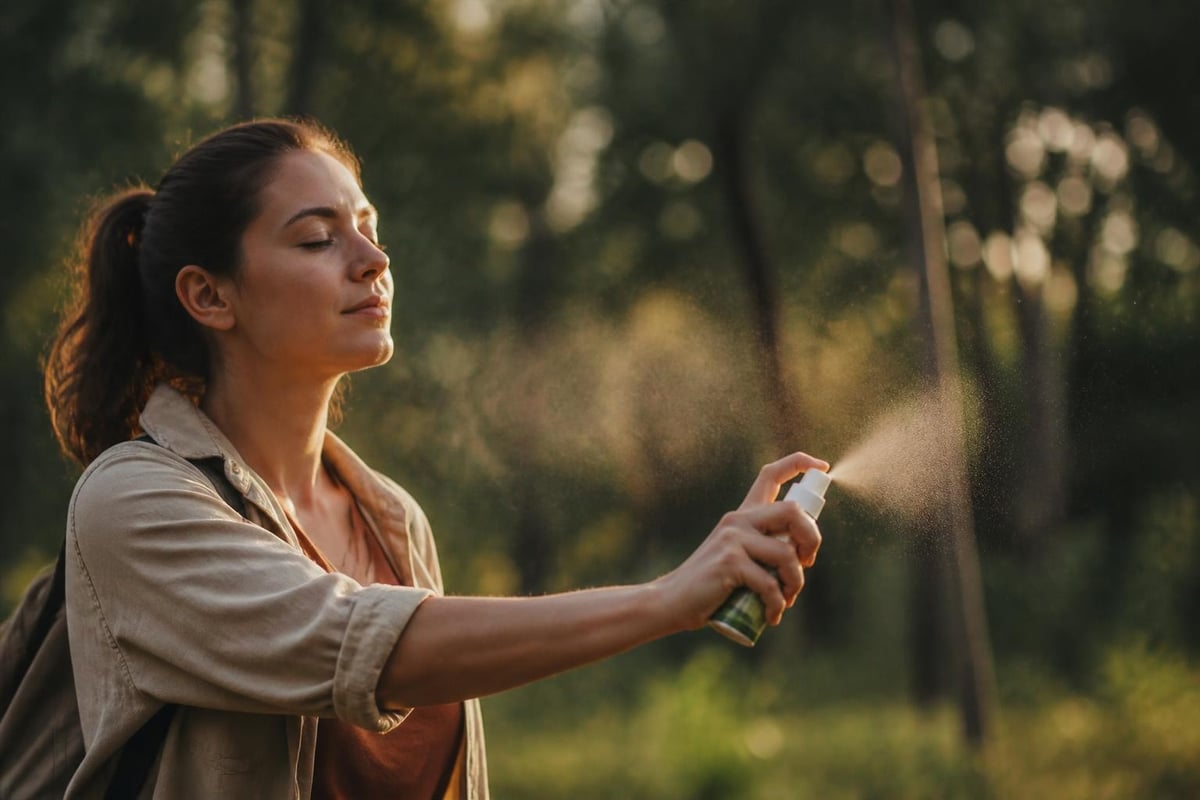
Personal repellents create a chemical barrier on your skin that confuses or repels mosquitoes at close range. These include synthetic options like DEET and picaridin, as well as botanical oils such as citronella or lemongrass. You apply them directly to exposed skin and clothing, and they typically protect one person at a time.
Spatial repellents work differently. Instead of coating individuals, they create a protective zone by releasing active ingredients into the air or masking the scents mosquitoes use to locate people. This category includes candles, coils, thermacell devices, and ground-applied granules. The goal is protecting a defined space rather than a single person.
Synthetic Active Ingredients: What the Research Shows
DEET remains the gold standard against which all repellents are measured. According to the U.S. EPA's assessment of DEET, formulations containing 20 to 30 percent DEET provide four to six hours of protection. Higher concentrations extend duration but do not improve effectiveness at repelling.
Picaridin (also called icaridin) delivers comparable performance to DEET without the greasy texture or plastic-damaging properties. Independent testing by Consumer Reports consistently ranks 20 percent picaridin formulations among top performers for mosquito protection.
IR3535, a synthetic amino acid derivative, offers moderate protection with a better skin feel than DEET. It works well for shorter exposures but requires more frequent reapplication than DEET or picaridin.
| Active Ingredient | Concentration | Protection Duration | Texture | Common Concerns |
|---|---|---|---|---|
| DEET | 20-30% | 4-6 hours | Greasy, dissolves plastics | Skin absorption, chemical exposure |
| Picaridin | 20% | 6-8 hours | Less greasy | Must avoid eyes and mouth |
| IR3535 | 20% | 4-5 hours | Light | Frequent reapplication needed |
| Oil of Lemon Eucalyptus | 30% | 4-6 hours | Oily | Not for children under 3 |
Natural and Botanical Alternatives
The botanical repellent category spans widely in effectiveness. Oil of lemon eucalyptus (OLE) and its refined component PMD (para-menthane-3,8-diol) stand out as the only plant-based options recommended by the CDC for meaningful protection. At 30 percent concentration, OLE delivers four to six hours of coverage, rivaling lower-concentration DEET products.
Essential oil blends containing citronella, geraniol, peppermint, rosemary, and eugenol appear in numerous formulations. Research published by the University of Florida IFAS Extension shows these botanicals provide shorter protection windows, typically 30 minutes to two hours, but many families prefer them for their natural origin and pleasant scent profiles.
The challenge with botanical sprays lies in reapplication frequency and the need to coat all exposed skin thoroughly. For a family gathering on the patio, asking guests to reapply spray every hour creates friction. Children often resist the sticky application, and pets cannot use most skin-applied products safely.
Ground-Applied Solutions for Outdoor Spaces
Ground-applied repellents shift the protection model from individual coverage to spatial defense. Rather than treating each person, you treat the gathering area itself.
Traditional methods include citronella candles, tiki torches, and mosquito coils. Candles create a pleasant ambiance but deliver minimal actual protection. Research shows citronella candles reduce mosquito bites by only 10 to 15 percent in outdoor settings because wind disperses the essential oil plume too quickly.
Thermacell and butane-powered devices heat and release allethrin, a synthetic pyrethroid, creating a 15-foot protection zone. These systems work reasonably well in calm conditions but require fuel cartridges and ongoing purchases. The synthetic pyrethroid raises concerns for families seeking natural alternatives.
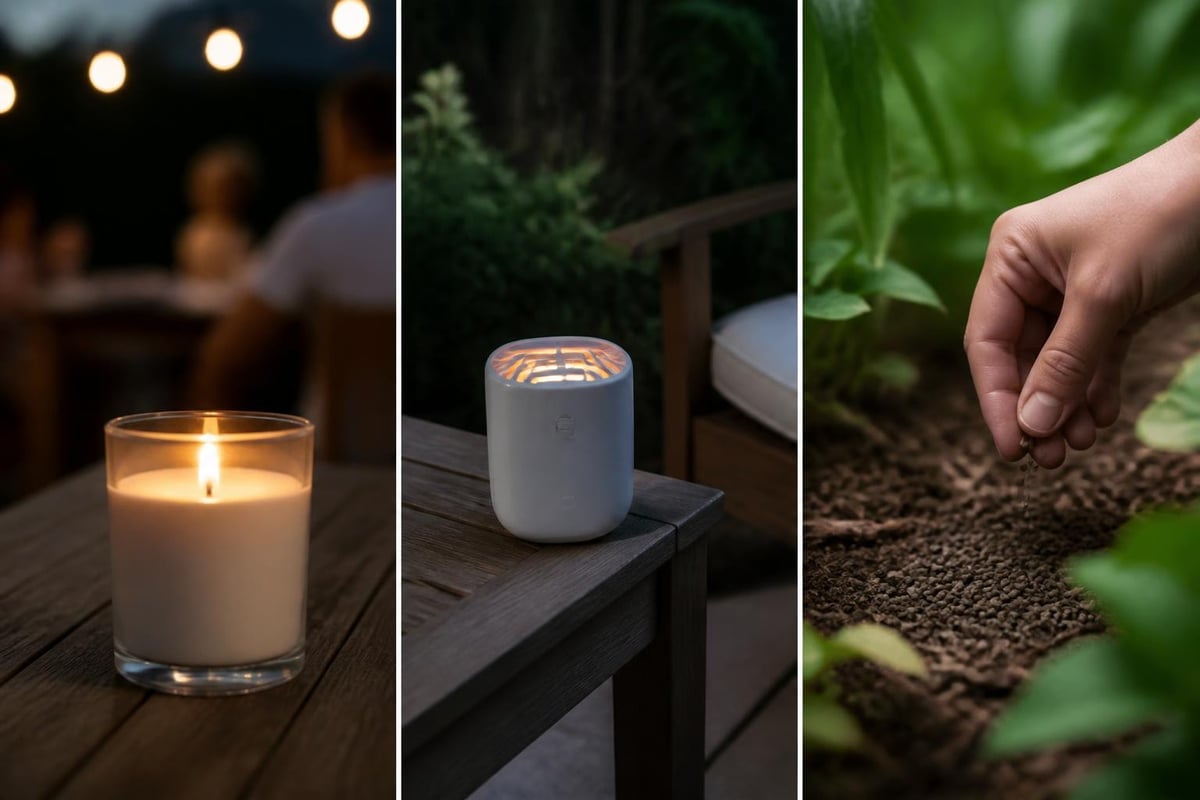
Biodegradable granule systems represent a newer category. These products use essential oil blends infused into corn-based carriers. You pour the granules on the ground where people gather. The concept leverages how mosquitoes hunt at ground level, tracking scent trails upward. By masking human scent at the source, the granules interrupt the tracking process before mosquitoes reach sitting height.
For homeowners who view their patio as an outdoor room, granule systems offer distinct advantages:
- No sticky application process
- No asking guests to spray themselves
- Pet-friendly when used as directed
- No flame, smoke, or fuel to manage
- No visual clutter on tables
- Covers the entire gathering space
The best DEET-free options prioritize whole-space protection without asking anyone to wear chemicals. Families appreciate the shift from individual defense to area coverage, especially when hosting gatherings or simply wanting to step outside without preparation.
Evaluating Performance and Coverage Area
Effectiveness metrics vary by product type. Personal sprays measure protection time on skin. Spatial products measure coverage area and reduction in bites within that zone.
Personal Spray Metrics
When evaluating the best outdoor mosquito repellent in spray form, look for:
- Protection duration: How long before reapplication is needed
- Sweat resistance: Does effectiveness drop with perspiration
- Application ease: Spray, lotion, or wipe format
- Residual feel: Greasy, sticky, or quickly absorbed
Most synthetic sprays require reapplication every four to eight hours. Botanical sprays often need reapplication hourly. In practice, few people reapply on schedule, which significantly reduces real-world effectiveness.
Spatial Product Metrics
Spatial repellents should clearly state coverage area in square feet. A small patio might measure 200 square feet, while a full deck and yard area could exceed 1,000 square feet.
Performance also depends on:
- Wind conditions
- Placement relative to seating
- Ground surface (concrete, grass, gravel, wood deck)
- Temperature and humidity
- Time since application
Products designed for natural mosquito repellent patio protection should account for typical outdoor variables. Peak performance often occurs within the first 48 hours of application for granule-based systems, after which effectiveness gradually declines.
Safety Considerations for Families and Pets
Chemical load concerns drive many families toward natural alternatives. While DEET and picaridin have established safety profiles when used as directed, the cumulative exposure question matters to parents and pet owners.
Skin absorption varies by active ingredient. DEET absorbs through skin at rates between 10 and 20 percent of applied dose. For young children with higher surface area to body weight ratios, this absorption represents a larger relative exposure.
Pet safety requires careful attention. Cats are particularly sensitive to many essential oils and cannot metabolize certain compounds found in permethrin-treated products. Dogs tolerate most repellents better, but ingestion risk exists when they lick treated skin. The EPA's guidance on permethrin and pyrethroids notes treating clothing rather than skin reduces exposure risk.
Ground-applied botanical granules offer a pet-friendly alternative when used according to label directions. Because nothing touches the animal's skin or fur, and the granules break down naturally, the risk profile differs significantly from topical applications.
Environmental impact matters for families who care about their yard ecosystem. Biodegradable formulas break down into the soil without leaving persistent residues. This approach aligns with integrated pest management principles that the World Health Organization recommends for sustainable mosquito control.
Practical Application Strategies
The best outdoor mosquito repellent strategy often combines multiple approaches based on the specific outdoor activity.
For Patio and Deck Living
Stationary outdoor living spaces benefit most from spatial protection. You want coverage that lasts through dinner, conversation, and evening relaxation without ongoing intervention.
Setup protocol:
- Apply ground treatment 30 to 60 minutes before guests arrive
- Focus application around seating areas, entry points, and gathering zones
- Create a perimeter rather than coating every square inch
- Refresh high-traffic areas after 48 hours for extended events
This approach transforms your patio into a protected sanctuary. Nothing sticks to skin. No one needs to remember to reapply spray. Children and pets move freely through the space without concern.
Families seeking natural ways to combat mosquitoes appreciate methods that integrate seamlessly into their outdoor routine without visible equipment or constant attention.
For Active Outdoor Activities
Camping, hiking, and sports activities present different challenges. You're moving through mosquito territory rather than creating a fixed protected zone.
Personal protection becomes necessary in these scenarios:
- Apply repellent to all exposed skin 15 minutes before heading outdoors
- Treat clothing with permethrin for extended trips
- Reapply according to product instructions, especially after swimming or heavy perspiration
- Carry a small portable option for touch-ups
For camping and RV living, combining personal spray with spatial protection around the campsite or RV creates layered defense. Pour granules around your setup perimeter to reduce mosquito pressure in your immediate camp area, then use personal spray for hiking or wandering beyond that zone.
For Hosting and Entertaining
Social gatherings require solutions that respect your guests' preferences. You cannot control whether someone wants to apply repellent, and asking everyone to spray themselves creates awkwardness.
Host-controlled options:
- Treat the gathering space in advance
- Place discrete spatial protection that doesn't interrupt table aesthetics
- Avoid smoke, flames, or mechanical devices that generate noise
- Skip asking guests to coat themselves with product
The outdoor sanctuary host values control over environmental factors without imposing demands on visitors. Natural mosquito repellent for BBQs and gatherings should work invisibly in the background, protecting everyone without requiring participation or awareness.
Regional Considerations for Mosquito Pressure
Geographic location dramatically affects mosquito species, season length, and optimal repellent strategies. The best outdoor mosquito repellent for a Houston patio differs from what works best in Kansas or the Pacific Northwest.
High-pressure regions like the Southeast and Gulf Coast face:
- Year-round mosquito activity in southern areas
- Multiple aggressive species including Asian tiger mosquitoes
- High humidity that affects some repellent performance
- Disease transmission risks from local mosquito populations
Florida's mosquito challenges demand consistent protection through most of the year. Families in these regions benefit from both spatial protection for daily outdoor living and personal repellent for higher-risk activities near wetlands or heavily wooded areas.
Moderate-pressure regions in the Midwest and Mid-Atlantic experience:
- Defined mosquito season from May through September
- Peak activity during humid summer months
- Culex and Aedes species present but less year-round pressure
Low-pressure regions in arid climates or high elevations see sporadic mosquito activity concentrated around water sources and irrigation areas. Protection needs focus on specific outdoor activities rather than daily patio use.
| Region | Mosquito Season | Primary Concerns | Recommended Strategy |
|---|---|---|---|
| Southeast/Gulf Coast | Year-round to 10 months | Disease risk, multiple species, high pressure | Spatial + personal combination |
| Midwest | May-September | Seasonal peaks, West Nile risk | Spatial for home, personal for travel |
| Southwest | Monsoon season | Localized around water | Targeted spatial treatment |
| Pacific Northwest | June-August | Short intense season | Spatial protection sufficient |
Cost-Effectiveness and Long-Term Value
Professional mosquito services run $400 to $1,200 per season for monthly treatments. These services spray synthetic pyrethroids across your entire property, killing mosquitoes but also beneficial insects.
Comparing over-the-counter options requires calculating cost per protected hour or cost per square foot of coverage. A detailed cost comparison of natural mosquito repellents versus professional services shows spatial treatments often deliver better value for defined outdoor living areas.
Personal spray economics:
- Average 6-ounce spray bottle: fifteen to twenty dollars
- Provides approximately 50 to 75 applications
- Protects one person for four to eight hours per application
- Annual cost for family of four using 2-3 times weekly: one hundred fifty to three hundred dollars
Spatial treatment economics:
- Initial product cost: twenty to fifty dollars
- Covers 300 to 1,000 square feet
- Peak performance lasts 48 hours
- Reapplication needed every few days during active use
- Protects everyone in the space simultaneously
The value equation shifts when you factor in convenience, chemical exposure reduction, and guest experience. Not asking visitors to spray themselves, eliminating skin contact with repellents, and protecting pets along with people all add qualitative value beyond simple price-per-hour calculations.
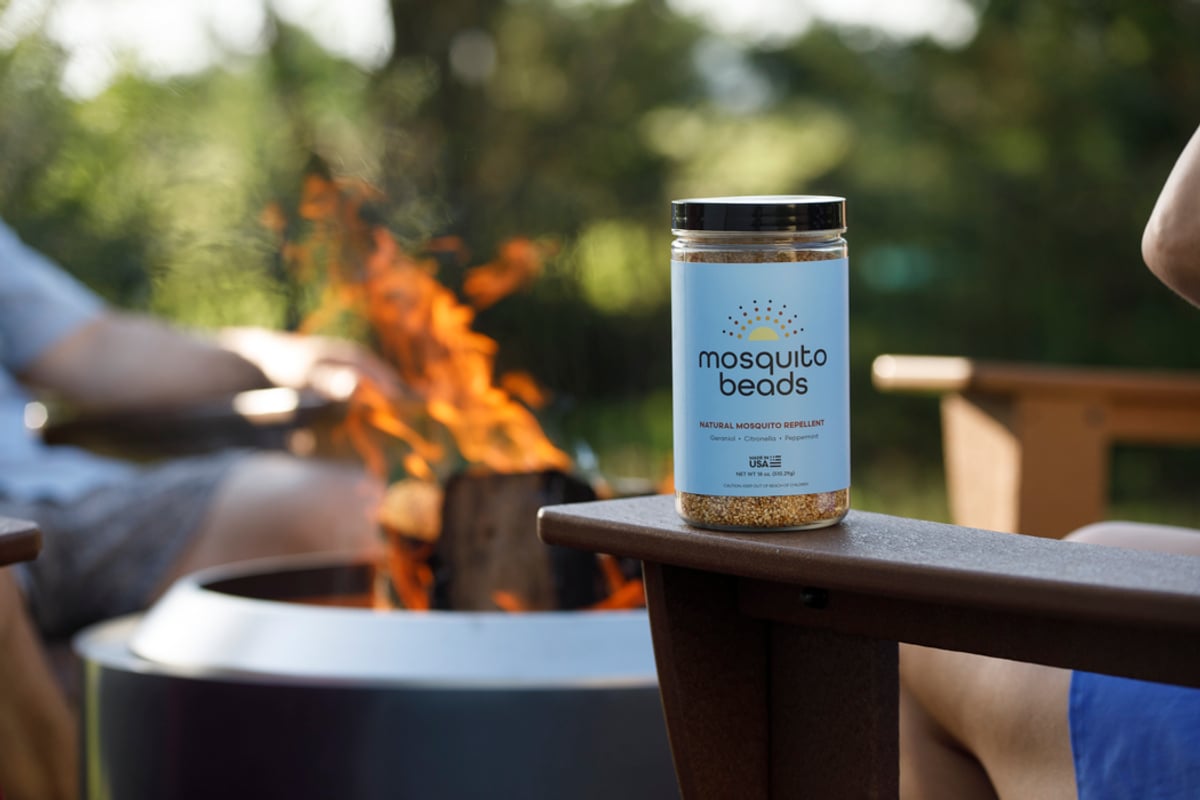
Mosquito Beads offers a ground-applied solution that addresses these concerns directly. Pour the biodegradable granules where people gather, and the blend of six essential oils, including geraniol, citronella, peppermint, eugenol, cornmint, and rosemary, masks human scent at ground level. Mosquitoes drift past instead of landing because they cannot detect their targets as easily. The Signature 18-ounce jar covers up to 1,000 square feet with peak performance on days one and two.
Integrating Repellents with Habitat Modification
The most effective long-term strategy combines active repellents with environmental changes that reduce mosquito breeding and resting sites.
Water management eliminates breeding sites:
- Empty standing water weekly from planters, toys, tarps
- Clean gutters to prevent pooling
- Maintain pool and fountain circulation
- Fix drainage problems that create puddles
Landscaping adjustments reduce mosquito habitat:
- Trim vegetation to increase air circulation
- Reduce dense ground cover near seating areas
- Plant mosquito-deterrent herbs like lavender and basil
- Install fans to create air movement on patios
Timing outdoor activities strategically:
- Mosquitoes peak at dawn and dusk
- Midday often sees lower activity
- Wind reduces mosquito flight and feeding
- Cooler temperatures below 60°F shut down most mosquito activity
These modifications reduce the baseline mosquito population pressure your repellent must overcome. Even the best outdoor mosquito repellent works better when fewer mosquitoes live and breed near your outdoor living space.
Making Your Decision
Selecting the right mosquito protection depends on your specific priorities. Map your decision against these key factors:
Chemical tolerance: If you're comfortable with DEET or picaridin and don't mind the application process, synthetic sprays deliver proven long-duration protection for individual coverage. If you prefer natural ingredients and want to minimize chemical exposure, botanical options and spatial treatments align better with those values.
Protection model: Personal sprays protect the person wearing them. Spatial treatments protect the space everyone shares. Consider whether you're typically outdoors alone or hosting groups.
Convenience requirements: Sprays demand preparation before heading outside and reapplication at intervals. Spatial treatments work best for defined areas you use repeatedly, like a patio or deck, where you can treat once and enjoy extended coverage.
Pet and child safety: Ground-applied methods that keep products off skin eliminate direct contact concerns. Biodegradable formulas reduce environmental persistence and secondary exposure risks.
Aesthetic preferences: Visible devices, smoke, flames, or requiring guests to spray themselves all affect the outdoor experience. Invisible protection that works without participation or visual distraction suits families who view their patio as an extension of their home.
For the outdoor sanctuary host who refuses to compromise on natural ingredients, pet safety, or guest comfort, the best outdoor mosquito repellent protects the space rather than asking individuals to coat themselves. The shift from personal application to spatial protection transforms how you experience your outdoor living area. Pour, don't spray, captures this fundamental difference in approach. Visit Mosquito Beads to explore whether ground-applied essential oil granules match your priorities and protection needs.
Finding the best outdoor mosquito repellent means matching protection method to your lifestyle, safety priorities, and how you actually use your outdoor space. Whether you choose synthetic sprays, botanical oils, or spatial protection, understanding the science behind how mosquitoes hunt and how different products interrupt that process helps you make informed decisions. For families seeking natural, DEET-free protection that covers their entire patio without sticky applications or asking guests to spray themselves, Mosquito Beads offers biodegradable granules you simply pour on the ground where people gather, creating a scent barrier that lets mosquitoes drift past while you enjoy your outdoor sanctuary undisturbed.