

Best DEET Free Mosquito Repellent for Patios in 2026
If you've transformed your patio into an outdoor sanctuary, the last thing you want is DEET's chemical odor clinging to your family or the greasy residue on furniture after you've applied a traditional spray. The search for the best deet free mosquito repellent has intensified as homeowners prioritize both safety and comfort in spaces they've designed to feel like extensions of their homes. In 2026, the options range from EPA-registered synthetics to plant-derived formulas, each with distinct trade-offs in application method, coverage area, and ingredient transparency.
Understanding Why DEET-Free Matters
DEET has dominated the insect repellent market since 1946, but its strong chemical smell, skin absorption profile, and synthetic composition have driven many families to seek alternatives. Parents worrying about repeated exposure near young children, pet owners concerned about accidental contact, and anyone who dislikes the sticky film DEET leaves on skin now have more choices than ever.
The EPA maintains a searchable database of registered insect repellents, allowing consumers to filter by active ingredient and protection duration. This transparency has helped families identify which active ingredients align with their values without sacrificing efficacy.
Chemical Load and Skin Contact
Traditional aerosol sprays require direct skin application, repeated throughout an evening as protection wears off. This means everyone in your outdoor space, including guests who arrive unexpectedly, must accept chemical contact or risk becoming mosquito targets.
Ground-application alternatives eliminate this dilemma entirely:
- No one needs to apply anything to their body
- Pets can move freely through treated areas
- Guests aren't asked to spray down before sitting
- Children don't need reapplication reminders every hour
The shift away from wearable repellents reflects a broader desire to protect the space itself rather than coating individual people.
Synthetic DEET-Free Alternatives
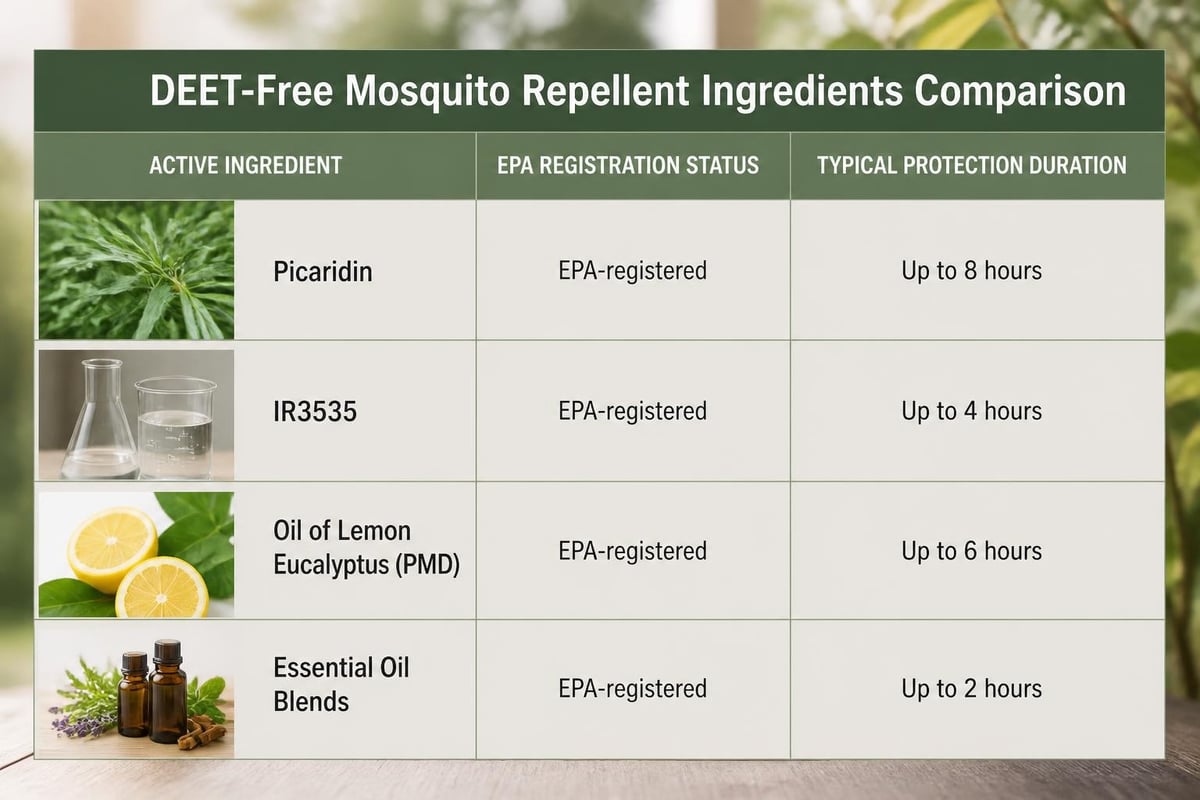
Picaridin and IR3535 represent the most studied synthetic alternatives to DEET. Both hold EPA registration and demonstrate measurable protection in controlled testing environments.
Picaridin (KBR 3023)
Developed in the 1980s, picaridin has gained traction in North America after decades of use in Europe and Australia. Consumer Reports testing in 2024-2025 found that 20% picaridin formulations provided protection comparable to 25% DEET when applied to skin.
The compound feels less oily than DEET and lacks the distinctive chemical odor. However, it still requires skin application, reapplication every four to eight hours, and doesn't protect others in your outdoor space who haven't applied it.
| Feature | Picaridin | DEET | IR3535 |
|---|---|---|---|
| Skin feel | Light, less oily | Greasy, sticky | Mild, neutral |
| Odor | Minimal | Strong chemical | Slight |
| Duration (topical) | 4-8 hours | 4-10 hours | 4-6 hours |
| EPA registered | Yes | Yes | Yes |
IR3535 (Ethyl Butylacetylaminopropionate)
IR3535 derives from a naturally occurring amino acid but is synthesized for repellent use. The American Academy of Pediatrics includes it among acceptable options for children over two months, though application frequency and concentration limits still apply.
Like picaridin, IR3535 addresses the "DEET-free" requirement but not the "spray-free" preference many patio owners express. Every person needs their own application, and the protection moves with them rather than creating a protected zone.
Plant-Based and Essential Oil Repellents
The best deet free mosquito repellent category that attracts the most consumer interest involves plant-derived compounds. These range from EPA-registered PMD (oil of lemon eucalyptus) to proprietary essential oil blends.
Oil of Lemon Eucalyptus (PMD/OLE)
PMD is the only plant-based repellent the EPA recognizes as providing protection duration comparable to low-concentration DEET. Derived from the leaves of Eucalyptus citriodora, PMD formulations at 30% concentration can protect for up to six hours when applied to exposed skin.
Key considerations for PMD products:
- Not recommended for children under three years
- Requires even skin coverage for consistent protection
- Can cause eye irritation if transferred from hands
- Protection diminishes with perspiration or swimming
Research published in PLOS Neglected Tropical Diseases has evaluated field performance of various formulations, finding that application technique and environmental conditions significantly impact real-world efficacy.
Essential Oil Blends
Multiple essential oils demonstrate mosquito-deterrent properties in laboratory settings. A 2026 systematic review examined the evidence base for essential oils, noting that while compounds like geraniol, citronella, peppermint, eugenol, and rosemary show promise, protection duration typically falls short of synthetic alternatives when applied topically.
The review highlighted a critical gap: most essential oil studies measure short-term efficacy in controlled environments rather than sustained protection during real-world outdoor gatherings. This matters less for ground-application products where continuous release from a stationary source differs fundamentally from skin application that degrades through evaporation and absorption.
Ground-Application Scent-Masking Systems
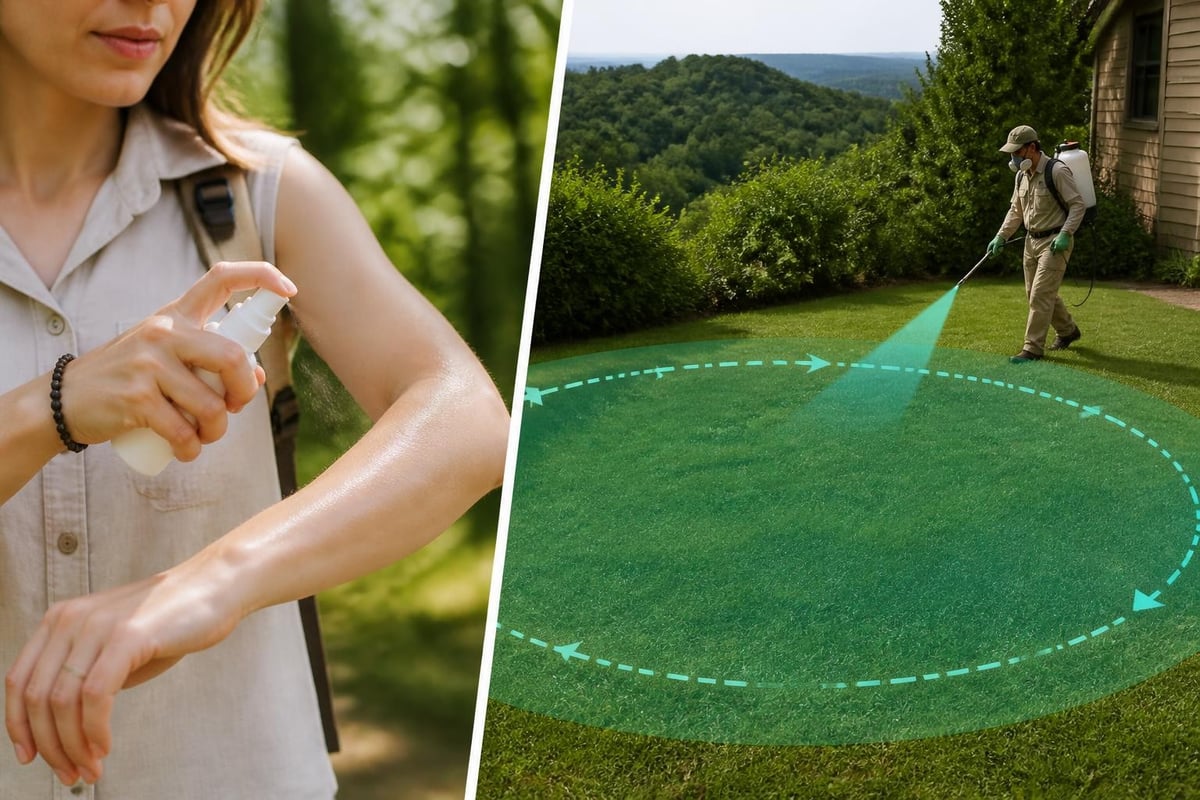
The newest category in the best deet free mosquito repellent landscape involves products you don't wear at all. Instead of coating yourself with chemicals, these systems work at ground level where mosquitoes hunt for carbon dioxide and body scent.
How Scent-Masking Works
Mosquitoes locate hosts primarily through scent detection. They track carbon dioxide plumes from up to 30 feet away and follow body odor gradients to land on skin. Ground-level scent-masking products release competing fragrance compounds that interfere with this tracking behavior, causing mosquitoes to drift past rather than lock onto human targets.
This approach offers distinct advantages for the patio environment:
- Zone protection: Everyone in the treated area benefits equally
- No skin contact: Zero chemical absorption concerns
- Guest-friendly: No one needs to prepare or reapply anything
- Pet-safe formulations: Animals move freely through treated spaces
- Multi-day effectiveness: Single application covers an entire weekend
Ground-applied products work differently than wearable repellents, creating a protected zone rather than protecting individual bodies. For families hosting gatherings or spending extended time outdoors, this shifts the maintenance burden from constant personal reapplication to simple area preparation. If you're exploring ground-level protection for outdoor activities beyond your patio, check out natural mosquito repellent options for camping and RV use.
Biodegradable Bead Technology
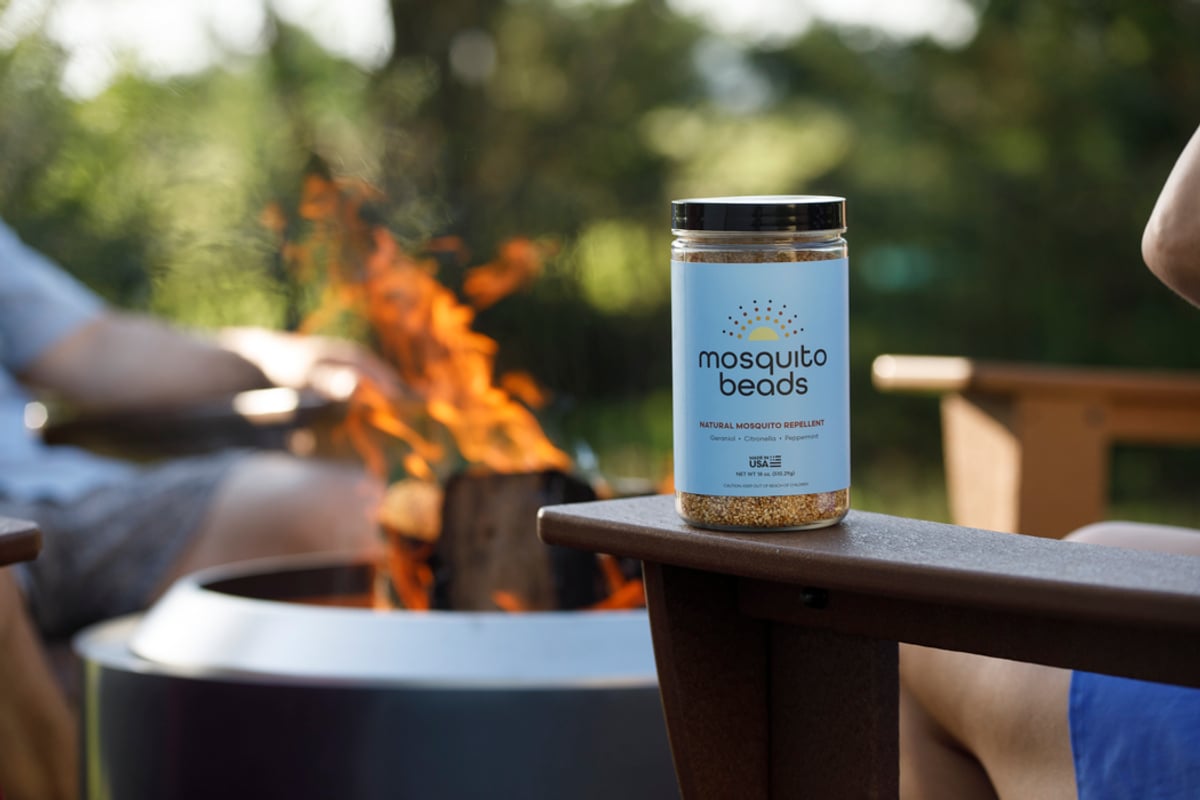
Products using biodegradable corn-based granules infused with essential oil blends represent an innovation in delivery method rather than active ingredient. Instead of asking guests to spray themselves, hosts simply pour beads around seating areas before the gathering begins.
The Signature 18 oz format covers up to 1,000 square feet with peak performance during days one and two after application. For targeted use at sporting events or smaller outdoor spaces, the Sidekick 5 oz version protects up to 300 square feet. Both options use the same six-oil formulation: geraniol, citronella, peppermint, eugenol, cornmint, and rosemary.
Because the beads sit on the ground rather than on skin, there's no sticky residue, no need to wash hands before eating, and no concern about transferring chemicals to furniture or clothing. The granules dissolve naturally back into soil without residue.
Safety Profiles Across Categories
When evaluating the best deet free mosquito repellent for family use, safety encompasses multiple dimensions beyond simply avoiding DEET.
Skin Sensitivity and Allergic Reactions
Even natural compounds can trigger reactions in sensitive individuals. The World Health Organization guidance on vector control products emphasizes patch testing new repellents, particularly those containing concentrated essential oils or synthetic compounds like picaridin.
Common sensitivity triggers include:
- Citrus-derived compounds (PMD/OLE)
- Menthol and mint oils
- Preservatives in aerosol formulations
- Alcohol carriers in spray products
Ground-application products eliminate dermal contact entirely, removing this category of risk for everyone in the treated space.
Environmental and Aquatic Considerations
Wearable repellents wash off during swimming or showering, introducing active ingredients into water systems. While manufacturers formulate products to meet environmental regulations, the cumulative effect of widespread use merits consideration for families near lakes, pools, or streams.
Biodegradable ground-application beads made from corn starch break down in soil without aquatic exposure, particularly when used on patios, decks, and landscaped areas away from direct water contact.
Comparing Application Methods and User Experience
The best deet free mosquito repellent for your situation depends heavily on how you use your outdoor space and who shares it with you.
Spray and Lotion Drawbacks
Traditional application methods create friction points that frustrate many patio hosts:
- Guests feel awkward applying chemicals at someone's home
- Children resist reapplication and miss spots
- Sticky residue transfers to cushions and outdoor furniture
- Strong fragrances clash with food aromas during outdoor dining
- Hourly reapplication interrupts conversations and activities
These factors explain why families who invest in high-quality outdoor furniture and entertaining spaces often reject spray-based solutions entirely, even DEET-free versions.
Candles and Coils
Citronella candles provide ambiance but minimal protection beyond a few feet. Coils produce smoke that many find unpleasant, and both create open flames that limit placement options near fabrics, plantings, or children.
Neither candles nor coils mask ground-level scent effectively because mosquitoes hunt below the smoke or fragrance plume, tracking carbon dioxide and body odor at ankle height.
Perimeter Spray Services
Professional mosquito barrier treatments kill adult mosquitoes on contact and provide residual protection for weeks. However, these services use synthetic pyrethroids that also affect beneficial insects, require regular technician visits, and involve chemical application throughout landscaping.
For homeowners concerned about pollinator health and chemical load in spaces where children and pets play daily, professional spraying often feels incompatible with the natural aesthetic they've cultivated. Understanding how mosquitoes detect and track us can help you choose methods that interrupt their hunting behavior with minimal ecological impact; learn more about why mosquitoes target specific people.
Performance Factors That Influence Efficacy
Laboratory testing rarely captures the complexity of real-world mosquito encounters during a three-hour dinner party or weekend camping trip.
| Factor | Impact on Wearable Repellents | Impact on Ground Systems |
|---|---|---|
| Wind speed | Dilutes skin-applied product | Helps disperse scent-masking compounds |
| Temperature | Increases evaporation rate | Enhances essential oil volatilization |
| Humidity | Reduces duration | Minimal effect on release rate |
| Physical activity | Requires faster reapplication | Protected zone remains consistent |
| Number of people | Each needs individual application | Single application covers group |
Duration and Reapplication Reality
Manufacturer claims about eight-hour protection assume ideal conditions: no sweating, no water contact, even application coverage, and moderate temperatures. Weekend patio use rarely matches these parameters.
Ground-application products offer practical advantages here because one preparation step covers an entire event window without depending on individual compliance. For families balancing mosquito control with the desire to minimize chemical exposure in their primary outdoor living space, natural mosquito repellent strategies for patios provide alternatives worth exploring.
Making the Right Choice for Your Outdoor Space
Your ideal solution balances effectiveness, application preference, safety priorities, and the specific context of your outdoor time.
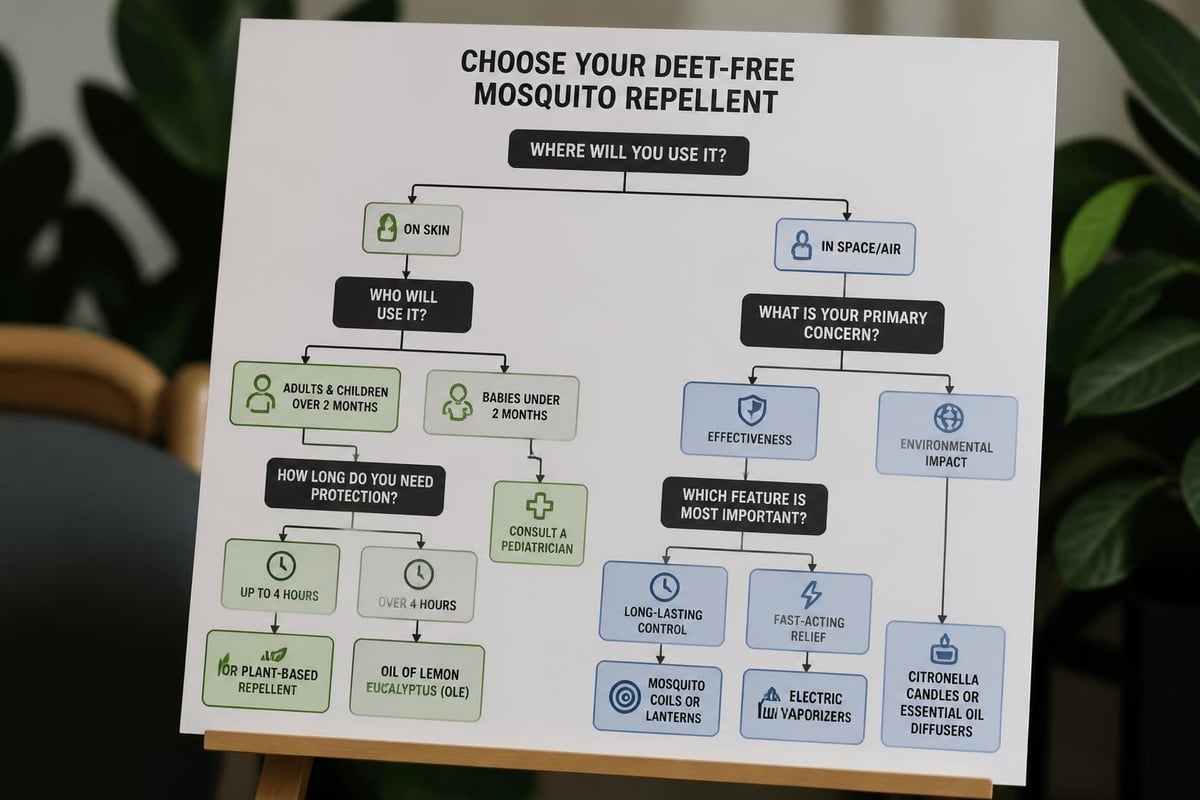
Questions to Guide Your Selection
Who uses the space most often?
- Young children who resist topical application
- Pets who need free movement
- Elderly family members with sensitive skin
- Frequent guests who appreciate low-maintenance hosting
What activities happen there?
- Dining and food preparation (sticky sprays are problematic)
- Swimming and water play (reapplication becomes constant)
- Extended evening relaxation (multi-hour protection matters)
- Regular entertaining (guest experience influences choice)
What's your tolerance for maintenance?
- Hourly reapplication for each person
- Weekly professional service visits
- Per-event ground preparation
- Daily lighting of candles or coils
Budget and Value Considerations
Wearable repellents seem inexpensive per bottle until you calculate the cost per gathering for a family of four plus guests, each requiring multiple applications over several hours. Ground-application systems cost more upfront but cover larger areas for multiple days without reapplication.
Professional services run hundreds of dollars per season with monthly treatments. For suburban families who use their patios as primary warm-weather living spaces, the math often favors solutions that protect the entire area with minimal ongoing effort. For insights on cost comparisons between over-the-counter natural products and professional mosquito control services, review detailed cost analysis here.
Regional Considerations and Mosquito Species
Mosquito pressure varies dramatically by geography and season. Gulf Coast residents face year-round challenges with multiple aggressive species, while northern climates see concentrated activity during summer months.
High-Pressure Environments
Texas, Florida, and other high-humidity regions present the most demanding test cases for any repellent strategy. Families in these areas often layer multiple approaches: habitat reduction, area protection, and strategic use of personal repellents when leaving protected zones.
The best deet free mosquito repellent for these contexts must deliver consistent performance across weeks of regular use, not just occasional outings. Many Texas families have found success with natural mosquito repellent solutions specific to their climate challenges.
Seasonal Intensity Shifts
Spring and early summer bring peak mosquito populations as breeding accelerates with warming temperatures and increased rainfall. Your protection strategy may need to intensify during these windows even if lighter approaches suffice during fall's reduced activity.
Special Populations and Unique Needs
Different family members have distinct repellent requirements based on age, health status, and activity patterns.
Children and Infants
The American Academy of Pediatrics provides clear guidance on repellent use for children. Infants under two months should rely on physical barriers like netting rather than chemical repellents. Older children can use specific DEET-free products, but concentration limits and application frequency restrictions apply.
Ground-application scent-masking systems sidestep these age restrictions entirely because children aren't exposed to direct chemical contact. Parents can create protected play zones without navigating complex pediatric dosing guidelines.
Pet Safety Concerns
Dogs and cats groom themselves constantly, making any topical repellent applied to their fur a potential ingestion risk. Products safe for human skin may be toxic to pets who lick treated areas.
Ground-application products formulated with pet-safe essential oils allow animals to move through treated spaces without exposure to compounds designed for skin application. When evaluating options, specifically confirm pet safety claims and usage instructions. Additional guidance on pet-friendly mosquito repellent approaches can help ensure your four-legged family members stay safe.
Pregnancy and Medical Conditions
Pregnant women often become more cautious about chemical exposures, particularly products absorbed through skin. While picaridin and PMD have acceptable safety profiles, many expectant mothers prefer to minimize all topical chemical contact during pregnancy.
Individuals with respiratory conditions may find aerosol sprays irritating regardless of active ingredient. Ground-application systems eliminate inhalation risks associated with spray-based products.
Integration with Broader Mosquito Management
The most effective mosquito control combines multiple strategies rather than relying on repellents alone.
Habitat Modification
Eliminating standing water remains the single most impactful step any homeowner can take. Check gutters, plant saucers, birdbaths, and any container that holds rainwater. Mosquitoes complete their aquatic life stages in surprisingly small water volumes.
Timing and Behavior Adjustment
Mosquitoes are most active during dawn and dusk when light levels drop. Understanding these patterns allows you to time repellent application or ground preparation for maximum effectiveness during peak activity windows. Research shows mosquitoes detect carbon dioxide from 30 feet away, which explains why they quickly locate gatherings even in large yards.
Mechanical Barriers
Screens, nets, and enclosed porches provide reliable protection without any chemical intervention. For spaces where enclosure isn't practical or aesthetically desired, combining physical barriers with chemical-free repellent strategies creates layered defense.
Reading Labels and Understanding Claims
Marketing language around "natural," "organic," and "chemical-free" can obscure actual product composition and efficacy evidence.
EPA Registration vs. Minimum Risk Exemption
Products containing certain essential oils qualify for EPA minimum-risk exemption under FIFRA 25(b). These don't undergo the same efficacy testing as registered repellents but must meet specific ingredient and labeling criteria.
Picaridin and PMD products carry full EPA registration with required efficacy data. Neither approach is inherently superior; they represent different regulatory pathways with distinct evidence standards.
Duration Claims and Testing Protocols
When a product claims "up to 8 hours of protection," investigate the testing methodology. Was it measured in a laboratory cage test or during field use? What concentration was tested? How many subjects were involved?
Comparing claims across products requires understanding these testing variables. Ground-application products measure zone protection differently than wearable repellents that track individual protection time.
Long-Term Considerations and Sustainability
For families committed to outdoor living, mosquito management becomes a multi-year consideration rather than a seasonal nuisance to solve temporarily.
Environmental Impact Across Seasons
Repeated application of any product, even plant-based formulas, accumulates in soil and runoff over time. Biodegradable options that break down within days or weeks reduce long-term environmental load compared to persistent synthetic compounds.
Pollinator Protection
Many mosquito control strategies harm beneficial insects. Professional barrier sprays kill butterflies, bees, and other pollinators along with mosquitoes. Targeted approaches that specifically disrupt mosquito behavior without broadcast insecticide application better support backyard ecosystems.
Families cultivating pollinator gardens or vegetable plots particularly value repellent methods that protect people without devastating the insects they've worked to attract.
Building Your Personalized Strategy
The best deet free mosquito repellent for your family emerges from matching product characteristics to your specific priorities, space design, and usage patterns.
Start with your non-negotiables:
- Must avoid skin contact entirely
- Must work for groups, not just individuals
- Must last multiple hours without reapplication
- Must be safe around young children and pets
- Must align with your aesthetic preferences for outdoor entertaining
Then evaluate each product category against these criteria. Wearable repellents, whether synthetic or plant-based, fail criteria one through three. Candles and coils struggle with criteria three and five. Professional services may conflict with criteria four depending on application methods.
Ground-application scent-masking systems specifically address the pain points that drive families away from traditional repellents: they protect the space, require no personal application, work for everyone present, and integrate invisibly into outdoor settings.
For comprehensive insights into protecting your outdoor sanctuary without compromising your design aesthetic or family safety standards, explore additional strategies for natural mosquito control in backyard environments.
Choosing the best deet free mosquito repellent means understanding not just active ingredients but application methods, coverage patterns, and how protection fits into the way you actually use your outdoor space. Ground-application biodegradable beads offer a spray-free alternative that masks human scent at the level where mosquitoes hunt, protecting your entire patio without asking anyone to apply chemicals to their skin. If you're ready to reclaim your evenings without sticky sprays, explore how Mosquito Beads delivers multi-day zone protection through simple ground application, so you can focus on your guests instead of reapplication schedules.