

Mosquito Repellent Trees: What Works (and What Doesn't)
The idea of planting a tree that keeps mosquitoes away sounds perfect. No sprays, no chemicals, no hassle-just natural protection from your own backyard. But before you redesign your landscape around mosquito repellent trees, it helps to understand what these trees actually do, what science says about their effectiveness, and what realistic expectations look like for anyone trying to reclaim their outdoor space. The promise is appealing, but the reality is more nuanced than most marketing materials suggest.
What Are Mosquito Repellent Trees?
Mosquito repellent trees refer to species that allegedly deter mosquitoes through aromatic compounds in their leaves, bark, or flowers. Common examples include eucalyptus, catnip, neem, citronella grass (often mislabeled as a tree), and certain cedars. The theory is simple: these plants emit volatile oils that mosquitoes dislike, creating a natural barrier around your patio or yard.
Some species do contain compounds with documented repellent activity in laboratory settings. Eucalyptus, for instance, produces PMD (para-menthane-3,8-diol), the active ingredient in many commercial repellents. Neem trees contain azadirachtin, which disrupts insect development. Cedar trees release thujone and other terpenes that insects tend to avoid.
The disconnect lies in concentration and delivery. A leaf on a branch releases trace amounts of these oils into open air, where wind disperses them rapidly. Mosquitoes detect CO2 from 30 feet away, and that powerful hunting instinct isn't easily overridden by faint plant volatiles drifting at random intervals.
The Science Behind Plant-Based Repellency
Research on essential oils as mosquito bio-repellents shows that concentrated formulations of certain plant extracts can repel mosquitoes when applied directly to skin or diffused in controlled environments. The same review emphasizes that passive emissions from living plants rarely achieve effective concentrations in outdoor settings.
A 2024 comparison of synthetic and natural repellents highlights formulation as the critical variable. PMD works when refined, stabilized, and applied at the right dose. A eucalyptus tree growing twenty feet from your deck chair does not deliver that dose.

Field observations add another layer. A study in Uganda's Kibale National Park found that leaves from certain nesting trees used by animals showed spatial repellent effects against malaria vectors. The key factor was proximity and leaf density-birds nested directly in thick canopies where volatile concentrations were highest. Your patio likely lacks that same enclosed microclimate.
Trees That Actually Help (Indirectly)
While no tree will create a mosquito-free zone through scent alone, certain species do help reduce mosquito habitat in meaningful ways. The benefit comes not from repellency but from environmental modification.
Habitat Disruption Through Canopy and Root Systems
- Shade management: Dense canopy trees reduce ground-level moisture and sun exposure, limiting the damp, shaded areas where mosquitoes rest during the day.
- Water displacement: Trees with aggressive root systems can dry out low-lying areas where standing water collects after rain.
- Leaf litter control: Some species produce allelopathic compounds in fallen leaves that inhibit microbial activity in water, making puddles less hospitable for larvae.
| Tree Type | Primary Benefit | Limitation |
|---|---|---|
| Oak, Maple | Deep shade reduces resting habitat | Leaf litter can trap water if not managed |
| Willow, Poplar | Roots absorb standing water quickly | Prefer wet sites, may not suit all yards |
| Cedar, Pine | Acidic needles discourage larval growth | Slow-growing, limited spatial impact |
The World Health Organization's report on nature-based solutions discusses how thoughtful vegetation planning can influence vector-borne disease risks at the landscape scale. The focus is on habitat management, biodiversity balance, and water drainage-not on planting a single aromatic species and expecting it to repel adult mosquitoes.
The Myth of the Citronella "Tree"
Citronella grass (Cymbopogon nardus) is often sold as a mosquito repellent tree, but it is neither a tree nor an effective passive repellent. The plant does produce citronella oil, which works when extracted, concentrated, and burned in candles or applied to skin. The living grass releases far too little oil to affect mosquito behavior outdoors.
Consumer Reports testing of natural repellents confirms that citronella candles provide minimal protection beyond the immediate smoke plume. A potted citronella plant on your deck offers even less. Understanding why mosquitoes target us helps clarify why passive scent emission cannot compete with the powerful cues of CO2, body heat, and skin odor that guide mosquitoes to their hosts.

Planting for Ecosystem Balance
Rather than expecting mosquito repellent trees to solve the problem alone, consider how strategic planting fits into a broader approach to protecting your space from mosquitoes.
Choosing Species That Support Predators
Birds, bats, dragonflies, and certain spiders feed on adult mosquitoes. Trees that attract these predators indirectly reduce mosquito populations.
- Native oaks and maples host caterpillars that feed insectivorous birds.
- Fruit-bearing trees (mulberry, serviceberry) attract bird species that also consume insects.
- Flowering trees with nectar (linden, tulip poplar) support beneficial insects that compete with mosquitoes for habitat.
Urban forestry guidance emphasizes pest management through ecosystem design rather than relying on single-species solutions. Healthy, diverse canopy layers create microclimates that benefit predators and reduce mosquito resting sites.
Avoiding Trees That Create Mosquito Habitat
Some trees inadvertently worsen mosquito problems. Species that hold water in leaf axils, bark crevices, or fallen debris create breeding sites.
Trees to avoid or manage carefully:
- Bamboo: Hollow stems collect rainwater and provide perfect larval habitat.
- Bromeliads and tree-mounted epiphytes: Water-holding structures become miniature mosquito nurseries.
- Trees with rot-prone wood: Woodpecker holes and decay pockets trap water.
- Heavy fruit drop species: Decomposing fruit creates moisture and attracts other pests.
Regular maintenance matters more than species choice. Even beneficial trees require gutter cleaning, debris removal, and drainage attention to prevent unintended breeding sites.
Practical Alternatives to Planting for Repellency
If mosquito repellent trees fall short, what actually works for the homeowner who wants to enjoy their patio without sticky sprays or chemical fog?
Ground-Level Scent Masking
Mosquitoes hunt by scent at ground level, tracking CO2, lactic acid, and ammonia signatures that rise from soil and human activity. Masking those scent trails where people gather disrupts their ability to locate hosts.
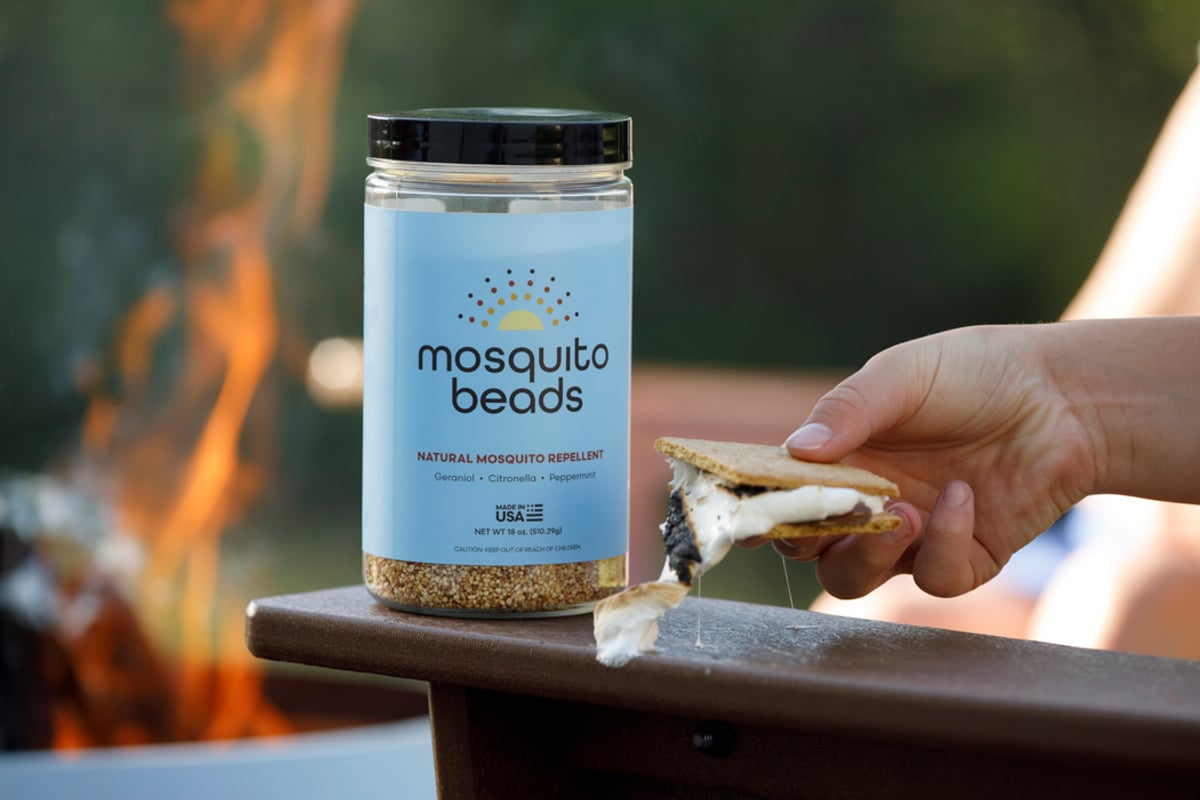
Biodegradable options that deploy essential oils directly at ground level-rather than relying on passive plant emissions-offer higher concentrations exactly where mosquitoes search. This approach protects the entire gathering space, not just individuals wearing repellent. For families concerned about chemicals in bug spray or the sticky feel of wearable products, ground-based scent masking provides an alternative that touches no one.
Natural Mosquito Repellent products use blends of geraniol, citronella, peppermint, eugenol, cornmint, and rosemary in biodegradable granules poured on the ground. Peak performance runs on days one and two per application, covering up to 1,000 square feet for patios or 300 square feet for game day setups.
Habitat Modification Strategies
Eliminate standing water weekly. Check gutters, birdbaths, plant saucers, tarps, tire swings, and any container that holds even a capful of water. Mosquitoes complete their life cycle in seven days, so weekly checks disrupt breeding.
- Install drainage solutions in low spots where water pools after rain.
- Trim vegetation to improve airflow and reduce resting sites.
- Maintain screens on windows, doors, and porches.
- Run fans on patios to disrupt mosquito flight (they are weak fliers and avoid wind above 1 mph).
Alameda County Mosquito Abatement FAQ addresses the limits of "mosquito-repellent plants" clearly: they do not provide reliable protection. The agency recommends proven control measures-source reduction, larvicides where appropriate, and EPA-registered repellents when needed.
Regulatory Perspective on Plant-Based Claims
The EPA and National Pesticide Information Center distinguish between essential oil products registered as repellents (meeting efficacy and safety standards) and unregistered marketing claims for live plants. Selling a tree as a mosquito repellent without supporting data violates consumer protection rules in most states.
Products formulated with essential oils can register under FIFRA 25(b) if they meet ingredient, labeling, and safety requirements. Live plants making repellency claims do not qualify and are not subject to the same testing standards.
This regulatory gap explains why nurseries often sell "mosquito plants" with vague language like "traditionally used to discourage insects" rather than "repels mosquitoes." The distinction matters when evaluating what to plant and what to expect.
What Labels Mean (and Don't Mean)
| Claim | Regulatory Status | What It Means |
|---|---|---|
| "Mosquito repellent tree" | Unregulated | Marketing language without required testing |
| "Contains natural oils" | Accurate but vague | Plant produces compounds; says nothing about efficacy outdoors |
| "EPA-registered repellent" | Tested for efficacy | Product met standards for active ingredient concentration and performance |
| "25(b) compliant" | Minimum safety review | Approved ingredients; no efficacy testing required by EPA |
Understanding these distinctions helps you assess claims honestly. A tree might contain citronella oil, but that does not make the tree itself a functional repellent in your yard.
Combining Strategies for Real Results
No single solution eliminates mosquitoes completely, but layered strategies significantly reduce bites and improve outdoor comfort.
Effective layering includes:
- Habitat management: Remove standing water, improve drainage, trim vegetation.
- Predator support: Plant native species that attract birds, bats, and beneficial insects.
- Ground-level scent masking: Apply biodegradable repellent granules where people gather.
- Mechanical barriers: Use fans, screens, and mosquito netting in high-use areas.
- Timing: Schedule outdoor activities during low-activity periods (avoid dawn and dusk).
For homeowners treating their patio as an outdoor room, the goal is control without constant reapplication, sticky sprays, or visual clutter. Mosquito repellent trees alone cannot deliver that outcome, but they can contribute to a healthier yard ecosystem when paired with practical, evidence-based tactics.
Species-Specific Recommendations
If you still want to plant trees as part of your mosquito management strategy, choose species based on habitat benefits rather than repellency myths.
For Shade and Moisture Control
- Red Maple (Acer rubrum): Fast-growing, dense canopy, tolerates wet and dry soils.
- Tulip Poplar (Liriodendron tulipifera): Large shade tree, nectar-rich flowers support pollinators.
- Sweetgum (Liquidambar styraciflua): Deep roots help dry soggy areas, provides dense shade.
For Wildlife Attraction
- Oak species (Quercus spp.): Support hundreds of caterpillar species, feeding insectivorous birds.
- Black Cherry (Prunus serotina): Berries attract birds that consume mosquitoes.
- Eastern Redbud (Cercis canadensis): Early nectar source, supports beneficial insects.
For Low-Maintenance Landscapes
- Bald Cypress (Taxodium distichum): Tolerates wet conditions, few pest problems, minimal debris.
- Eastern Red Cedar (Juniperus virginiana): Evergreen, drought-tolerant, acidic foliage discourages some insects.
- Serviceberry (Amelanchier spp.): Multi-season interest, berries for birds, manageable size.
None of these will repel mosquitoes directly, but all contribute to healthier landscapes that support mosquito predators and reduce habitat.
Maintenance Practices That Matter More Than Species
How you care for your trees influences mosquito populations more than which trees you plant.
Critical maintenance tasks:
- Clean gutters monthly during growing season to prevent water accumulation.
- Prune dead branches to eliminate rot pockets that hold water.
- Rake leaf litter in damp areas where it traps moisture.
- Inspect tree wells and mulch rings for standing water after rain.
- Remove tree stumps that collect rainwater in decay cavities.
Natural ways to combat mosquitoes that work emphasize proactive habitat management over passive planting strategies. Trees require ongoing care to prevent them from becoming mosquito assets rather than liabilities.
Setting Realistic Expectations
Mosquito repellent trees appeal to our desire for simple, natural solutions. The concept feels right: plant something beautiful, solve a problem, enjoy your yard. But mosquitoes evolved over millions of years to find hosts using sophisticated sensory systems. A eucalyptus tree in your yard will not override that biology.
This does not mean trees are irrelevant to mosquito control. Strategic planting improves drainage, provides habitat for predators, reduces resting sites, and contributes to a healthier outdoor environment. Those benefits are real and valuable. They simply are not the same as repellency.
For homeowners who want reliable protection without chemicals on skin or constant reapplication, the solution lies in ground-based scent masking that disrupts how mosquitoes hunt at the source. Combine that with habitat management, and you create layered defense that actually works.
Mosquito repellent trees make attractive additions to your landscape and can support beneficial wildlife, but they will not keep mosquitoes off your patio through scent alone. Real protection comes from eliminating breeding sites, supporting predators, and masking the ground-level scent trails mosquitoes follow to find you. When you want to reclaim your outdoor space without sticky sprays or chemicals near family and pets, Mosquito Beads offers a biodegradable, DEET-free solution you pour on the ground where people gather-nothing on your skin, just effective scent-masking that protects the entire space for days.