

Chemicals in Bug Spray: What's Really in Your Repellent
Understanding the chemicals in bug spray has become increasingly important for families who spend time outdoors. Whether you're hosting a dinner party on your patio or watching soccer games at the park, the decision about which repellent to use involves balancing effectiveness against concerns about chemical exposure. The active ingredients in commercial bug sprays have evolved considerably over the past seventy years, yet many consumers remain uncertain about what they're actually applying to their skin and what alternatives might better suit their needs.
The Primary Active Ingredients in Conventional Bug Sprays
Most commercial bug sprays rely on a handful of synthetic chemicals that have been extensively tested and approved by regulatory agencies. These active ingredients work by interfering with mosquito sensory receptors, making it difficult for them to locate human targets.
DEET: The Gold Standard Since 1946
DEET (N,N-diethyl-meta-toluamide) remains the most widely recognized name among chemicals in bug spray formulations. Originally developed by the U.S. Army in 1946, DEET concentrations in consumer products typically range from 5% to 30%, though some formulations reach 100%.
The compound works by confusing mosquito olfactory neurons, essentially jamming the signals they use to detect carbon dioxide and body odor. According to the EPA's guidance on insect repellents, products containing 20% to 30% DEET provide protection lasting four to six hours under typical conditions.
Key characteristics of DEET include:
- Duration of protection increases with concentration up to about 50%
- Can damage certain plastics, synthetic fabrics, and painted surfaces
- Absorbs through skin at approximately 8% to 17% of applied dose
- Requires reapplication after swimming or heavy sweating
Research on DEET pharmacokinetics shows the chemical is metabolized primarily in the liver and excreted through urine within 24 hours. However, safety studies note that repeated daily application leads to cumulative exposure, raising questions about long-term effects, particularly for children.

Picaridin: The European Alternative
Picaridin (also called icaridin or KBR 3023) emerged in the 1980s as a DEET alternative with comparable effectiveness but different safety and sensory profiles. The EPA fact sheet on picaridin confirms its registration for use on skin and clothing.
This synthetic compound offers several advantages over DEET:
- Does not damage plastics or synthetic materials
- Odorless and non-greasy feel on skin
- Similar protection duration at equivalent concentrations
- Lower dermal absorption rate
Concentrations of 20% picaridin provide protection comparable to 25% to 30% DEET, making it popular among consumers who dislike DEET's distinctive smell and oily texture. Like DEET, picaridin requires direct application to exposed skin, meaning every person needs their own coating.
IR3535: The Lesser-Known Synthetic
IR3535 (3-[N-Butyl-N-acetyl]-aminopropionic acid, ethyl ester) represents another category of chemicals in bug spray products. Developed in the 1970s, this ingredient appears primarily in European formulations but has gained EPA registration in the United States.
| Active Ingredient | Typical Concentration | Protection Duration | Skin Feel | Material Safety |
|---|---|---|---|---|
| DEET | 10%-30% | 3-6 hours | Oily, strong odor | Damages plastics |
| Picaridin | 5%-20% | 3-8 hours | Light, odorless | Material-safe |
| IR3535 | 7.5%-20% | 2-4 hours | Slightly greasy | Material-safe |
| Permethrin | 0.5% | Up to 6 weeks on fabric | N/A (clothing only) | Fabric treatment |
Understanding Permethrin and Clothing Treatments
Permethrin occupies a unique position among chemicals in bug spray applications because it's designed for fabric treatment rather than skin contact. This synthetic pyrethroid kills or repels insects on contact and bonds to fabric fibers during application.
The compound remains effective through multiple wash cycles, making it suitable for treating outdoor clothing, tents, and gear. Military and outdoor recreation communities have adopted permethrin-treated clothing as a primary defense layer. Yet permethrin carries its own considerations: it's highly toxic to cats and aquatic organisms, requires careful application away from water sources, and shouldn't be applied to skin despite appearing in some "spray" formulations.
The Chemical Load Question for Families
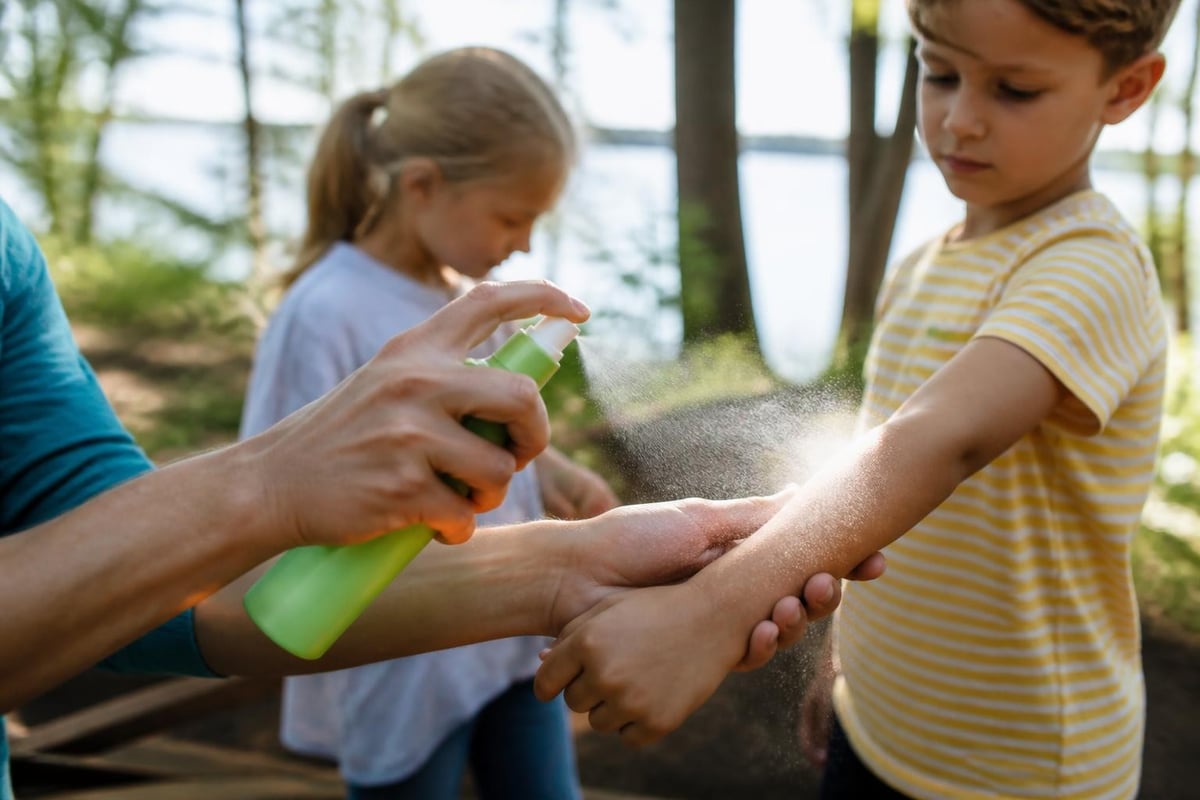
Many homeowners who've invested in creating comfortable outdoor spaces face a practical dilemma. Traditional bug sprays require every family member and guest to apply chemicals directly to their skin. This creates several concerns that extend beyond the active ingredients themselves.
Challenges with conventional spray applications:
- Repeated exposure throughout the season: Weekly patio dinners mean dozens of applications per person from May through September
- Guest comfort: Asking visitors to spray themselves down before joining you feels awkward
- Pet proximity: Dogs and cats move freely through treated spaces, contacting residue on furniture and skin
- Children's exposure: Young children touch treated skin, then put hands in mouths
- Reapplication burden: Four-hour protection windows require mid-gathering touch-ups
The cumulative chemical exposure from regular use throughout mosquito season adds up considerably. A family of four applying repellent twice weekly from May through September administers approximately 80 individual applications per season. For homeowners who view their patio as an extension of their living room, this volume of chemical use in a space where they eat and relax raises reasonable concerns.
Synergists and Inactive Ingredients
The chemicals in bug spray formulations extend well beyond the active ingredients listed prominently on labels. Inactive ingredients often make up 70% to 95% of the total formula, serving as carriers, stabilizers, and absorption enhancers.
Common inactive ingredients include:
- Alcohol or petroleum distillates: Carriers that help active ingredients spread and dry
- Fragrance compounds: Mask the chemical smell of active ingredients
- Skin conditioners: Reduce the harsh feel of solvents on skin
- Propellants: In aerosol formulations, typically hydrocarbons or compressed gas
Synergists like piperonyl butoxide (PBO) deserve special mention. While not repellent themselves, these chemicals enhance the effectiveness of active ingredients by inhibiting insect enzymes that would otherwise metabolize the repellent. The addition of synergists allows manufacturers to achieve target effectiveness with lower concentrations of active ingredients, but it means consumers apply additional synthetic compounds.
Botanical Alternatives and Essential Oil Chemistry
The growing interest in natural alternatives has spurred research into plant-derived chemicals in bug spray products. Essential oils represent a diverse category of volatile organic compounds extracted from plants that have evolved these chemicals as their own pest defenses.
Common Essential Oil Actives
Citronella oil contains citronellal, citronellol, and geraniol as primary repellent components. While popular, citronella's protection duration typically ranges from 30 minutes to two hours, requiring frequent reapplication when used in topical sprays.
Geraniol, whether derived from geraniums, lemongrass, or roses, shows documented repellent properties. According to recent comprehensive reviews of mosquito control strategies, geraniol and other plant-based compounds can provide meaningful protection when formulated properly.
Peppermint oil, eugenol (from clove), and rosemary oil round out commonly used botanical ingredients. Each contains multiple chemical constituents that contribute to repellent activity through different mechanisms.
The challenge with essential oil-based formulations lies in volatility. These compounds evaporate quickly, limiting protection duration in traditional spray applications. However, advances in formulation technology including microencapsulation and sustained-release matrices are extending the functional lifespan of botanical actives.
Safety Considerations and Age Restrictions
Understanding the safety profile of chemicals in bug spray becomes particularly important when protecting children. Regulatory agencies and health organizations provide specific guidance based on age and developmental stage.
Age-Based Recommendations
The American Academy of Pediatrics and MedlinePlus safety guidance offer the following framework:
| Age Group | DEET | Picaridin | Essential Oils | Special Notes |
|---|---|---|---|---|
| Under 2 months | Not recommended | Not recommended | Varies by product | Physical barriers preferred |
| 2 months - 2 years | Up to 10% | Up to 5% | Check label | Limit applications per day |
| 3-12 years | Up to 30% | Up to 20% | Generally safe | Adult supervision required |
| Adults | Up to 100% | Up to 20% | No restrictions | Follow label directions |
Parents should apply repellent to their own hands first, then rub onto children's exposed skin, avoiding hands, eyes, mouth, and irritated skin. This controlled application reduces the risk of children ingesting the product or getting it in their eyes.
The Space Protection Alternative
A fundamentally different approach to managing mosquitoes involves protecting the area rather than coating individuals. This paradigm shift addresses many concerns about chemicals in bug spray by eliminating skin contact entirely.
Ground-applied repellents work through scent-masking rather than creating a chemical barrier on human skin. Understanding how mosquitoes detect their targets reveals why this approach succeeds: mosquitoes hunt primarily by scent, detecting carbon dioxide from 30 feet away and homing in on body odor and heat as they approach.
By saturating the ground-level air in a space with competing scents, these products interfere with the mosquito's ability to locate people. The insects drift through the treated area without landing because they cannot detect their usual target signals. This method protects everyone in the space simultaneously, from toddlers to grandparents to pets, without requiring anyone to spray anything on their skin.
For homeowners who've invested in outdoor furniture, lighting, and landscaping to create a true outdoor room, ground-applied scent-masking offers protection that matches how they actually use the space. Nobody wants to ask dinner guests to spray down before sitting at a carefully set table. Pour-and-protect approaches eliminate that awkwardness while addressing concerns about chemical exposure near family and pets.
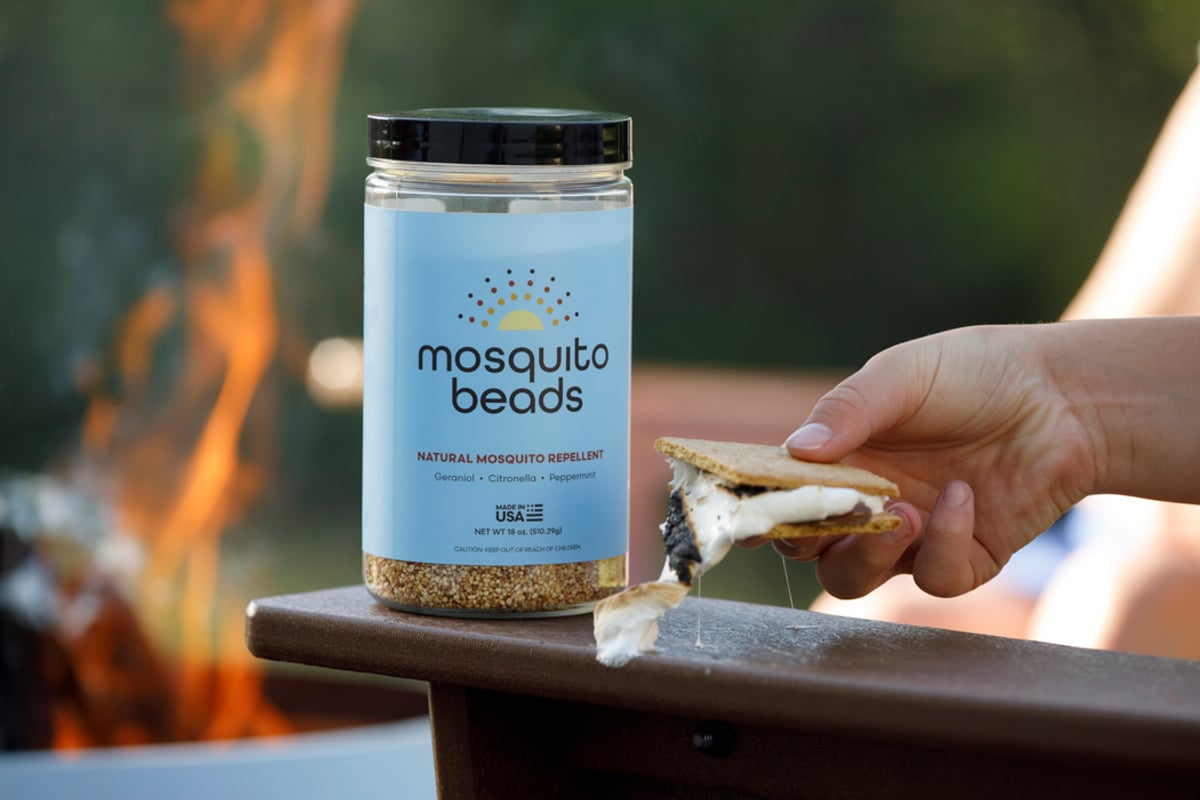
If you're seeking this type of solution, Natural Mosquito Repellent options that use biodegradable beads infused with essential oils provide an alternative to traditional spray chemicals without requiring skin application.

Formulation Types and Delivery Methods
The physical form of repellent products significantly impacts user experience and chemical exposure patterns. The chemicals in bug spray vary not just in active ingredients but in how those ingredients are delivered.
Aerosol Sprays
Aerosol formulations use pressurized propellants to create a fine mist. While convenient, aerosols present specific challenges:
- Easy to inhale during application
- Difficult to control coverage, leading to over-application
- Environmental concerns about propellants
- Risk of eye contact during spraying
Pump Sprays
Non-aerosol pump bottles offer more controlled application but still deliver the same active ingredients to skin. Users have better visibility of where the product lands, reducing waste and inhalation risk.
Lotions and Wipes
Cream and wipe formulations minimize inhalation concerns and allow precise application. However, the same chemicals contact skin, and the thicker base may feel even greasier than spray versions.
Wearable Devices
Clip-on devices that emit repellent vapors or treated bands avoid direct skin application but create a small protected zone that may not cover the entire body. Effectiveness varies significantly based on wind conditions and movement.
Regulatory Oversight and Testing Requirements
The chemicals in bug spray face scrutiny from multiple regulatory bodies. In the United States, the Environmental Protection Agency registers repellent products under the Federal Insecticide, Fungicide, and Rodenticide Act (FIFRA).
Registration requires manufacturers to submit extensive data on:
- Efficacy testing: Controlled studies demonstrating protection against target insects
- Toxicology studies: Acute and chronic exposure data across multiple species
- Environmental fate: Breakdown pathways, persistence, and ecosystem impacts
- Human exposure modeling: Estimating realistic use patterns and cumulative exposure
Products containing minimum-risk ingredients under FIFRA 25(b) face less stringent registration requirements. These typically include certain essential oils and other plant-derived ingredients that EPA considers low-risk based on historical safe use.
The World Health Organization also evaluates repellent products, particularly for use in disease-endemic regions where mosquito-borne illnesses pose significant public health threats. WHO recommendations influence global standards for repellent efficacy and safety.
Resistance Development and Efficacy Over Time
An emerging concern in repellent chemistry involves potential resistance development. While less studied than insecticide resistance, some research suggests mosquito populations may adapt to commonly used repellent chemicals over time.
Laboratory studies have demonstrated that mosquito strains can develop reduced sensitivity to DEET after multiple generations of exposure. Field relevance remains unclear, but the possibility highlights the value of rotating repellent strategies and using multiple approaches rather than relying solely on one chemical class.
Making Informed Choices for Your Outdoor Space
Selecting appropriate protection against mosquitoes requires balancing multiple factors specific to your situation. The suburban homeowner hosting evening gatherings on a beloved patio faces different constraints than a backpacker on a week-long wilderness trek.
Questions to guide your decision:
- How frequently will you need protection throughout the season?
- Who will be in the protected space (ages, sensitivities, pets)?
- How long do gatherings typically last?
- Do you prefer protecting people or protecting space?
- What level of chemical exposure are you comfortable with?
- How important is convenience versus natural ingredients?
For those who've created an outdoor sanctuary and want to enjoy it without the burden of spray applications, exploring how to protect your space from mosquitoes through area treatment offers an alternative approach. The difference between spraying each person and treating the ground where you gather may seem subtle but proves significant in practice.
The Evolution of Repellent Technology
Research into novel delivery systems and new active ingredients continues to advance. Nanoparticle encapsulation shows promise for extending the duration of both synthetic and botanical repellents by controlling release rates. Microencapsulated formulations protect volatile compounds from rapid evaporation while maintaining efficacy.
Combination products that blend synthetic and botanical actives aim to capture benefits from both categories. These hybrid formulations may provide longer protection than plant-based products alone while reducing the concentration of synthetic chemicals needed.
Spatial repellents that protect areas rather than individuals represent another frontier. These approaches range from passive emanators that release repellent vapors to active devices that disperse treated particles into the air. Ground-applied granules that release essential oils over time fit this category, offering area protection through scent saturation rather than chemical barriers on skin.
Understanding Label Claims and Marketing Language
The regulatory environment for repellent products allows specific claims only when supported by testing data. Understanding what labels can and cannot promise helps consumers make informed decisions.
"Repels" versus "kills": True repellents deter mosquitoes from landing without necessarily killing them. Insecticides kill on contact. Some products combine both functions, but the chemicals in bug spray designed purely for repellency work differently from those intended to kill.
Protection duration: Labels must specify how long protection lasts based on EPA-reviewed testing. "Up to 8 hours" means that duration represents the maximum under ideal conditions; actual protection varies with temperature, activity level, and perspiration.
"Natural" claims: This term lacks strict regulatory definition for repellents. Products marketed as natural may still contain synthetic fragrances, preservatives, or inactive ingredients. Check the complete ingredient list rather than relying on front-label marketing.
Understanding the chemicals in bug spray empowers you to make choices aligned with your priorities, whether that means accepting synthetic actives for maximum duration or seeking plant-based alternatives despite more frequent reapplication. For families who value their outdoor spaces and prefer eliminating chemical contact altogether, ground-applied protection offers a compelling alternative to traditional spray-on-skin approaches. Mosquito Beads deliver this kind of space-focused protection through biodegradable beads infused with essential oils that you pour where people gather, masking human scent at ground level without requiring anyone to apply anything to their skin.