

DEET-Free Mosquito Repellent Guide (2026)
The shift toward mosquito repellent DEET free alternatives reflects growing awareness about what we put on our skin and how we protect outdoor spaces. Families hosting gatherings on patios, campers seeking safer options, and parents concerned about chemical exposure near children and pets increasingly demand protection without the tradeoffs associated with conventional synthetic repellents. This comprehensive guide examines the science, efficacy, and practical considerations behind DEET-free mosquito protection methods available in 2026.
Understanding DEET and Why People Seek Alternatives
DEET (N,N-diethyl-meta-toluamide) has dominated the mosquito repellent market since 1946, earning registration with regulatory bodies worldwide. The EPA recognizes DEET as effective when applied correctly to skin and clothing, yet many consumers express legitimate concerns about repeated dermal exposure.
Common reasons for seeking mosquito repellent DEET free options include:
- Skin sensitivity: Some individuals experience irritation, rashes, or allergic reactions to DEET formulations, particularly at concentrations above 30 percent.
- Odor and texture: The chemical smell and greasy residue discourage regular use, especially in social settings where hosts want guests comfortable.
- Chemical load concerns: Parents question the cumulative effect of applying synthetic chemicals multiple times daily throughout mosquito season.
- Pet safety: Households with dogs and cats worry about animals licking treated skin or coming into contact with freshly sprayed surfaces.
- Material damage: DEET dissolves certain plastics, synthetic fabrics, and finishes on furniture, creating practical limitations for patio environments.
The regulatory approval of DEET does not eliminate personal preference for alternatives. As Penn State Extension notes, consumers balance efficacy with comfort, application method, and environmental context when selecting repellent strategies.

Registered Synthetic Alternatives to DEET
Three synthetic compounds offer EPA-registered mosquito repellent DEET free protection with substantial efficacy data.
Picaridin (Icaridin)
Picaridin emerged in the 1980s as a DEET alternative, offering comparable protection duration at similar concentrations. Formulations containing 20 percent picaridin typically provide four to eight hours of protection against common mosquito species.
| Feature | Picaridin | DEET |
|---|---|---|
| Odor | Nearly odorless | Distinctive chemical smell |
| Skin feel | Less greasy | Often leaves residue |
| Material safety | Does not damage plastics or synthetics | Dissolves some materials |
| Reapplication | Every 4-8 hours | Every 4-8 hours |
| Concentration range | 5-20% typical | 10-100% available |
This synthetic compound works by interfering with mosquito olfactory receptors, making it difficult for insects to locate human hosts. Studies cited in comprehensive repellent reviews demonstrate that 20 percent picaridin formulations match or exceed DEET performance in field trials.
IR3535 (Ethyl Butylacetylaminopropionate)
Developed in the 1970s, IR3535 presents another mosquito repellent DEET free option registered for dermal application. This synthetic amino acid derivative offers moderate protection duration, typically three to six hours depending on concentration.
The compound has gained acceptance in European markets and carries WHO recommendations for certain applications. Its lower volatility compared to DEET may reduce inhalation exposure, though it still requires direct skin application with the associated reapplication burden.
Oil of Lemon Eucalyptus (PMD)
PMD (para-menthane-3,8-diol) represents a plant-derived active ingredient synthesized from lemon eucalyptus oil. The EPA distinguishes between refined PMD formulations and crude essential oil products, registering only the former as effective repellents.
Research summarized by NCBI Bookshelf indicates that 30 percent PMD formulations can provide protection comparable to low-concentration DEET products, lasting approximately four to six hours. However, the compound still requires skin application, may cause eye irritation, and is not recommended for children under three years of age.
Essential Oil-Based Natural Repellents
The category of mosquito repellent DEET free products includes numerous essential oil formulations, though efficacy varies widely across ingredients and concentrations.
Active Essential Oil Compounds
Research into plant-based repellents has identified several compounds with measurable mosquito-deterrent properties:
- Geraniol: Found in geranium and citronella oils, geraniol demonstrates repellent action by disrupting mosquito olfactory detection. Studies show variable protection duration from 30 minutes to three hours depending on formulation and concentration.
- Citronella: Perhaps the most recognized natural repellent, citronella oil contains multiple active compounds including citronellal and geraniol. Effectiveness typically lasts one to two hours when applied topically.
- Peppermint oil: Containing menthol and menthone, peppermint oil shows mosquito deterrent properties in laboratory settings, though field efficacy data remains limited.
- Eugenol: Derived from clove oil, eugenol acts as both a repellent and irritant to mosquitoes, with short-duration protection in most formulations.
- Rosemary oil: Contains multiple terpenes that contribute to repellent activity, frequently used in combination with other essential oils.
The primary limitation of essential oil mosquito repellent DEET free products applied to skin involves rapid evaporation, requiring reapplication every 30 to 90 minutes for sustained protection. This frequency creates practical challenges for extended outdoor activities.
Formulation Challenges
Essential oils face several obstacles when formulated as wearable repellents:
- Volatility: Natural compounds evaporate quickly, reducing protection duration
- Skin irritation: Concentrated oils can cause dermal sensitivity, especially in children
- Inconsistent potency: Natural variation in plant sources affects active ingredient concentrations
- Photosensitivity: Some essential oils increase sun sensitivity when applied to exposed skin
Understanding these limitations helped drive innovation toward ground-based protection methods that leverage essential oils without requiring skin contact.

Ground-Based Scent Masking Technology
An emerging category of mosquito repellent DEET free solutions protects outdoor spaces rather than individual people by deploying scent-masking compounds at ground level where mosquitoes hunt.
How Mosquitoes Track Humans
Mosquitoes locate hosts through a sophisticated multi-sensory system. Research shows mosquitoes detect CO2 from breath at distances exceeding 30 feet, then use thermal signatures and chemical cues from skin to zero in on targets. The final approach relies heavily on scent compounds that rise from ground level as humans move through space.
By saturating the ground with masking scents where people gather, ground-based repellents disrupt this hunting sequence. Mosquitoes drift through the area without detecting human targets, continuing their search elsewhere rather than landing.
Biodegradable Granule Systems
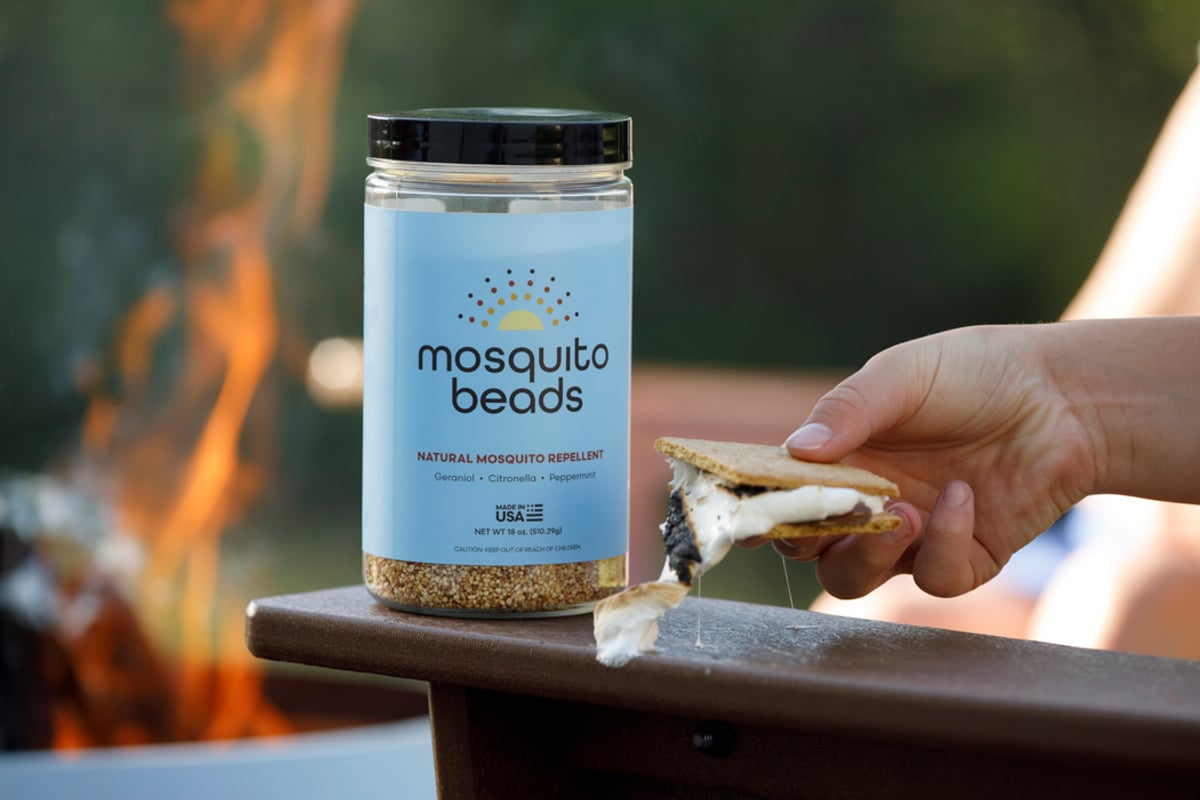
Modern ground-application mosquito repellent DEET free technology uses biodegradable carriers to deliver essential oil blends precisely where mosquitoes hunt. Corn-based granules infused with multiple essential oils create a scent barrier that protects areas up to 1,000 square feet depending on product volume.
Key advantages over spray-based approaches:
- No sticky application to skin or clothing
- Protects all people and pets in the treated space simultaneously
- Eliminates reapplication burden for hosts and guests
- Avoids chemical contact with food, beverages, or table settings
- Creates no visual clutter on patio furniture or dining surfaces
- Remains effective for one to two days per application
This method addresses the core frustration of suburban homeowners who view their patio as an extension of interior living space. Rather than asking each guest to spray themselves with repellent, the host treats the ground once and everyone benefits.
Biodegradable formulations dissolve back into soil after serving their protective function, aligning with environmental values while eliminating cleanup requirements. For families concerned about pet safety around mosquito control products, ground beads used as directed keep active ingredients away from animal contact while protecting the space pets occupy.
One effective option uses a blend of six essential oils-geraniol, citronella, peppermint, eugenol, cornmint, and rosemary-formulated into corn-based granules that mask human scent at ground level. Natural Mosquito Repellent delivers this technology in convenient sizes: an 18-ounce signature format covering up to 1,000 square feet for patio protection, and a 5-ounce sidekick ideal for portable needs like sports fields or camping sites.
Comparing Application Methods and User Experience
The practical difference between mosquito repellent DEET free options often comes down to application method rather than active ingredient alone.
Spray-Based Products (Wearable Protection)
Whether DEET, picaridin, or essential oils, spray formulations share common characteristics:
| Aspect | Spray Application Reality |
|---|---|
| Coverage | Protects only the individual who applies it |
| Social dynamics | Hosts must provide bottles and ask guests to spray themselves |
| Skin contact | All active ingredients touch skin, hair, and clothing |
| Texture | Leaves residue ranging from slightly greasy to sticky |
| Odor | Chemical or botanical scent persists on person |
| Reapplication | Required every 1-8 hours depending on formulation |
| Pet exposure | Animals may lick treated skin or rub against sprayed clothing |
| Surface contact | Treated hands transfer repellent to furniture, dishes, phones |
The fundamental limitation of spray-based mosquito repellent DEET free products involves individual compliance. Even when effective ingredients are chosen, protection fails if guests decline to use the product or apply it inconsistently.
Ground-Based Products (Space Protection)
Ground application methods eliminate the compliance issue by treating the environment rather than people:
- Single application protects everyone: One treatment covers the entire gathering space for all attendees
- No guest participation required: Hosts handle protection before guests arrive
- Zero skin contact: Active ingredients remain on the ground away from people and pets
- No odor on people: Scent remains at ground level rather than on clothing or hair
- Multi-day effectiveness: Properly formulated ground products maintain peak performance for 24 to 48 hours
- Aesthetic neutrality: Nothing visible on tables, chairs, or social areas
This approach particularly appeals to those seeking natural mosquito repellent for patios that preserve the visual and sensory experience of outdoor entertaining while providing reliable protection.
Safety Considerations Across DEET-Free Options
All mosquito repellent DEET free products carry safety considerations that vary by formulation and application method.
Dermal Products (Sprays and Lotions)
Even natural alternatives applied to skin require careful use:
- Pregnancy and nursing: While generally considered safer than DEET, pregnant women should consult healthcare providers before using any dermal repellent regularly
- Young children: Many essential oil products and PMD formulations are not recommended for children under three years
- Eye contact: All spray formulations risk accidental eye exposure during application, particularly problematic with young children
- Mucous membrane irritation: Concentrated essential oils can irritate nose, mouth, and respiratory passages
- Allergic reactions: Natural ingredients can trigger allergies; patch testing is advisable before extensive use
The WHO guidance on vector control emphasizes following label directions and choosing age-appropriate formulations, regardless of whether products contain synthetic or natural active ingredients.
Ground Application Products
Products applied to ground surfaces rather than skin eliminate several exposure pathways:
- No dermal absorption: Active ingredients do not penetrate skin
- Reduced inhalation risk: Ground-level placement minimizes respiratory exposure
- Lower eye irritation potential: No spray mist or application near face
- Pet-friendly options: When formulated and used correctly, ground products keep ingredients away from animal contact
Proper use of any mosquito repellent DEET free product requires reading labels, following application instructions, and storing containers securely away from children and pets.
Efficacy Expectations and Real-World Performance
Managing expectations about mosquito repellent DEET free products prevents disappointment and encourages appropriate product selection.
What "Effective" Means
Effectiveness encompasses several measurable factors:
- Protection duration: How long the product prevents mosquito landings or bites
- Complete protection percentage: The proportion of users experiencing zero bites during the protection window
- Bite reduction percentage: The decrease in bite frequency compared to untreated controls
- Species specificity: Performance against different mosquito species varies
No repellent achieves 100 percent protection for all users in all conditions. Even DEET formulations show variable performance based on concentration, mosquito species, temperature, humidity, and individual user factors like sweat rate.
Performance Tiers
Mosquito repellent DEET free options fall into rough performance categories:
Tier 1: Registered synthetic alternatives (picaridin, IR3535, PMD)
- Protection duration: 4-8 hours at recommended concentrations
- Efficacy comparable to equivalent DEET concentrations in most field trials
- Regulatory approval based on substantial efficacy data
Tier 2: Essential oil spray formulations
- Protection duration: 30 minutes to 3 hours depending on oils and concentration
- Moderate efficacy requiring frequent reapplication
- Performance varies significantly by formulation quality
Tier 3: Ground-based scent masking
- Protection duration: 24-48 hours peak performance per application
- Protects spaces rather than individuals
- Effectiveness depends on proper application and coverage area
Understanding these tiers helps consumers match products to specific needs. Camping and RV applications may prioritize long-duration space protection, while hiking might require portable personal spray despite shorter effectiveness windows.
Regional Considerations and Disease Prevention
Geographic location influences both mosquito pressure and disease risk, affecting mosquito repellent DEET free product selection.
High-Risk Regions
Areas with mosquito-borne disease transmission require careful assessment of repellent strategies. The European Centre for Disease Prevention and Control monitors disease risk across Europe, while CDC tracks domestic threats in the United States.
States with elevated mosquito activity and disease incidence include:
- Florida: Year-round mosquito activity with multiple aggressive species
- Texas: Large geographic area with varied mosquito populations
- Louisiana: High humidity and standing water create ideal breeding conditions
- Mississippi: Extended mosquito season with disease transmission risk
- Kansas: Seasonal peaks with significant outdoor activity impact
Residents in these regions often seek regional-specific mosquito repellent solutions that balance efficacy with frequent use requirements.
Matching Products to Risk Levels
When traveling to areas with active disease transmission, public health authorities typically recommend registered repellents with proven efficacy data. For routine backyard mosquito nuisance in areas without active disease outbreaks, many consumers prioritize comfort and safety over maximum protection duration.
This risk-based approach allows families to use gentler mosquito repellent DEET free options for regular patio dining while reserving stronger formulations for specific high-risk scenarios like travel to endemic areas.
Application Scenarios and Product Selection
Different outdoor activities demand different repellent strategies among mosquito repellent DEET free options.
Backyard and Patio Entertaining
Homeowners hosting gatherings prioritize:
- Protection for multiple people simultaneously
- No requirement for guests to apply products
- Aesthetic compatibility with outdoor decor
- Long enough duration to cover entire events (typically 2-4 hours)
- Safety around food and beverages
Ground-based scent masking excels in these scenarios, treating the space once before guests arrive and maintaining protection throughout the event. For detailed guidance, see natural mosquito repellent for backyards.
Camping and RV Living
Mobile outdoor recreation demands:
- Portable formats that pack efficiently
- Coverage for defined spaces (campsites, RV awning areas)
- Multi-day effectiveness to reduce reapplication frequency
- Safety for children and pets in close quarters
- No flame or smoke that violates campground rules
Both ground-based granules in portable containers and long-duration synthetic sprays serve these needs, depending on whether users prioritize personal or space protection.
Youth Sports and Outdoor Events
Parents attending outdoor games need:
- Quick setup requiring minimal preparation time
- Coverage for sideline areas where families gather
- Safety for use around multiple children
- No sticky residue on equipment or uniforms
- Enough duration to last through games and practices
Portable ground-application products in smaller sizes (around 5 ounces) provide focused protection for defined areas like team benches and spectator zones. More information is available about natural mosquito repellent for sports.
Gardening and Yard Work
Solo activities in mosquito-prone areas benefit from:
- Long protection duration for extended work sessions
- Ease of application before starting tasks
- No interference with hand tools or gloves
- Coverage that moves with the user or treats work zones
Individual preferences vary here, with some users favoring personal spray products they can carry while others prefer treating work areas with ground products before beginning tasks.
Cost Analysis and Value Considerations
Evaluating mosquito repellent DEET free products requires examining cost per use rather than initial purchase price alone.
Spray Product Economics
A typical 6-ounce aerosol or pump spray containing picaridin costs $8-12 and provides approximately 30 applications covering exposed skin on one adult. If reapplication is required every 6 hours, a single person needs about one application per outdoor evening.
Cost per evening: $0.27-0.40 per person
For a family of four hosting twice weekly for a 20-week mosquito season (40 evenings), spray costs total $43-64 annually. However, this assumes all four people consistently apply product each time, which often does not occur.
Ground Product Economics
An 18-ounce container of ground-application mosquito repellent DEET free beads priced at $25-30 covers up to 1,000 square feet with peak performance for two days per application.
A typical patio (400 square feet) uses approximately one-third of the container per application, yielding three treatments per container. If used once weekly throughout a 20-week season (20 applications needed), the family requires 6-7 containers.
Annual cost: $150-210 for weekly coverage
While higher initial cost, ground products protect all occupants simultaneously without requiring individual application, eliminate the compliance issue, and prevent the discomfort of sticky spray that often leads to underuse.
Many households find that combining approaches, using ground protection for regular home use and keeping spray products for portable needs, optimizes both cost and effectiveness. Compare various natural mosquito repellent cost structures for comprehensive analysis.
Label Claims and Regulatory Status
Understanding regulatory framework helps consumers evaluate mosquito repellent DEET free product claims accurately.
EPA Registration Requirements
The EPA regulates mosquito repellents as pesticides under FIFRA (Federal Insecticide, Fungicide, and Rodenticide Act). Products claiming to repel, kill, or mitigate pest insects must either:
- Register active ingredients with efficacy data demonstrating performance claims, or
- Qualify under 25(b) minimum risk pesticide exemption
Minimum Risk Pesticides (25b)
Products using only approved low-risk ingredients may bypass full EPA registration while maintaining FIFRA compliance. These mosquito repellent DEET free formulations must:
- Contain only ingredients listed in 40 CFR 152.25(f)
- Meet specific labeling requirements
- Avoid claims exceeding scope of exempt status
- List all active and inert ingredients
Common 25(b)-exempt active ingredients include geraniol, citronella oil, peppermint oil, and eugenol, the same essential oils showing repellent properties in research trials.
Reading Labels Critically
Effective label reading requires distinguishing between:
- "Repels mosquitoes": Indicates intended use without specifying efficacy level
- "Proven effective": Should reference specific studies or registration data
- "Natural" or "botanical": Describes ingredient source but not effectiveness
- Duration claims: Should specify conditions (concentration, mosquito species, application method)
Consumers researching mosquito repellent DEET free options benefit from checking whether products provide EPA registration numbers (for fully registered formulations) or clearly state 25(b) exempt status and qualifying ingredients.
Making an Informed Decision
Selecting the right mosquito repellent DEET free product requires matching formulation characteristics to personal priorities and use scenarios.
Decision Framework
Consider these factors in priority order:
- Primary use location: Fixed space (patio, yard) versus mobile (hiking, travel)
- Number of people protected: Individual versus group protection needs
- Frequency of use: Occasional versus multiple times weekly
- Skin sensitivity concerns: Tolerance for dermal application
- Children and pets present: Safety requirements around vulnerable populations
- Aesthetic preferences: Acceptance of visible products in social spaces
- Disease risk level: Nuisance versus disease-prevention priority
- Budget allocation: Initial cost versus cost per use
When to Choose Spray Products
Spray-based mosquito repellent DEET free options work best when:
- Protection is needed for individual mobile activities (hiking, running)
- Travel to high-risk disease areas requires maximum protection duration
- Quick application for short outdoor exposures is sufficient
- User has no skin sensitivity to available formulations
When to Choose Ground Products
Ground-based scent masking excels when:
- Protecting defined spaces for group gatherings
- Hosts want to eliminate guest application compliance issues
- Skin sensitivity or aesthetic concerns outweigh portability needs
- Multi-day effectiveness reduces reapplication burden
- Children, pets, or food safety requires avoiding skin-applied chemicals
The optimal approach for many households combines both strategies, keeping ground products for home use and portable sprays for specific mobile scenarios.
Choosing effective mosquito repellent DEET free protection means matching product type and active ingredients to your specific outdoor lifestyle and priorities. Whether you select registered synthetic alternatives like picaridin, plant-based PMD formulations, essential oil sprays, or ground-based scent masking systems, understanding how each works and where each excels ensures you get reliable protection without the tradeoffs of DEET. Mosquito Beads offers a ground-application solution that protects your entire patio space without requiring anything on skin, giving you the freedom to host gatherings where everyone stays comfortable and protected from the moment they arrive.