

Great Mosquito Repellent: What Actually Works in 2026
Finding a great mosquito repellent transforms how you use outdoor spaces. The difference between a product that barely works and one that genuinely protects your evening is the difference between abandoning your patio at dusk and enjoying dinner with family until the stars come out. In 2026, the conversation has shifted from simply keeping mosquitoes away to doing so without compromising comfort, aesthetics, or safety around children and pets.
Understanding What Makes Mosquito Repellent Effective
Mosquitoes hunt primarily by scent, and understanding how mosquitoes detect their hosts reveals why certain products succeed where others fail. Carbon dioxide, lactic acid, and dozens of volatile compounds emitted through skin and breath create a scent signature mosquitoes track from impressive distances. A great mosquito repellent disrupts this hunting mechanism, either by masking those scents or by creating a barrier mosquitoes avoid.
The most effective repellents share several key characteristics:
- Proven active ingredients backed by research
- Adequate concentration to maintain protection
- Appropriate duration for the intended activity
- Practical application method that fits real-world use
- Safety profile suitable for the entire household
Traditional chemical repellents rely on ingredients registered with the EPA as effective against mosquitoes. DEET remains the gold standard in conventional products, with decades of testing confirming its efficacy. Picaridin and IR3535 offer alternatives with similar performance in laboratory settings.

The Chemical Repellent Landscape
DEET concentrations range from 5% to 100%, with higher percentages extending protection duration rather than improving repellency strength. A 10% DEET product might protect for two hours, while 30% extends coverage to five hours under similar conditions.
The sticky, greasy feel of spray-on repellents creates practical problems many families tolerate because they believe no alternative exists. Reapplication every few hours means multiple trips inside to wash hands before touching food, furniture, or devices. Children resist the process, pets cannot consent to chemical application, and guests arriving for dinner should not need to coat themselves in spray before sitting down.
| Ingredient | Duration | Feel on Skin | Reapplication Frequency |
|---|---|---|---|
| DEET 30% | 4-6 hours | Oily, sticky | Every 4-6 hours |
| Picaridin 20% | 8-10 hours | Less oily | Every 8 hours |
| IR3535 20% | 4-6 hours | Moderate | Every 4-6 hours |
| Oil of Lemon Eucalyptus | 2-4 hours | Oily | Every 2 hours |
According to University of Florida entomology research, comparing active ingredients across real-world conditions reveals significant variation in both initial knockdown and sustained protection. Temperature, humidity, and individual body chemistry all influence performance.
Natural Alternatives and Plant-Based Solutions
Natural repellents attract consumers seeking to reduce chemical exposure, particularly around children and in spaces where pets roam freely. Plant-based and essential oil repellents demonstrate varying degrees of efficacy depending on formulation, concentration, and application method.
Essential oils such as citronella, geraniol, peppermint, eugenol, and rosemary show measurable repellent properties in controlled studies. The challenge lies in maintaining adequate concentration over time, as volatile oils evaporate quickly when applied to skin.
A great mosquito repellent using natural ingredients must address the volatility issue. Biodegradable delivery systems that release oils gradually at ground level where mosquitoes approach offer advantages over skin application. Instead of asking guests to spray themselves, you prepare the space itself.
Ground-Based Scent Masking Technology
Mosquitoes track scent at ground level as they approach potential hosts. By saturating the lower airspace with masking scents, you disrupt their ability to pinpoint landing zones. This approach protects everyone in the treated area rather than requiring each person to apply product individually.
Benefits of ground application include:
- No sticky residue on skin or clothing
- No need for guests to prepare before arrival
- Safe around pets that move through the space
- Consistent coverage across the entire patio
- No reapplication during the event
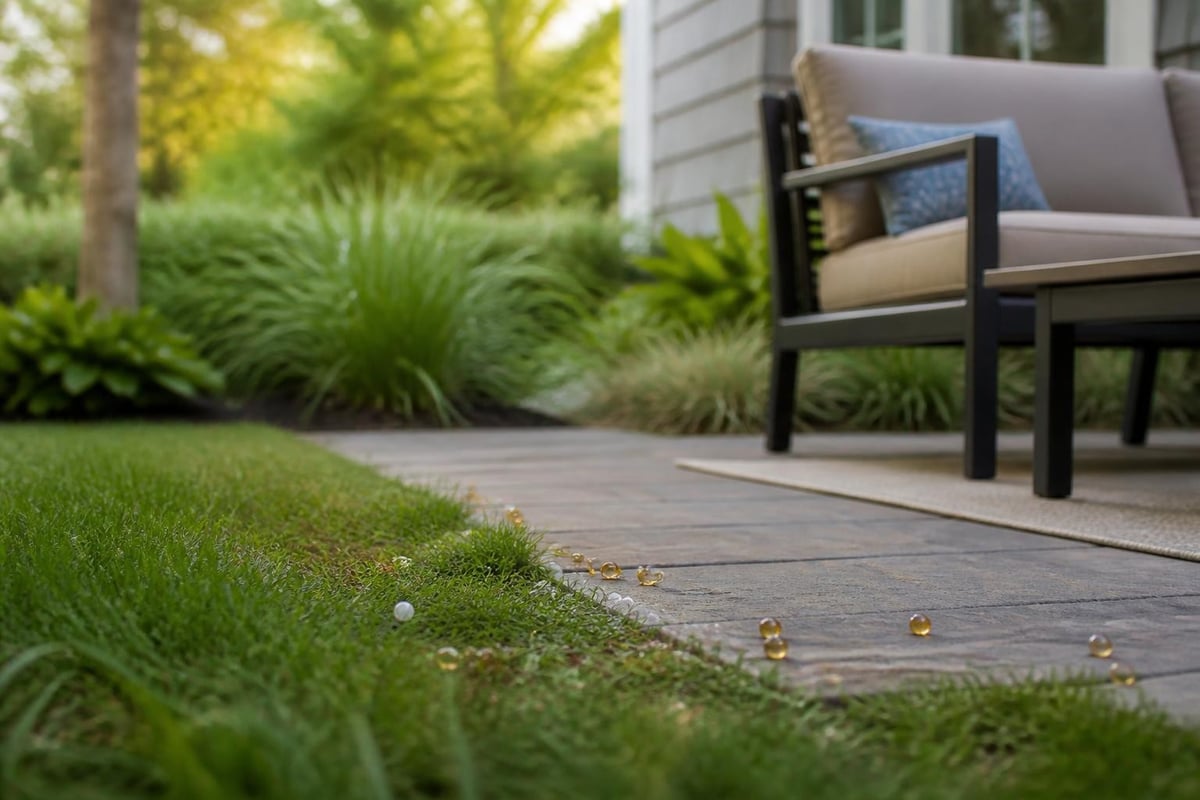
The scent-masking strategy relies on concentration and placement. Pour biodegradable beads where people gather, and the essential oils create a barrier at the exact level mosquitoes hunt. Peak performance typically occurs within the first 48 hours as the oils release most actively.
Evaluating Safety and Environmental Impact
The EPA provides clear guidance on absence-of-ingredient claims, helping consumers understand what "DEET-free" or "chemical-free" actually means on product labels. Regulatory frameworks distinguish between conventional pesticides requiring full EPA registration and minimum-risk products using only ingredients listed under FIFRA 25(b).
Natural does not automatically mean safe, and synthetic does not automatically mean dangerous. A great mosquito repellent balances proven efficacy with a safety profile appropriate for your specific use case.
Consider these factors when evaluating safety:
- Skin contact frequency and potential for irritation
- Inhalation risk from aerosols or concentrated vapors
- Pet exposure in shared outdoor spaces
- Aquatic toxicity if used near water features
- Biodegradability and long-term environmental persistence
For families managing mosquito protection in their backyard, the decision often comes down to minimizing chemical load while maintaining effective protection. Products that work at the space level rather than the individual level reduce total chemical exposure for the household.
Comparing Delivery Methods
| Method | Chemical Load | Convenience | Coverage Area | Guest-Friendly |
|---|---|---|---|---|
| Aerosol spray | High (skin contact) | Low (reapply often) | Single person | No |
| Wipes | Moderate | Moderate | Single person | No |
| Candles | Low | High | Limited radius | Yes |
| Ground beads | Very low (no skin contact) | Very high | Entire zone | Yes |
The World Health Organization maintains comprehensive guidance on insect repellents for public health applications, emphasizing both individual protection and community-level mosquito control. For residential use, the calculus shifts toward methods that preserve quality of life while reducing disease risk.
Practical Application for Outdoor Living Spaces
Your patio functions as an outdoor room, deserving the same attention to comfort and aesthetics you give interior spaces. A great mosquito repellent should enhance rather than detract from the environment you have worked to create.
Visual and sensory considerations matter:
- Candles add clutter and weak protection
- Spray bottles create an unwelcoming prep routine
- Plug-in devices require electrical access and maintenance
- Ground-based biodegradable options remain invisible after application
For the Outdoor Sanctuary Host who has invested in comfortable furniture, thoughtful lighting, and carefully selected table settings, protecting your space from mosquitoes cannot compromise the aesthetic. The solution must be elegant, effective, and unobtrusive.
Setting Up Protection Zones
Create concentric rings of protection by understanding mosquito behavior. They approach from vegetation and standing water sources, typically staying within three feet of the ground as they follow scent plumes.
Placement strategy:
- Identify mosquito entry points (lawn edges, garden borders, fence lines)
- Pour biodegradable beads in a perimeter around seating areas
- Concentrate application near standing areas where people linger
- Refresh treatment every few days for continuous coverage
- Adjust quantity based on space size (1,000 sq ft versus 300 sq ft zones)
For those seeking natural mosquito repellent options for patios, the ground application method addresses both efficacy and elegance. Simply pour where people sit, and the space becomes protected without anyone touching a spray bottle.
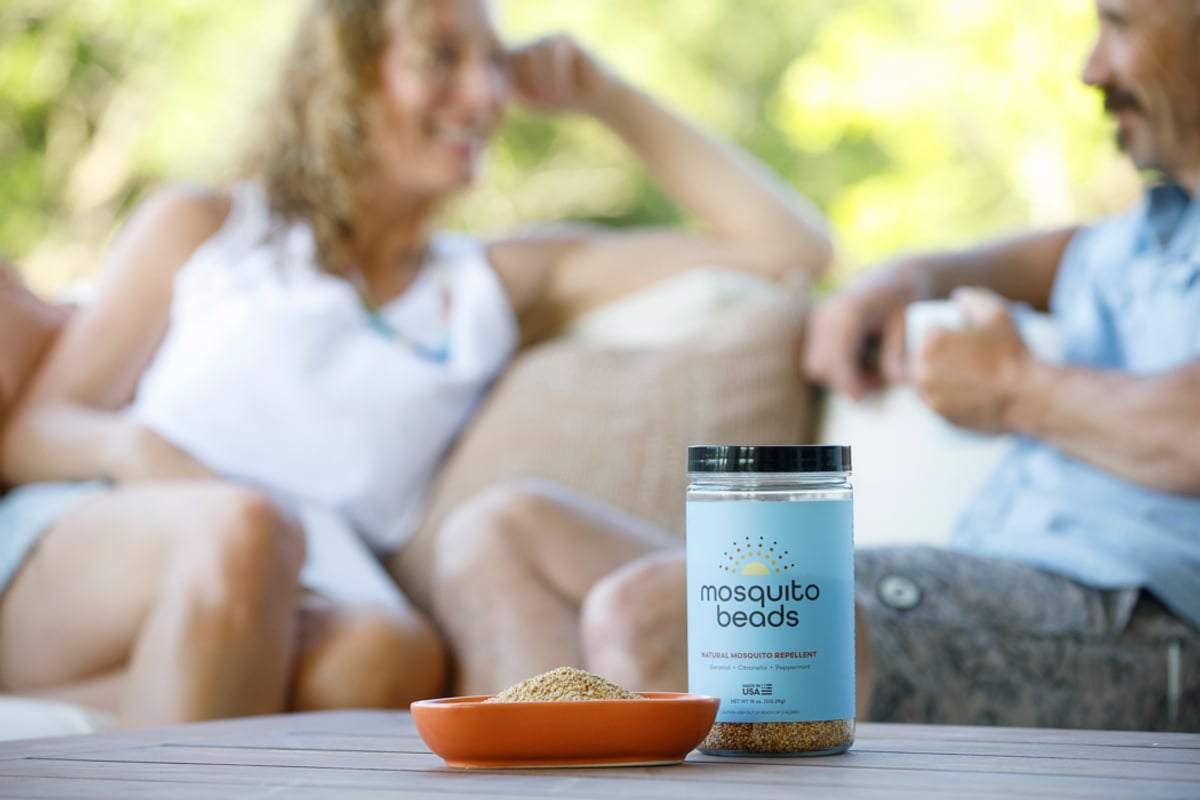
Natural mosquito repellent formulations using biodegradable corn-based granules infused with six essential oils offer a compelling alternative to conventional sprays. Geraniol, citronella, peppermint, eugenol, cornmint, and rosemary combine to create a scent-masking barrier that works at ground level where mosquitoes hunt. Because nothing touches skin and there is no smoke or flame involved, families can maintain protection without compromising comfort or safety around pets.
Performance Expectations Across Different Scenarios
A great mosquito repellent performs differently depending on environmental conditions and activity type. Understanding these variations helps you select the right product and application method for your needs.
Variable conditions affecting performance:
- Temperature and humidity accelerate evaporation of volatile compounds
- Wind speed disperses scent barriers and carries mosquitoes into spaces
- Time of day correlates with mosquito activity peaks at dawn and dusk
- Vegetation density provides mosquito staging areas near gathering spaces
- Water proximity increases breeding populations and feeding pressure
Research published in Cochrane reviews examining topical repellents demonstrates that even highly effective products show reduced performance under extreme conditions. Real-world effectiveness differs from laboratory testing, making user experience and practical feedback essential evaluation criteria.

Matching Product to Activity
Different outdoor activities demand different protection strategies. A great mosquito repellent for a stationary patio dinner differs from what works best for camping or youth sports.
| Activity | Duration | Area Coverage | Mobility | Best Approach |
|---|---|---|---|---|
| Patio dining | 2-4 hours | Fixed 500-1000 sq ft | Stationary | Ground beads (Signature 18 oz) |
| Grilling/BBQ | 1-3 hours | Fixed 300-500 sq ft | Semi-mobile | Ground beads or portable container |
| Youth sports | 1-2 hours | Defined field area | Semi-mobile | Ground beads (Sidekick 5 oz) around seating |
| Camping | 8+ hours | Variable campsite | Mobile | Mesh bag with beads at tent perimeter |
| RV living | Days/weeks | Fixed outdoor room | Stationary | Ground beads refreshed every 2 days |
Those enjoying natural mosquito repellent while camping or in an RV benefit from portable formats that protect the immediate living space without requiring skin application. Pour around your campsite perimeter or RV awning area, and mosquitoes drift past rather than landing on occupants.
Cost and Value Comparison
Initial price rarely tells the complete story when evaluating mosquito protection options. A great mosquito repellent delivers value through sustained effectiveness, reduced reapplication frequency, and elimination of hidden costs.
Hidden costs to consider:
- Replacement frequency for consumable products
- Time spent on reapplication and preparation
- Guest experience and social friction
- Cleanup and removal after use
- Storage and shelf-life management
Professional mosquito control services charge $300 to $500 per season for barrier spray treatments applied every three weeks. While effective, this approach introduces significant chemical load and requires scheduling around treatments.
Consumer-grade aerosol sprays cost $8 to $15 per can, with active families consuming one can per week during peak mosquito season. A four-month season translates to $128 to $240 in spray products, plus the inconvenience of constant reapplication.
Natural ground-based options using biodegradable beads offer different economics. An 18-ounce container covering 1,000 square feet for two days of peak performance costs approximately $25 to $30. For twice-weekly entertaining, that equals $50 to $60 per month, or $200 to $240 for a four-month season with zero skin contact required.
Long-Term Value Factors
Beyond direct cost, consider the value proposition of different approaches:
- Convenience premium: How much is your time worth when calculating reapplication labor?
- Guest comfort: What is the social cost of asking visitors to spray down before dinner?
- Pet safety: How do you value avoiding chemical exposure for animals sharing your space?
- Aesthetic preservation: What matters more, invisible protection or visible devices?
For families who view their outdoor space as an extension of their home, investing in solutions that preserve both comfort and aesthetics becomes part of the overall outdoor living budget rather than a mere pest control expense.
Making the Right Choice for Your Household
Selecting a great mosquito repellent requires matching product characteristics to your specific priorities, space requirements, and usage patterns. No single solution works for everyone, but understanding your non-negotiables clarifies the decision.
Priority framework for selection:
- Chemical exposure tolerance: Will you accept DEET on children's skin, or is DEET-free mandatory?
- Application convenience: Can you manage hourly reapplication, or must protection be set-and-forget?
- Coverage needs: Do you protect one person or an entire gathering space?
- Aesthetic standards: Will you accept visible devices, or must protection remain invisible?
- Pet presence: Does your solution need to avoid chemical contact with animals?
Households with young children and pets often prioritize DEET-free formulations and no-skin-contact application methods. The sticky, greasy feel of traditional sprays becomes particularly problematic when children touch furniture, reach into snack bowls, and pet the dog within minutes of application.
For additional guidance on selecting products that fit your specific situation, the frequently asked questions page addresses common concerns about natural formulations, application methods, and performance expectations across different environments.
Regional Considerations
Mosquito species, population density, and disease risk vary significantly by region. What qualifies as a great mosquito repellent in Minnesota differs from Florida's requirements.
In the Deep South, where mosquito season extends year-round and populations peak in late spring, sustained protection matters more than in northern states with shorter warm seasons. Florida residents seeking natural mosquito repellent face particularly aggressive species and need solutions that perform in high heat and humidity.
Western states with arid climates see concentrated mosquito activity near water sources and at dawn and dusk. Targeted protection during peak activity periods offers better value than all-day coverage.
Midwest and Northeast families contend with seasonal explosions following rainfall and snowmelt, demanding flexible solutions that scale up during peak weeks and scale down as populations wane.
Beyond Repellents: Integrated Mosquito Management
A great mosquito repellent works best as part of a broader mosquito management strategy rather than as a standalone solution. Reducing mosquito populations through habitat modification amplifies repellent effectiveness.
Essential habitat management steps:
- Empty standing water from containers, gutters, and tire swings weekly
- Maintain swimming pools and water features with proper circulation
- Trim vegetation to reduce daytime resting spots near patios
- Install fans on covered porches to disrupt mosquito flight
- Replace white outdoor lighting with yellow bug lights
A well-maintained yard with minimal breeding sites requires less repellent to achieve comfortable protection. Combining habitat modification with effective repellent creates layered defense more robust than either approach alone.
For comprehensive strategies, explore resources on natural ways to combat mosquitoes that address both immediate protection needs and long-term population reduction.
The Role of Personal Protection
While space-level protection handles the majority of your outdoor living needs, certain situations still call for personal repellent. Hiking through wooded trails, working in the garden, or walking the dog at dusk may require portable protection beyond what ground-based products provide.
Mesh bags filled with biodegradable beads offer portable options for these scenarios. Clip to a belt loop, backpack, or stroller, and the scent-masking effect travels with you. This approach maintains the no-skin-contact advantage while providing mobility.
The key insight: great mosquito repellent comes in multiple formats to match specific use cases. Choose the right tool for each situation rather than forcing a single product to serve every need.
Testing and Validating Effectiveness
Unlike many consumer products, mosquito repellents offer immediate, observable feedback. You know within minutes whether a product works or fails. This rapid validation cycle makes field testing essential for any product claiming to be a great mosquito repellent.
Evaluation criteria for real-world testing:
- Landing rate reduction: Fewer mosquitoes attempting to land on exposed skin
- Bite prevention: Zero bites during the protection window
- Duration consistency: Performance matches claimed coverage period
- Reapplication necessity: Product works as long as advertised without refresh
- User compliance: Method simple enough that you actually use it regularly
The CDC has published research on minimum-risk products, noting significant variation in performance among products marketed as natural alternatives. Not all essential oil formulations deliver equivalent protection, making brand selection and formulation quality critical factors.
Customer reviews and field reports provide valuable validation beyond laboratory testing. Products earning consistent positive feedback across diverse geographic regions and mosquito species demonstrate robust performance worthy of the "great mosquito repellent" designation.
Choosing a great mosquito repellent means understanding your priorities and matching product characteristics to your outdoor living needs. Whether you value DEET-free formulations, no-skin-contact application, pet safety, or invisible protection, options exist that deliver effective mosquito control without compromising comfort. Mosquito Beads offers a natural, biodegradable solution you pour on the ground where people gather, creating a scent-masking barrier that protects your entire patio without sticky sprays, smoke, or flame.