

Bug Repellent DEET Free: Natural Alternatives That Work
More families are reconsidering what they spray on their skin during outdoor gatherings. The shift toward bug repellent DEET free products reflects growing concerns about chemical exposure, particularly for children, pets, and anyone spending extended time outdoors. Whether you're hosting a backyard dinner or watching your child's Saturday game, the question is no longer just "does it work?" but "what exactly am I putting on my family?" This article examines the landscape of DEET-free protection, comparing active ingredients, application methods, and practical considerations that matter when you're trying to reclaim your outdoor space without compromise.
Understanding DEET and Why People Seek Alternatives
DEET (N,N-diethyl-meta-toluamide) has served as the gold standard in mosquito repellents since the U.S. Army developed it in 1946. The EPA regulates DEET as a conventional pesticide, approving formulations ranging from 5% to 100% concentration for direct skin application. Its effectiveness is well-documented, but so are the reasons families hesitate to use it.

The Chemical Load Concern
Parents hosting weekend barbecues face a practical dilemma. Asking guests to apply sticky spray before sitting down feels invasive. Watching children rub their eyes after touching DEET-coated arms triggers worry. The chemical has an established safety profile when used as directed, yet many families prefer to minimize synthetic pesticide exposure altogether, especially in spaces where toddlers play on the ground and pets roam freely.
The greasy residue creates another layer of resistance. DEET can damage plastics, synthetic fabrics, and certain finishes. A single application leaves skin feeling coated for hours. For someone who has carefully curated an outdoor sanctuary, introducing a substance that melts plastic lawn furniture or stains cushions simply doesn't align with how they want to live.
Regulatory Perspective and Evidence Base
The EPA lists several registered skin-applied repellent ingredients beyond DEET, including picaridin, IR3535, and oil of lemon eucalyptus (PMD). Each offers varying protection durations and safety profiles. Global health organizations continue to evaluate these options. The WHO maintains guidance on vector control that balances efficacy with practical use considerations across diverse populations.
Recent research provides nuance to the DEET-free conversation. A systematic review of essential oils as mosquito bio-repellents examined plant-based compounds and their mechanisms of action, while a meta-analysis comparing synthetic and natural repellents offered protection-time data across human studies. The evidence suggests that DEET-free options can work, though formulation and application method significantly impact real-world performance.
Natural Active Ingredients in Bug Repellent DEET Free Products
The bug repellent DEET free category spans a wide range of active ingredients, each with distinct properties and limitations. Understanding these differences helps you match the right solution to your specific outdoor situation.
| Active Ingredient | Typical Concentration | Protection Duration | Application Type | Key Considerations |
|---|---|---|---|---|
| Picaridin | 5-20% | 3-8 hours | Spray, lotion | Synthetic; less greasy than DEET |
| Oil of Lemon Eucalyptus (PMD) | 30-40% | 4-6 hours | Spray, lotion | Plant-derived; not for children under 3 |
| IR3535 | 7.5-20% | 2-6 hours | Spray, lotion | Synthetic derivative of amino acid |
| Geraniol | 5-10% | 2-4 hours | Spray, candle, bead | Essential oil; pleasant scent |
| Citronella | 5-10% | 30 min-2 hours | Candle, spray, bead | Classic scent; short duration in candles |
| Peppermint Oil | 2-10% | 1-3 hours | Spray, bead | Cooling sensation; strong scent |
Plant-Derived Essential Oil Blends
Multiple essential oils show mosquito-deterrent properties in laboratory settings. Geraniol, extracted from geraniums and citronella grass, interferes with mosquito olfactory receptors. Citronella has decades of anecdotal use, though candle delivery proves less effective than concentrated topical or ambient applications. Peppermint, eugenol (from cloves), cornmint, and rosemary each contribute unique volatile compounds that mosquitoes find aversive.
The challenge with essential oils historically centered on delivery method and duration. Sprays require reapplication every one to three hours. Candles depend on wind conditions and flame proximity. What changed the equation for many families was recognizing that protection doesn't have to mean coating your skin. Ground-applied, ambient scent-masking offers an entirely different approach, eliminating the sticky factor while addressing the space rather than individuals.
Synthetic DEET Alternatives
Picaridin emerged as a DEET alternative in the 1990s and gained EPA registration in 2005. It provides comparable protection duration without damaging plastics or leaving the same greasy residue. IR3535, while less common in U.S. retail, enjoys popularity in Europe. Both require direct skin application and reapplication based on concentration and activity level.
These synthetic alternatives solve some DEET concerns but maintain the fundamental approach: coat exposed skin, reapply frequently, and accept the tactile experience of wearing a chemical barrier. For families looking for natural ways to combat mosquitoes, the question shifts from "which chemical is best?" to "does it need to be a chemical on my skin at all?"
Application Methods Beyond Traditional Sprays
The delivery system matters as much as the active ingredient. Bug repellent DEET free products now span multiple formats, each suited to different outdoor scenarios and personal preferences.
Wearable Repellents: Sprays, Lotions, and Wipes
Traditional application methods dominate the retail landscape:
- Aerosol sprays offer quick coverage but create overspray and uneven distribution
- Pump sprays provide more control yet still require skin contact
- Lotions allow precise application but take longer to spread
- Wipes combine portability with control, though coverage can be spotty
All these formats share a common requirement: you must touch the product, apply it to exposed skin, and convince everyone in your party to do the same. At a family gathering with fifteen guests, this becomes logistically awkward. For young children who resist having anything rubbed on their face or arms, it turns into a negotiation. And for the host who has set a beautiful table on a carefully designed patio, asking guests to spray themselves down contradicts the entire evening's aesthetic.
Spatial Repellents: Protecting the Area Instead of Individuals
A fundamentally different approach treats the space rather than people:
- Candles release essential oils through combustion but depend heavily on wind and proximity
- Coils provide longer burn times yet introduce smoke and require constant flame monitoring
- Fans and misters add mechanical deterrence or chemical dispersion but need power sources
- Ground-applied granules release scent at mosquito hunting level without flames, smoke, or skin contact
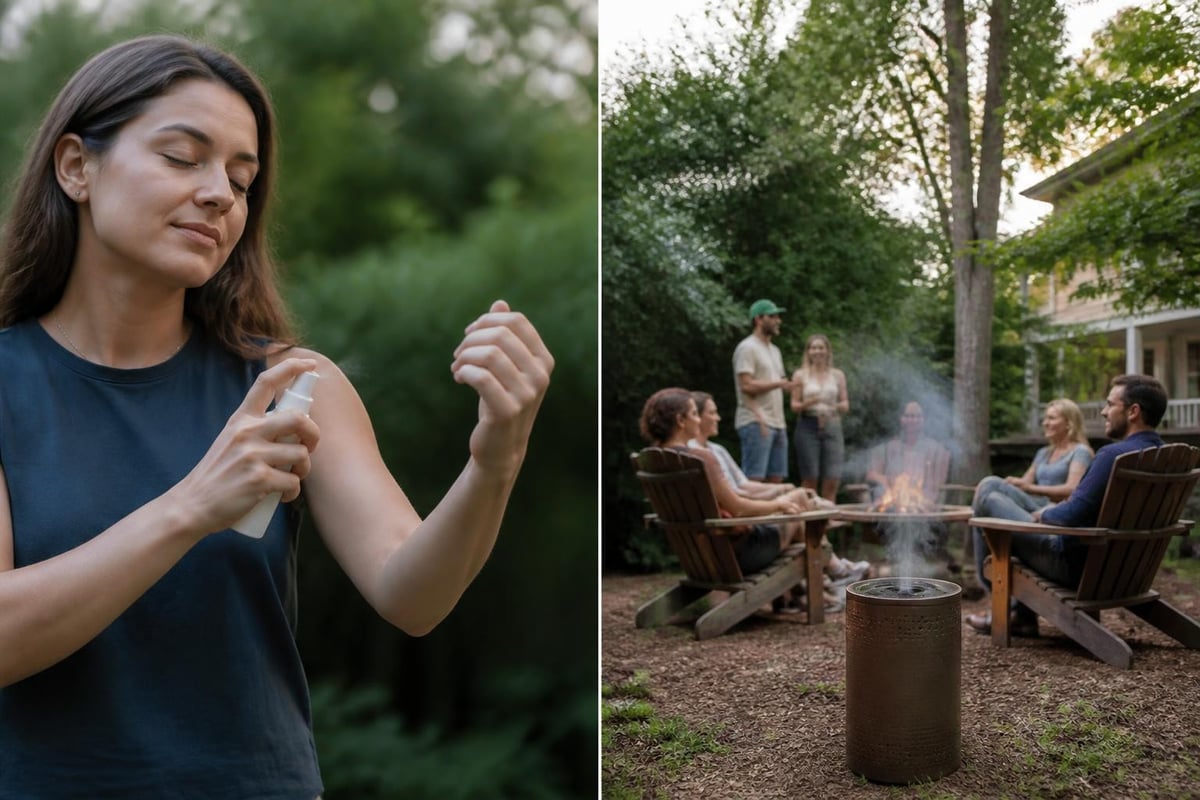
The spatial approach aligns with how many families want to protect their backyard space from mosquitoes. It addresses the zone where people gather rather than requiring each person to become a mobile chemical barrier. This matters when you have guests who decline to use sprays, children who wriggle away from application, or pets moving through the protected area.
How Scent-Masking Technology Works
Mosquitoes navigate toward potential hosts through a sophisticated scent-detection system. Female mosquitoes can detect carbon dioxide from human exhalation from up to 30 feet away. Once in the general vicinity, they track specific chemical signatures at ground level, including lactic acid, ammonia, and other metabolic byproducts that drift downward and pool near the earth's surface.
The Ground-Level Hunting Pattern
Understanding mosquito behavior reveals why application location matters:
- Initial detection: CO2 plume from breathing draws mosquitoes to the general area
- Thermal signature: Body heat confirms a warm-blooded target
- Scent refinement: Ground-level chemical markers provide precise location data
- Landing decision: Final approach depends on detecting human scent concentrated near the surface
Traditional skin repellents work by coating you in compounds mosquitoes find repulsive. They smell you, then smell the DEET or picaridin, and choose to fly elsewhere. But you must achieve complete coverage, and the protection moves only as far as you do.
Scent-masking technology intervenes earlier in the mosquito's decision process. By releasing a concentrated blend of essential oils at ground level where mosquitoes hunt for scent markers, the approach overwhelms their detection system. They cannot locate the human scent signature that tells them where to land. They drift through the treated area without identifying a target.
Why This Approach Appeals to Outdoor Sanctuary Hosts
For someone who considers their patio an extension of their home, scent-masking delivers specific advantages:
- No requirement to apply anything to skin or clothing
- Protection covers the entire gathering space, not just individuals
- Guests can arrive and enjoy the evening without preparation
- Pet-friendly when used as directed, with no risk of animals licking chemical-coated skin
- Biodegradable formulations dissolve back into soil after use
- No smoke, flame, or visual intrusion on carefully curated aesthetics
This method resonates particularly with hosts aged 35 to 55 who have invested in outdoor living spaces and refuse to compromise on either protection or presentation. They want the evening to feel effortless for guests while maintaining complete control over the mosquito situation.
Comparing Bug Repellent DEET Free Performance
Consumer testing organizations and academic researchers evaluate repellent effectiveness through controlled studies. Consumer Reports regularly tests insect repellents, measuring how long products protect against mosquito bites in laboratory and field conditions. The Cochrane review on mosquito repellents examines evidence quality for products used in malaria prevention, offering insight into what constitutes rigorous testing.
Protection Duration by Product Type
Real-world performance varies significantly based on formulation, concentration, and environmental conditions:
High-performing DEET-free skin applications:
- 20% picaridin: 8-10 hours in ideal conditions
- 30% oil of lemon eucalyptus: 6-8 hours with moderate activity
- 10% essential oil blends: 2-4 hours with frequent reapplication needed
Spatial repellents:
- Citronella candles: 30 minutes to 2 hours depending on wind
- Essential oil misters: Coverage varies by breeze and placement
- Ground-applied biodegradable beads: Peak performance days 1-2, protecting up to 1,000 square feet
The performance gap between categories matters less when you match the product to the use case. A hiker on a wooded trail benefits from long-duration skin application. A family hosting dinner on their patio for two hours needs something entirely different.
When to Choose Each Approach
Select skin-applied bug repellent DEET free products when:
- Individual mobility requires portable protection (camping, hiking, running)
- You will be in heavily infested areas away from controlled spaces
- Duration exceeds what spatial repellents can provide
- You have no concern about applying chemicals to skin
Select spatial, ground-applied protection when:
- Hosting gatherings in a defined outdoor area
- Children or pets make skin application impractical
- You prefer to avoid all skin contact with repellent chemicals
- The aesthetic and comfort of your outdoor space matters significantly
- Guests should not need preparation to feel comfortable
Many families maintain both categories in their pest-management toolkit, deploying each where it makes the most sense. The RV and camping crowd often uses spatial protection at the campsite and skin repellents for trail walks.
Environmental and Safety Considerations
The shift toward bug repellent DEET free products often reflects environmental values as much as personal health concerns. Families who landscape with native plants, compost kitchen waste, and limit lawn chemical use extend the same philosophy to pest control.
Biodegradability and Environmental Impact
Synthetic repellents (DEET, picaridin, IR3535):
- Persist in the environment after washing off skin
- Can enter water systems through showering and swimming
- Some evidence of aquatic toxicity at concentrations higher than typical environmental levels
- Do not readily biodegrade
Natural essential oil formulations:
- Typically biodegrade within days to weeks
- Corn-based carrier granules decompose like any organic matter
- Less persistent in water systems
- Lower aquatic toxicity in most formulations
For families concerned about runoff into storm drains or impact on beneficial insects, biodegradable options align with broader environmental commitments. The tradeoff historically involved reduced efficacy, but modern formulations and delivery systems have narrowed that gap considerably in controlled-space applications.
Pet and Child Safety Protocols
Whether choosing chemical or natural options, safe use around vulnerable family members requires attention:
- Never apply essential oil concentrates directly to pet fur or skin
- Keep all repellent products out of children's reach
- Follow age restrictions (many products prohibit use under age 3)
- Wash hands after handling any repellent before touching food
- Store products in cool, dry locations away from direct sunlight
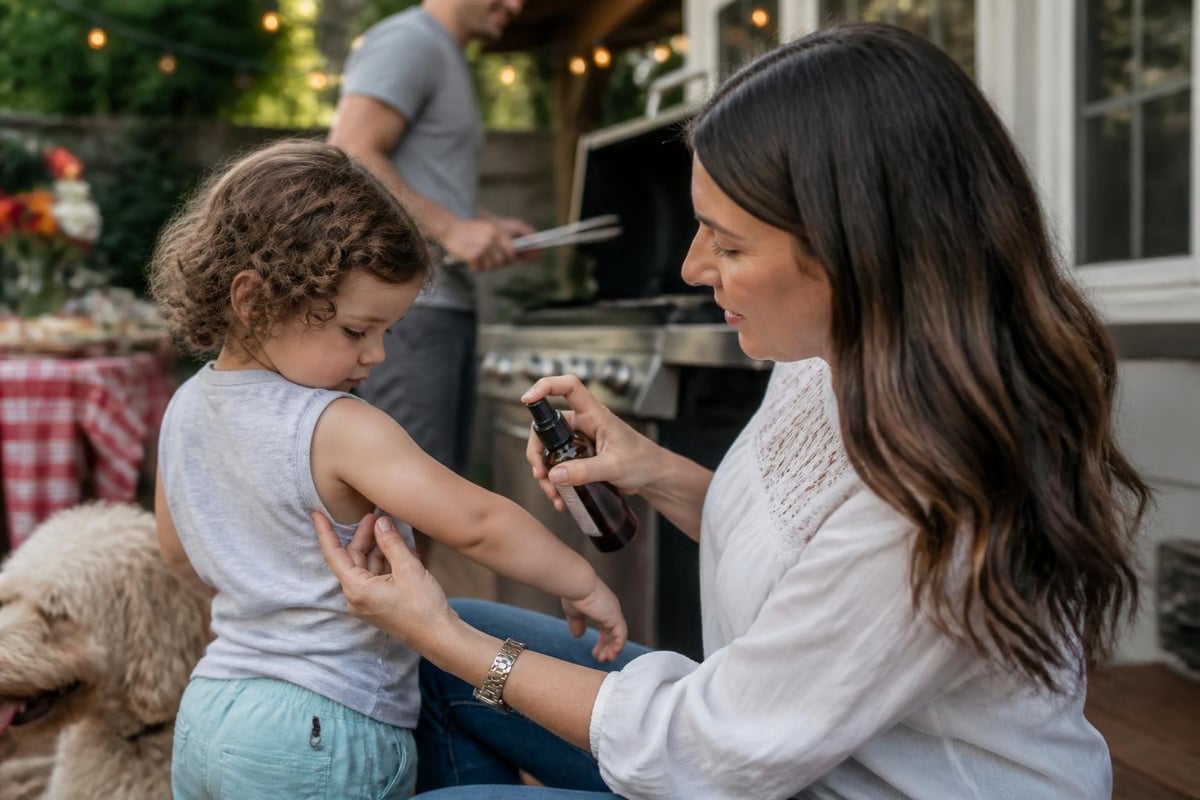
Ground-applied products offer an inherent safety advantage: nothing goes on skin, eliminating the risk of children rubbing treated arms on their face or pets licking treated legs. When properly deployed, the active ingredients remain at ground level where they create a scent barrier without requiring direct contact.
Making the Switch: Practical Implementation
Transitioning from DEET-based sprays to bug repellent DEET free alternatives requires adjusting your approach to outdoor mosquito management. Success depends on understanding how different products work and setting appropriate expectations.
Setting Up Your Outdoor Space
For patio and backyard applications, effectiveness starts with proper deployment:
- Identify gathering zones where people will sit, stand, or play for extended periods
- Calculate square footage to determine product quantity needed
- Apply at ground level in a perimeter around the gathering space
- Refresh as directed based on product specifications (typically every 1-2 days for peak performance)
- Combine methods if needed, using fans to disperse scent and reduce CO2 pooling
Families often discover that protecting outdoor space works better than they anticipated once they commit fully to the approach. The key lies in treating the entire zone rather than creating small protected pockets.
Adjusting Expectations and Measuring Success
The mental shift from "spray everyone" to "protect the space" takes some adjustment:
What to expect:
- Significant reduction in mosquito landings and bites within treated areas
- Best results in the first 48 hours after application
- Diminished but continuing protection through day 3-5 depending on weather
- Greater effectiveness in defined spaces versus wide-open areas
What not to expect:
- 100% elimination of all mosquitoes everywhere
- Protection that extends indefinitely without reapplication
- Equal effectiveness in hurricane-force winds versus calm evenings
Success means hosting an outdoor dinner where guests don't slap at mosquitoes every three minutes. It means watching your child's soccer game without covering yourself in sticky spray. For the Outdoor Sanctuary Host, it means reclaiming the patio as the room you intended it to be.
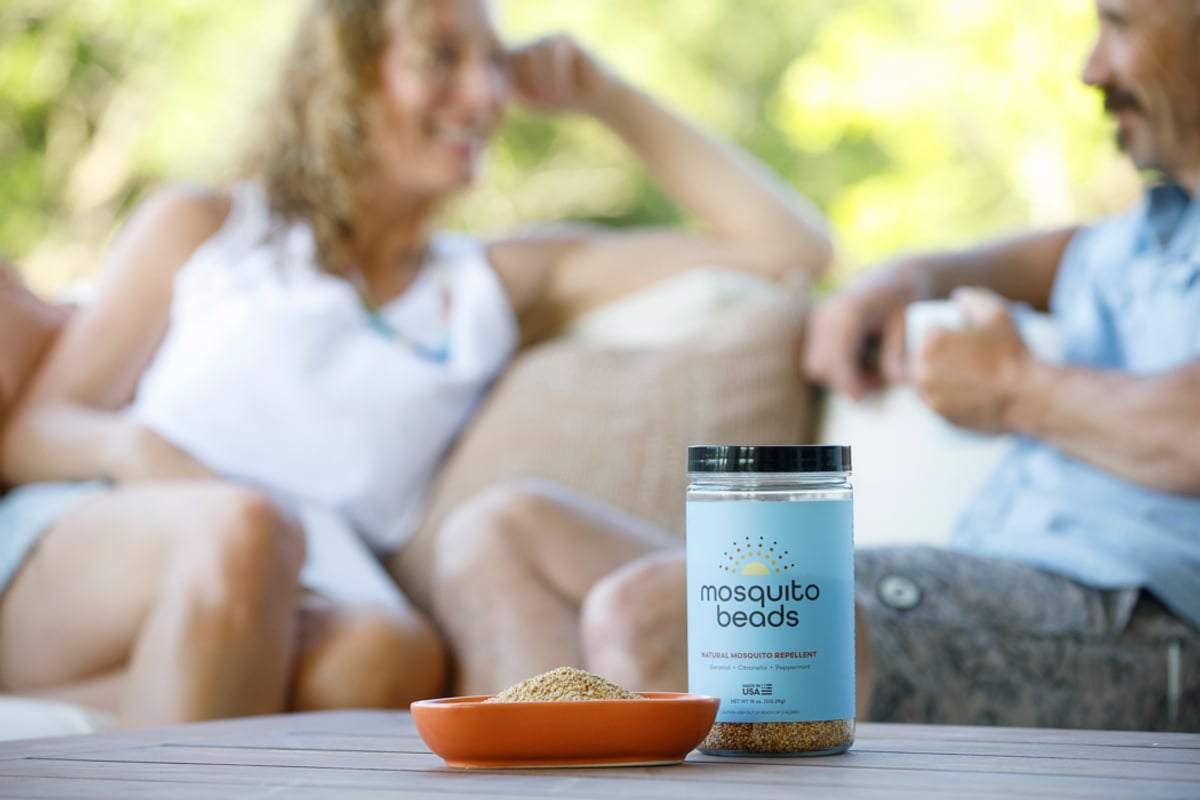
Mosquito Beads offer exactly this approach for families ready to move beyond traditional sprays. Biodegradable granules infused with six essential oils work through scent-masking at ground level, protecting up to 1,000 square feet per 18-ounce application. Pour on the ground where people gather, nothing on your skin, and enjoy peak performance on days one and two.
Regional Considerations and Climate Factors
Bug repellent DEET free effectiveness varies by geography, mosquito species, and seasonal conditions. What works brilliantly in one region may require adjustment in another.
High-Pressure Mosquito Zones
States like Florida and Texas face year-round mosquito pressure with multiple aggressive species. Humid climates support larger mosquito populations and extend breeding seasons. In these environments:
- Product performance duration may decrease due to heat and humidity
- More frequent reapplication becomes necessary
- Combining multiple DEET-free approaches (spatial plus barriers) often works best
- Timing outdoor activities for lower mosquito activity periods helps
Moderate and Variable Climates
Regions with distinct seasons see mosquito pressure peak during warm, humid months and virtually disappear in winter. In Kansas and similar climates:
- Late spring through early fall represents the primary protection window
- Evening protection matters most (dawn and dusk feeding times)
- Moderate temperatures can extend product effectiveness
- Standing water elimination becomes crucial during rain cycles
Adapting Your Approach
No single product delivers universal results across all conditions. The most successful outdoor hosts:
- Monitor local mosquito activity levels and adjust protection accordingly
- Increase coverage area and refresh frequency during peak pressure
- Maintain backup options for unexpectedly high mosquito counts
- Focus resources on the spaces that matter most rather than attempting total yard coverage
For additional guidance on matching protection strategies to your specific situation, the frequently asked questions page addresses common regional and application concerns.
Cost Analysis and Long-Term Value
Price comparisons between bug repellent DEET free options reveal significant differences in cost per use and convenience value.
Direct Product Costs
| Product Type | Typical Retail Price | Coverage/Duration | Cost Per Use |
|---|---|---|---|
| DEET spray (6 oz) | $8-12 | 40-60 applications per person | $0.15-0.30 per person per use |
| Picaridin spray (6 oz) | $10-14 | 40-60 applications per person | $0.20-0.35 per person per use |
| Essential oil spray (4 oz) | $12-18 | 20-30 applications per person | $0.40-0.90 per person per use |
| Citronella candles (3-pack) | $15-25 | 12-18 hours total burn time | $1.25-2.10 per evening |
| Biodegradable ground beads (18 oz) | $25-35 | 1,000 sq ft for 2 days peak | $12.50-17.50 per application |
Hidden Costs and Convenience Factors
Beyond sticker price, consider:
- Application time: Spraying six people takes 10-15 minutes; pouring ground protection takes 2 minutes
- Reapplication frequency: Skin sprays require hourly touch-ups during active sweating; spatial protection lasts days
- Product waste: Spray bottles inevitably leave 10-15% unusable; granules deploy completely
- Replacement costs: Damaged plastic furniture or stained fabrics from DEET add hidden expenses
When hosting regular outdoor gatherings, the convenience value of not asking guests to spray themselves carries weight beyond pure economics. The host who can simply say "come as you are" creates a more welcoming environment than one who hands arriving guests a bottle of repellent.
For detailed cost breakdowns specific to natural options, this comparison of over-the-counter solutions versus professional services examines total annual investment across different approaches.
Building Your Complete Protection Strategy
Most successful outdoor mosquito management combines multiple tactics rather than relying on any single product. Bug repellent DEET free solutions work best as part of a broader integrated approach.
The Four-Layer Defense
Layer 1: Source reduction
- Eliminate standing water in gutters, flowerpots, and yard debris
- Maintain swimming pools with proper chemical balance
- Keep grass trimmed and vegetation managed
- Remove leaf piles and ground clutter where mosquitoes rest
Layer 2: Physical barriers
- Screen porches and pavilions where structurally feasible
- Deploy mosquito netting for temporary outdoor sleeping areas
- Use fans to create air movement that disrupts mosquito flight patterns
- Time activities for lower mosquito pressure periods when possible
Layer 3: Spatial repellents
- Apply ground-level scent-masking products in gathering zones
- Position candles or diffusers as supplementary protection
- Create treated perimeters around high-use areas
- Refresh applications based on product specifications
Layer 4: Personal protection (when needed)
- Keep DEET-free skin spray available for individuals venturing beyond treated zones
- Wear light-colored, loose-fitting clothing that covers arms and legs
- Apply additional protection for activities in heavily infested areas
- Maintain personal products separately from shared spatial protection
This layered approach acknowledges that different situations call for different tools. Your backyard dinner party relies primarily on layers one through three. Your weekend camping trip adds layer four for trail walks and fishing expeditions.
Seasonal Adjustments
Protection needs shift throughout the year:
Spring (March - May):
- Focus on source reduction as mosquitoes emerge
- Begin spatial protection as temperatures consistently reach 50°F
- Monitor breeding sites after heavy rains
Summer (June - August):
- Maintain peak protection levels for evening outdoor activities
- Increase refresh frequency during heat waves
- Extend protected zones for longer gatherings
Fall (September - November):
- Continue protection through warm evenings
- Reduce coverage area as mosquito populations decline
- Winterize water features and clean gutters
Winter (December - February):
- Minimal to no active protection needed in most climates
- Use downtime to assess and repair physical barriers
- Plan approach for coming season
Addressing Common Concerns and Misconceptions
Families considering bug repellent DEET free options often encounter conflicting information. Addressing the most frequent questions helps set realistic expectations.
"Natural Products Don't Work"
This oversimplification ignores delivery method and application context. A 5% essential oil spray reapplied every 90 minutes performs differently than a concentrated ground-applied scent barrier refreshed every two days. Research on essential oils as mosquito bio-repellents demonstrates measurable effectiveness when formulations and concentrations reach appropriate levels.
The real question is not "natural versus synthetic" but rather "right tool for the job." Skin-applied DEET excels at protecting a hiker in deep woods. Ground-applied essential oil blends excel at protecting a patio gathering. Expecting one to perform the other's role leads to disappointment.
"You Need DEET for Serious Protection"
DEET certainly offers proven long-duration individual protection. But "serious protection" depends on your definition of serious. A family hosting outdoor gatherings three evenings per week doesn't face the same challenge as someone working outdoors in a malaria zone. For suburban mosquito pressure, DEET-free spatial protection often exceeds what traditional sprays deliver because it treats the entire space rather than individuals.
The evidence base continues to expand. Public health organizations recognize multiple effective approaches, each suited to different risk profiles and use cases.
"Ground Application Can't Work Because Mosquitoes Fly"
This misunderstands mosquito hunting behavior. While mosquitoes fly several feet above ground for transportation, they drop to ground level to track human scent markers that guide final approach and landing decisions. By masking those markers where mosquitoes hunt for them, ground-applied products disrupt the targeting system mosquitoes rely on.
The approach works because it intervenes at the right point in the mosquito's detection sequence, not because mosquitoes only fly at ankle height.
"Natural Means Weak"
Concentration and formulation determine effectiveness, not whether ingredients originate from plants or laboratories. A poorly formulated DEET product fails just as readily as a poorly formulated essential oil product. The difference lies in selecting products engineered for your specific application rather than assuming all "natural" or all "synthetic" products share identical performance characteristics.
For additional clarity on how specific ingredients work, the article on geraniol mosquito repellent effectiveness examines one key essential oil component in detail.
Choosing bug repellent DEET free protection means matching proven alternatives to your specific outdoor needs and values. When you understand how different active ingredients work and which delivery methods suit patio gatherings versus trail hikes, you can build a mosquito management strategy that protects your family without compromise. For hosts ready to reclaim outdoor spaces without sticky sprays or harsh chemicals, Mosquito Beads deliver ground-level scent-masking protection that lets guests arrive unbothered and enjoy the evening you designed.