

Best DEET Free Bug Repellent for Patio & Outdoor Spaces
Finding the best DEET free bug repellent means understanding what you actually need to protect: your body or your space. The outdoor sanctuary you've built on your patio deserves better than sticky sprays that wear off in an hour or chemical-laden solutions that make you question what you're putting near your family and pets. In 2026, DEET-free options have matured far beyond the citronella candles that never quite worked, offering genuine protection through multiple mechanisms that fit different outdoor lifestyles. Whether you're hosting weekend dinners, watching kids play in the yard, or simply claiming your evenings back from mosquitoes, the right DEET-free solution balances effectiveness, convenience, and peace of mind.
Understanding DEET-Free Repellent Options
The best DEET free bug repellent category includes several distinct active ingredients, each with different strengths and ideal use cases. Modern alternatives have closed the effectiveness gap that once made DEET the default choice.
Active Ingredient Breakdown
Picaridin has emerged as a synthetic DEET alternative with comparable protection duration. The EPA recognizes picaridin as effective against mosquitoes, ticks, and other biting insects, with 20% formulations providing up to eight hours of protection. Unlike DEET, picaridin doesn't damage plastics or synthetic fabrics, making it friendlier to outdoor gear and clothing.
PMD (para-menthane-3,8-diol) and OLE (oil of lemon eucalyptus) represent plant-derived options that offer legitimate protection. According to Consumer Reports testing, 30% PMD formulations can protect for up to six hours, though they require more frequent reapplication than picaridin or DEET.
IR3535, a synthetic amino acid derivative, rounds out the EPA-registered alternatives. While less common in retail products, it provides moderate protection duration and has established safety data for use around children.
Application Method Matters More Than You Think
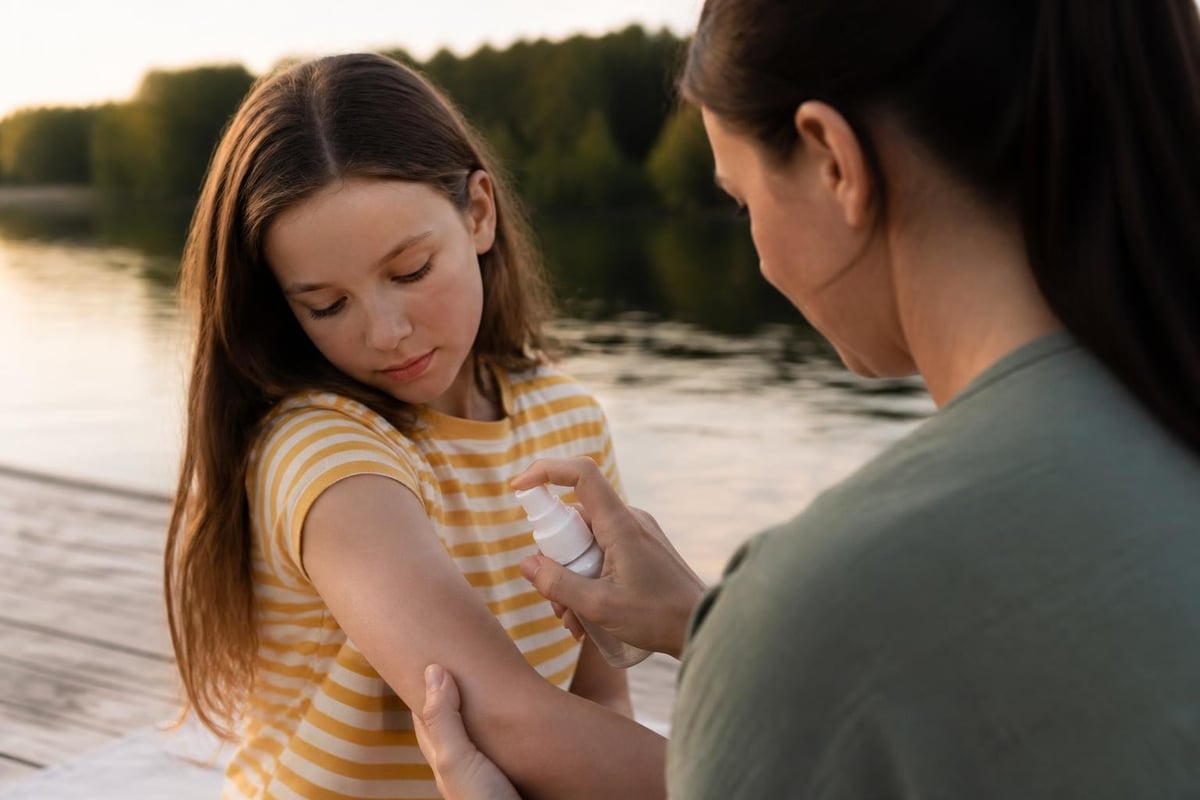
The conversation around the best DEET free bug repellent typically focuses on active ingredients, but application method fundamentally changes the user experience. Wearable repellents require direct skin contact, regular reapplication, and often leave a greasy or sticky residue that makes hosting uncomfortable.
Wearable spray and lotion drawbacks:
- Requires everyone present to apply product
- Reapplication needed every 2-4 hours
- Sticky residue on skin and furniture
- Cannot reasonably ask guests to spray down before entering your space
- Pets may lick treated skin
- Chemical exposure concerns for frequent users
Space-based protection methods eliminate these friction points entirely. Rather than treating each person, you treat the environment where people gather.
Comparing Protection Methods by Lifestyle
Different outdoor scenarios demand different repellent strategies. The best DEET free bug repellent for a camping trip looks nothing like the ideal solution for your backyard patio.
| Use Case | Best Approach | Why It Works | Duration |
|---|---|---|---|
| Patio dining | Ground-applied scent masking | Protects the entire space, no guest coordination | 1-2 days |
| Hiking/walking | Picaridin spray (20%) | Mobile protection, no flames allowed on trails | 6-8 hours |
| Camping | PMD lotion + spatial repellent | Dual protection for tent area and body | Varies |
| Kids' sports | Ground application near seating | Parents can't enforce spray on all kids | 1-2 days |
| RV living | Spatial protection at site perimeter | Creates protected outdoor room | 1-2 days |
Why Patio Hosts Choose Different Solutions
The outdoor sanctuary host faces unique constraints that make traditional wearable repellents impractical. You cannot control whether guests arrive already sprayed. You cannot pause conversation to reapply lotion. You definitely cannot interrupt dinner to ask everyone to recoat themselves with sticky spray.
Ground-applied solutions like biodegradable beads infused with essential oil blends solve this coordination problem. Natural mosquito repellent options for patios work by masking the carbon dioxide and scent signatures that mosquitoes track at ground level, causing them to drift past your space rather than landing on guests.
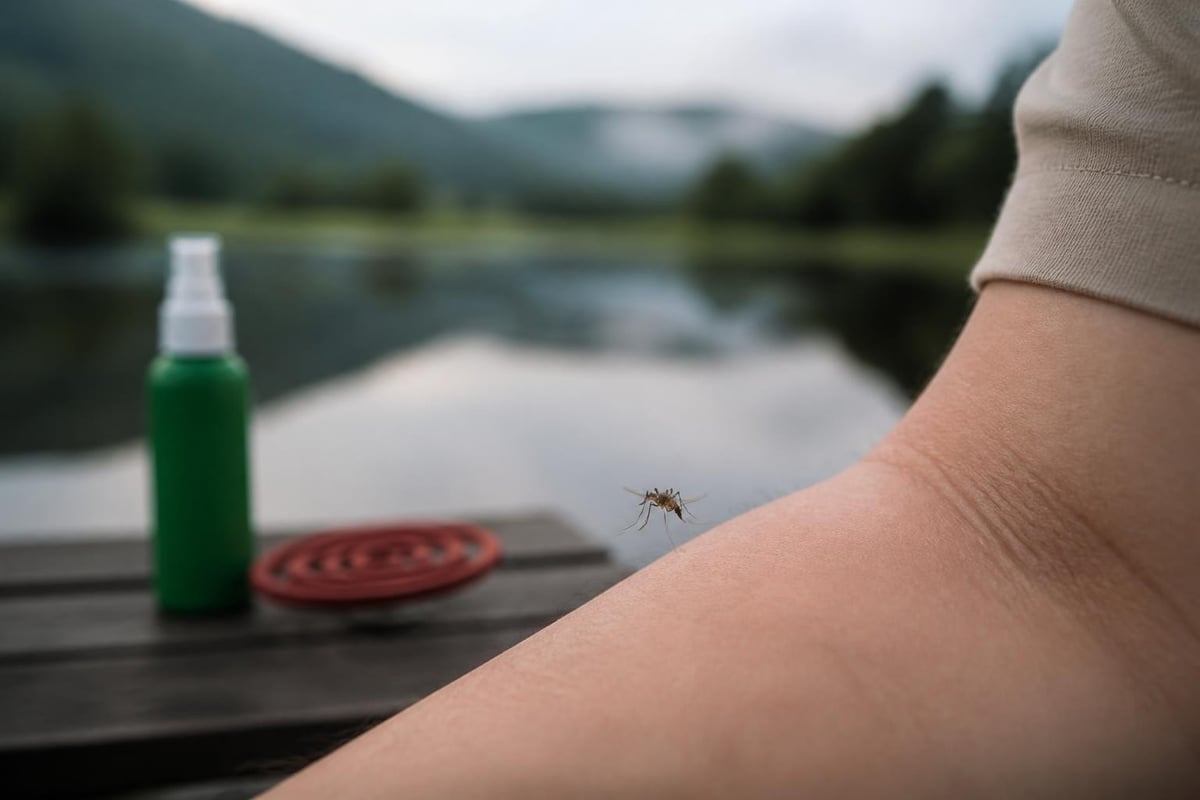
The mechanism differs fundamentally from wearable repellents. Instead of creating a chemical barrier on skin that repels insects through taste or smell upon contact, scent-masking disrupts the mosquito's ability to locate targets in the first place. Mosquitoes hunt primarily by scent, detecting CO2 from up to 30 feet away and tracking body heat and odor plumes to find landing sites.
Evaluating Natural Essential Oil Formulations
Essential oils occupy a controversial middle ground in the best DEET free bug repellent discussion. While EPA-registered alternatives like picaridin have clear efficacy data, essential oil products fall under different regulatory categories with less standardized testing requirements.
What the Research Actually Shows
The National Pesticide Information Center notes that essential oil repellents generally provide shorter protection duration than synthetic alternatives, typically 30 minutes to two hours depending on concentration and formulation. However, recent research in Frontiers in Insect Science highlights that certain essential oil combinations show synergistic effects that extend protection beyond what individual oils provide.
Proven essential oil actives:
- Geraniol (rose geranium)
- Citronella (lemongrass)
- Peppermint oil
- Eugenol (clove)
- Cornmint
- Rosemary oil
The challenge with essential oils lies not in their fundamental effectiveness but in delivery method. Topical application means rapid evaporation, requiring constant reapplication. Alternative delivery systems that release essential oils gradually into the environment show better sustained performance.
The Pet-Friendly Consideration
Many families seeking the best DEET free bug repellent prioritize pet safety as heavily as human protection. Dogs and cats explore outdoor spaces with their mouths and paws, creating exposure risks with any product applied to surfaces or skin.
DEET poses documented risks to pets through ingestion or skin contact. Picaridin, while safer than DEET, still warrants caution around animals that may lick treated skin. Penn State Extension guidance recommends keeping pets away from freshly treated areas until products fully dry.
Ground-applied biodegradable beads made from corn-based materials and essential oils offer a pet-friendly profile when used as directed. The product remains on the ground rather than on surfaces pets will contact directly, and natural degradation begins immediately upon application.
For families creating an outdoor space that accommodates pets, avoiding wearable chemical repellents removes one source of concern while still achieving meaningful mosquito reduction in gathering areas.
Effectiveness Data and Realistic Expectations
Honest assessment of any best DEET free bug repellent option requires understanding what "effectiveness" means in practical terms. Protection duration, mosquito species variation, environmental conditions, and application technique all influence real-world performance.
Protection Duration by Product Type
A systematic review on topical repellents provides meta-analysis data on protection times across formulations. The findings reveal significant variation even within the same active ingredient category based on concentration and carrier formulation.
| Active Ingredient | Concentration | Typical Protection | Reapplication Frequency |
|---|---|---|---|
| Picaridin | 20% | 6-8 hours | 1-2 times daily |
| Picaridin | 10% | 3-5 hours | 2-3 times daily |
| PMD/OLE | 30% | 4-6 hours | 2-3 times daily |
| Essential oil blend (topical) | Varies | 30-90 minutes | Every 1-2 hours |
| Essential oil blend (spatial) | N/A | 24-48 hours | Every 1-2 days |
The reapplication burden with topical products becomes clear when planning an outdoor event. A six-hour dinner party with picaridin might require one midpoint reapplication. The same event with topical essential oils demands four to six reapplications, which simply doesn't happen in social settings.
What "Works" Means for Your Use Case
The best DEET free bug repellent for a solo hiker differs dramatically from the best option for someone hosting ten people on a patio. Individual protection products work well when you control the single user and can maintain application discipline. Space protection works better when coordinating multiple people or when the goal is ambient protection that doesn't require active participation.
Understanding how mosquitoes hunt by scent and CO2 explains why spatial approaches succeed. Rather than waiting for mosquitoes to land and then repelling them through contact, scent-masking prevents detection in the first place. The mosquito never identifies your patio as containing human hosts because the attractive odor plume has been disrupted.
Application Challenges and Real-World Convenience
Product efficacy in laboratory testing often exceeds real-world performance because perfect application rarely occurs outside controlled settings. The best DEET free bug repellent on paper becomes mediocre protection when people don't apply it correctly or consistently.
The Wearable Application Problem
Spray application seems simple until you account for coverage gaps, overspray waste, and reluctance to apply near the face. Most people underapply repellent sprays, using roughly half the amount needed for complete protection. Children squirm during application. Guests arrive already dressed and decline to spray their clothing.
Common spray application failures:
- Missing the backs of arms and legs
- Inadequate coverage on ankles and feet
- Avoiding face and neck entirely
- Failing to treat clothing edges where fabric meets skin
- Waiting too long between reapplications
Lotion formulations improve coverage consistency but introduce the sticky residue problem. Your hands remain greasy for 20 minutes after application. Touching phones, furniture, or food transfers product residue. The sensory experience ranges from tolerable to actively unpleasant.
The Coordination Problem with Guests
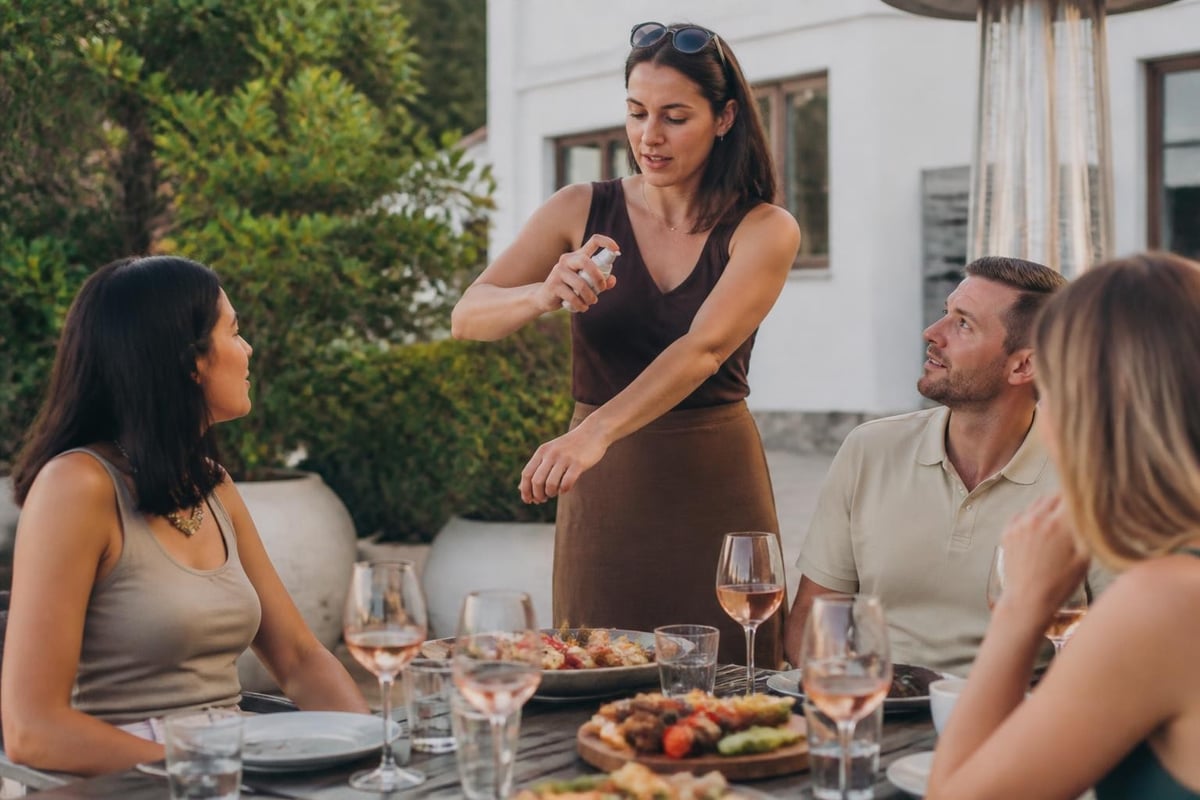
Hosting outdoors means managing an inherent tension: you want to protect your guests from mosquitoes, but you cannot reasonably ask adult visitors to coat themselves in repellent spray before entering your patio. The social awkwardness factor alone eliminates wearable repellents from serious consideration for regular entertaining.
Space-based protection removes this coordination burden entirely. Whether you're using natural mosquito repellent methods for your backyard or commercial spatial devices, the host controls the protection without requiring anything from guests.
Ground-applied biodegradable beads exemplify this hands-off approach. Pour the product where people will gather, and protection activates automatically without anyone needing to wear, spray, or reapply anything. Peak effectiveness runs through days one and two after application, covering a typical weekend gathering without intervention.
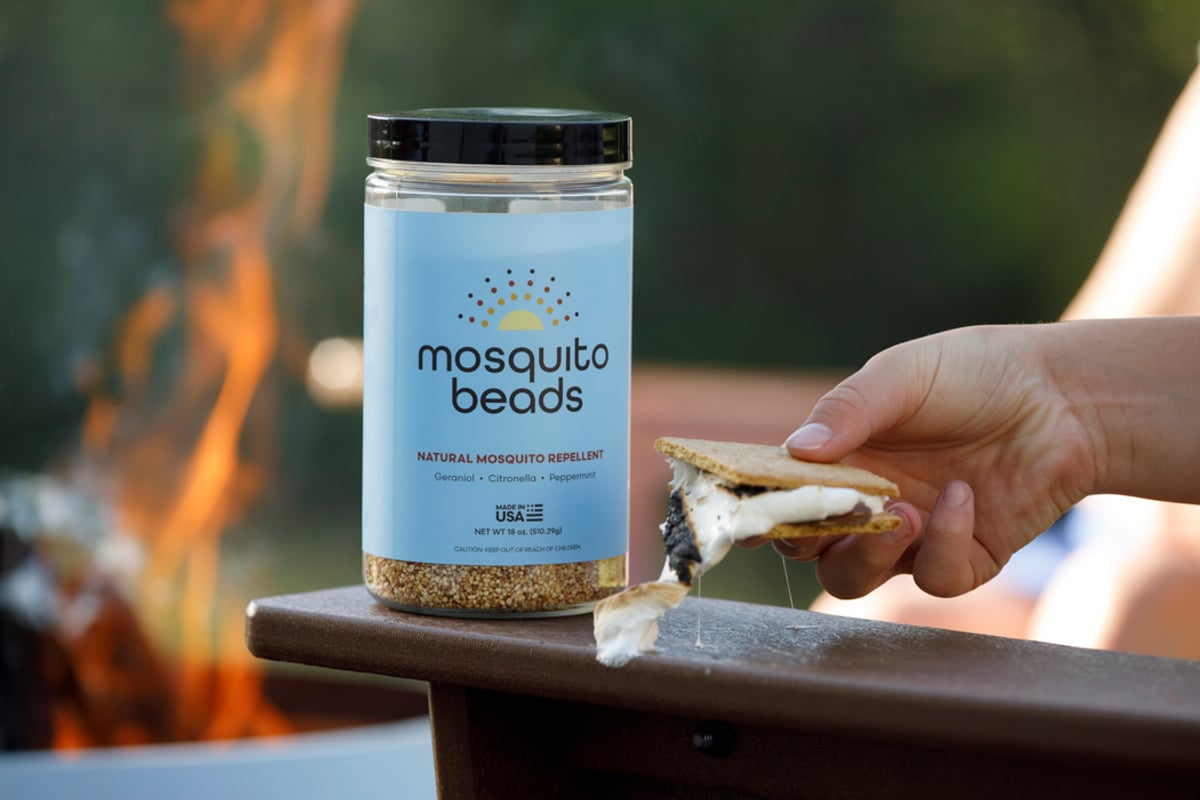
For those seeking the best DEET free bug repellent that doesn't involve sticky sprays or constant reapplication, Mosquito Beads deliver natural protection through scent-masking. The biodegradable corn-based granules infused with geraniol, citronella, peppermint, eugenol, cornmint, and rosemary mask human scent at ground level where mosquitoes hunt. Simply pour on the ground around seating areas, set an open jar nearby, or clip a filled mesh bag for portable protection.
Regional Considerations and Species Variation
Mosquito populations vary significantly by geography, with some regions facing year-round pressure while others see concentrated seasonal activity. The best DEET free bug repellent for Florida's aggressive mosquito season may differ from what works in drier climates with shorter mosquito seasons.
Climate Impact on Product Performance
Humidity, temperature, and rainfall all affect how long repellent protection lasts. High humidity slows evaporation of spray products, potentially extending protection time. Rain washes away topical applications and can dilute or disperse ground-applied products.
Climate considerations by region:
- Gulf Coast and Southeast: High humidity, year-round mosquitoes, aggressive species require robust protection
- Midwest and Mid-Atlantic: Seasonal mosquitoes, moderate humidity, intense summer pressure
- Southwest: Lower humidity shortens spray protection duration, fewer mosquito species but concentrated in irrigated areas
- Pacific Northwest: Cooler temperatures reduce mosquito activity intensity, shorter season
The University of Florida Extension notes that some mosquito species show resistance to certain repellents while remaining susceptible to others. Rotating between different active ingredients or mechanisms can prevent adaptation and maintain effectiveness over time.
Making the Final Choice for Your Outdoor Space
Selecting the best DEET free bug repellent comes down to matching product characteristics to your specific outdoor lifestyle and priorities. The decision tree starts with basic questions about how you use your outdoor space and what tradeoffs you're willing to accept.
Decision Framework
If your primary use is individual hiking or running:
Choose a wearable picaridin spray (20% concentration) for reliable 6-8 hour protection. Reapplication happens at home before and after activity, so the sticky factor matters less than protection duration.
If you host regularly on a patio or deck:
Choose spatial protection that covers the entire gathering area without requiring guest participation. Ground-applied products, spatial diffusers, or perimeter treatments eliminate coordination problems and create invisible protection zones.
If you have young children and pets:
Prioritize products with established safety profiles and application methods that minimize direct contact. Avoid topical products that transfer to hands and mouths through normal contact. Focus on pet-safe mosquito repellent approaches that protect the space rather than coating individuals.
If you want minimal maintenance:
Select products with the longest effective duration and simplest application. Multi-day protection beats hourly reapplication for busy families who want to enjoy outdoor spaces without constant product management.
The Chemical Load Question
Many people seeking the best DEET free bug repellent are motivated less by DEET-specific concerns and more by general caution about chemical exposure. This perspective especially resonates with the outdoor sanctuary host who has invested in creating a beautiful, healthy space and questions whether coating family members in synthetic chemicals aligns with that vision.
WHO guidance on vector control acknowledges that repellent choice involves balancing efficacy against user acceptability and safety profiles. In public health settings fighting malaria transmission, maximum efficacy justifies stronger chemical options. In suburban American patios, the disease transmission risk is lower, and user preference legitimately favors gentler approaches.
Natural essential oil formulations, when delivered through spatial rather than topical application, offer a middle path. You gain meaningful mosquito reduction without the chemical intensity of synthetic repellents or the sticky application of conventional sprays.
Beyond Repellents: Integrated Mosquito Management
The truly best DEET free bug repellent strategy combines repellent products with habitat modification and behavioral adjustments that reduce mosquito populations at the source. No single product performs optimally when the environment actively produces mosquitoes.
Eliminating Breeding Sites
Mosquitoes require standing water to complete their lifecycle. Even small water sources hidden in plain sight can produce hundreds of mosquitoes per week.
Common backyard mosquito breeding sites:
- Clogged gutters holding rainwater
- Saucers under potted plants
- Bird baths (change water twice weekly)
- Tire swings and stored tires
- Tarps covering firewood or equipment
- Low spots in yards that puddle after rain
- Forgotten buckets and containers
Weekly yard walks to dump standing water reduce mosquito emergence by orders of magnitude. This habitat modification complements any repellent strategy, natural or synthetic.
Timing Your Outdoor Activities
Mosquito activity peaks during specific time windows based on species and environmental conditions. Most common backyard mosquitoes feed most actively during dawn and dusk, with reduced activity during midday heat and after dark.
Understanding these patterns allows strategic scheduling. An afternoon barbecue faces less mosquito pressure than an evening dinner party. When timing flexibility exists, choosing lower-pressure hours reduces the repellent burden needed for comfortable outdoor living.
For camping and RV enthusiasts, timing matters even more. Setting up camp during low-activity hours and using spatial repellent to establish a protected zone before peak feeding times creates a buffer that lasts through the evening.
Cost Comparison Across Product Categories
Price per application varies dramatically across the best DEET free bug repellent options, with seemingly inexpensive products often carrying the highest per-use cost due to frequency requirements.
| Product Type | Retail Price | Coverage Area | Duration | Cost per Day |
|---|---|---|---|---|
| Picaridin spray (6 oz) | $8-12 | Single person | 6-8 hours | $4-6 (multiple applications) |
| PMD lotion (4 oz) | $10-15 | Single person | 4-6 hours | $5-8 (multiple applications) |
| Citronella candle (large) | $15-20 | 10 ft radius | 6 hours | $15-20 (single use) |
| Spatial repellent device | $30-40 | 300 sq ft | 12 hours | $2-3 (refill cost) |
| Ground-applied beads (18 oz) | $40-50 | 1,000 sq ft | 48 hours peak | $20-25 (per application) |
The per-day cost reveals unexpected economics. Wearable sprays appear cheap until you account for protecting multiple family members with multiple daily applications. Candles seem reasonable until you realize each evening requires fresh candles that burn down completely.
Spatial and ground-applied solutions show higher upfront costs but lower per-event expenses when protecting groups. A single application covering 1,000 square feet for two days costs less than equipping four people with spray bottles they'll use repeatedly over the same period.
Value Beyond Direct Cost
Cost analysis should include convenience value and user experience factors. How much is it worth to avoid sticky residue on your skin? What premium would you pay to eliminate the coordination burden of ensuring all guests apply protection? How do you value two days of automatic protection versus hourly reapplication reminders?
For the outdoor sanctuary host, these convenience factors often outweigh pure cost-per-hour calculations. The entire point of creating a beautiful outdoor space is to enjoy it effortlessly. Protection methods that require constant active management defeat that purpose regardless of their efficiency on paper.
Safety Profiles and Side Effect Considerations
Even the best DEET free bug repellent can cause adverse reactions in sensitive individuals. Understanding safety profiles helps match products to users with specific concerns or sensitivities.
Skin Sensitivity and Allergic Reactions
Picaridin shows lower rates of skin irritation than DEET in clinical studies, with most users tolerating 20% formulations without issue. However, individuals with sensitive skin may still experience redness or irritation at application sites.
PMD and OLE can cause eye irritation if applied near the face or transferred via hands. Some users report stinging sensations when PMD contacts broken skin or fresh scratches.
Essential oils carry the highest rate of skin sensitivity reactions among natural repellent options. Citronella, eucalyptus, and cinnamon oils most commonly trigger contact dermatitis in susceptible individuals. A clinical review of insect repellents notes that allergic reactions to essential oils often develop after repeated exposures rather than appearing immediately.
Respiratory Considerations
Aerosol spray delivery, whether DEET-free or conventional, poses inhalation risks during application. Fine mist particles can irritate airways in people with asthma or reactive airway disease.
Safer application methods for respiratory-sensitive individuals:
- Lotion or cream formulations (no airborne particles)
- Pump spray applied outdoors with breath held
- Treated clothing rather than skin application
- Spatial repellents that don't require personal application
Ground-applied scent-masking products eliminate respiratory exposure entirely since nothing is sprayed into the air and nothing touches skin. The essential oil volatiles release gradually at ground level rather than as concentrated aerosol mists.
The best DEET free bug repellent ultimately depends on how you use your outdoor space and what matters most to your family. Whether you choose picaridin for hiking, PMD for personal protection, or spatial solutions for your patio, moving beyond DEET opens up options that align better with natural living preferences without sacrificing meaningful mosquito protection. For those who refuse to choose between effective protection and chemical-free outdoor living, Mosquito Beads offer a ground-applied solution that masks human scent so mosquitoes drift past your gathering space without anyone needing to spray, wear, or reapply anything. Pour where you sit, and reclaim your outdoor sanctuary from mosquitoes naturally.