

Natural Oils for Mosquito Repellent: A Complete Guide
Natural mosquito repellent options have moved far beyond basic citronella candles and into a sophisticated world of plant-based science. Homeowners seeking effective protection without the chemical load of DEET or the inconvenience of sticky sprays are discovering that natural oils for mosquito repellent offer a compelling alternative. These botanical compounds work by interfering with the mosquito's highly developed scent-tracking abilities, making it harder for them to locate their next meal. Understanding which oils perform best and how they function helps families create comfortable outdoor spaces without compromising safety or aesthetics.
How Natural Oils Interfere with Mosquito Detection
Mosquitoes hunt humans through a complex sensory system that relies primarily on scent. Research shows mosquitoes can detect carbon dioxide from up to 30 feet away, but they refine their approach using other chemical signals including lactic acid, ammonia, and skin-specific volatile compounds. Natural oils for mosquito repellent don't kill insects but rather create olfactory confusion that disrupts this tracking mechanism.
Essential oils function through three primary pathways:
- Masking: Covering human scent signatures with stronger botanical compounds
- Repelling: Triggering avoidance behavior through compounds mosquitoes find unpleasant
- Jamming: Overwhelming olfactory receptors so mosquitoes cannot process location data effectively
The effectiveness of any botanical repellent depends on concentration, application method, environmental conditions, and specific mosquito species present. A recent systematic review of essential oils tested as mosquito bio-repellents highlights significant variability in laboratory versus field performance.

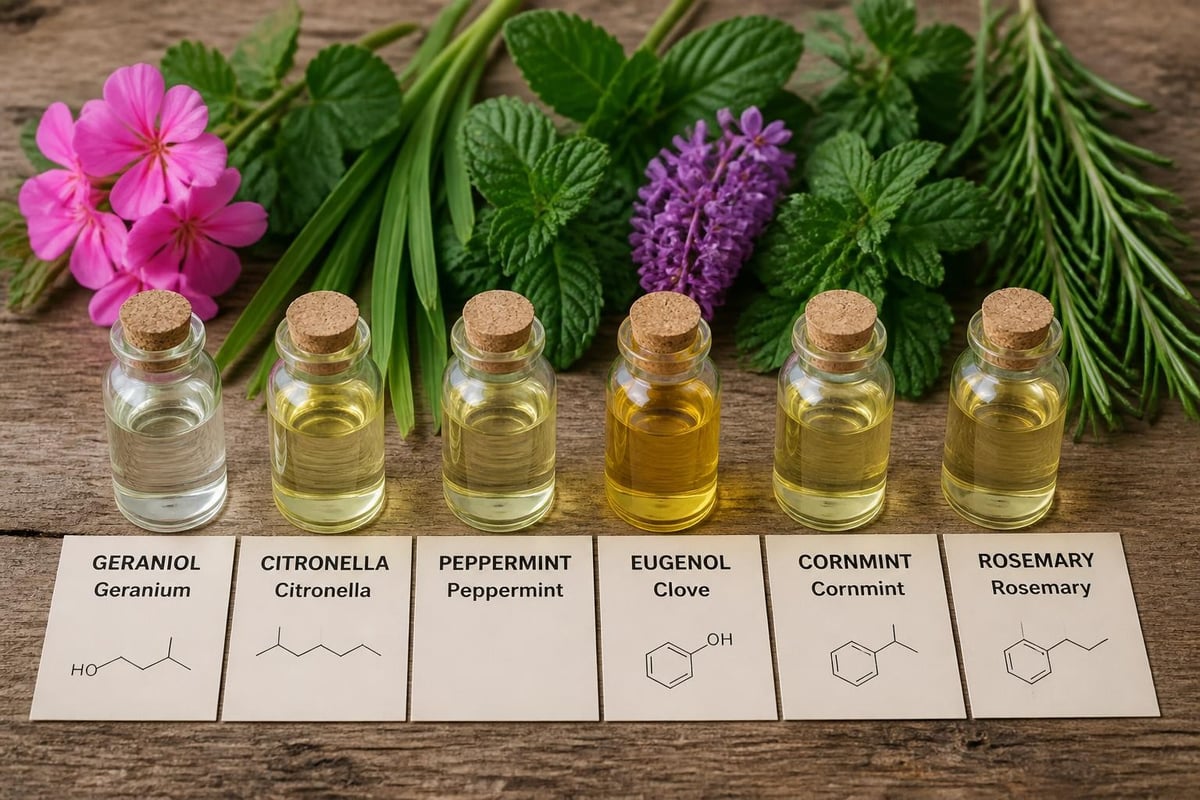
Six Essential Oils with Proven Repellent Properties
Geraniol: The Power Player
Geraniol stands out among natural oils for mosquito repellent because of its dual action. This rose-scented compound extracted from geranium, lemongrass, and citronella plants both masks human scent and actively repels mosquitoes. Studies show protection times ranging from 90 minutes to several hours depending on formulation and concentration.
The compound works particularly well against Aedes species, the mosquitoes responsible for transmitting dengue and Zika virus. Unlike skin-applied products that wear off through sweating and movement, ground-level applications maintain consistent scent dispersion throughout a protected area.
Citronella: The Classic Choice
Citronella oil has earned its reputation through decades of commercial use, though efficacy varies dramatically by application method. The oil contains citronellal, citronellol, and geraniol as active constituents. While citronella candles provide minimal protection due to low concentration and limited dispersal, higher-concentration formulations deliver meaningful results.
A 2025 study reviewing repellency of plant products found citronella effective when properly concentrated and applied, with protection times extending beyond two hours in controlled settings. The key limitation remains duration, which is why blending citronella with complementary oils extends overall performance.
Peppermint and Cornmint: The Menthol Effect
Peppermint oil (Mentha piperita) and cornmint oil (Mentha arvensis) both contain high levels of menthol, creating a cooling sensation humans find pleasant but mosquitoes avoid. These oils work best in combination formulations rather than as standalone repellents.
| Oil Type | Primary Compound | Protection Duration | Best Use Case |
|---|---|---|---|
| Peppermint | Menthol | 45-90 minutes | Blend component |
| Cornmint | Menthol | 60-120 minutes | Blend component |
| Geraniol | Geraniol | 90-240 minutes | Primary active |
| Citronella | Citronellal | 60-180 minutes | Primary active |
The menthol-rich profile provides immediate knockdown effect while longer-lasting oils maintain protection after the initial burst dissipates.
Eugenol: The Clove Compound
Eugenol, derived primarily from clove oil, offers strong repellent properties with a warm, spicy aroma that blends well in multi-oil formulations. This phenolic compound shows particular effectiveness against Culex species, the common house mosquitoes that emerge at dusk.
Laboratory testing demonstrates eugenol's ability to disrupt mosquito landing behavior even at relatively low concentrations. The compound's stability in outdoor environments makes it valuable for ground-based applications where oils need to maintain potency despite sun exposure and air movement.
Rosemary: The Understated Performer
Rosemary oil contributes both repellent properties and formulation stability to natural mosquito products. While not as immediately potent as geraniol or citronella, rosemary's complex chemical profile including camphor, 1,8-cineole, and α-pinene creates a multi-layered defense.
The oil's woody, herbaceous scent appeals to homeowners who want their outdoor spaces to smell pleasant rather than medicinal. When you're entertaining on the patio, rosemary-containing formulations provide protection without the overwhelming artificial fragrance of conventional products.
Formulation Strategies That Actually Work
Why Blends Outperform Single Oils
No single essential oil delivers comprehensive protection across all mosquito species, environmental conditions, and time frames. Professional formulations combine multiple natural oils for mosquito repellent to achieve:
- Immediate knockdown from volatile compounds like menthol
- Extended duration through stable compounds like geraniol
- Species coverage addressing both Aedes and Culex varieties
- Scent complexity that mosquitoes cannot adapt to easily
The synergistic effect of properly balanced blends exceeds the sum of individual components. A six-oil formulation, for instance, creates overlapping protection windows so that as one compound's effectiveness wanes, others maintain the defensive barrier.
Ground Application Versus Skin Application
Traditional essential oil products require direct skin contact, which creates multiple complications for outdoor entertaining. Guests cannot be expected to spray themselves down before entering a patio space. Children resist application. Pets lick treated skin. Oils stain fabric furniture.
Ground-based scent-masking approaches solve these problems by treating the space rather than individuals. When natural oils for mosquito repellent are applied at ground level where mosquitoes approach from, the protective zone covers everyone present without sticky residue or reapplication hassles.
Protection duration also improves with ground application since the product remains undisturbed by human movement, sweating, or swimming. Peak performance typically extends across 48 hours before requiring renewal.
Concentration and Carrier Systems
Essential oils in pure form evaporate rapidly and can cause skin sensitization at high concentrations. Effective formulations require carrier systems that control release rates while maintaining safety profiles. Options include:
- Biodegradable granules that absorb and slowly release oil blends
- Polymer-based microencapsulation for timed release
- Natural wax matrices that melt gradually in warm conditions
- Absorbent mineral substrates like diatomaceous earth
The EPA regulates skin-applied repellent ingredients differently than area-applied products, which affects formulation requirements and label claims. Minimum-risk products using 25(b) exempt ingredients offer streamlined regulatory pathways while maintaining safety standards.
Practical Performance Expectations
Real-World Protection Times
Laboratory studies of natural oils for mosquito repellent often report protection times under ideal conditions with no wind, controlled temperature, and fresh applications. Field performance differs significantly:
- Spray applications on skin: 30 to 90 minutes before reapplication needed
- Candles and torches: Minimal protection beyond immediate flame area
- Ground-applied granular systems: 24 to 48 hours at peak effectiveness
- Spatial repellent devices: 4 to 8 hours depending on fan power and oil reservoir
Understanding these timelines helps set realistic expectations for backyard gatherings. A Friday evening patio dinner through Sunday brunch falls within the performance window of properly applied ground systems, while skin sprays would require multiple reapplications across the same period.
Coverage Area Calculations
Protection zones depend on concentration, application density, and environmental factors. A standard guideline for ground-applied natural mosquito repellent products suggests:
- Dense coverage: 18 ounces per 1,000 square feet for optimal protection
- Moderate coverage: 5 ounces per 300 square feet for smaller spaces
- Perimeter treatment: Heavier application around space boundaries where mosquitoes enter
Wind, humidity, and mosquito pressure all affect performance. Areas near standing water or heavy vegetation may require increased application rates compared to open lawn spaces. Many families prefer to establish a protected zone around their primary gathering area rather than treating entire yards.
For those seeking to understand mosquito behavior better, learning about why mosquitoes target us provides valuable context for protection strategies.
Safety Considerations for Families and Pets
Chemical Load Concerns
Parents and pet owners increasingly question the accumulated exposure from conventional insect repellents containing DEET, picaridin, or permethrin. While these synthetic compounds have established safety records when used as directed, the preference for lower chemical load drives interest in botanical alternatives.
Natural oils for mosquito repellent offer reduced toxicity profiles, though "natural" does not automatically mean "safe for all uses." Concentrated essential oils can cause:
- Skin irritation or allergic reactions in sensitive individuals
- Respiratory irritation when heavily atomized indoors
- Toxicity to cats when certain oils contact skin or are ingested
- Eye irritation from spray mist or hand-to-eye transfer
Ground-applied formulations eliminate most of these risks by avoiding direct contact with people and pets. The scent disperses at low concentration through the protected space without requiring anyone to wear the product.
Pet-Friendly Formulation Guidelines
Cats lack certain liver enzymes needed to metabolize some essential oil compounds, making them vulnerable to toxicity from products safe for dogs and humans. Oils requiring particular caution around cats include tea tree, pennyroyal, and wintergreen.
The essential oils commonly used in mosquito repellents (geraniol, citronella, peppermint, eugenol, rosemary) generally show good safety profiles when used as directed in ground applications. Pets may sniff treated areas but rarely ingest granular products in quantities that would cause concern.
Always verify that any natural mosquito repellent product is specifically labeled as pet-friendly and follow dilution and application guidelines. For families with both outdoor living goals and pet safety priorities, exploring pet-safe mosquito repellent options provides additional guidance.

Comparing Natural Oils to Synthetic Alternatives
Efficacy: The Evidence Gap
A Frontiers review comparing synthetic versus natural repellents against Aedes aegypti found that while DEET and picaridin typically provide longer protection times per application, properly formulated botanical products achieve meaningful protection for the durations most outdoor activities require.
The practical question becomes whether 8 hours of protection from a synthetic spray applied to skin surpasses 48 hours of protection from natural oils for mosquito repellent applied to the ground where no one has to wear anything. For backyard entertaining, the latter often proves more convenient.
| Approach | Duration | Application | Reapplication | Chemical Contact |
|---|---|---|---|---|
| DEET spray | 4-8 hours | Skin | Every gathering | High |
| Picaridin spray | 6-10 hours | Skin | Every gathering | High |
| Natural oil spray | 1-3 hours | Skin | Multiple times | Moderate |
| Ground granular | 24-48 hours | Space | Every 2 days | None |
Regulatory Status and Label Claims
The EPA's pesticide registration system distinguishes between conventional repellents requiring full registration and minimum-risk products using 25(b) exempt ingredients. Many essential oil formulations qualify for the streamlined 25(b) pathway.
This regulatory difference affects what manufacturers can claim about efficacy. Fully registered products undergo extensive testing and can make specific performance claims. Minimum-risk products must be more circumspect in their marketing language, even when field performance supports effectiveness.
Consumers should understand that lack of EPA registration number does not indicate ineffectiveness or unsafety. The CDC has noted both benefits and limitations of unregulated botanical products, emphasizing that proper formulation and application remain more important than regulatory category alone.
Application Methods for Different Outdoor Scenarios
Patio and Deck Protection
Creating a mosquito-free zone for evening entertaining requires strategic placement of natural oils for mosquito repellent around the gathering space. Focus application on:
- Entry points where mosquitoes approach from yard or garden edges
- Under furniture where air circulation is reduced and scent concentrates
- Perimeter borders establishing a protected boundary around the social zone
- Near plantings where mosquitoes rest during daylight hours before evening activity
Many homeowners appreciate solutions that protect the entire space without requiring guests to take any action. When you've set a beautiful table for dinner, asking visitors to spray themselves creates awkward moments and potential chemical exposure that conflicts with the carefully planned atmosphere.
Ground-applied granular products work particularly well for patio scenarios because they remain invisible once scattered, require no open flame that competes with candles or fire features, and produce no smoke that might drift into faces or food.
Camping and RV Applications
Mobile outdoor living presents unique challenges since the protected space changes location frequently. Portable containers of natural mosquito repellent allow campers to establish temporary zones around:
- Campsite perimeters where tents or RV doors create entry points
- Cooking and dining areas where food preparation happens
- Seating zones around campfires or camp chairs
- Pet areas where dogs or other animals rest during the evening
For RV enthusiasts who treat their setup as an extension of home, learning about natural mosquito repellent for RV settings offers specialized strategies. The convenience of pouring protection rather than spraying down every family member before exiting the vehicle makes evening enjoyment more spontaneous.
Sports Events and Outdoor Activities
Youth sports seasons coincide perfectly with peak mosquito activity in most regions. Parents spending hours at soccer fields, baseball diamonds, or track meets face the choice between conventional sprays that require repeated application or natural alternatives that protect the spectator area.
Establishing a treated zone around folding chairs or team benches creates comfort without requiring each child to be individually sprayed. This approach particularly appeals to families who prefer minimizing chemical exposure during activities where kids are already sweating, breathing hard, and touching their faces frequently.
Emerging Research and Novel Botanicals
Catnip Oil: The Potent Newcomer
While not yet common in commercial formulations, catnip-derived nepetalactone has shown remarkable repellent properties. A Scientific Reports study demonstrated strong repellency against Aedes aegypti, with protection times rivaling synthetic compounds in some tests.
The challenge with catnip oil lies in formulation stability and cost-effective extraction. As research continues, expect to see this compound incorporated into next-generation natural oils for mosquito repellent products, possibly in combination with the established players like geraniol and citronella.
Lemon Eucalyptus: The Hybrid Category
Oil of lemon eucalyptus (OLE) occupies an interesting middle ground between purely botanical products and synthesized compounds. The refined version, PMD (para-menthane-3,8-diol), receives full EPA registration and shows protection times approaching DEET in some studies.
Consumer perception varies on whether OLE/PMD qualifies as "natural" given the chemical processing involved. For homeowners focused on avoiding synthetic repellents, the distinction matters less than the fact that it requires skin application rather than offering a ground-based spatial protection option.
Making the Switch from Conventional Repellents
Why Outdoor Hosts Choose Natural Alternatives
The shift away from aerosol sprays and DEET-based products reflects changing priorities among suburban families who view their patios as outdoor rooms deserving the same care as interior spaces. Key motivations include:
- Aesthetic control: No visible candles, devices, or flames cluttering beautifully arranged furniture
- Guest comfort: Eliminating the awkward expectation that visitors apply chemicals before sitting down
- Family health: Reducing overall chemical exposure, particularly for young children
- Pet safety: Ensuring four-legged family members can roam freely without risk
- Practical convenience: Avoiding the need to reapply protection multiple times during extended gatherings
These same principles drive interest in natural ways to combat mosquitoes that actually work across various outdoor settings.
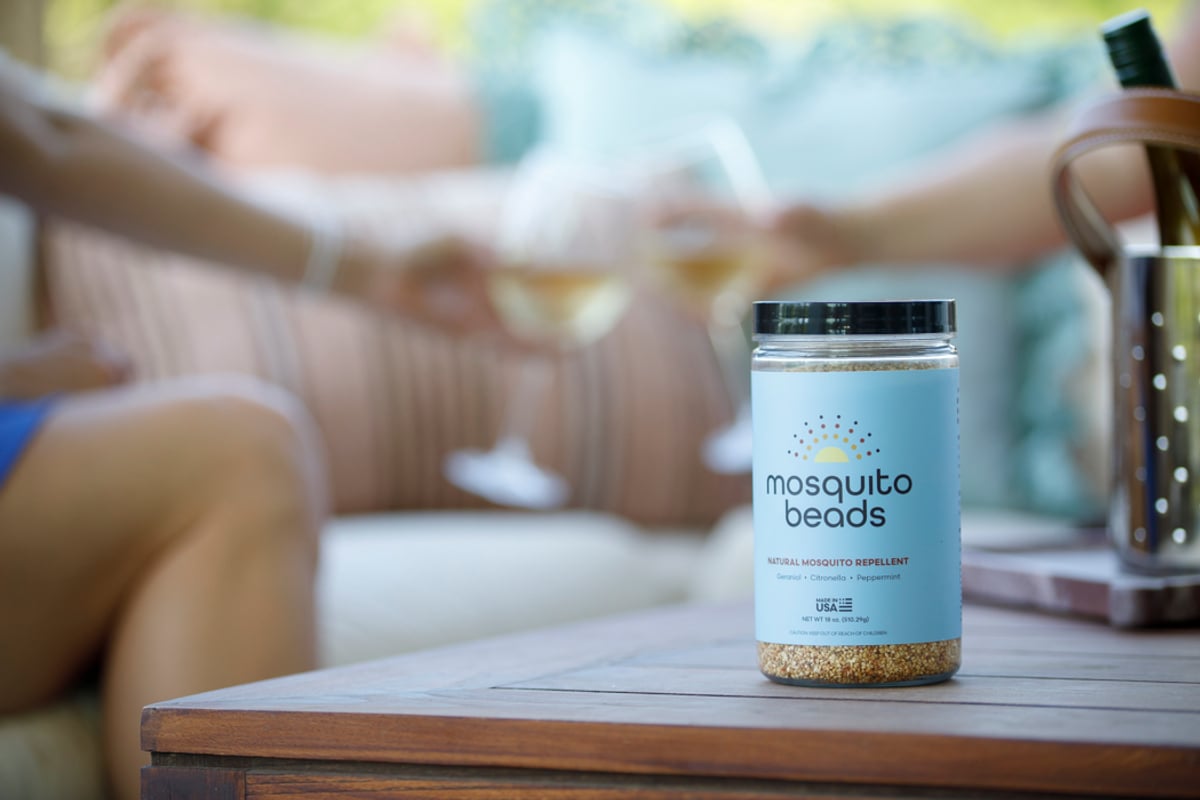
Families who've tried citronella candles and found them ineffective, or who've used DEET sprays and disliked the greasy residue, are discovering that biodegradable ground-applied formulations offer the effectiveness of the former with the convenience they always wanted. Products like those found at Mosquito Beads combine six essential oils including geraniol, citronella, peppermint, eugenol, cornmint and rosemary in corn-based granules that you simply pour where people gather, creating scent-masking protection that lasts up to 48 hours without touching anyone's skin.
Transitioning Your Protection Strategy
Moving from spray-based personal repellents to space-based natural systems requires adjusting your approach:
Week One: Test the new system during a lower-stakes outdoor period to gauge effectiveness for your specific property and mosquito pressure.
Week Two: Identify optimal application points by noting where mosquitoes seem to enter your space or where family members get bitten most frequently.
Week Three: Establish a rhythm for reapplication based on protection duration and your outdoor schedule.
Ongoing: Fine-tune application rates for different areas of your property, increasing coverage in high-traffic zones and near vegetation.
Most families find the transition simple once they adjust to the concept of treating the space rather than treating people. The method particularly appeals during gatherings when multiple guests would otherwise each need individual protection.
Storage and Shelf Life Considerations
Maintaining Oil Potency
Essential oils degrade when exposed to light, heat, and oxygen. Natural oils for mosquito repellent formulations maintain effectiveness longest when stored in:
- Cool, dry locations away from direct sunlight
- Sealed containers that minimize air exposure
- Temperature-stable environments rather than garage or shed spaces
Properly stored products typically maintain full potency through one full mosquito season with gradual decline over 12 to 18 months. The scent itself provides a good indicator since essential oils that have oxidized or evaporated will smell noticeably weaker than fresh product.
Seasonal Planning
Mosquito activity in most temperate regions follows predictable patterns, with peak pressure from late spring through early fall. Stocking natural repellent products at the season's start ensures availability during high-demand periods and allows you to establish protection before mosquito populations explode.
End-of-season clearance purchasing can offer cost savings, though verify shelf life to ensure the product will maintain effectiveness through storage until the following year. Products using biodegradable carriers offer the advantage of simple disposal since they break down naturally rather than requiring special waste handling.
Cost Analysis and Value Comparison
Price Per Protection Hour
Comparing costs between natural and synthetic mosquito repellents requires calculating protection hours delivered rather than simple package prices.
Aerosol DEET spray example: $8 per 6-ounce can providing approximately 20 applications of 4 hours each = $0.10 per person per hour
Natural oil skin spray example: $12 per 4-ounce bottle providing approximately 30 applications of 2 hours each = $0.20 per person per hour
Ground-applied granular example: $30 per 18-ounce container covering 1,000 square feet for 48 hours per application, four applications per container = $0.004 per square foot per hour for the entire protected space
The economic advantage of space-based protection becomes clear when protecting multiple people simultaneously. A family of four hosting friends for an evening gathering would need multiple individual spray applications hourly but only one ground application covering everyone for the duration.
Interested in exploring cost comparisons further? The analysis of comparing cost of OTC natural mosquito repellents versus professional services provides detailed breakdowns.
Natural oils for mosquito repellent have evolved from folk remedies into scientifically supported alternatives that meet the needs of modern outdoor living. The six essential oils discussed (geraniol, citronella, peppermint, eugenol, cornmint, and rosemary) work best in synergistic blends that create overlapping protection windows and address multiple mosquito species. For families seeking to reclaim their patios without chemical exposure or application hassles, Mosquito Beads offers a ground-applied solution that protects the space, not just individual people, using biodegradable granules you pour where you gather-nothing to spray, nothing to wear, just protection that lasts.