

Natural Mosquito and Bug Repellent: Your Complete Guide
The search for effective natural mosquito and bug repellent has never been more urgent for families who refuse to choose between comfort and safety. Conventional chemical repellents work, but they come with trade-offs: greasy residue, harsh odors, and questions about long-term exposure near children and pets. Meanwhile, many "natural" alternatives promise the world but deliver disappointment. The good news is that botanical science has advanced dramatically, offering proven plant-based solutions that protect outdoor spaces without compromise. Understanding how these products work, which ingredients deliver results, and how to deploy them strategically transforms your patio from a mosquito feeding ground into the sanctuary you intended.
Why Traditional Repellents Fall Short for Modern Families
DEET remains the gold standard in conventional mosquito protection, with EPA approval and decades of regulatory review confirming its efficacy. Yet for the outdoor sanctuary host who values their patio as an extension of their living room, DEET presents a constellation of problems that have nothing to do with effectiveness.
The sticky application issue alone makes DEET impractical for hosts. You cannot reasonably ask dinner guests to spray themselves down before stepping onto your deck. The residue transfers to furniture, leaves an oily film on skin, and requires reapplication every few hours. Children resist the smell. Pets walk through treated areas and then groom themselves.
Beyond the practical concerns, perception matters:
- Families increasingly question cumulative chemical exposure
- The greasy feel contradicts the clean aesthetic of a well-appointed outdoor space
- Aerosol drift affects everyone nearby, wanted or not
- Single-person protection fails when you're hosting a gathering
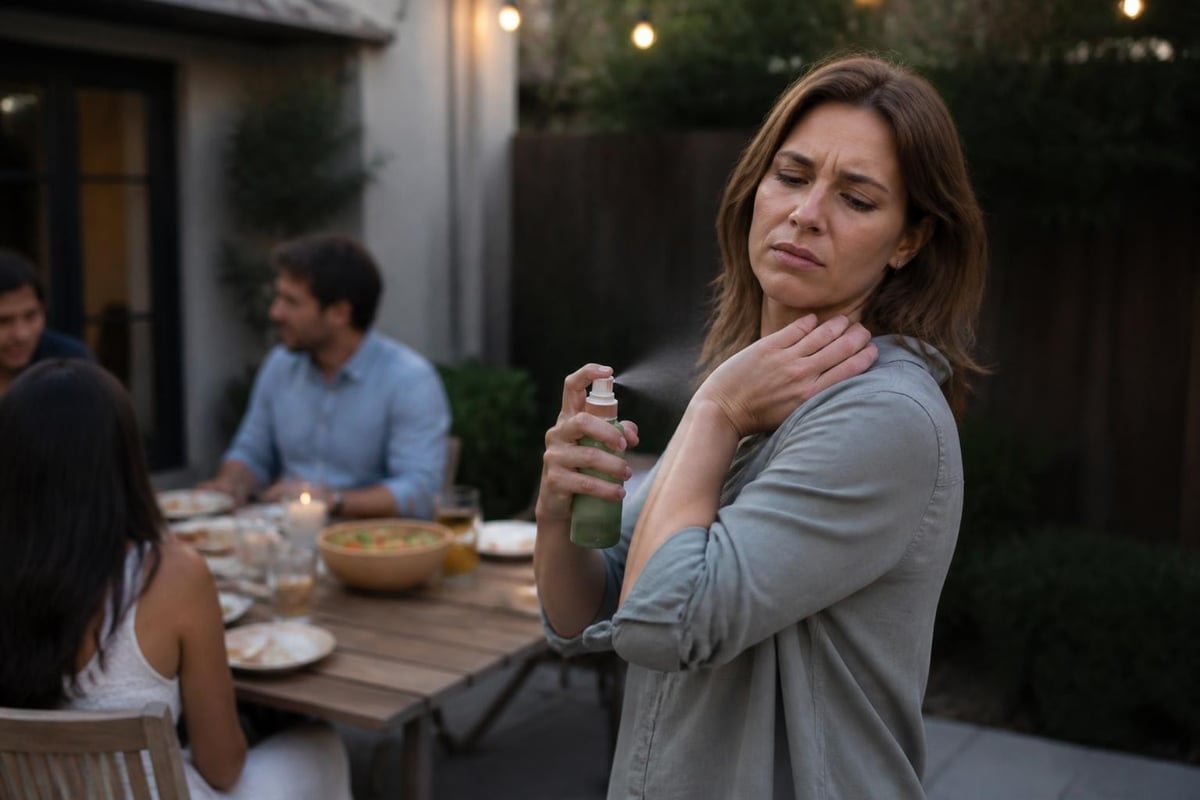
Consumer Reports testing confirms DEET's performance but also highlights why consumers actively seek alternatives. The perfect patio evening should not require a chemical spray-down at the door.
The Science Behind Natural Mosquito and Bug Repellent
Mosquitoes do not hunt randomly. They track three primary signals: carbon dioxide from breath, body heat, and chemical compounds in human sweat and skin oils. Research published by the National Institutes of Health demonstrates that specific essential oils interfere with mosquitoes' ability to detect these signals, effectively rendering humans invisible to their sensory apparatus.
How Scent-Masking Technology Works
The mechanism differs fundamentally from chemical repellents. DEET works as a true repellent, actively driving mosquitoes away from treated skin. Natural alternatives typically function through scent interference, flooding the detection zone with botanical compounds that overwhelm or mask human scent markers.
| Approach | Method | Coverage | Duration | Application |
|---|---|---|---|---|
| Chemical spray | Skin barrier | Single person | 2-6 hours | Direct to body |
| Botanical ground application | Scent-masking | Entire space | 24-48 hours | Pour on ground |
| Candles/coils | Smoke screen | Limited radius | Burn time only | Light and monitor |
This explains why ground-level deployment proves more effective than skin application for many botanical products. Mosquitoes hunt close to the ground, following scent trails upward. Saturating that zone with competing signals disrupts their navigation before they reach human targets.
Essential Oil Ingredients That Actually Perform
Not all plant extracts offer equal protection. Systematic research on botanical repellents identifies six primary essential oils with documented mosquito-deterrent properties: geraniol, citronella, peppermint, eugenol, cornmint, and rosemary.
Geraniol leads the botanical lineup in peer-reviewed studies. Extracted from geranium and citronella plants, this compound shows repellent activity comparable to low-concentration DEET in controlled field tests. The key limitation has always been longevity; on skin, geraniol volatilizes within 30 to 60 minutes.
Citronella remains the most recognized natural mosquito and bug repellent ingredient, though its reputation exceeds its performance in candle form. The University of California's Integrated Pest Management program notes that citronella candles provide minimal protection beyond immediate proximity. The issue is concentration and delivery method, not the oil itself.
Peppermint and cornmint oils contribute menthol compounds that interfere with mosquito olfactory receptors. These cooling agents add a secondary sensory disruption layer that complements the masking effect of other oils.
Formulation Matters More Than Ingredients
Raw essential oils alone cannot deliver practical outdoor protection. The challenge lies in controlled release. Oils evaporate rapidly when exposed to air and heat. Effective natural mosquito and bug repellent formulations solve this through carrier systems: waxes for candles, polymers for slow-release devices, or biodegradable granules that meter oil release over days rather than minutes.
The difference between a citronella candle that barely works and a botanical system that protects a full patio comes down to engineering, not ingredients. EPA guidance on minimum-risk botanical products acknowledges this formulation challenge as the primary barrier to effective natural alternatives.

Ground-Based Protection: A Different Philosophy
The revelation that transformed botanical mosquito control was moving protection from skin to space. Rather than treating each person individually with sticky spray, deploy protection at the source: the ground level where mosquitoes hunt.
Biodegradable corn-based granules infused with botanical oils offer a delivery system that solves every practical limitation of traditional natural repellents. Pour the beads around seating areas, along deck perimeters, or in concentrated zones near high-traffic spots. The essential oils release slowly over 48 hours, creating a scent barrier that mosquitoes cannot navigate through.
This approach delivers specific advantages for patio hosts:
- No one touches or applies anything to their skin
- Protection covers the entire gathering space, not individual guests
- Pets remain safe when products are used as directed
- No visual clutter or open flames to monitor
- No sticky residue on furniture or clothing
Modern formulations like those found in natural outdoor mosquito protection products combine six essential oils in precise ratios, maximizing the synergistic effect while extending release time through intelligent carrier design.
The strategic advantage becomes clear when comparing application methods. A spray-based natural mosquito and bug repellent requires every person to apply product, remember reapplication timing, and tolerate skin contact. Ground-based scent-masking requires one person to pour beads once, delivering 48 hours of peak protection to everyone in the zone.
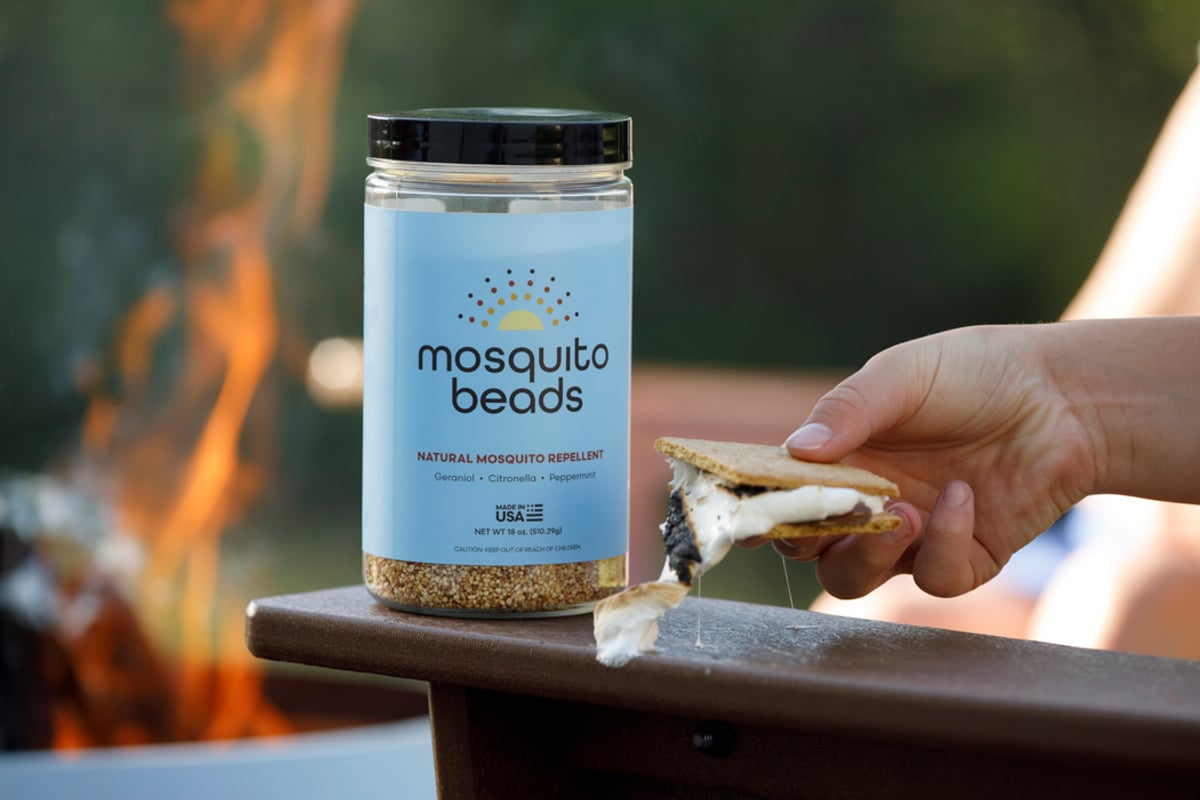
For families seeking space-wide coverage without chemicals on skin, Mosquito Beads deliver precisely this solution. The Signature 18 oz container protects up to 1,000 square feet, perfect for standard patios and deck areas. Simply pour where people gather, and the biodegradable granules release their essential oil blend at ground level, where mosquitoes hunt by scent.
Deployment Strategy for Maximum Effectiveness
Understanding mosquito behavior informs proper natural repellent placement. Mosquitoes do not fly long distances; they drift on air currents while tracking scent plumes. Studies on mosquito hunting patterns show they detect carbon dioxide from up to 30 feet away, then follow closer-range chemical signals from skin and breath.
Perimeter Plus High-Traffic Zones
The most effective layout combines perimeter protection with concentrated coverage in gathering spots. Outline your patio's edges first, creating a scent barrier that intercepts mosquitoes before they reach the seating area. Then reinforce high-occupancy zones: around dining tables, near lounge chairs, by outdoor kitchen prep areas.
Wind direction matters. Mosquitoes struggle to fly against even light breezes, so they approach from downwind positions. Double your coverage on the prevailing wind side of your space during mosquito-active hours, typically dusk through dawn.
Peak performance zones for ground-based application:
- Beneath and around seating furniture
- Transition points between lawn and hardscape
- Near water features or pet bowls
- Along fence lines and property borders
- Around playground equipment and gathering zones
Camping and RV applications follow the same principles on portable scale. The Sidekick 5 oz container covers up to 300 square feet, ideal for a campsite footprint or the immediate area around an RV door and awning.
Timing and Refresh Cycles
Natural mosquito and bug repellent products based on essential oils deliver strongest performance in their first 48 hours. This window reflects the rate at which botanical compounds volatilize from carrier systems. After two days, protection declines but does not disappear entirely; the scent masking effect diminishes as oil concentration drops.
For weekend entertaining, apply fresh product on Friday afternoon before guests arrive Saturday evening. This timing ensures peak protection during your gathering. For continuous summer use, plan a twice-weekly refresh schedule: Sunday evening and Wednesday evening cover the full week with overlapping protection windows.
Weather Considerations
Rain accelerates oil release from biodegradable carriers, shortening effective duration but intensifying short-term coverage. After heavy precipitation, reapply to restore full protection. Extreme heat above 95°F also increases volatilization rates, while cool evenings extend oil release time.
| Temperature Range | Expected Peak Duration | Refresh Timing |
|---|---|---|
| Below 70°F | 48-72 hours | Every 3 days |
| 70-85°F | 36-48 hours | Every 2 days |
| Above 85°F | 24-36 hours | Daily to every other day |
| After rain | 12-24 hours | Reapply after storm |
Understanding these variables allows you to adjust deployment rather than settling for inconsistent results. Frequently asked questions about application timing address specific scenarios like pool parties, sporting events, and extended outdoor living.
What Natural Repellents Cannot Do
Transparency about limitations builds trust and sets realistic expectations. Natural mosquito and bug repellent systems excel at creating protected zones for gatherings and everyday outdoor living. They do not eliminate mosquitoes from your property or provide instant knockdown like chemical foggers.
The distinction matters. If you walk into deep woods at dusk, no ground-based botanical product will follow you. Mosquitoes exist in massive numbers throughout natural areas, and scent-masking requires establishing a protected perimeter. For true wilderness hiking, a wearable repellent remains necessary.
Similarly, natural products cannot address breeding sites or larval populations. Effective mosquito management always begins with source reduction: eliminating standing water, maintaining gutters, treating ornamental ponds. Global health organizations emphasize integrated approaches combining habitat management, personal protection, and space treatment.
Scenarios where natural repellents face challenges:
- High mosquito pressure during peak hatch periods
- Unmaintained properties with heavy breeding sites nearby
- Dense vegetation creating mosquito harborage immediately adjacent to treated areas
- Extreme wind dispersing scent barriers before they establish
These limitations do not invalidate botanical approaches; they define appropriate use cases. For the suburban patio host dealing with neighborhood mosquitoes drifting into an otherwise well-maintained yard, natural mosquito and bug repellent systems deliver excellent results without the drawbacks of chemical treatments or the ineffectiveness of token citronella candles.
Cost-Performance Analysis for Outdoor Spaces
Budget-conscious families often assume natural options cost more than conventional solutions. The reality depends on how you measure value. A detailed cost comparison between over-the-counter natural products and professional services reveals surprising economics.
Professional mosquito barrier treatments run $75 to $150 per application, required monthly throughout mosquito season. Annual cost for May through September coverage: $375 to $750. These services spray synthetic pyrethroids, effective but concerning for families prioritizing reduced chemical exposure around children and pets.
Conventional DEET spray bottles cost $8 to $15 and protect one person for perhaps a dozen applications before depletion. A family of four hosting weekly gatherings burns through product rapidly, spending $150 to $200 per season on sticky applications nobody enjoys.
Quality natural mosquito and bug repellent in ground-application format costs $20 to $35 per container covering 1,000 square feet for 48 hours. Twice-weekly application across a 20-week season requires approximately 40 applications, or roughly $400 to $700 depending on product choice and patio size.
The numbers look comparable until you factor in the experience: no spray, no skin contact, no asking guests to coat themselves, no chemical concern with pets underfoot. For the outdoor sanctuary host, these intangibles carry significant weight in the value equation.
Pet Safety and Family Considerations
Households with dogs and cats face additional scrutiny when selecting mosquito protection. Pets groom themselves constantly, ingesting whatever contacts their fur. They also spend considerable time at ground level, exactly where many mosquito control products concentrate.
Natural mosquito and bug repellent formulations using essential oils generally present lower toxicity risk than synthetic alternatives when used as directed. The EPA's minimum-risk ingredient list under 25(b) includes many botanical compounds specifically because they pose minimal hazard to non-target organisms including pets.
That said, "natural" does not automatically mean "harmless." Essential oils in high concentrations can irritate pet skin or cause gastric upset if ingested in quantity. Proper deployment matters: apply ground-based products in outdoor areas where pets walk through briefly, not in feeding zones or indoor spaces where they might lie directly in product.
Pet-friendly deployment guidelines:
- Apply products outdoors in open-air settings, not enclosed patios where pets spend hours
- Avoid concentrated piles; spread beads or granules in thin, even layers
- Keep original containers closed and stored out of pet reach
- Monitor pets initially to ensure they don't attempt to eat or roll in product
- Choose products specifically formulated for pet-safe outdoor use
Pet-specific mosquito protection guidance addresses common questions about dogs who dig, cats who investigate, and ensuring your mosquito strategy keeps both humans and animals comfortable.
Regional Performance Variations
Mosquito pressure varies dramatically by geography and season, influencing natural repellent effectiveness. Florida's year-round mosquito challenges differ substantially from Kansas spring and fall patterns or Texas summer intensity.
High-pressure regions with dense mosquito populations and extended seasons require more aggressive natural mosquito and bug repellent deployment: higher application frequency, concentrated coverage, and realistic expectations about breakthrough bites during peak hatch periods. Lower-pressure areas with defined seasons see excellent results from standard protocols.
Climate also affects product performance. High humidity slows essential oil volatilization, potentially extending effective duration. Arid conditions accelerate evaporation, requiring more frequent refresh. Temperature extremes in either direction reduce peak performance windows.
The solution is not abandoning botanical approaches in challenging regions but calibrating deployment to local conditions. Someone hosting patio dinners in suburban Atlanta during July needs different timing and coverage than someone enjoying September evenings in Northern California.
Making the Transition from Chemical to Botanical Protection
Families accustomed to DEET or professional barrier sprays often hesitate to try natural mosquito and bug repellent, fearing they'll spend a frustrating evening swatting mosquitoes while regretting the switch. A structured transition reduces this risk and builds confidence in botanical systems.
Start with a low-stakes trial: a weeknight dinner, not your big annual barbecue. Deploy ground-based botanical product according to manufacturer instructions, focusing on proper coverage and strategic placement. Note conditions: temperature, wind, time of day. Observe results honestly.
Most families discover that properly deployed natural systems deliver protection comparable to what they remember from chemical products, minus the aspects they disliked: smell, residue, concern about pets and children. The occasional mosquito that penetrates the perimeter no longer triggers panic about product failure; it reflects the reality that no system achieves 100% elimination.
Transition strategy milestones:
- Test on a single small gathering to calibrate coverage and timing
- Adjust deployment based on observed mosquito pressure and conditions
- Scale up to full patio protection once you've validated the approach
- Fine-tune refresh timing based on your specific microclimate
- Integrate as routine seasonal preparation, like opening patio umbrellas
This methodical approach prevents the all-or-nothing thinking that leads people to declare natural products "don't work" after one disappointing trial with improper application.
The Future of Natural Mosquito Control
Research into botanical repellents continues advancing, with recent technological improvements focusing on controlled-release mechanisms and synergistic oil combinations that extend protection duration without increasing concentration.
University extension programs now acknowledge natural mosquito and bug repellent as a legitimate component of integrated mosquito management rather than dismissing botanical products entirely. This represents a significant shift in professional perspective, driven by improved formulations and growing consumer demand for reduced-chemical approaches.
Emerging delivery systems show particular promise: microencapsulation that releases oils only when mosquitoes land and disturb the capsule, polymer matrices that respond to heat and humidity triggers, and targeted scent-masking that focuses on the specific chemical signatures mosquitoes use for human detection.
The outdoor sanctuary hosts of 2026 benefit from this evolving science. Options that seemed marginal a decade ago now deliver reliable results, allowing families to reclaim their patios without compromise.
Natural mosquito and bug repellent has evolved from wishful thinking to practical science, offering families genuine protection without the sticky sprays and chemical concerns of conventional products. When you understand mosquito hunting behavior and deploy botanical solutions strategically, your outdoor space becomes the sanctuary you envisioned. Mosquito Beads deliver this solution through biodegradable granules you pour on the ground, creating scent-masking protection for your entire patio while keeping chemicals off skin, pets safe, and your evenings unbothered.