

Best Outdoor Mosquito Spray: 2026 Buyer's Guide
When mosquitoes turn your patio into a no-fly zone, the search for the best outdoor mosquito spray becomes urgent. You want guests comfortable, kids playing outside without swatting, and evenings that stretch past sunset without everyone retreating indoors. The spray aisle promises relief, but which products actually deliver? More importantly, are sprays still the smartest choice for protecting outdoor spaces in 2026, or have better methods emerged? This guide examines what works, what falls short, and how to choose protection that fits your lifestyle, space, and values.
Understanding Outdoor Mosquito Spray Categories
Not all outdoor mosquito sprays function the same way. The category splits into three distinct types, each with different active ingredients, application methods, and coverage patterns.
Skin-Applied Aerosol Repellents
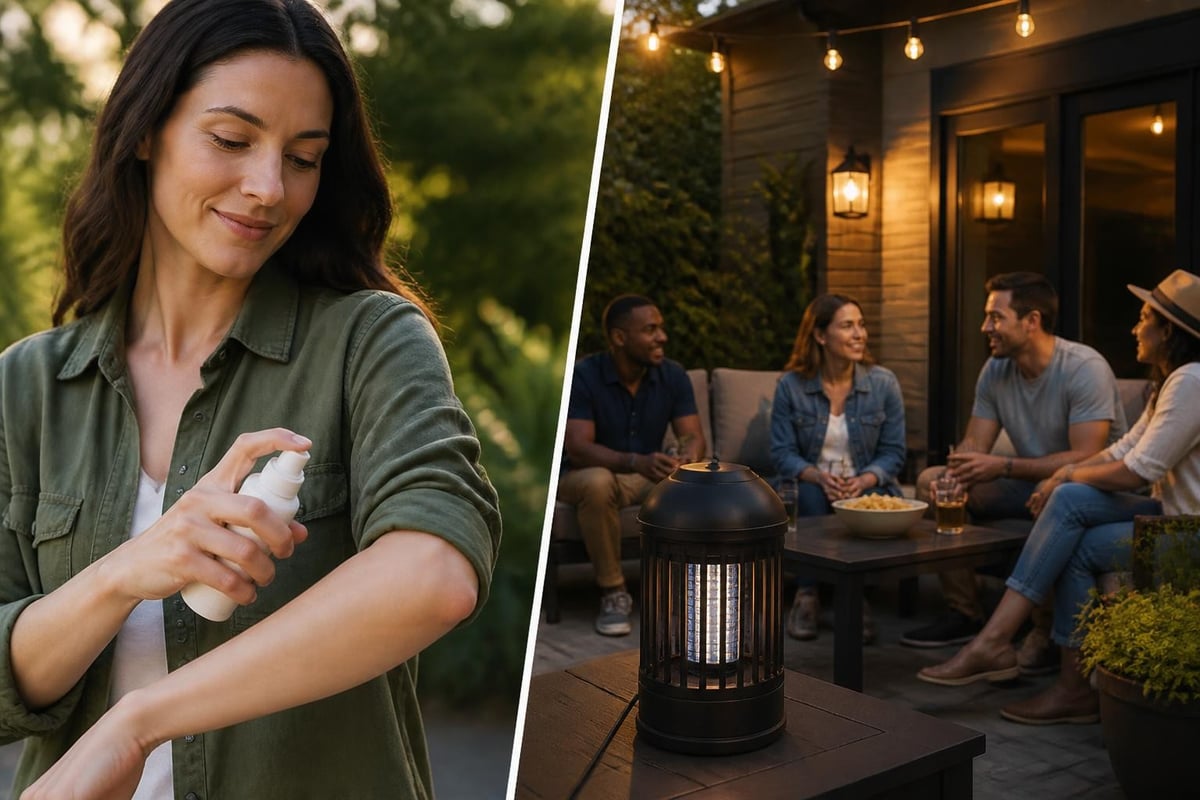
The most familiar option remains personal spray repellents you apply directly to exposed skin and clothing. Consumer Reports testing consistently shows DEET formulations between 15% and 30% provide reliable protection for two to six hours. Picaridin, a synthetic alternative, performs similarly without the odor or plastic-damaging properties of DEET.
These sprays protect the individual wearing them. Coverage stops at the edges of treated skin, which means every person needs their own application. Reapplication happens hourly during active evenings, and the sticky residue becomes a deal-breaker for many hosts who refuse to ask dinner guests to spray down before sitting at a beautifully set table.
Perimeter and Yard Treatment Sprays
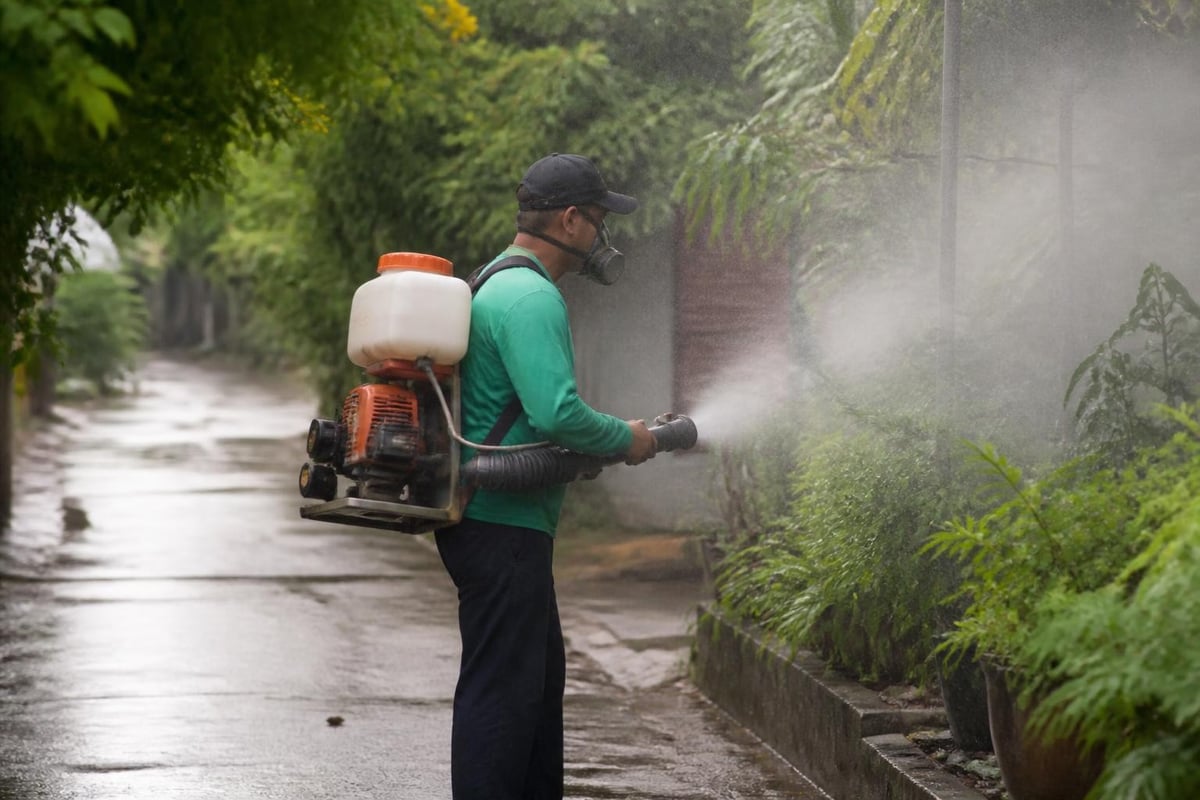
Lawn and garden sprays target adult mosquitoes resting in vegetation or larvae developing in standing water. Pyrethroids such as bifenthrin, permethrin, and lambda-cyhalothrin dominate this category. Professional mosquito control services typically use backpack foggers or truck-mounted misters to apply these chemicals around yard perimeters, under decks, and in shrubbery.
Knockdown happens quickly. Mosquitoes die on contact or shortly after landing on treated surfaces. Residual protection lasts two to four weeks depending on rainfall and UV exposure. The American Mosquito Control Association provides guidance on permethrin use, noting it should only be applied to clothing and never directly to skin.
The challenge? Broad-spectrum insecticides kill beneficial insects alongside mosquitoes. Pollinators, predatory wasps, and butterflies die in the same spray drift. Families with children, pets, and vegetable gardens increasingly reject chemical saturation of spaces where daily life happens.
Spatial Repellent Devices
A newer category uses heat or battery power to vaporize active ingredients into the air, creating a protective zone. Allethrin and metofluthrin are common pyrethroid actives in these devices. The WHO recently recommended spatial emanators for vector control after field trials demonstrated efficacy against pyrethroid-resistant mosquitoes.
Devices range from tabletop units to clip-on personal emitters. A cluster randomized trial in Mexico showed metofluthrin emanators reduced mosquito landings in outdoor community spaces. Peak performance requires proper placement, fresh cartridges, and calm wind conditions. Costs accumulate because cartridges last only 12 to 40 hours depending on the brand.
What Makes the Best Outdoor Mosquito Spray Effective
Efficacy depends on matching the product to your specific need. The best outdoor mosquito spray for a camping trip differs dramatically from the best choice for a backyard patio dinner.
| Factor | Skin Spray | Yard Spray | Spatial Device |
|---|---|---|---|
| Protection Duration | 2-6 hours | 2-4 weeks | 12-40 hours per refill |
| Coverage Area | Individual only | Up to 5,000 sq ft | 10-15 ft radius |
| Reapplication Frequency | Hourly during activity | Bi-weekly to monthly | Cartridge replacement |
| Chemical Exposure | Direct skin contact | Residual on surfaces | Airborne vapor |
| Cost Per Use | $0.15-$0.40 | $25-$75 per treatment | $1.50-$3.00 per session |
The EPA's repellent finder tool helps narrow choices based on active ingredient, protection duration, and intended use. Products carrying an EPA registration number have undergone testing to verify label claims.
Active Ingredient Performance
DEET remains the gold standard for personal protection. Concentrations above 50% provide no additional benefit and increase the risk of skin irritation. Most dermatologists recommend 20% to 30% formulations for adults and 10% to 15% for children over two months old.
Picaridin offers comparable performance without DEET's drawbacks. It does not damage synthetic fabrics, feels less greasy, and carries no odor. Oil of lemon eucalyptus (PMD) provides a plant-based alternative effective for two to four hours, though it should not be used on children under three years old.
For yard applications, synthetic pyrethroids work quickly but degrade in sunlight. Natural pyrethrins derived from chrysanthemum flowers break down faster, requiring more frequent applications. Neither option discriminates between target pests and beneficial insects.
Evaluating Safety and Environmental Impact
The best outdoor mosquito spray balances effectiveness against chemical exposure, especially in spaces where families, pets, and food intersect daily. Understanding how mosquitoes detect humans helps evaluate whether protection needs to involve direct skin contact or whether scent disruption offers a viable path.
Chemical Load Considerations
DEET absorption through skin remains minimal during normal use, but repeated applications over weeks add up. Parents hesitate to spray toddlers multiple times daily throughout summer. Pets grooming treated skin can ingest residues. The Outdoor Sanctuary Host values the patio as an extension of the home and questions whether chemical saturation aligns with the curated environment they have created.
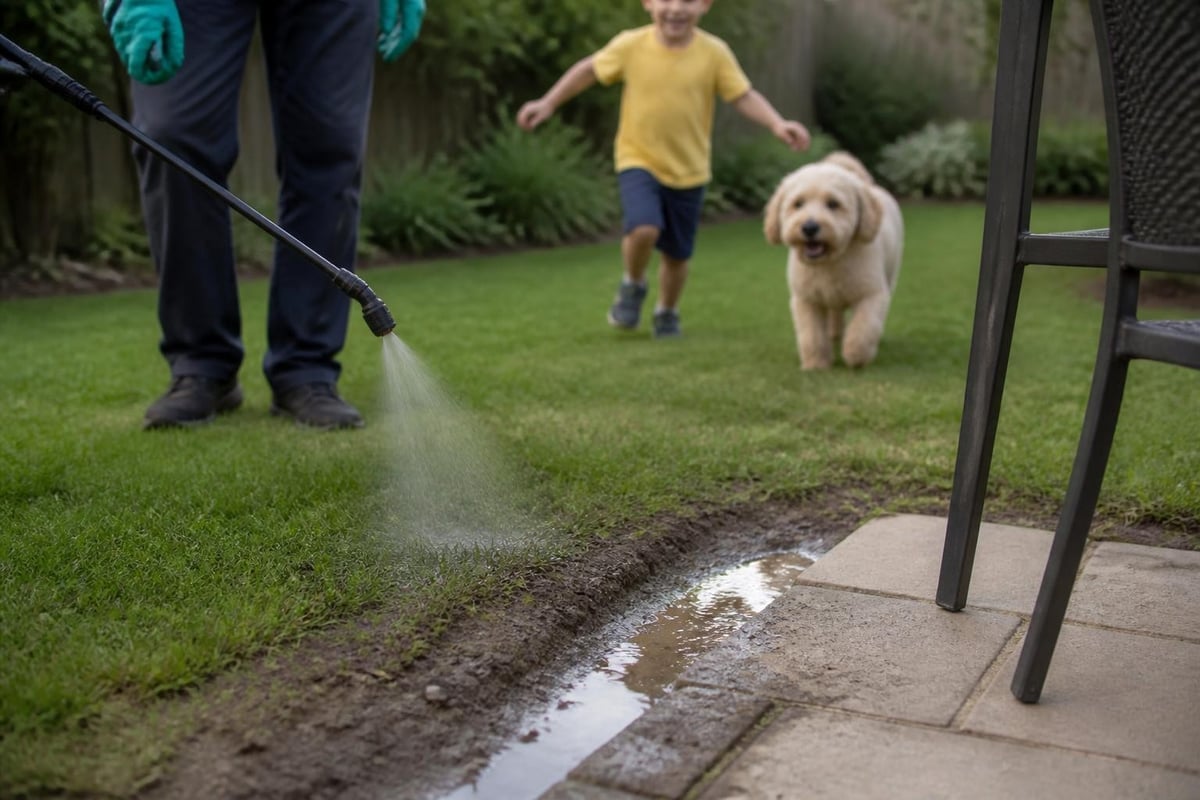
Permethrin yard sprays carry strong warnings about aquatic toxicity. Runoff into storm drains, streams, or ponds kills fish and amphibians. The compound binds to soil and vegetation, persisting for weeks. Dogs tolerate treated lawns after the spray dries, but cats are highly sensitive to pyrethroids and can develop neurological symptoms from exposure.
Non-Toxic Alternatives Gaining Ground
Growing awareness of ecosystem impacts has driven innovation in scent-based protection. Mosquitoes hunt primarily by detecting carbon dioxide, body heat, and scent compounds humans exhale and secrete. Masking these cues at ground level, where mosquitoes search for hosts, disrupts their ability to locate targets.
Biodegradable granules infused with essential oils provide this masking without aerosol delivery. Geraniol has demonstrated measurable repellent properties in field trials. When combined with citronella, peppermint, eugenol, cornmint, and rosemary, the blend creates a scent barrier that makes human presence less detectable.
The mechanism differs fundamentally from killing or creating a chemical vapor cloud. Instead of saturating air or coating skin, the approach focuses on scent disruption at the source level where mosquitoes begin their search pattern. Nothing touches guests. No reapplication interrupts conversation. The space itself becomes protected rather than individuals within it.
Best Outdoor Mosquito Spray Options by Use Case
Selecting the best outdoor mosquito spray requires matching product characteristics to specific scenarios. A family patio demands different solutions than a wilderness camping trip.
Backyard Patios and Decks
Hosts prioritize guest comfort without visible equipment or mandatory spray-downs. Traditional citronella candles provide ambiance but minimal protection. Tabletop spatial devices work only in still air and create disposal waste from single-use cartridges. Perimeter yard sprays raise concerns about chemical drift onto dining surfaces and play equipment.
Natural mosquito repellent approaches for patios emphasize zone protection that operates invisibly. Ground-applied granules scatter under furniture, along deck edges, and around planters. The method suits hosts who refuse to compromise aesthetic standards or ask guests to tolerate sticky skin treatments.
Coverage for a typical 15 by 20 foot patio requires approximately 300 square feet of protection. Performance peaks during the first two days after application. Reapplication every three to four days maintains consistent scent masking through peak mosquito season.
Camping and RV Sites
Wilderness protection demands portable, effective options without access to electricity or water for mixing concentrate sprays. Personal aerosols remain necessary for hiking and exploring beyond the campsite perimeter. At the campsite itself, where families gather around picnic tables and fire rings, natural mosquito repellent for camping offers flexibility.
Small mesh bags filled with scent-masking granules clip onto tent stakes, picnic table legs, and camp chair frames. Open jars positioned on stable surfaces extend protection zones. The approach eliminates flame risk from citronella torches in dry forest conditions and avoids chemical residue on sleeping bags and cooking equipment.
Youth Sports and Outdoor Events
Parents at sports fields face unique challenges. Teams practice during peak mosquito activity from dusk through evening under field lights. Spraying an entire team before every practice becomes impractical. Coaches resist requiring chemical applications for participation. Standing water in drainage areas and irrigation systems adjacent to fields creates ideal mosquito breeding habitat.
Portable protection that travels with the team solves the logistics problem. Five-ounce containers cover sideline areas up to 300 square feet. Parents scatter granules along bleachers, behind dugouts, and around water cooler stations. The method protects spectators without requiring individual compliance or creating disposal waste.
Common Mistakes When Choosing Outdoor Protection
Even the best outdoor mosquito spray fails when applied incorrectly or selected for the wrong context. Understanding these pitfalls prevents frustration and wasted investment.
Over-Reliance on Single Methods
No single product protects every scenario perfectly. Personal sprays work during active movement through mosquito habitat but offer no help to guests arriving at your patio. Yard perimeter treatments create residual barriers but require professional reapplication and raise toxicity concerns. Spatial devices perform poorly in wind or rain.
Layered approaches combine methods strategically. Use personal repellent for gardening or yard work in mosquito-heavy areas. Apply ground-level scent masking in gathering spaces where people remain relatively stationary. Reserve chemical yard treatments for severe infestations or disease outbreak seasons rather than routine weekly use.
Ignoring Wind and Weather
Aerosol sprays and spatial vapor devices lose effectiveness in wind above five miles per hour. The protective cloud dissipates before creating a meaningful barrier. Rain washes away residual yard treatments within hours. Florida humidity and frequent afternoon storms make timing critical for spray applications.
Ground-applied granules tolerate light wind because they remain stationary once positioned. Heavy rain eventually dilutes and disperses the scent barrier, triggering the need for reapplication. Checking weather forecasts before treatment prevents wasted product and disappointing results.
Neglecting Source Reduction
The best outdoor mosquito spray cannot overcome breeding site neglect. A single bottle cap filled with rainwater produces hundreds of larvae within a week. Gutters, flowerpot saucers, bird baths, and tire swings become mosquito nurseries when water stagnates for more than five days.
Weekly inspection eliminates standing water before eggs hatch. Dunks containing Bacillus thuringiensis israelensis (Bti) treat water features and ponds without harming fish or plants. Addressing larvae before they mature into biting adults reduces pressure on repellent products by limiting local mosquito populations.
Why Many Homeowners Are Moving Beyond Sprays
The limitations of spray-based protection have driven demand for alternatives that align better with modern outdoor living values. Hosts who view their patio as a curated extension of interior space reject solutions that compromise aesthetics, require visible equipment, or demand guest participation.
The Sticky Spray Problem
Aerosol repellents leave an oily film on skin that attracts dirt and feels uncomfortable in warm weather. The sensation conflicts with the relaxed comfort hosts want guests to experience. Asking arrivals to apply DEET before sitting at a linen-covered table contradicts hospitality instincts. Children resist application and often wipe product off inadvertently, reducing effectiveness.
The "Pour. Don't Spray." philosophy eliminates these friction points entirely. Protection happens before guests arrive through ground application that requires no individual compliance. The method respects personal autonomy while delivering space-wide coverage.
Environmental Awareness
Suburban families in 2026 increasingly question routine pesticide use in spaces where children play barefoot and pets roll in grass. The American Mosquito Control Association's position on misting systems notes concerns about non-target impacts and development of insecticide resistance through repeated low-dose exposure.
Biodegradable solutions that dissolve back into soil without accumulating or persisting align with values around chemical stewardship. Corn-based granules carrying essential oils break down naturally rather than building residual loads in yard ecosystems.
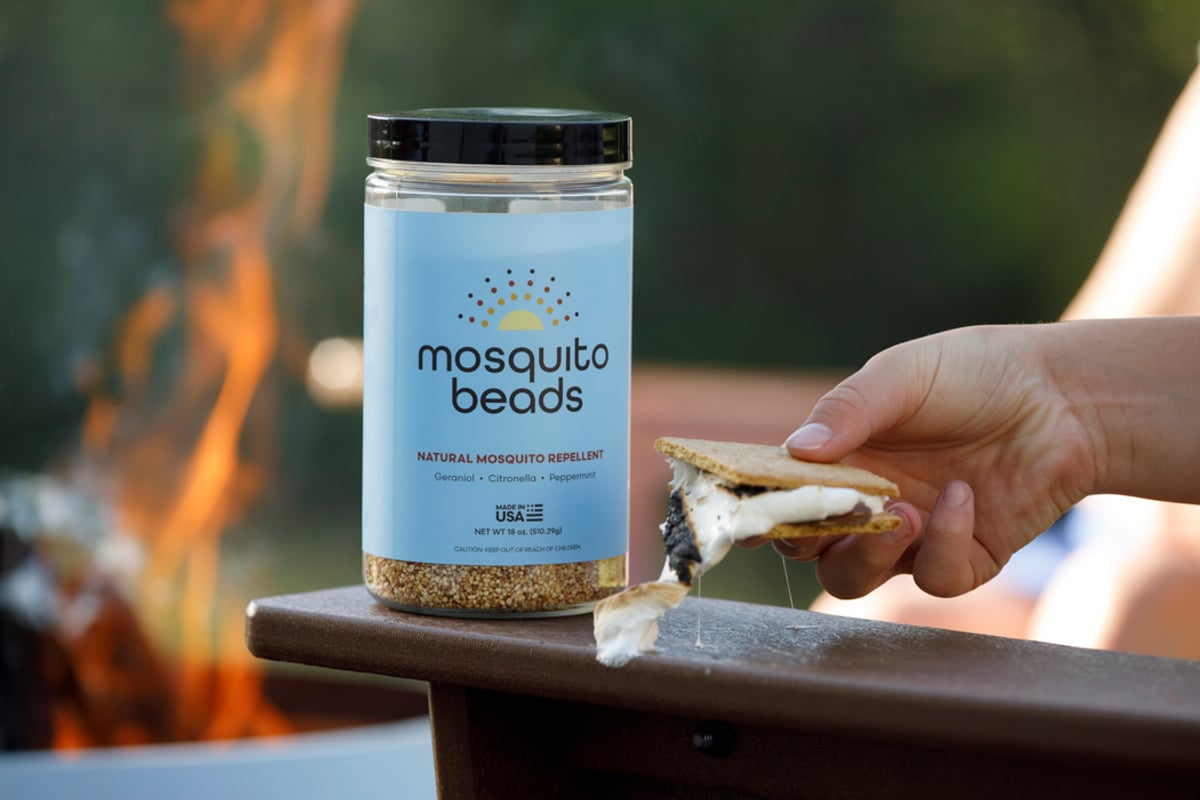
For homeowners who have tried conventional methods and found them wanting, Mosquito Beads offer a ground-applied alternative. These biodegradable granules infused with geraniol, citronella, peppermint, eugenol, cornmint, and rosemary work by masking human scent at ground level where mosquitoes hunt. Pour them around seating areas, under furniture, or along patio edges. Nothing touches skin, no smoke or flame is needed, and peak performance runs through days one and two after application.
Cost-Effectiveness Over Time
Personal spray bottles run $8 to $15 and last a few weeks of regular use for a family of four. Spatial device refills cost $12 to $18 for 40 hours of protection. Professional yard spray services charge $60 to $150 monthly depending on property size. Comparing natural options against professional services reveals meaningful savings.
An 18-ounce container covering 1,000 square feet costs approximately $30 and provides protection through multiple applications across weeks of outdoor entertaining. The per-evening cost drops below $2 for a typical patio gathering, less than a single spatial device cartridge.
Making the Right Choice for Your Outdoor Space
The best outdoor mosquito spray depends entirely on your specific context, priorities, and tolerance for different protection methods. No universal answer exists, but a structured decision framework clarifies the path forward.
Assessment Questions
- How many people need protection? Personal sprays work for solo activities. Gatherings of six or more benefit from area-wide approaches.
- What is the setting? Wilderness camping requires portable, self-contained options. Home patios allow pre-treatment and zone creation.
- What are your chemical comfort levels? DEET-averse families need DEET-free alternatives that still perform reliably.
- How much maintenance will you accept? Spray reapplication every hour versus ground treatment every few days represents vastly different commitment levels.
- What is your budget? Calculate cost per protected hour rather than per-bottle price to understand true value.
Decision Matrix
| Your Priority | Best Approach | Why It Fits |
|---|---|---|
| Maximum protection duration | 30% DEET spray | Proven 6-hour coverage per application |
| Chemical-free family space | Ground-applied scent masking | No skin contact, biodegradable, pet-friendly |
| Portable camping protection | Clip-on spatial device + personal spray | Flexible for moving around campsite |
| Low-maintenance yard control | Bi-weekly professional service | Comprehensive perimeter treatment |
| Budget-conscious frequent use | Biodegradable granules | Low per-use cost, reusable coverage |
Integration with Broader Strategy
Effective mosquito management rarely relies on a single tactic. The best outcomes layer multiple approaches that address different aspects of the problem. Source reduction eliminates breeding sites. Habitat modification removes daytime resting areas. Repellents protect people during peak activity periods.
Ground-applied scent masking fits naturally into this integrated framework. It handles the gathering space where people spend extended time without requiring behavior change from guests. Personal sprays supplement protection during yard work or gardening in areas outside the main patio zone. Occasional professional treatments address severe population explosions during unusually wet seasons.
Regional Considerations Across the United States
Climate, mosquito species, and disease risk vary dramatically across regions. The best outdoor mosquito spray for Texas differs from the optimal choice for New England.
Southern States
Texas mosquito challenges include aggressive Aedes aegypti that bite during daytime and Culex species active at dusk. Year-round breeding means protection requirements never pause. Outdoor entertaining happens ten months annually, making cost-per-use calculations critical.
High heat and humidity increase perspiration, which washes away skin-applied sprays faster and amplifies the sticky, uncomfortable sensation. Ground treatments that avoid skin contact gain appeal in climates where people already feel overheated.
Coastal and Wetland Areas
Salt marsh mosquitoes in coastal regions swarm in enormous numbers after high tides flood breeding areas. Sheer volume overwhelms single-method approaches. Spatial devices cannot generate protective zones large enough. Personal sprays require frequent reapplication as sweating dilutes active ingredients.
Layered protection becomes non-negotiable. Scent masking handles the immediate patio perimeter. Fans create air currents that disrupt mosquito flight. Screened enclosures add physical barriers. The combination delivers livable outdoor space despite challenging mosquito pressure.
Northern Climates
Shorter mosquito seasons in northern states compress protection needs into intense 12 to 16-week windows from late spring through early fall. Residents invest more heavily in seasonal solutions because the burden concentrates rather than spreading across a full year.
Biodegradable options appeal to lake cabin owners and seasonal cottage residents who want protection during weekend visits without maintaining subscription spray services. Portable containers travel easily and store compactly during winter months.
Practical Application Tips for Maximum Effectiveness
Even the best outdoor mosquito spray underperforms when applied incorrectly. These field-tested strategies optimize results regardless of which product category you choose.
Timing Applications Strategically
Mosquito activity peaks during dawn and dusk when temperature and humidity create ideal hunting conditions. Applying protection two hours before the expected activity window ensures coverage when it matters most. Late afternoon application for evening gatherings allows scent dispersal before guests arrive.
Avoid midday applications in direct sun. Heat accelerates evaporation of volatile compounds, reducing effective duration. Morning applications for evening events in hot climates may require midafternoon refreshing.
Proper Coverage Patterns
Personal sprays require even coating of all exposed skin. Most people under-apply, using half the necessary volume. The average adult needs approximately one ounce to cover arms, legs, neck, and face adequately. Spray hands and rub product into hard-to-reach areas rather than direct spraying near eyes and mouth.
For ground applications, concentrate product in zones where people actually sit and stand. Under tables, around chair clusters, and along walkways deliver better results than even distribution across entire yards. Mosquitoes hunt at ground level, making low-height treatment more effective than elevated applications.
Maintenance and Monitoring
Track when you apply treatments to maintain consistent protection. Calendar reminders prevent gaps where coverage lapses and mosquitoes reclaim territory. Note weather events that may shorten product effectiveness and trigger early reapplication.
Monitor results objectively. Count bites during gatherings to establish baselines and measure improvement. If a method consistently underperforms, adjust technique or try alternative approaches rather than accepting poor outcomes.
Looking Forward: The Future of Outdoor Mosquito Control
Innovation in mosquito control continues accelerating as climate change expands mosquito ranges and resistance to conventional insecticides spreads. The best outdoor mosquito spray in 2026 may look different from options available even two years earlier.
Emerging Technologies
Genetic modification techniques show promise for reducing mosquito populations through sterile insect release and gene drive systems. These approaches target mosquitoes at the population level rather than protecting individual spaces. Commercial availability remains years away for most homeowners, but public health agencies have begun pilot programs in high-risk disease transmission areas.
Improved spatial repellent formulations using novel active ingredients may deliver longer-lasting protection with reduced chemical loads. WHO guidance on spatial repellents establishes efficacy standards that drive research toward next-generation products.
Sustainability as Standard
Consumer demand for environmentally responsible options will continue reshaping the marketplace. Products that biodegrade, avoid persistent chemicals, and minimize non-target impacts gain market share as awareness grows. The "better for you and the planet" positioning becomes table stakes rather than premium positioning.
Transparency in ingredient sourcing, manufacturing processes, and environmental impact data will increasingly influence purchasing decisions. Homeowners want verification that products claiming natural formulation or biodegradable properties actually deliver on those promises.
Integration with Smart Home Systems
Automated mosquito control integrated with weather data, humidity sensors, and outdoor occupancy detection may optimize treatment timing without manual intervention. IoT-enabled dispensers could adjust release rates based on real-time conditions, maximizing efficacy while minimizing product consumption.
The challenge remains ensuring automation serves homeowner values rather than creating dependence on proprietary systems or subscription models that inflate long-term costs.
Choosing the best outdoor mosquito spray in 2026 means weighing effectiveness against application method, chemical exposure, environmental impact, and lifestyle fit. While DEET and picaridin sprays remain reliable for personal protection during active outdoor pursuits, many homeowners now prefer methods that protect entire gathering spaces without requiring guests to apply chemicals to skin or tolerating sticky residues. Mosquito Beads offer a ground-applied alternative that masks human scent at the level where mosquitoes hunt, using biodegradable granules infused with six essential oils. Pour them where people gather, protect the space rather than just individuals, and reclaim your patio without compromise.