

At Home Insect Repellent: Natural Options for Your Space
Creating an outdoor sanctuary requires more than comfortable furniture and ambient lighting. The persistent buzz and bite of mosquitoes can transform your carefully curated patio into an unusable space during peak mosquito season. While commercial sprays dominate store shelves, homeowners increasingly seek at home insect repellent solutions that protect entire outdoor areas without requiring everyone to coat themselves in sticky chemicals. Understanding the full spectrum of options, from spatial repellents to scent-masking technologies, empowers you to reclaim your outdoor living room on your own terms.
Understanding How Different Repellent Categories Work
Not all at home insect repellent products operate the same way. The distinction between topical and spatial approaches fundamentally changes how you protect your outdoor gathering spaces.
Topical Repellents and Their Limitations
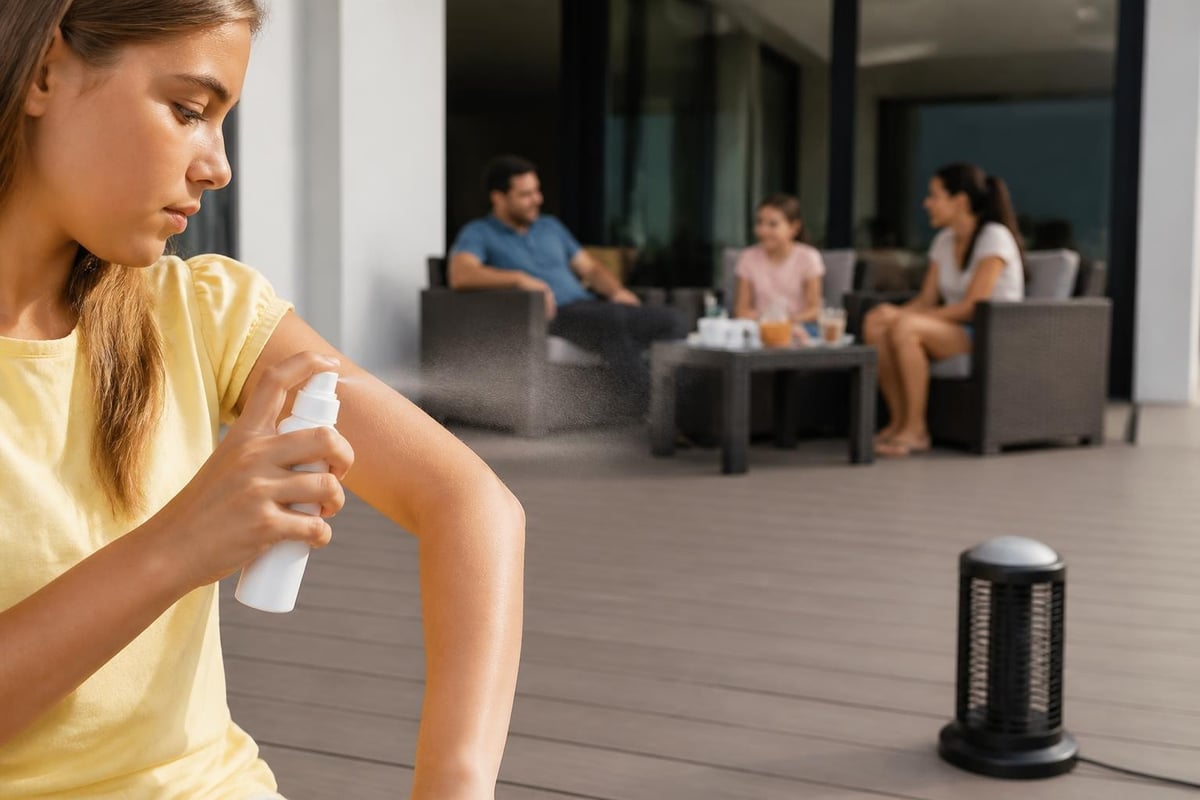
Traditional topical repellents require direct skin application. These products, whether DEET-based or natural formulations, create a chemical barrier on exposed skin that interferes with mosquito receptors. While effective when used properly, they present several challenges for homeowners hosting gatherings.
Key drawbacks of topical-only approaches:
- Every person must apply product individually
- Reapplication needed every 2-4 hours
- Greasy or sticky residue on skin
- Cannot be applied to pets in most cases
- Guests may decline to use chemical products
- Children require special application considerations
The individual protection model works for hiking or solo activities but breaks down when hosting family dinners or watching children play in the yard. You cannot reasonably ask six dinner guests to spray themselves before sitting at your table.
Spatial Repellent Technologies
Spatial repellents protect areas rather than individuals. These at home insect repellent solutions release active ingredients into the air or mask human scent signatures at ground level where mosquitoes hunt. The WHO has evaluated various spatial repellent technologies for public health applications, recognizing their role in vector control strategies.
| Spatial Method | Coverage Area | Duration | Application Type |
|---|---|---|---|
| Citronella candles | 50-100 sq ft | 2-4 hours | Open flame |
| Thermacell devices | 225 sq ft | 12 hours | Heat activation |
| Scent-masking beads | 300-1,000 sq ft | 24-48 hours | Ground pour |
| Perimeter sprays | Varies | 3-4 weeks | Professional/DIY spray |
Each method balances convenience, coverage, and environmental impact differently. Your choice depends on how you use your outdoor space and what tradeoffs you find acceptable.
Natural At Home Insect Repellent Ingredients That Actually Work
The natural repellent market has expanded dramatically, but not all essential oils demonstrate equal efficacy. Research has identified several compounds with measurable mosquito deterrent properties.
Essential Oils with Documented Effectiveness
Geraniol leads the natural ingredient category. Derived from geraniums and citronella plants, geraniol interferes with mosquito olfactory receptors. Studies show it provides protection comparable to lower concentrations of synthetic repellents when properly formulated.
Citronella oil remains the most recognized natural mosquito deterrent. While citronella candles have limited effectiveness due to low concentration, properly formulated products using citronella in combination with other oils show improved results.
Peppermint and cornmint oils contain menthol compounds that mosquitoes avoid. These oils contribute to multi-ingredient formulations that mask human scent signatures mosquitoes track.
Eugenol, extracted from clove oil, demonstrates both repellent and insecticidal properties at varying concentrations. When blended with other essential oils, eugenol enhances overall effectiveness.
Rosemary oil rounds out effective botanical options. Its strong aromatic profile contributes to scent-masking strategies that prevent mosquitoes from detecting human targets.
Why Blended Formulations Outperform Single Oils
Single essential oils rarely provide adequate protection alone. Mosquitoes adapt to individual scent barriers, and volatile oils evaporate quickly. Blended formulations create layered scent profiles that maintain effectiveness longer and prevent mosquitoes from isolating human scent markers. The synergistic effect of multiple oils creates more robust protection than any single ingredient.
For families concerned about protecting children from environmental risks, natural formulations offer reassurance when properly tested and labeled.
Ground-Based Versus Airborne Application Methods
How you deploy at home insect repellent matters as much as which active ingredients you choose. The delivery method determines coverage area, duration, and whether family members or pets come into direct contact with chemicals.
The Ground Application Advantage
Mosquitoes hunt from ground level, following carbon dioxide plumes and scent trails humans leave. They fly low, rarely above knee height during approach. This hunting behavior creates an opportunity for ground-based scent-masking strategies.
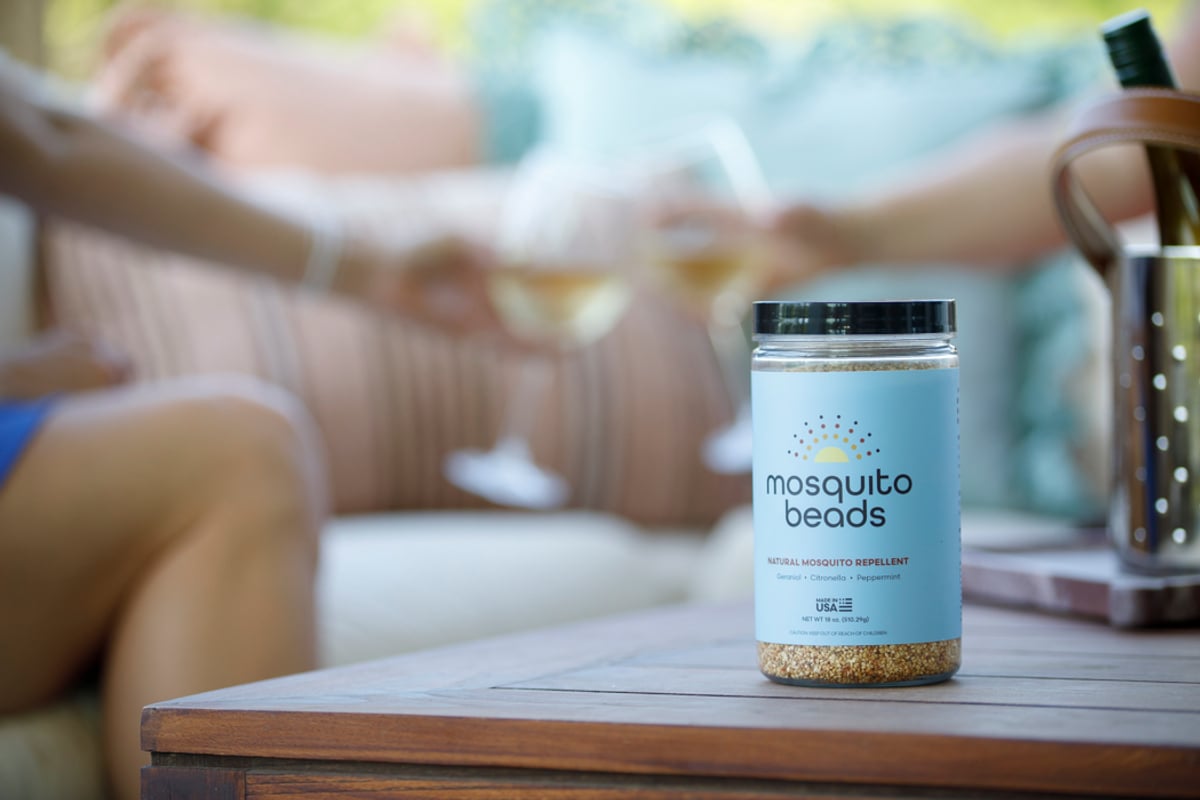
When you apply natural repellent beads directly to the ground where people gather, you create a scent barrier at the exact elevation mosquitoes use for detection. The biodegradable granules release essential oil blends that mask human scent signatures mosquitoes track. Instead of landing on skin, mosquitoes drift past, unable to isolate their targets.
This approach eliminates skin contact entirely. Nothing sticky, no spray residue, no reapplication between courses. Your guests never know the protection system exists unless you point it out. For homeowners who view their patio as an outdoor room, this invisible protection maintains aesthetic standards while delivering functional results.

Airborne Dispersal Systems
Thermacell-style devices and similar technologies heat repellent pads to release chemicals into the air. These systems protect smaller zones effectively but require ongoing fuel or battery power. Smoke-based options like mosquito coils release repellent through combustion, creating visible smoke some homeowners find objectionable.
Comparison of spatial delivery methods:
- Ground beads: No power needed, no visible output, covers 300-1,000 sq ft, lasts 24-48 hours
- Heated devices: Battery/fuel required, quiet operation, covers ~225 sq ft, 12-hour refills
- Smoke coils: No power needed, visible smoke, limited coverage, outdoor-only safety requirement
- Candles: Open flame required, decorative options available, 50-100 sq ft effective range
Your choice balances practical coverage needs against aesthetic preferences and safety considerations.
Implementing Integrated Mosquito Management at Home
Effective at home insect repellent strategies work best as part of comprehensive mosquito management. Repellents address adult mosquitoes currently in your space, but integrated pest management prevents breeding and reduces populations long-term.
Source Reduction as Foundation
Standing water elimination remains the single most effective prevention step. Walk your property weekly during mosquito season:
- Empty saucers under potted plants
- Clear roof gutters and downspout extensions
- Flip wheelbarrows, buckets, and toys upside down
- Change birdbath water every three days
- Repair leaking outdoor faucets
- Fill tree holes with sand or expanding foam
- Stock ornamental ponds with mosquito fish
One overlooked water source can produce hundreds of adult mosquitoes. Female mosquitoes lay eggs in surprisingly small volumes of water, from bottle caps to folded tarp creases.
Habitat Modification for Long-Term Control
Mosquitoes rest in cool, damp vegetation during the day. Trimming shrubs, mowing regularly, and removing leaf litter reduces daytime hiding spots. Creating air circulation with ceiling fans makes it harder for mosquitoes to navigate, as they are weak fliers.
UC IPM's guidance on mosquito management emphasizes these cultural controls as the foundation for effective home protection. Chemical controls, whether synthetic or natural, work best when layered onto solid habitat management.
Choosing At Home Insect Repellent for Different Outdoor Scenarios
Your specific use case determines which repellent approach makes sense. A solution that works for morning coffee on a small balcony may fail for weekend dinner parties with eight guests.
Patio Dining and Extended Gatherings
When hosting meals or conversation that last several hours, you need consistent coverage without interruption. Ground-applied beads offer distinct advantages here. Pour them around the perimeter of your dining area before guests arrive, and protection lasts through dinner and dessert without reapplication.
This hands-off approach lets you focus on hosting rather than managing repellent logistics. No asking guests to spray down, no candles requiring attention, no devices to refuel mid-gathering. The natural scent-masking strategy used in products like Natural Mosquito Repellent works by preventing mosquitoes from detecting anyone in the protected space, not just treating individual people.
For families who want to enjoy outdoor spaces without chemical concerns, biodegradable granule systems offer pet-friendly protection when used as directed. Children play freely, pets roam without restriction, and the system remains invisible to everyone except the mosquitoes who can no longer find their targets.
Active Play Areas and Sports Watching
Watching children's sports or playground activities presents unique challenges. You cannot ask kids to stand still for spray application every hour, and topical repellents sweat off quickly during active play. Ground-based protection around bleachers and playground perimeters creates safe zones without requiring cooperation from active children.
Parents attending weekend tournaments appreciate solutions that protect without adding to their packing list or requiring halftime reapplication. The Mosquito Almanac covers various outdoor scenarios families face during mosquito season.
Camping and RV Living
Temporary outdoor living requires portable at home insect repellent solutions. Whether you are camping at established sites or boondocking in your RV, ground-applied beads in mesh bags provide flexible protection. Clip bags to camping chairs, hang from RV awnings, or pour around campfire seating.
Natural options for camping and RV use must balance effectiveness with portability. Smaller containers protect immediate gathering areas without requiring storage space for large perimeter treatments.
Understanding Safety and Environmental Impact
Choosing at home insect repellent requires balancing effectiveness against safety concerns, particularly for homes with children and pets. Natural does not automatically mean safer, and synthetic does not necessarily mean dangerous when used correctly.
Reading Labels and Understanding Active Ingredients
The EPA registers repellent products and requires specific labeling. Whether natural or synthetic, registered products have undergone safety evaluation. Look for EPA registration numbers on packaging and follow application instructions precisely.
Natural repellent safety considerations:
- Essential oils can cause skin irritation in concentrated forms
- Ingestion risks for children and pets require secure storage
- Allergic reactions possible with botanical ingredients
- "Natural" claims do not exempt products from proper usage requirements
Ground-applied products eliminate many safety concerns by removing skin contact from the equation. When repellent stays on the ground rather than coating skin, children cannot touch treated surfaces or ingest residue from their hands.
Biodegradability and Environmental Footprint
Corn-based biodegradable granules break down naturally in soil without leaving synthetic residue. This matters for homeowners concerned about cumulative chemical exposure in spaces where children play and pets spend time. Traditional plastic-based products or non-degradable formulations persist in the environment long after their active ingredients lose effectiveness.
The broader vector control strategies outlined by WHO recognize the role of personal and spatial protection methods in reducing disease transmission while balancing environmental sustainability.
Cost Comparison: At Home Insect Repellent Options
Understanding the true cost per protected hour helps evaluate seemingly expensive natural options against cheap synthetic sprays.
| Product Type | Initial Cost | Coverage | Duration | Cost Per Use | Protected Person-Hours |
|---|---|---|---|---|---|
| DEET spray (6 oz) | $8-12 | One person | 4 hours | $2-3 per application | 4 hours (single person) |
| Natural spray (4 oz) | $10-15 | One person | 2-3 hours | $3-4 per application | 2-3 hours (single person) |
| Citronella candles (3-pack) | $12-18 | 100 sq ft | 3 hours each | $4-6 per use | 9 hours (limited area) |
| Thermacell device + refills | $25-35 initial, $8-10 refills | 225 sq ft | 12 hours | $0.65-0.85 per hour | 12 hours (225 sq ft) |
| Ground beads (18 oz) | $20-30 | 1,000 sq ft | 48 hours peak | $0.40-0.60 per day | 48 hours (1,000 sq ft) |
When protecting multiple people in larger spaces, spatial solutions deliver better value than individual topical applications. A family of four requiring spray protection for a two-hour outdoor dinner would use $12-16 worth of individual spray bottles. The same gathering protected by ground-applied beads costs $0.80-1.20 in product.
Comparing natural repellent costs against professional services reveals additional savings for DIY approaches that deliver consistent seasonal protection.
Regional Considerations for Mosquito Species and Seasons
At home insect repellent strategies must account for local mosquito species and their seasonal activity patterns. What works in Minnesota may prove inadequate in Florida, where year-round mosquito pressure demands different approaches.
High-Pressure Regions Require Robust Solutions
States like Florida and Texas face aggressive mosquito species that bite throughout daylight hours, not just at dawn and dusk. Aedes aegypti and Aedes albopictus, both daytime feeders, thrive in urban and suburban environments. These species require all-day protection strategies rather than timed applications for specific outdoor windows.
Homeowners in high-pressure regions benefit from layered approaches: habitat management plus consistent spatial protection during outdoor use periods. Waiting until mosquitoes appear before applying repellent means enduring bites while scrambling for spray bottles.
Seasonal Timing and Preparation
Northern states experience concentrated mosquito seasons from late May through September. Southern and coastal regions may see mosquito activity from March through November or even year-round in subtropical climates. Preparing your at home insect repellent strategy before peak season begins ensures you have effective products on hand when the first warm evenings arrive.
Spring preparation includes source elimination, ordering adequate repellent supplies, and testing application methods before hosting season begins. Nothing frustrates homeowners more than discovering their chosen repellent method fails during the Memorial Day cookout they planned for weeks.
Making the Switch from Traditional Sprays to Spatial Protection
Homeowners accustomed to spray-based protection often hesitate to trust spatial methods. The psychological comfort of feeling repellent on skin creates doubt about invisible protection systems. Understanding this transition helps set realistic expectations.
Adjusting Expectations and Application Timing
Spatial repellents require proper application before mosquitoes arrive in force. Unlike topical sprays applied reactively when you notice bites, ground-based systems work best when deployed 30-60 minutes before outdoor activity begins. This allows the scent barrier to establish fully.
Transition tips for spray-dependent households:
- Start with small test applications to build confidence
- Apply spatial repellent early in the day for evening gatherings
- Keep topical spray as backup during the adjustment period
- Track mosquito activity levels before and after application
- Give the system 2-3 uses before judging effectiveness
Most families discover that properly applied spatial protection eliminates 90-95% of mosquito encounters. The occasional mosquito that drifts through feels dramatic compared to zero contact, but represents massive improvement over unprotected exposure.
Recognizing What Success Looks Like
Success with at home insect repellent is not zero mosquitoes in your yard. Mosquitoes will still exist in your property's vegetation and may buzz through protected areas. Success means mosquitoes do not land on people or animals in the treated space because they cannot detect targets through the scent barrier.
You will still hear the occasional mosquito. You may see them flying nearby. What you will not experience is the constant landing, biting, and swatting that made outdoor living unbearable. This distinction matters when evaluating whether your chosen method delivers adequate protection.
Maintaining Consistency Across the Outdoor Season
Effective mosquito management requires sustained attention, not one-time applications. The most sophisticated at home insect repellent loses effectiveness if you forget to reapply or allow gaps in coverage.
Creating Application Routines
Weekly routines for peak season:
- Monday: Walk property for standing water
- Wednesday: Check repellent supply levels
- Friday: Pre-apply spatial repellent for weekend use
- Sunday: Evaluate effectiveness and adjust coverage areas
Linking mosquito management to existing routines increases compliance. If you mow every Saturday morning, add water dumping and repellent application to that same workflow.
Adjusting for Weather and Activity
Heavy rain washes away ground-applied repellents faster than dry conditions. Plan to reapply after significant rainfall if you have outdoor gatherings scheduled. Extremely windy conditions may disperse scent barriers more quickly, requiring increased application frequency.
Hot, humid weather accelerates mosquito reproduction and activity. The same repellent application that lasts 48 hours in moderate conditions may need refreshing after 24-36 hours during heat waves when mosquito pressure peaks.
Evaluating Product Claims and Marketing Promises
The at home insect repellent market includes products making extraordinary claims about effectiveness, duration, and coverage area. Developing critical evaluation skills helps separate functional solutions from marketing hype.
Red Flags in Repellent Marketing
Be skeptical of products claiming:
- 100% protection: No repellent achieves perfect effectiveness in all conditions
- Season-long single application: Even professional barrier treatments require monthly reapplication
- Works on all insects: Different insects respond to different deterrents
- No reapplication ever needed: Active ingredients degrade over time regardless of formulation
- Instant results: Spatial repellents need time to establish protective zones
Look for specific coverage area claims (in square feet), duration estimates (in hours or days), and active ingredient disclosure. Products hiding behind "proprietary blends" without listing concentrations should raise concerns.
Evidence-Based Evaluation
The Cochrane systematic review on topical insect repellents demonstrates the importance of randomized trial evidence for protection claims. While most commercial products lack this level of scrutiny, looking for third-party testing, university research, or EPA registration provides some quality assurance.
Customer reviews offer real-world effectiveness data. Look for detailed reviews mentioning specific conditions, coverage areas, and duration rather than simple star ratings. Reviews from your geographic region carry more weight than generic testimonials, as mosquito species and pressure vary dramatically by location.
Building effective at home insect repellent strategies requires understanding how different products work, selecting methods that match your specific outdoor lifestyle, and maintaining consistent application throughout mosquito season. Whether you choose topical sprays, spatial devices, or ground-based scent-masking systems, the goal remains the same: reclaiming your outdoor sanctuary from persistent mosquito pressure. For families seeking chemical-free protection that covers entire gathering spaces without sticky sprays or visible devices, Mosquito Beads offers a biodegradable solution you simply pour on the ground where people gather, letting the essential oil blend mask human scent so mosquitoes drift past instead of landing.