

DEET Free Bug Repellent: Safe Alternatives for 2026
The conversation around mosquito protection has shifted dramatically in recent years. Families hosting backyard gatherings, RV enthusiasts setting up camp, and parents watching weekend soccer games are asking a simple question: what works without the chemical concerns? The search for reliable deet free bug repellent has grown from niche preference to mainstream demand as more people question what they put on their skin and near their pets. Understanding the alternatives, how they work, and which situations call for which solution makes the difference between guessing and actually enjoying time outdoors.
Why People Choose DEET-Free Protection
The decision to avoid DEET rarely comes from one single concern. For most suburban families who treat their patio as an extension of their living space, it reflects a layered worry about chemical exposure, especially around children and pets who play in treated areas.
DEET's track record is extensive, with decades of use and regulatory approval. Yet the oily texture, strong odor, and warnings about application frequency create hesitation. Parents remember the sticky feel on skin after an afternoon outside, the ruined finish on plastic furniture, and the general unease about reapplying concentrated formulas every few hours.
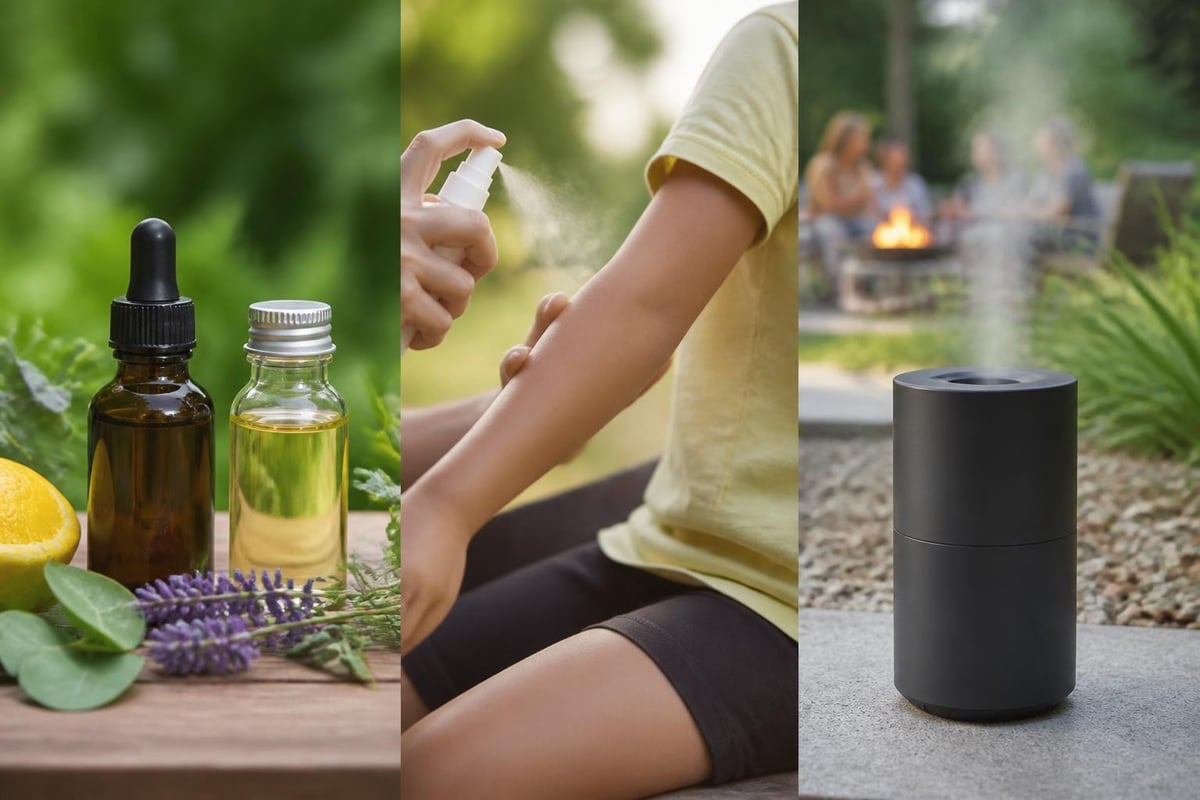
Beyond texture and smell, the cultural shift toward lower-chemical households has accelerated demand for natural alternatives. The CDC Yellow Book travel guidance acknowledges this trend while still recommending effective protection, noting that oil of lemon eucalyptus (PMD) and other registered actives offer viable paths forward.
The Chemical Concern for Families
When you pour drinks on a patio table where your toddler just finished coloring, or your dog stretches out after dinner, the thought of aerosol mist settling on surfaces feels different than it did twenty years ago. Hosting means caring about every detail, and invisible residue doesn't fit the vision of a controlled, comfortable outdoor room.
This isn't about rejecting science. It reflects wanting measurable control over what enters the home ecosystem. Families ask whether they need skin-applied chemicals at all, or whether protecting the space itself makes more sense than treating each person individually.
Understanding DEET-Free Active Ingredients
The term "deet free bug repellent" covers a broad spectrum. Some products substitute one registered synthetic for another. Others rely entirely on plant-derived compounds. Knowing the difference helps match the solution to your specific needs and expectations.
EPA-Registered Synthetic Alternatives
Picaridin has gained significant traction as a DEET alternative. Developed in the 1980s and widely used in Europe before gaining EPA registration in the United States, picaridin offers comparable protection without the plastic-damaging properties or strong odor of DEET.
| Active Ingredient | Origin | Typical Duration | Texture | EPA Registered |
|---|---|---|---|---|
| Picaridin | Synthetic (pepper plant derivative) | 8-12 hours | Light, non-greasy | Yes |
| IR3535 | Synthetic (amino acid derivative) | 4-8 hours | Moderate | Yes |
| PMD (Oil of Lemon Eucalyptus) | Plant-derived, refined | 6-8 hours | Variable | Yes |
The EPA's searchable tool allows families to verify registration status and compare active ingredients side by side, which proves invaluable when standing in the aisle trying to decode marketing claims from actual efficacy data.
IR3535 represents another registered option, derived from a naturally occurring amino acid but produced synthetically. It offers moderate protection and appears in many European formulations. Both picaridin and IR3535 undergo the same rigorous testing protocols as DEET, including the field efficacy evaluations reviewed by EPA scientists.
Plant-Derived Essential Oil Options
Essential oils occupy a different regulatory space. Most appear on the EPA's 25(b) minimum-risk pesticide list, meaning they contain ingredients deemed low-risk enough to skip full registration when formulated correctly.
Common essential oils in deet free bug repellent formulas include:
- Citronella (from lemongrass)
- Geraniol (from geranium and other flowers)
- Peppermint and cornmint (menthol-rich plants)
- Eugenol (from clove)
- Rosemary (herbaceous compound)
A systematic review of essential oils as mosquito bio-repellents published in 2026 confirmed that while many essential oils show repellent activity in laboratory settings, field performance varies significantly based on concentration, formulation, and environmental conditions.
The difference between lab results and backyard reality matters. A compound that repels mosquitoes in a controlled chamber for 30 minutes may perform very differently when wind, humidity, and temperature fluctuate during an evening gathering. Understanding this gap prevents disappointment and helps set realistic expectations.

Spray Versus Spatial Protection Approaches
The default assumption for decades has been personal application: spray yourself, rub it in, reapply when the label says. This model works for hikers moving through terrain, but it creates friction for stationary social settings.
Why Wearable Repellents Feel Wrong for Hosting
Picture this scenario. You've set the table, lit the lanterns, and placed fresh flowers in a vintage pitcher. Guests arrive in their favorite summer dresses and linen shirts. Now you're supposed to suggest everyone coat themselves in bug spray before sitting down?
The visual and social friction is real. Spray-based protection means:
- Guests handling bottles and applying product at your home
- Chemical residue on chair cushions and tablecloths
- Reapplication interrupting conversation every two hours
- Children running inside with sticky hands
- Pets brushing against freshly sprayed legs
For people who view their outdoor space as an extension of their home's aesthetic and comfort standards, this approach conflicts with the entire purpose of creating a sanctuary. It also raises practical questions about protecting the space itself rather than asking every individual to self-treat. If you're hosting regularly, managing protection becomes a logistical burden rather than a simple preventive step.
Ground-Based Scent-Masking Systems
Spatial protection flips the model. Instead of treating people, you treat the zone where people gather. Mosquitoes hunt by scent, tracking carbon dioxide, lactic acid, and other chemical signatures that humans emit. When you mask those scent trails at ground level where mosquitoes approach, they lose the ability to pinpoint targets accurately.
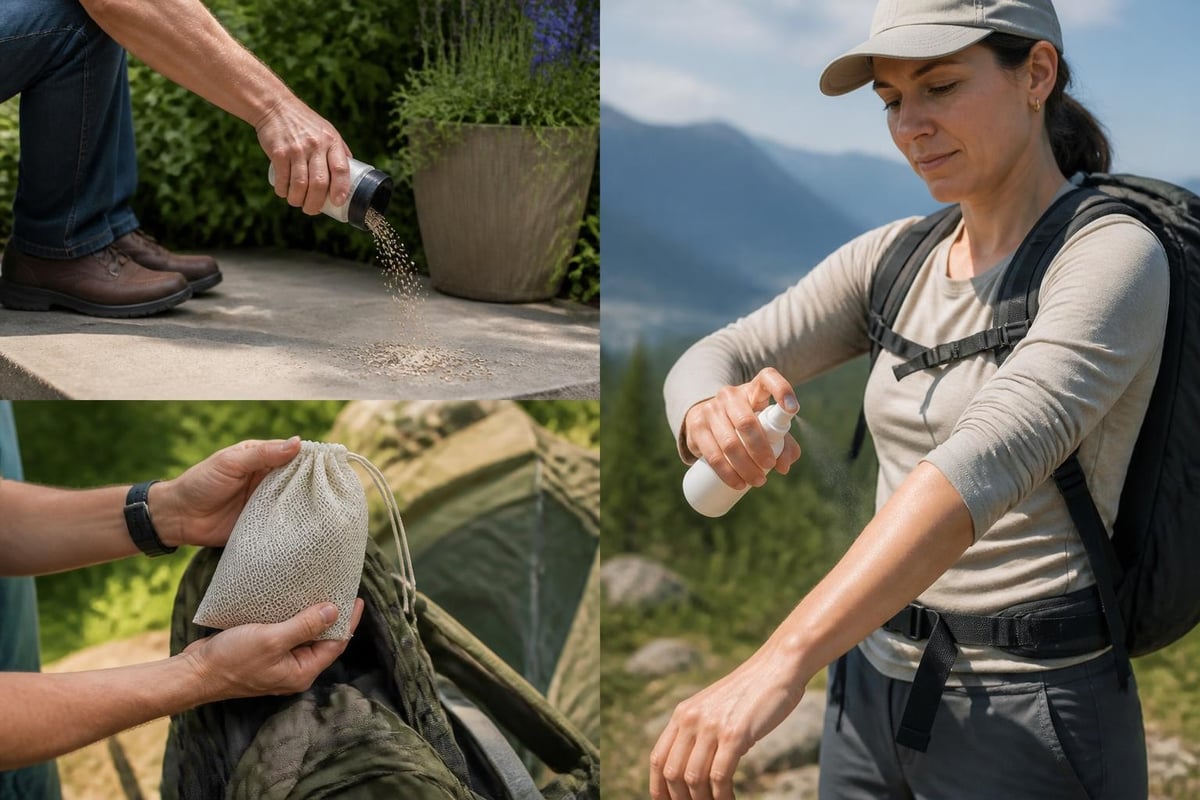
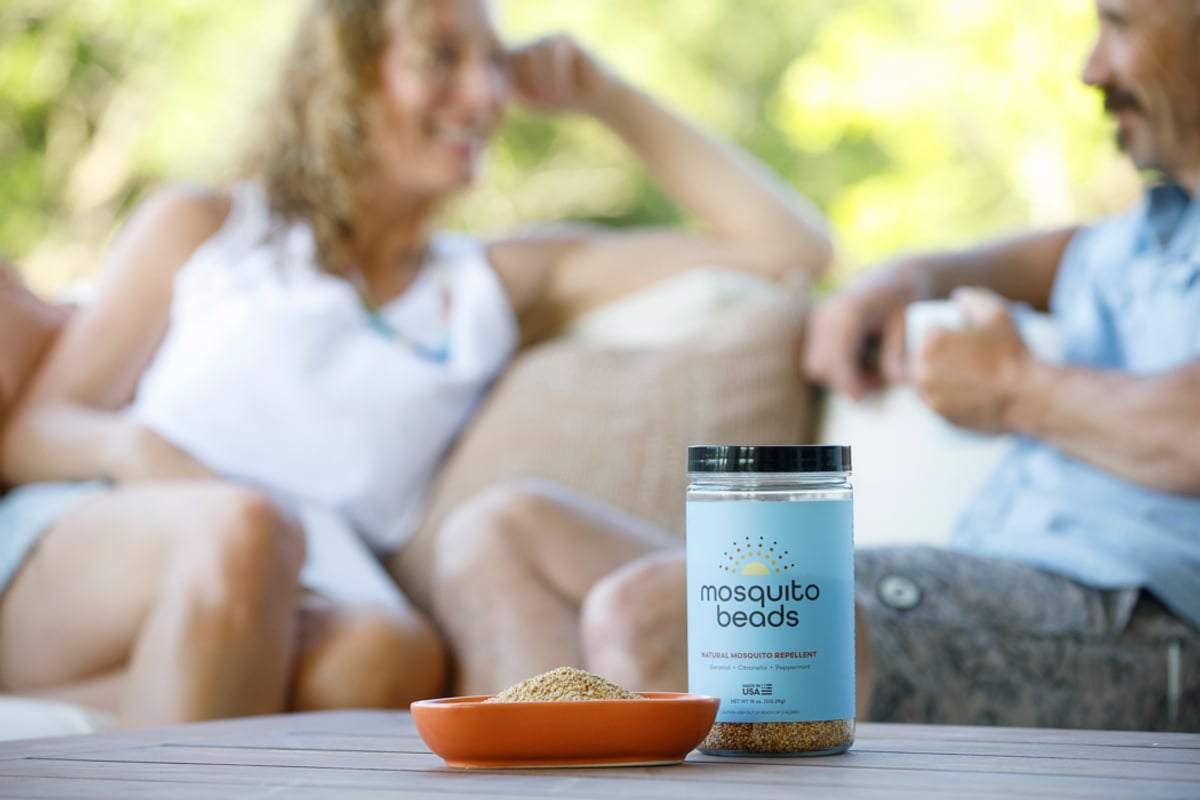
This approach addresses the hosting problem directly. Pour biodegradable granules infused with essential oil blends on the ground around seating areas, and the scent creates a barrier zone. Nothing touches skin. No one needs to spray down. The protection persists across the space for days rather than hours.
Peak performance typically runs strongest during the first 48 hours after application, with effectiveness gradually declining as volatile compounds dissipate. This timing aligns well with planned gatherings: apply the day before, enjoy full protection during the event, and reapply for the next weekend's plans.
For families who want reliable deet free bug repellent without the sticky application process, natural mosquito repellent options for camping and RV use demonstrate how ground-based systems adapt across different outdoor scenarios, from fixed patio spaces to portable applications at campsites and sporting events.
Evaluating Effectiveness Claims
Marketing language around bug repellent grows more creative each year. Words like "natural," "botanical," and "chemical-free" appear prominently, but they don't correlate directly with protection hours or bite reduction percentages.
Reading Labels Like a Scientist
Active ingredient percentage matters. A product listing "essential oil blend" without specifying concentrations tells you almost nothing about expected performance. Look for:
- Specific percentages of each active component
- EPA registration number (if claiming regulated efficacy)
- Protection duration (hours) based on testing, not marketing
- Application instructions that match your intended use
Consumer Reports' evaluation of oil of lemon eucalyptus products highlights how even within a single category of deet free bug repellent, formulation differences create vastly different real-world results. Two products both containing PMD might offer three hours versus eight hours of protection based on concentration and carrier formulation.
The WHO's preferred product characteristics for vector control provide a global framework for evaluating repellent technologies, useful for understanding what benchmarks matter beyond marketing claims.
Field Performance Versus Lab Testing
Laboratory testing controls variables in ways outdoor life never does. Temperature stays constant. Wind doesn't exist. Mosquito species and hunger levels standardize. None of this reflects your actual patio on a humid July evening.
Field testing introduces reality:
- Temperature swings between afternoon heat and evening cool-down
- Breeze patterns that disperse or concentrate scent barriers
- Multiple mosquito species with different feeding preferences
- Human movement and activity disrupting application zones
This gap between controlled and real-world conditions explains why anecdotal experiences vary so widely. One family swears by a product while another finds it useless, often because environmental conditions differed significantly during use.
Matching Solutions to Situations
No single deet free bug repellent approach dominates every scenario. The best choice depends on mobility, duration, group size, and environmental factors.
Fixed Spaces: Patios and Decks
When the gathering spot doesn't change, spatial protection systems shine. You're not moving through mosquito territory; you're creating a defended zone where people remain stationary for hours.
Advantages of ground-based protection for fixed spaces:
- One application protects multiple people simultaneously
- No individual cooperation required from guests
- Multi-day effectiveness reduces reapplication frequency
- Pet-friendly formulations allow animals in the protected space
- No residue on furniture, cushions, or table surfaces
Coverage area becomes the key specification. An 18-ounce application covering 1,000 square feet handles most residential patio layouts, while smaller 5-ounce portions work for targeted zones like doorway thresholds or specific seating clusters.
Mobile Activities: Camping and Sports
When you're moving through terrain or changing locations frequently, portability shifts the equation. Carrying protection matters as much as effectiveness.
For camping scenarios, mesh bags filled with scent-masking granules offer middle ground. Clip them to tent stakes, picnic tables, or camp chairs for zone protection without needing to treat individual hikers who wander in and out of camp throughout the day.
Sports parents watching games face unique constraints: temporary seating, public spaces where you can't modify the ground, and short duration (90 minutes to two hours). Here, smaller portable applications or personal wearable options may prove more practical than spatial systems designed for longer, fixed gatherings.
| Scenario | Best DEET-Free Approach | Key Consideration |
|---|---|---|
| Backyard dinner party | Ground-based spatial protection | Multi-day coverage, no guest application needed |
| Hiking trail | Wearable picaridin or PMD spray | Personal mobility, reapplication access |
| Soccer game | Portable mesh bag or clip-on | Temporary location, short duration |
| RV camping | Combination ground + portable | Semi-fixed base with occasional mobility |
Safety Considerations for Families and Pets
Choosing deet free bug repellent often stems from safety concerns, yet "natural" doesn't automatically mean "safe for everyone in every situation." Essential oils are potent compounds that warrant the same careful handling as any active ingredient.
Age-Appropriate Applications
PMD (oil of lemon eucalyptus) carries a specific age restriction: not recommended for children under three years old. This surprises many families who assume plant-derived automatically means gentle enough for babies.
Picaridin, by contrast, has no age restriction and can be used on infants over two months old when applied according to label directions. IR3535 similarly allows application for young children.
For ground-based spatial systems using essential oil blends, age restrictions shift. Because nothing applies directly to skin, the primary safety consideration becomes whether children might handle the granules directly or place them in their mouths. When used as directed with granules poured on the ground rather than stored within reach of toddlers, the exposure profile differs substantially from direct skin application.
Pet Safety in Treated Spaces
Cats and dogs process essential oils differently than humans. Cats lack certain liver enzymes that metabolize many essential oil compounds, making them particularly sensitive to concentrated exposure.
Ground-based systems using essential oils pose lower risk than topical pet products because:
- Granules remain on the ground rather than on fur
- Volatile compounds disperse into air rather than concentrating on pet skin
- Pets aren't licking treated surfaces the way they would groom treated fur
Still, following manufacturer directions matters. Allowing treated granules to settle before letting pets into the area, ensuring adequate ventilation in covered outdoor spaces, and observing pets for any signs of distress during initial use provides appropriate caution.
Pet-safe mosquito protection considerations extend beyond ingredient lists to application methods, ventilation, and observation protocols that keep four-legged family members comfortable while maintaining effective protection.
Cost Comparison Across DEET-Free Options
Price per application varies dramatically across deet free bug repellent categories, but comparing bottle prices alone misses the full picture.
Per-Use Economics
A $12 spray bottle containing 6 ounces of picaridin solution might provide 40 applications for one person at recommended coverage. That's $0.30 per person per use.
A spatial protection system using 18 ounces of essential oil-infused granules might cost $35 but protect 1,000 square feet for two full days of peak performance. If eight people gather for a Saturday evening and Sunday brunch, that's 16 person-events protected for $35, or $2.19 per person-event.
The math shifts based on group size and gathering frequency:
- Solo hikers favor low per-use cost of personal sprays
- Regular hosts favor lower per-person cost of spatial systems
- Occasional users may prioritize upfront bottle price regardless of per-use calculation
Hidden Costs of Wearable Protection
Spray-based approaches carry costs beyond the bottle price:
- Replacement costs for damaged plastics and finishes (DEET-based especially)
- Time cost of individual application and reapplication
- Social friction cost of asking guests to spray down
- Laundry costs from treating clothing instead of skin
These factors rarely appear in direct price comparisons but influence long-term satisfaction and actual cost of achieving comfortable outdoor time.
Regional Variations in Mosquito Pressure
Texas mosquito challenges differ substantially from Florida's mosquito landscape. Species diversity, seasonal patterns, and disease transmission risks vary by geography, which influences both the urgency of protection and the most effective approaches.
High-Pressure Versus Moderate Climates
In Gulf Coast regions where mosquitoes remain active nearly year-round and species diversity includes aggressive daytime feeders like Aedes aegypti, protection requirements intensify. Multiple species means varied feeding patterns, resistance profiles, and preferred habitats.
Conversely, northern temperate zones might experience intense but seasonal pressure, with mosquito activity compressed into summer months but reaching high density during peak weeks.
These patterns influence product selection:
- High year-round pressure justifies higher upfront investment in spatial systems
- Seasonal pressure might favor lower-cost personal sprays used intensively for 8-12 weeks
- Disease transmission risk (West Nile, dengue, Zika) in certain regions elevates the importance of EPA-registered actives with documented efficacy data
Recent research on PMD mechanisms shows how synergistic compounds in essential oil formulations enhance effectiveness, which matters more in high-pressure environments where marginal improvements in repellency translate to meaningful bite reduction.
Building a Complete Protection Strategy
Effective mosquito management rarely depends on repellents alone. Habitat modification, behavioral timing, and physical barriers layer together to create comprehensive protection that reduces chemical dependence.
Source Reduction First
Empty containers collecting rainwater, clogged gutters, and neglected bird baths produce mosquitoes faster than any repellent can handle. Weekly elimination of standing water cuts mosquito production at the source.
For suburban homeowners invested in their outdoor sanctuary, source reduction aligns with aesthetic goals. Proper drainage, maintained water features with circulation, and strategic landscaping that reduces shaded moisture pockets all contribute to lower baseline mosquito populations.
Timing and Air Movement
Mosquitoes fly poorly in moving air. Ceiling fans on covered patios, oscillating fans on decks, and strategic furniture placement that leverages natural breeze patterns reduce mosquito landing attempts by making hovering and precision landing physically difficult.
Similarly, timing gatherings to avoid peak feeding hours (dawn and dusk for most species) reduces encounter rates. This proves more flexible than it sounds; a 7:30 PM dinner start instead of 6:00 PM during summer's late sunset often shifts activity past the evening feeding peak.
Layering Chemical and Non-Chemical Methods
The families most satisfied with their outdoor protection combine approaches rather than seeking a single silver bullet:
- Source reduction to lower breeding populations
- Spatial deet free bug repellent for the gathering zone
- Fans or air movement for additional physical deterrent
- Timing consideration when scheduling events
- Personal spray backup for individuals who attract mosquitoes heavily despite spatial protection
This layered strategy reduces the performance demand on any single method, allowing moderate-efficacy natural options to succeed in ways they might fail if relied upon exclusively.
Long-Term Satisfaction Factors
Product performance matters, but usability determines whether people actually maintain protection consistently. A highly effective solution that feels burdensome eventually gets abandoned.
Aesthetic Integration
For the outdoor sanctuary host who treats the patio as an extension of their interior design sensibility, visible protection methods matter. Citronella candles in metal buckets signal "trying too hard to fight mosquitoes" rather than "effortlessly enjoying the evening."
Invisible or minimal-visual-impact solutions preserve the ambiance:
- Ground-applied granules that blend with mulch or gravel
- Unscented or naturally scented protection that doesn't compete with food aromas
- No bottles, cords, or devices cluttering sightlines
This consideration sounds superficial until you realize that people who invested significantly in outdoor furniture, lighting, and landscape design will not tolerate protection methods that visually undermine that investment.
When choosing a deet free bug repellent system, consider how it appears (or doesn't appear) in your space. Nothing on your skin often extends to nothing disrupting the visual harmony of your carefully curated outdoor room. Biodegradable granules that you pour on the ground and largely forget about until the next application fit this aesthetic requirement in ways that spray bottles, plug-in devices, or smoking coils never will.
Maintenance Burden
Weekly reapplication feels manageable in May when outdoor season launches with enthusiasm. By August, it feels like another chore competing for Saturday morning attention.
Systems with 48-hour peak performance but gradual effectiveness decline over 5-7 days offer flexibility. Apply Thursday evening for a weekend gathering, maintain good protection Saturday and Sunday, and accept diminished coverage mid-week when outdoor use naturally decreases.
This rhythm matches how suburban families actually use patios: intensive weekend use with sparse weeknight presence. Products requiring daily attention or precise hourly reapplication schedules conflict with real behavior patterns and eventually get skipped.
Making Your Decision
Choosing the right deet free bug repellent approach requires honest assessment of your specific situation, not just reading about general effectiveness.
Ask yourself these diagnostic questions:
- Do I need to protect a fixed space or mobile individuals?
- How many people typically need protection simultaneously?
- How frequently will I realistically maintain the protection method?
- What are my non-negotiable requirements (pet safety, skin sensitivity, aesthetic concerns)?
- What mosquito pressure level do I face in my specific location?
Decision Matrix
| Priority | Recommended Approach | Why |
|---|---|---|
| Protect large groups regularly | Spatial ground-based system | One application covers many people across multiple days |
| Solo hiking/mobility | EPA-registered wearable (picaridin or PMD) | Personal protection that moves with you |
| Very young children | Picaridin spray (over 2 months) or spatial ground system | Age-appropriate efficacy with documented safety |
| Pet-dense households | Ground-based essential oil granules used per directions | Lower direct exposure than topical products |
| Minimal visual impact | Biodegradable granules | Blend with landscape, no visible devices |
| Budget-conscious occasional use | Essential oil personal spray | Low upfront cost for infrequent application |
Additional resources like the Mosquito Beads FAQ section address specific implementation questions that arise after you've chosen an approach but before you've perfected the application technique for your unique space.
Trial and Observation
Even with perfect research, your specific microclimate, mosquito species mix, and usage patterns create variables that only real-world testing reveals. Plan to try your chosen deet free bug repellent method during a lower-stakes situation before relying on it for your most important gathering.
Apply protection for a regular Tuesday evening outside. Observe performance, note timing of any breakthrough bites, assess ease of application, and check whether pets or children react unexpectedly. This dress rehearsal approach prevents disappointment during the dinner party you've planned for weeks.
Regulatory Landscape and Future Developments
The deet free bug repellent market continues evolving rapidly as consumer demand drives innovation and regulatory bodies adapt frameworks to accommodate new technologies.
25(b) Minimum-Risk Versus Full Registration
Understanding EPA's two-track system helps decode labels and set expectations appropriately:
Full registration (like DEET, picaridin, PMD, IR3535) requires extensive efficacy and safety testing, provides specific protection duration claims, and undergoes regulatory review of all marketing claims.
25(b) minimum-risk designation (many essential oil products) allows products containing specified low-risk ingredients to enter market without full registration, but also restricts the efficacy claims manufacturers can legally make.
This creates confusion when comparing products. One bottle can claim "8 hours protection against mosquitoes" (registered, tested, proven) while another can only say "repels mosquitoes" without duration or efficacy percentages (25(b) compliant, limited claims allowed).
Emerging Technologies
Research into novel plant compounds, synergistic essential oil combinations, and controlled-release delivery systems promises improved performance from natural ingredients. Studies examining PMD synergistic components hint at how combining specific essential oils might enhance effectiveness beyond simple additive effects.
Microencapsulation technologies that slow essential oil evaporation could extend protection duration without increasing concentration, addressing one of the primary limitations of plant-based approaches compared to synthetic alternatives.
Integration With Broader Outdoor Living Trends
The drive toward deet free bug repellent sits within larger cultural movements around outdoor living, natural products, and domestic wellness that influence product development and marketing.
The Outdoor Room Concept
Suburban homes increasingly blur the line between interior and exterior living spaces. Kitchens extend to built-in grills, living rooms flow to covered seating areas, and dining tables migrate outside for months at a time.
This integration raises standards for outdoor comfort. You wouldn't tolerate mosquitoes in your dining room, so why accept them on your patio? The expectation shifts from "outdoor activities involve some bugs" to "my outdoor room should be as comfortable as my indoor room."
Protection methods that respect this elevated expectation succeed while those that feel like camping gear or emergency measures clash with the aspirational vision of seamless indoor-outdoor living.
Wellness Culture and Chemical Consciousness
Families tracking food additives, choosing organic produce, and filtering home water naturally extend scrutiny to pest control products. This isn't necessarily science-based skepticism of DEET's safety profile; it often reflects a general preference for fewer synthetic inputs across all household categories.
The logic flows: if we choose fragrance-free detergent and avoid artificial food colors, why spray ourselves with DEET when alternatives exist?
This perspective creates market demand that drives innovation in deet free bug repellent options. Manufacturers respond with improved formulations, better delivery systems, and broader variety of natural and synthetic-but-DEET-free choices.
Protection from mosquitoes no longer requires choosing between effective chemical formulas and ineffective natural alternatives. The range of deet free bug repellent options now spans EPA-registered synthetic actives like picaridin, plant-derived compounds with solid research backing, and innovative spatial protection systems that eliminate the need for anything on skin entirely. For families who value their outdoor spaces as extensions of their homes and refuse to compromise on either comfort or chemical exposure, ground-based scent-masking approaches offer a third path beyond traditional sprays and citronella candles. Mosquito Beads provide biodegradable, essential oil-infused granules that you pour on the ground where people gather, creating protection that lasts for days without sticky applications, visible devices, or asking guests to spray down before sitting at your table.