

DEET Free Repellent: Safe Protection for Family Spaces
For decades, DEET has dominated the mosquito repellent market, but a growing number of families are seeking alternatives that don't require applying chemicals to skin. The shift toward deet free repellent options reflects broader concerns about chemical exposure, skin irritation, and the need for solutions that protect entire outdoor spaces rather than just individual people. Whether you're hosting dinner on your patio, watching your child's soccer game, or simply enjoying a quiet evening outside, understanding your options beyond DEET can transform how you reclaim your outdoor sanctuary.
Why People Seek DEET Free Repellent Options
The movement away from DEET stems from multiple practical and health-related concerns. Traditional DEET sprays require direct skin application, leaving a greasy residue that feels uncomfortable in warm weather. For those who view their patio as an outdoor room, asking guests to spray themselves down before dinner creates an awkward situation that disrupts the hospitality experience.
Families with young children face additional considerations. Research on DEET safety in children highlights ongoing discussions about appropriate concentrations and application frequency for younger users. While regulatory agencies have established guidelines, many parents prefer avoiding the question entirely by choosing deet free repellent alternatives that don't touch skin at all.
Pet owners represent another significant group seeking alternatives. Dogs and cats explore outdoor spaces with their faces close to the ground, exactly where spray residue settles. The concern isn't hypothetical: poison control centers regularly field questions about pets and children who have contacted or ingested repellent products.
The Chemical Load Concern
Modern families encounter chemicals throughout daily life, from household cleaners to personal care products. For health-conscious homeowners, reducing unnecessary chemical exposure becomes a priority. This doesn't require embracing extreme measures, just making thoughtful choices where viable alternatives exist.
A deet free repellent approach aligns with this philosophy. Rather than adding another chemical layer to skin several times per evening, families can protect their outdoor spaces through methods that keep active ingredients away from direct contact. The difference matters especially when gatherings last hours and require multiple reapplications with traditional sprays.
Categories of DEET Free Repellent Products
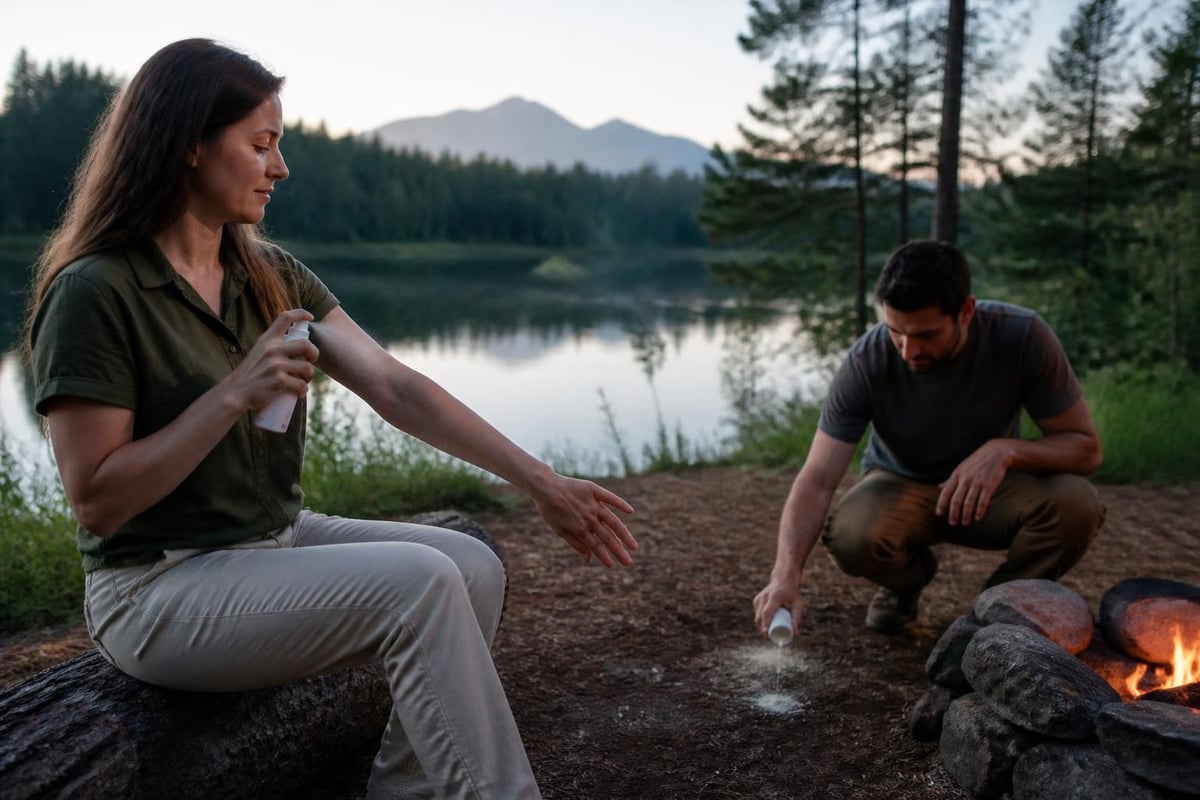
The market offers several distinct categories of deet free repellent solutions, each working through different mechanisms and suited to different situations.
Synthetic DEET Alternatives
Picaridin and IR3535 represent the most researched synthetic alternatives to DEET. These compounds provide protection through skin application but avoid DEET's specific chemical structure. Field evaluations comparing IR3535 to DEET show comparable efficacy in real-world conditions, making them legitimate alternatives for those who need wearable protection.
| Active Ingredient | Typical Concentration | Application Type | Duration |
|---|---|---|---|
| Picaridin | 10-20% | Spray, lotion | 3-8 hours |
| IR3535 | 20-25% | Spray, lotion | 4-6 hours |
| Oil of Lemon Eucalyptus | 30-40% | Spray, lotion | 4-6 hours |
These options still require skin application and reapplication, but they eliminate the specific concerns associated with DEET chemistry.
Essential Oil-Based Formulations
Natural essential oils have been used for generations to deter mosquitoes. Modern formulations typically combine multiple oils to enhance effectiveness. Common ingredients include:
- Citronella oil
- Geraniol
- Peppermint oil
- Lemongrass
- Eucalyptus
- Rosemary
The challenge with essential oil sprays lies in their shorter protection duration. Most require reapplication every one to two hours, creating the same interruption cycle that makes DEET sprays inconvenient for extended outdoor gatherings.
Spatial Repellent Systems
A newer category shifts the paradigm entirely. Instead of applying repellent to individuals, spatial systems protect defined areas. This includes devices that heat repellent pads, candles infused with repellent oils, and ground-applied granular formulations.
Consumer Reports testing evaluates both wearable and spatial products, helping consumers understand which situations call for each approach. For stationary outdoor activities in defined spaces, spatial methods eliminate the need for anyone to apply anything to their skin.
Understanding How Different DEET Free Repellent Methods Work
The mechanism matters when selecting protection. DEET and its synthetic alternatives work by confusing mosquitoes' chemical receptors, essentially making treated skin "invisible" to their detection systems. This requires the chemical to be present where mosquitoes would land, meaning direct skin contact is non-negotiable for these products.
Essential oil formulations can work similarly when applied to skin, but many oils also provide true repellency, creating a scent barrier mosquitoes actively avoid. This characteristic opens possibilities for area protection that DEET's masking mechanism cannot provide.
Scent Masking at Ground Level
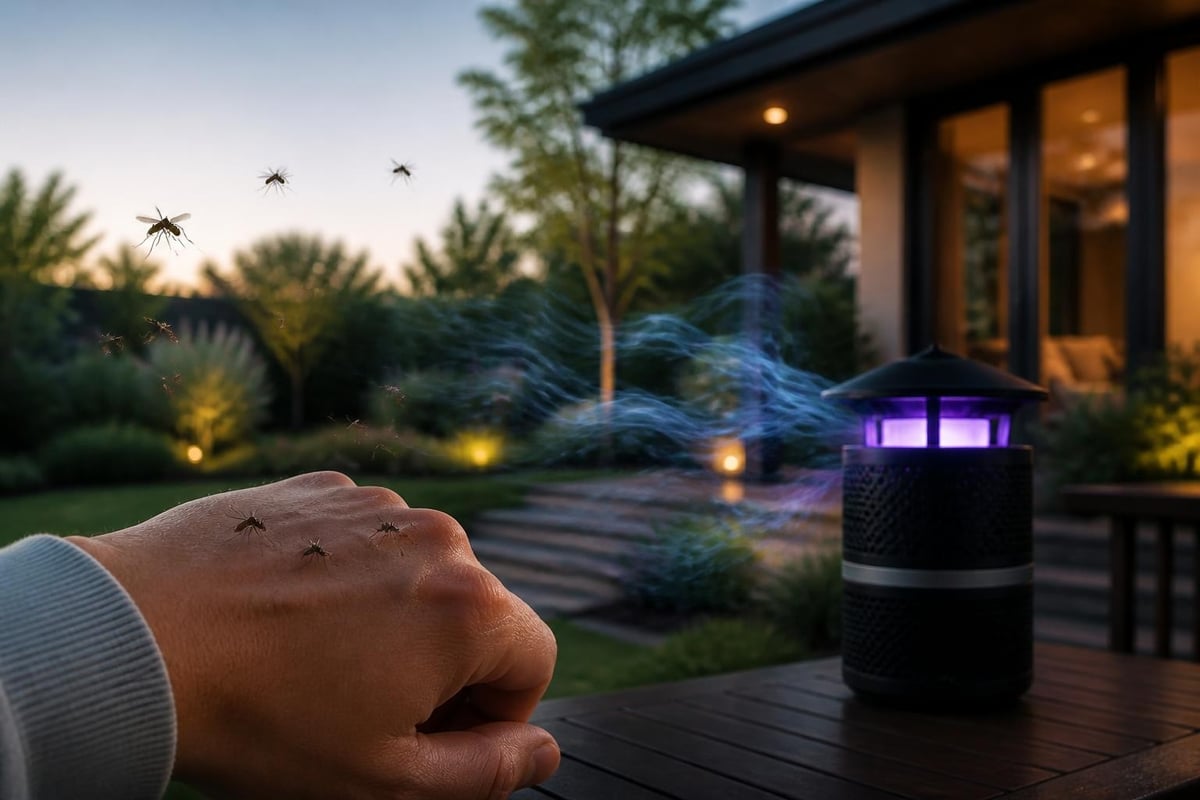
Mosquitoes don't attack from high altitudes. They hunt close to the ground, following scent trails of carbon dioxide and human odors that drift downward. Understanding this behavior explains why mosquitoes detect CO2 from 30 feet away but make their approach near ground level where scent concentrations are strongest.
Ground-applied deet free repellent formulations leverage this hunting pattern. By creating a scent barrier at the level where mosquitoes navigate, these products mask the human odors mosquitoes track. The insects drift past the protected space because they never detect the attractants that would normally trigger landing behavior.
This method offers distinct advantages for family spaces:
- No skin contact for anyone in the protected area
- No reapplication interrupting conversations and activities
- Pet-friendly zones when products are properly formulated
- Guest comfort without asking visitors to spray down
Regulatory Framework for DEET Free Repellent Claims
Product labeling in the repellent category follows strict federal guidelines. The EPA's guidance on absence-of-ingredient claims establishes how manufacturers can truthfully communicate that products are deet free repellent options without making misleading comparisons.
This regulatory attention ensures consumers receive accurate information. When a product states it contains no DEET, that claim must be verifiable and not imply superiority unless supported by data. For shoppers, this means deet free repellent labeling represents a factual statement about composition, allowing informed decisions based on personal priorities rather than marketing hype.
25(b) Minimum Risk Pesticides
Many natural repellents qualify as minimum risk pesticides under FIFRA 25(b), a category covering products made from specifically listed essential oils and other low-risk ingredients. These products avoid the full pesticide registration process while meeting safety and efficacy standards appropriate for their ingredient profile.
For families seeking natural mosquito repellent solutions, 25(b) products offer transparency. The ingredient list tells the complete story, and the regulatory classification confirms these are genuinely lower-risk formulations.
Comparing Performance in Real-World Conditions
Laboratory efficacy differs from backyard reality. A deet free repellent that performs well in controlled testing may disappoint during an actual evening on the patio, while another might exceed expectations. Several factors influence real-world performance.
Duration and Coverage Area
Traditional sprays protect individual people for specified time periods. A product labeled for six hours of protection means reapplication after six hours per person. For a family of four hosting two guests, that's six separate applications initially and six more if the gathering extends past the protection window.
Ground-applied spatial products flip this calculation. Instead of protecting six people for six hours each, they protect a defined area continuously. A formulation covering 1,000 square feet protects everyone within that space without individual applications.
Consider the practical implications:
- Zero sticky residue on skin or clothing
- No spray mist around food and drinks
- Children and pets move freely without timing concerns
- Hosts can focus on guests rather than reapplication schedules
Environmental Factors
Wind, humidity, and temperature affect all repellent types. DEET and synthetic alternatives resist sweat and water better than many essential oil sprays, maintaining skin protection during physical activity. However, the same perspiration that dilutes wearable repellents doesn't impact ground-applied formulations that never touch skin.
Rainfall presents challenges for both categories. Heavy rain washes spray residue from skin and disperses ground-applied products, requiring reapplication in either case. Light evening moisture affects different products differently based on their specific formulations and application methods.
Choosing the Right DEET Free Repellent for Your Situation
The ideal solution varies by context. A camper hiking through mosquito-dense wilderness faces different needs than a homeowner protecting their patio dinner party. Matching the product category to your specific situation ensures satisfaction with deet free repellent performance.
| Scenario | Primary Concern | Best Solution Type | Why |
|---|---|---|---|
| Backyard dinner party | Guest comfort, no skin contact | Ground-applied spatial | Protects whole space, no sticky sprays |
| Hiking or camping | Personal mobile protection | Wearable synthetic or oil spray | Moves with you, proven trail efficacy |
| Children's outdoor play | Safety, simplicity | Pet-friendly spatial ground product | Nothing on skin, continuous area protection |
| Travel to disease-risk areas | Maximum efficacy against disease vectors | CDC-recommended wearables | Specific regional disease prevention |
For the suburban homeowner treating their patio as an outdoor room, the ground-applied approach solves multiple problems simultaneously. It addresses the chemical exposure concern, eliminates the awkwardness of asking guests to apply repellent, and removes the sticky spray experience that makes traditional DEET products unpleasant.
European public health guidance on personal protective measures recognizes that different settings call for different strategies. Disease prevention in high-risk regions may require CDC-recommended wearable repellents, while general nuisance mosquito control in home settings permits more flexible approaches.
What Independent Testing Reveals
Organizations like Consumer Reports conduct rigorous testing of both DEET and deet free repellent products. Their 2024 insect repellent buying guide evaluates products across categories, measuring protection duration and effectiveness against multiple mosquito species.
Key findings for deet free repellent shoppers include:
- Picaridin at 20% concentration performs comparably to 25% DEET
- Oil of lemon eucalyptus (PMD) at 30% provides 4-6 hours of protection
- Essential oil blends vary widely in efficacy and duration
- Spatial devices show effectiveness within their rated coverage areas

The Ground Application Alternative
Among deet free repellent innovations, ground-applied biodegradable formulations represent a distinctive category. Rather than protecting skin, these products create a scent barrier in the environment where mosquitoes hunt. This approach originated from understanding mosquito behavior: they track human scent at ground level where carbon dioxide and body odors concentrate.
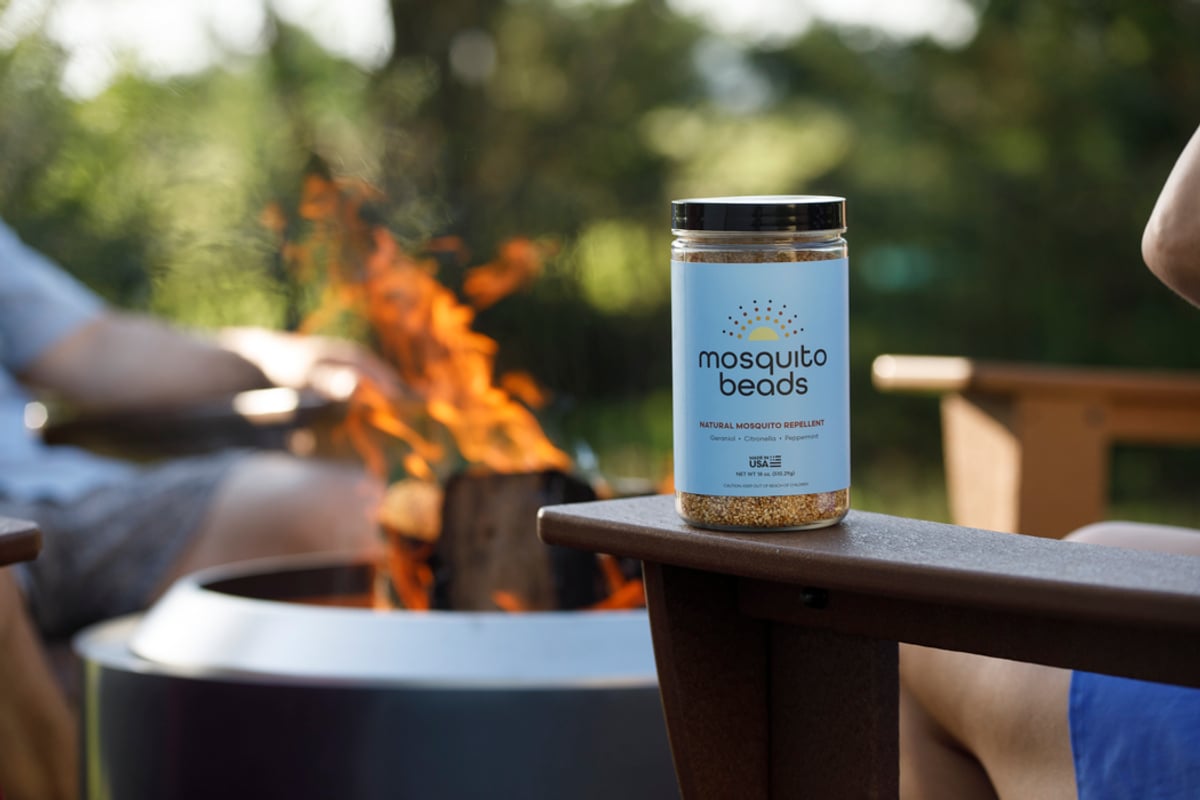
Biodegradable granules infused with essential oil blends offer several practical advantages. Pour them where people gather, and they release a concentrated scent profile that masks human attractants without requiring contact with skin. The application takes seconds, protects the entire space, and avoids every inconvenience associated with traditional sprays.
For families concerned about chemical exposure near children and pets, this method eliminates direct contact entirely. The beads remain on the ground, away from curious hands and noses. When formulated with pet-safe ingredients and used as directed, the protected space welcomes everyone without restriction. Products designed with this approach, such as the natural mosquito repellent solutions at Mosquito Beads, prioritize both efficacy and safety through thoughtful ingredient selection and application methods that keep active compounds where they work without touching anyone.
Performance timing matters with ground-applied products. Most deliver peak effectiveness during the first two days after application, gradually diminishing as volatile oils disperse. This predictable pattern allows planning: apply fresh product before gatherings to ensure optimal protection during your event.
Coverage area scales with product quantity. An 18-ounce container typically protects up to 1,000 square feet, sufficient for most residential patios and common gathering spaces. Smaller 5-ounce portions suit focused applications for sports sidelines or camping setups where mobility matters.
Global Perspectives on DEET Free Repellent Development
International health organizations approach mosquito protection with evidence-based recommendations that balance efficacy and safety. The World Health Organization's technical guidance on vector control outlines preferred characteristics for repellent products, informing both product development and public health policy.
These frameworks acknowledge that different populations face different needs. Travelers to malaria or dengue zones require highly effective personal protection, often meaning DEET or picaridin at concentrations proven against disease-carrying species. Families managing nuisance mosquitoes in low-disease-risk areas have flexibility to prioritize other factors like avoiding skin application or reducing chemical exposure.
Regional Innovations and Traditions
Different cultures have developed unique approaches to mosquito control over centuries. Asian mosquito coils, European citronella traditions, and North American screened porches all represent regional solutions to universal problems. Modern deet free repellent development draws from this global knowledge base while applying contemporary safety testing and efficacy standards.
The convergence of traditional knowledge and modern formulation science produces products that honor natural approaches while meeting current performance expectations. Essential oils used for generations now appear in precisely blended ratios, optimized through testing rather than guesswork.
Making the Transition from DEET
Switching to deet free repellent options requires adjusting expectations and application habits. DEET's multi-hour individual protection creates specific usage patterns: spray before going outside, reapply mid-evening if needed, wash off before bed. Alternative products work differently and deliver benefits through different mechanisms.
Setting Realistic Expectations
No repellent provides perfect protection. DEET doesn't eliminate 100% of mosquito encounters, and neither do alternatives. The goal is reducing bites to negligible levels, transforming outdoor spaces from unbearable to comfortable. Success means spending the evening outside without constantly swatting, not achieving a completely mosquito-free environment.
Ground-applied spatial products excel in stationary settings but don't help during walks around the neighborhood. Essential oil sprays provide mobile protection but require more frequent reapplication than synthetics. Understanding each product's strength and limitation prevents disappointment.
Transition tips for deet free repellent adoption:
- Start with small-scale testing before major events
- Combine methods when appropriate (spatial for gathering areas, wearable for yard work)
- Track performance across multiple applications to identify patterns
- Adjust coverage area or application frequency based on mosquito pressure in your specific location
- Consider seasonal variations in mosquito activity
Addressing Common Concerns
First-time users of deet free repellent products sometimes expect instant results identical to their DEET experience. While many alternatives perform comparably, the user experience differs. Spatial products require application to the area rather than people, a mental shift that feels strange initially.
Some families worry that avoiding DEET means accepting inferior protection. Current product development has narrowed the efficacy gap significantly. Research comparing natural and synthetic alternatives shows that properly formulated deet free repellent options deliver meaningful protection, even if duration or coverage differs from DEET's specific profile.
Integrating DEET Free Repellent Into Outdoor Living
Creating a comfortable outdoor sanctuary involves multiple elements working together. Repellent represents one component alongside fans for air circulation, strategic lighting, and vegetation management. For homeowners who view their patio as an extension of their home, the protection method must align with the space's purpose and aesthetic.
Traditional DEET sprays conflict with refined outdoor entertaining. The aerosol mist drifts across carefully set tables, leaving residue on glassware and linens. The chemical scent competes with garden flowers and grilled food. The application process interrupts conversation as guests excuse themselves to spray down.
Ground-applied deet free repellent solutions integrate seamlessly into the outdoor room concept. Application happens before guests arrive, much like adjusting lighting or arranging furniture. The protection exists without visible equipment, burning flames, or billowing smoke. Visitors enjoy the space without awareness of the defensive measures in place.
Seasonal Strategies
Mosquito pressure varies throughout the year. Spring emergence brings different species than late summer peak activity. Your deet free repellent strategy can adjust seasonally:
Early season (March-May): Lighter applications may suffice as populations build. Test products to establish baseline performance before peak season.
Peak season (June-August): Maximum protection needed. Apply ground products at full recommended coverage, refresh between gatherings, consider supplementing with fans or other methods during extreme pressure.
Late season (September-October): Populations decline but late-season mosquitoes can be aggressive. Maintain protection during comfortable autumn evenings when outdoor time is precious.
Considerations for different regions: Texas requires different strategies than Florida due to climate and species variations. What works in Kansas may need adjustment in Houston. Local mosquito populations, breeding patterns, and seasonal timing all influence product performance.
Beyond the Backyard: Portable DEET Free Repellent Applications
While ground-applied products excel for patios and defined spaces, deet free repellent needs extend to mobile scenarios. Sports parents spending hours at fields need protection that travels. RV enthusiasts want to protect their campsite setup without carrying bulky equipment.
Portable spatial protection solves these challenges. Small containers or mesh bags filled with repellent beads clip onto chairs or sit near seating areas, creating protected zones wherever you settle. This approach works for:
- Soccer and baseball game sidelines
- Camping and RV sites
- Tailgating and outdoor events
- Lakeside fishing spots
- Poolside relaxation areas
The key advantage remains consistent: protecting the space instead of individuals, avoiding skin application while maintaining effective mosquito control. A 5-ounce portable container covers approximately 300 square feet, sufficient for most temporary gathering situations.
Cost Considerations Across DEET Free Repellent Categories
Budget impacts product choice. DEET sprays remain inexpensive and widely available, but the per-use cost calculation becomes complex when protecting multiple people across an entire season. A deet free repellent investment may cost more upfront but deliver better value over time.
Comparing costs between natural products and professional services reveals interesting trade-offs. Professional barrier sprays provide season-long reduction of mosquito populations but require recurring service visits. Over-the-counter products demand more active management but allow precise control over timing and application.
Ground-applied biodegradable products typically fall between wearable sprays and professional services on the price spectrum. A single container protects multiple gatherings, and the cost per event decreases with regular use. The absence of skin contact and reapplication requirements adds value beyond simple price per ounce.
Value Beyond Direct Cost
Financial comparison should account for total experience. Products that require constant reapplication consume time and attention during gatherings. Methods that cause skin irritation or sticky residue create discomfort that's difficult to price but impacts enjoyment. Solutions that welcome pets and children without restriction deliver peace of mind worth more than the price difference between options.
For outdoor sanctuary hosts who have invested in comfortable furniture, ambient lighting, and landscaping, repellent becomes part of the overall environment. A method that maintains the aesthetic while providing protection preserves the complete experience their outdoor room represents.
DEET free repellent options have evolved far beyond simple essential oil sprays, offering families genuine alternatives that match their priorities for chemical exposure, skin contact, and outdoor comfort. From synthetic alternatives like picaridin to spatial ground-applied formulations, the current market provides solutions for nearly every situation and preference. Whether you prioritize protecting the entire patio space without sticky applications or need portable protection for sports sidelines, understanding how different products work helps you select the approach that transforms your outdoor time from battling mosquitoes to genuinely enjoying your space. Mosquito Beads delivers on this promise through biodegradable granules you pour on the ground, creating a scent barrier that masks human odors at the level where mosquitoes hunt. Nothing touches skin, no flames or smoke interrupt the evening, and your outdoor sanctuary remains exactly that: a protected space where family and friends gather comfortably.